Book Appointment Now

All-on-4 Dental Implants: Complete Guide to “Teeth in a Day” Medical Tourism
 By
By
All-on-4 dental implants, the “Teeth in a Day” procedure, cost $6,000-$15,000 per arch abroad versus $20,000-$35,000 in the United States, a saving of 50-80%.
Mexico offers All-on-4 from $6,000 per arch, Colombia from $7,000, Costa Rica from $8,500, and Panama from $10,000, all 3-7 hours from the US with no visa required. According to the Malo Clinic long-term study, implant survival is 91-93% at 10-18 years.
Our network connects you with verified implant specialists across Bogotá, Medellín, San José, Cancún, and Panama City, each checked for credentials, recognized implant brands like Nobel Biocare and Straumann, and patient outcomes. Below, you will find honest timelines, a country-by-country cost breakdown, material comparisons, and answers to the questions patients ask most about Teeth in a Day abroad.
What Are All-on-4 Dental Implants and “Teeth in a Day”?
All-on-4 dental implants are a full-arch restoration. Four titanium implants support a fixed set of teeth replacing one or both jaws. “Teeth in a Day” means you leave surgery with temporary teeth. Your permanent teeth come 3-6 months later.
What Is the Difference Between Temporary and Permanent Teeth?
The difference is timing and material. On surgery day you receive temporary teeth made from acrylic (PMMA). They let you eat soft foods, restore your smile, and protect the healing implants. They also act as a test drive for your final look.
Your permanent teeth arrive 3-6 months later, after the implants fuse with the bone. Made from zirconia or porcelain, they restore full chewing function. With proper care they last 10-20 years.
What Do the All-on-4, All-on-6, and Immediate-Load Terms Mean?
These terms describe how your teeth are attached and how many implants hold them. Knowing the four key terms helps you compare clinic quotes.
- All-on-4: A trademarked technique using exactly four implants to support 12-14 teeth. Two implants go vertically in front, two are angled up to 45 degrees in back.
- All-on-6: A modified technique using six implants for added stability. Dentists often recommend it for the upper jaw.
- Immediate Loading: The clinical protocol that allows temporary teeth to attach on surgery day.
- Teeth in a Day: A marketing term for same-day temporary teeth. It does not mean a permanent restoration.
What Do Clinics Promise Versus What Actually Happens?
Clinics promise quick, easy results, but the reality involves more time, complexity, and cost than advertised. Here is what marketing claims really mean:
| What They Promise | The Reality |
|---|---|
| “New teeth in one day” | Temporary acrylic teeth in one day; permanent teeth require 3-6 months |
| “One simple procedure” | A 3-5 hour surgery, often needing general anesthesia |
| “Immediate return to normal” | A soft diet for weeks and activity limits for 2 weeks |
| “All-inclusive price” | Often excludes diagnostics, sedation, extractions, and permanent teeth |
| “Lifetime solution” | Prosthetics need replacement every 10-15 years |
For an overview of all implant types, see our dental implants guide.
How Much Do All-on-4 Dental Implants Cost Abroad?
All-on-4 dental implants cost $6,000-$15,000 per arch abroad versus $20,000-$35,000 in the United States, a saving of 50-80%. Mexico is the lowest-cost option and Panama the highest among popular destinations. Always confirm what each quote includes.
How Do All-on-4 Costs Compare Across Countries?
Here is how All-on-4 cost per arch compares across the four main destinations and the US:
| Country | All-on-4 Cost (per arch) | Savings vs USA |
|---|---|---|
| United States | $20,000-$35,000 | Baseline |
| Mexico | $6,000-$10,000 | 50-83% |
| Colombia | $7,000-$11,000 | 45-80% |
| Costa Rica | $8,500-$12,750 | 36-76% |
| Panama | $10,000-$15,000 | 25-71% |
Panama pricing comes from a single source and is less transparent than the other markets, so confirm the full quote before booking. Mexico and Colombia offer the deepest savings for budget-focused patients.
What Hidden Costs Should You Expect?
Hidden costs can add 40-60% to the advertised price. Plan for these extras in your budget:
- Bone Grafting (if needed): $500-$2,500 additional
- Sinus Lift (for upper jaw): $1,500-$3,000 per side
- Temporary Teeth Repairs: $200-$500 per incident
- Travel (two trips): flights $280-$800 roundtrip; hotels from $40-$60 per night; meals $15-$25 per day
- Time Off Work: at least 2 weeks total for both trips
- Companion Expenses: a travel companion is recommended for post-surgery support
What Are the Long-Term Costs?
Long-term costs include about $500-$1,000 in annual maintenance, $45-$100 screw replacements every 3-5 years, and a $10,000-$25,000 prosthesis replacement every 10-15 years. Many patients return to their original clinic for major work because home dentists often decline it.
Clinics in these countries use implants from established global brands such as Straumann, Nobel Biocare, Zimmer, and Osstem. These systems carry FDA clearance and are the same brands used in North America and Europe. Ask your clinic to confirm the brand in writing so a home dentist can support it later.
Which Countries Are Best for All-on-4 Dental Tourism?
The best countries for All-on-4 dental tourism are Mexico, Colombia, Costa Rica, and Panama. All four sit 3-7 hours from the US, require no visa for US, Canadian, or UK citizens, and allow stays up to 180 days. Each offers a different mix of price and infrastructure.
Why Choose Colombia for All-on-4?
You should choose Colombia for strong value, with All-on-4 priced at $7,000-$11,000 per arch and savings of 45-80% versus US prices. Clinics in Bogotá, Medellín, and Cali use premium brands like Straumann and Nobel Biocare. Direct flights from Miami reach Bogotá in about 4 hours.
Major clinics employ English-speaking dentists, though quality varies between providers, so vetting matters. Our network includes specialists like Dr. Ana Carolina Troconis Nery in Bogotá, a full-arch implant specialist with 20+ years of experience and US Embassy approval. For trip planning, see our guide for American medical tourists in Colombia and our dental implants in Colombia page.
Why Choose Mexico for All-on-4?
You should choose Mexico for the lowest cost, with All-on-4 priced at $6,000-$10,000 per arch and savings of 50-83% versus US prices. Mexico has 8 JCI-accredited hospitals and is the closest destination for many patients. Flights from Houston reach Monterrey in under 2 hours and Cancún in about 2.5 hours.
Dental tourism is well established in cities like Cancún and Tijuana, with many clinics built around international patients. For details, see our pages on All-on-4 dental implants in Mexico and dental implants in Mexico.
Why Choose Costa Rica for All-on-4?
You should choose Costa Rica for its established reputation for quality care, with All-on-4 priced at $8,500-$12,750 per arch and savings of 36-76%. San José is the main destination, just 3 hours from Miami. Hospital Clínica Bíblica in San José has held JCI accreditation since 2007 and includes dental among its specialties.
Costa Rica uses the same materials and technology as US practices, often with US-trained, English-speaking dentists. Costs run higher than Colombia or Mexico but come with more mature infrastructure. See our dental implants in Costa Rica page for more.
Why Choose Panama for All-on-4?
You should choose Panama for convenience, since it uses the US dollar and English is widely spoken. All-on-4 runs $10,000-$15,000 per arch with savings of about 25-71%. Panama City is the main destination, roughly 3 hours from Miami.
The dental tourism market is less established than Colombia, Costa Rica, or Mexico, with fewer specialized clinics and less pricing transparency. Research clinics thoroughly before committing. See our dental implants in Panama page for current options.
How Long Does the All-on-4 Process Take Abroad?
The All-on-4 process takes about 6 months from start to finish. International patients need two separate trips: one for surgery and temporary teeth, and one for the permanent bridge 3-6 months later.
What Happens Before Surgery and on Surgery Day?
Before surgery you complete a virtual consultation, a 3D CBCT scan, and any medical clearances. Surgery day itself is a single 3-5 hour session, following these steps:
- Anesthesia administration (local, sedation, or general)
- Tooth extractions and bone reshaping (alveoloplasty)
- Implant placement and abutment attachment
- Temporary teeth fabrication and bite adjustment
Complex cases can run longer. Get diabetes control or cardiac approval finalized before you travel.
What Is Recovery Like Before You Fly Home?
Recovery before flying home lasts about 7 days, with peak swelling in the first 3 days and daily clinic check-ups. Most patients get medical clearance to fly on day 7. The first trip typically lasts 7-14 days.
- Day 1-3: Peak swelling. Use ice packs and pain medication, rest at your hotel, and eat soft foods only.
- Day 4-6: Daily clinic check-ups monitor healing as swelling goes down.
- Day 7: Medical clearance to fly home. Flying sooner raises blood clot risk, so wait at least 7 days.
What Happens During the Healing Period and Second Trip?
During healing at home the implants fuse with the bone, a process called osseointegration. The phases below follow AAID All-on-4 recovery guidance and the Malo Clinic long-term study:
- Month 1: Liquids and purées only. Attend weekly virtual check-ins.
- Months 2-3: Move to soft foods like scrambled eggs and fish. Avoid hard foods.
- Months 4-6: Osseointegration completes. Begin planning your return trip.
On your second trip, which lasts 3-5 days, the dentist checks implant stability with X-rays, removes the temporary teeth, and takes final impressions. You choose zirconia or porcelain, and the permanent bridge is attached and adjusted for a precise bite.
What Materials Are Used for All-on-4 Permanent Teeth?
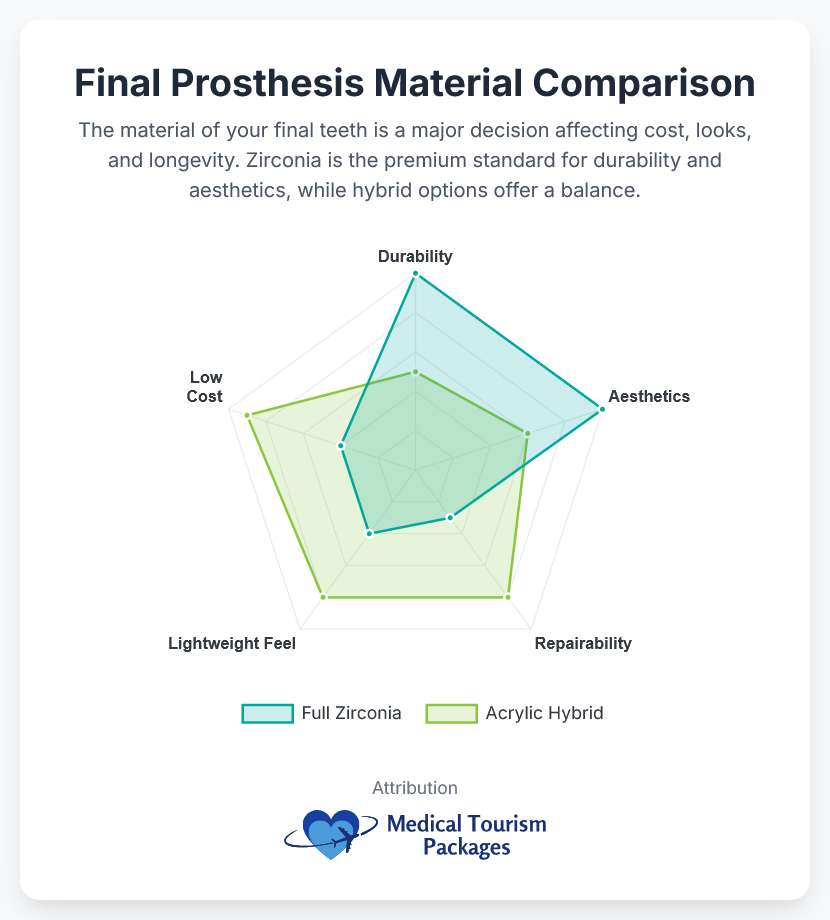
The materials used for All-on-4 permanent teeth affect cost, durability, and look. There are four common options, from budget acrylic hybrids to premium zirconia. Your dentist helps you pick the best fit for your case.
How Do the Four Material Options Compare?
Here is how the four All-on-4 prosthesis materials compare on cost, lifespan, and best use:
| Material | Cost | Lifespan | Best For |
|---|---|---|---|
| Acrylic-Titanium Hybrid | $5,000-$8,000 | 7-10 years | Budget-conscious patients |
| PMMA Milled | $7,000-$10,000 | 10-12 years | Mid-range budget |
| Nano-Ceramic (Crystal Ultra, Trilor) | $10,000-$15,000 | 12-15 years | Natural feel, 60% lighter than zirconia |
| Full Monolithic Zirconia | $12,000-$20,000 | 15-20+ years | Maximum durability |
Acrylic hybrids and PMMA are lightweight and easier to repair. Zirconia is the most durable but heavier and harder to fix, often needing full replacement.
What Are the Risks and Success Rates of All-on-4 Implants?
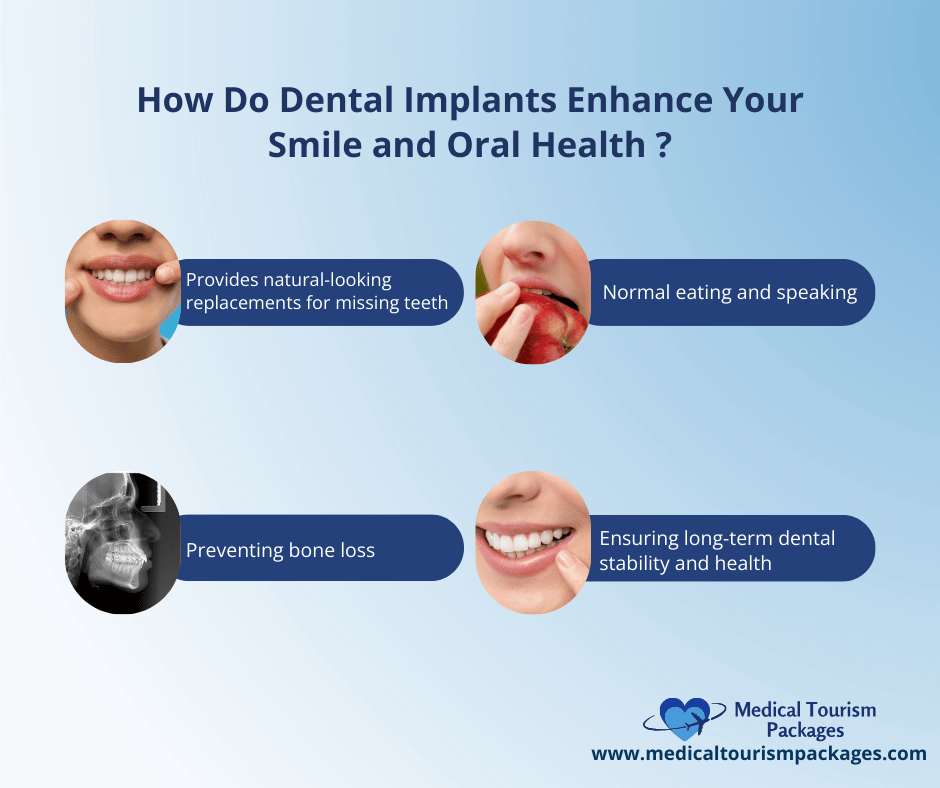
All-on-4 implants have strong long-term outcomes, but they carry real surgical and long-term risks. According to the Malo Clinic long-term study, implant survival is 91-93% at 10-18 years. Experienced surgeons and good patient hygiene drive the best results.
What Is the Long-Term Success Rate?
The long-term success rate is high. The Malo Clinic long-term study reports implant survival of 91-93% at 10-18 years and prosthesis survival of about 98.8% at 18 years. Outcomes depend on the surgeon’s experience, proper case selection, and daily oral hygiene.
What Are the Surgical and Long-Term Risks?
The main risks are surgical and long-term complications. These are usually manageable with proper protocols and an experienced surgeon:
- Surgical risks: infection, implant failure, nerve injury, excess bleeding, and sinus issues for upper-jaw implants.
- Temporary teeth issues: possible fractures in the first months, a strict soft-food diet, and temporary speech changes.
- Long-term challenges: bone loss around implants (peri-implantitis) without good hygiene, and difficulty finding home follow-up care.
Most US dental specialists will not treat implants placed by another surgeon, mainly due to liability. With over a thousand implant systems worldwide, confirm your home dentist can support your specific brand.
How Do You Choose a Safe All-on-4 Clinic Abroad?
You choose a safe All-on-4 clinic abroad by checking the package contents, watching for red flags, and confirming quality indicators. Focus on transparent pricing, recognized implant brands, and proper accreditation before you book.
What Should a Good Package Include?
A good package should cover the full first trip and clear support. Confirm these items are included in writing:
- Consultation, 3D imaging, and surgical fees
- Anesthesia, temporary bridge, and medications
- Daily check-ups, airport transfers, and emergency support
Always request a clear list of what is NOT included, such as bone grafting or the permanent teeth, to avoid surprise costs.
What Red Flags Should You Avoid?
You should avoid clinics that show these warning signs, which often point to low quality or hidden costs:
- Prices under $5,000 per arch, or single-trip promises for permanent teeth
- No mention of temporary versus permanent teeth, or missing implant brand details
- Booking pressure, no written complication policy, or no discussion of extra costs
What Quality Indicators Should You Look For?
You should look for board-certified surgeons with implant specialization and international training. The facility should use 3D imaging, surgical guides, and CAD/CAM systems, plus premium brands like Nobel Biocare, Straumann, Zimmer, or Osstem.
Check for JCI, ISO, or national accreditations, and request before-and-after case documentation with realistic timelines. In Medellín, Dr. María Gómez brings 12+ years of specialized implant experience. Each provider in our network is verified for credentials and patient outcomes.
What Questions Should You Ask About Teeth in a Day?
How long do temporary teeth last?
Temporary teeth last 3-6 months, the standard healing window. With strict diet compliance, some patients extend that to 12 months. They should never be considered permanent.
Can I get permanent teeth in one day?
No, you cannot get permanent teeth in one day. Osseointegration, the fusion of implant and bone, takes 3-6 months. Surgery-day teeth are always temporary acrylic designed for the healing phase.
What happens if temporary teeth break while abroad?
If temporary teeth break while abroad, reputable clinics include repair coverage during your stay. After you return home, repairs typically cost $200-$500 per incident at a local dentist.
How many trips are needed for All-on-4?
All-on-4 needs a minimum of two trips:
- Trip 1 (7-14 days): implant surgery and temporary bridge placement.
- Trip 2 (3-5 days, 3-6 months later): permanent bridge delivery.
- Optional Trip 3: only for complex cases like bone graft follow-up.
What is the total cost of All-on-4 including hidden expenses?
The total cost per arch, before travel and hidden extras, is roughly:
- Mexico: $6,000-$10,000 per arch (50-83% savings)
- Colombia: $7,000-$11,000 per arch (45-80% savings)
- Costa Rica: $8,500-$12,750 per arch (36-76% savings)
- Panama: $10,000-$15,000 per arch (25-71% savings)
- United States: $20,000-$35,000 per arch (baseline)
Why do dentists refuse to treat dental-tourism implants?
Dentists refuse to treat dental-tourism implants because of liability concerns. They have no control over the original surgery. Without full documentation and manufacturer support, taking on that risk is legally unsound.
What foods can I eat with All-on-4 temporary teeth?
With All-on-4 temporary teeth, your diet changes over time:
- Month 1: liquids and purées only
- Months 2-3: soft foods like scrambled eggs, fish, and pasta
- Avoid: hard, crunchy, or chewy items until the permanent bridge is placed
Does insurance cover All-on-4 dental implants?
Insurance coverage for All-on-4 is minimal. Most dental plans cap benefits at $1,500-$2,000 per year, a fraction of the total cost. Most patients rely on savings or financing to pay for treatment.
What is the success rate of All-on-4 implants?
The success rate is high. According to the Malo Clinic long-term study, implant survival is 91-93% at 10-18 years and prosthesis survival is about 98.8% at 18 years. Outcomes depend on experienced surgeons, proper case selection, and patient hygiene.
Can I vacation after All-on-4 surgery?
Yes, you can vacation after All-on-4 surgery, but wait at least 7 days. Sightseeing right away risks bleeding, swelling, and implant failure. Save tourism for the return trip when your permanent teeth are fitted.
Ready to Start Your All-on-4 Journey Abroad?
Medical Tourism Packages coordinates All-on-4 medical travel in Mexico, Colombia, Costa Rica, Panama, and Argentina.
Contact us today for a free consultation and personalized All-on-4 quote.