Book Appointment Now



What is a Medical Tourism Agent in Panama? Your Guide to Seamless Travel
 By
By
Traveling abroad for medical care requires careful planning. Panama has become a notable destination for medical tourism. Many international patients visit Panama each year, especially from North and South America and the Caribbean. It is important to note, however, that unlike some neighboring countries, Panama’s government stopped actively promoting medical tourism as an official strategy in late 2020 (Source: LaingBuisson News). Planning often relies on private providers and independent research.
Why choose medical tourism in Panama? Key reasons include:
- Quality Healthcare: Access to modern private facilities, many holding international Joint Commission International (JCI) accreditation.
- Lower Costs: Potential savings of 50-70% or more compared to US prices for certain procedures.
- Skilled Professionals: Well-trained doctors and specialists are available, many US or European-trained and bilingual (English/Spanish).
- Popular Procedures: Panama is known for advanced dental work (like implants and restorations) and cosmetic surgery, alongside other specialized care available in top private hospitals.
This guide provides information for planning medical tourism in Panama. It focuses on understanding the role of Medical Tourism Agents who can assist in this process.
What is a Medical Tourism Agent?
A Medical Tourism Agent is an important link in the medical tourism sector. They connect patients seeking medical treatments abroad with available international healthcare services, similar to what a medical tourism facilitator does. These agents help simplify the process of getting medical care in another country. They handle issues like unfamiliar healthcare systems, language barriers, and logistical problems. Their main goal is to help people access high-quality, affordable medical treatments overseas. These treatments might be unavailable or too expensive in a patient’s home country.
These agents understand the global healthcare landscape. They know the accreditation standards of foreign medical facilities and the qualifications of healthcare providers abroad. They also know the details of medical procedures offered internationally. They provide a complete service covering treatment options, travel and accommodation logistics, and communication between the patient and the overseas healthcare provider. This full service ensures patients are informed, comfortable, and receive continuous care during their medical journey abroad.
Medical tourism agents show healthcare is becoming more global. There is also a rising demand for accessible, affordable medical treatments across borders. They serve many clients. Some seek elective procedures or cosmetic surgeries. Others need complex medical treatments not covered by insurance or facing long waits at home. Using their knowledge and contacts, medical tourism agents can greatly improve the patient’s experience and outcomes. This shows their important role in the international healthcare industry.
Why use Medical Tourism Agents in Panama?
Choosing Medical Tourism Agents in Panama offers several potential benefits for people seeking affordable healthcare solutions outside their home country. Panama is a top choice as a medical tourism destination, as outlined in our complete guide for American medical tourists in Panama. It offers potentially large cost savings in its private healthcare sector compared to costs in North America or Europe. These savings should be carefully checked, as we’ll discuss later. Panama also offers access to specialized treatments and comprehensive treatment plans that bundle medical care with travel arrangements, plus the unique chance to combine treatment with a vacation in a beautiful setting.
First, the potential cost savings on medical procedures in Panama can be large compared to expenses in North America and Europe. Medical tourism agents in Panama often have connections with accredited hospitals and skilled healthcare providers. They aim to ensure patients receive quality care at much lower prices.
This affordability, particularly in Panama’s top private hospitals, generally does not mean lower quality. This is especially true in facilities meeting strict international standards. Through their networks with respected healthcare facilities, often those holding Joint Commission International (JCI) accreditation, good agents connect patients with care that meets high global standards. This provides value for money and good health outcomes.
Moreover, Panama provides access to many specialized treatments. Patients might need elective surgery, dental work, or more complex medical care. Agents use their knowledge to connect patients with experienced specialists and top-tier facilities. Their knowledge of Panama’s healthcare scene helps create suitable treatment plans for each patient’s needs.
Joint Commission International (JCI) accreditation is a key quality indicator for these facilities. It shows a facility meets high global standards for patient safety and care. Many facilities also maintain ISO standards certification for quality management. Good agents prioritize working with JCI-accredited facilities or those showing similar international quality standards.
For example, facilities like Hospital Punta Pacífica (affiliated with Johns Hopkins Medicine International and JCI-accredited), Clinica Hospital San Fernando (affiliated with US hospitals like Tulane and Baptist Health South Florida, also JCI-accredited), Hospital Nacional (one of Panama’s premier private hospitals), and Centro Medico Paitilla (another leading medical facility with international affiliations including Cleveland Clinic collaborations) show the high standards available.
These top facilities often feature advanced technology, like robotic surgery systems (e.g., Hugo™ RAS at Pacífica Salud). They also employ US or European-trained doctors, many who are US trained specifically, often bilingual (English/Spanish) medical staff. Many facilities maintain modern healthcare facilities that meet US standards of care.
Beyond general capabilities, Panama is also known for specific fields. Many international patients travel for advanced dental work and dental treatments, including implants and full mouth restorations, often citing both cost and quality. Cosmetic surgery is another popular area, with skilled surgeons available for various procedures. Additionally, Panama offers specialized services in cardiology, dermatology, assisted reproduction (fertility treatments and IVF), and therapeutic treatments. Researching specific clinics and doctor credentials within these fields is important.
Lastly, the chance to combine medical treatment with a vacation is a unique benefit of choosing Panama. With beautiful landscapes, a rich culture, and a warm climate, patients can enjoy a recovery holiday. Medical tourism agents in Panama can help arrange travel and accommodation plans for medical tourists, aiming for a smooth and relaxing experience.
Cost savings on medical procedures
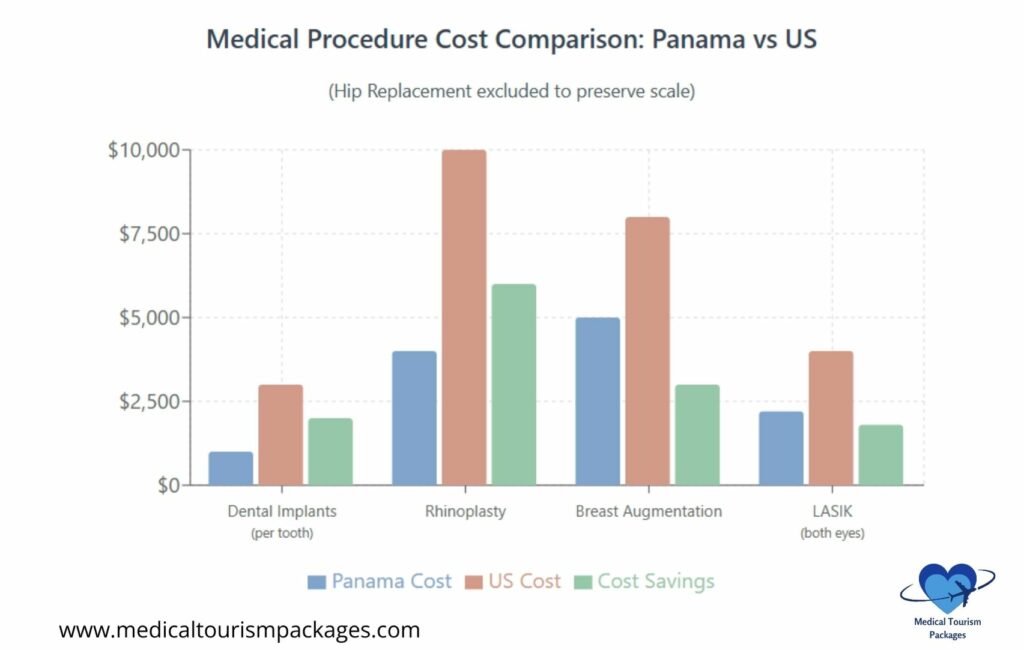
The attraction of potential cost savings on medical procedures draws many people to consider medical tourism in Panama. The country offers many medical treatments found in North America and Europe, often at a lower cost in its private facilities.
| Procedure | Approx. Cost in Panama (USD) | Approx. Cost in US (USD) | Potential Savings |
| Hip Replacement | ~$5,000 | $28,000 – $57,000+ | Significant |
| Dental Implants (per tooth) | ~$900 – $1,500 (+ crown) | $2,500 – $5,000+ (excl. crown) | Significant |
| Cataract surgeries | ~$1,500 – $2,500 per eye | $3,500 – $7,000+ per eye | 50-65% |
| General dentistry | ~$50 – $150 | $200 – $400+ | 60-75% |
Source Note: Cost estimates are approximate. Always obtain direct quotes.
For patients considering joint procedures, MTP coordinates orthopedic surgery options across Latin America with significant cost savings.
Access to specialized treatments
Panama provides access to specialized treatments in its top private medical centers, particularly in fields like dentistry and cosmetic surgery. Patients considering dental implants abroad can benefit from Panama’s specialized dental clinics. Medical tourism agents use their full understanding of the local healthcare system to connect patients with top specialists. They help arrange treatment plans for elective procedures, standard surgical procedures, dental care, or complex medical needs including internal medicine consultations and full body MRI scans in Latin America. This personalized approach helps ensure patients receive the best possible care for their unique health requirements. (See details on JCI accreditation, hospital affiliations, technology, and staff qualifications mentioned previously).
Combining treatment with vacation
Combining treatment with vacation is a unique advantage of medical tourism in Panama. Panama’s beautiful landscapes, vibrant culture, and warm climate make it a perfect recovery destination. Medical tourism agents can organize travel and accommodation plans for both medical and leisure needs. This smooth connection of healthcare and vacation offers a healing and enjoyable recovery experience.
| Vacation Activity | Description | Recommended for Patients |
| Beach Resorts in Bocas del Toro | Relaxing beachside resorts good for post-treatment recovery | Low mobility patients, Cosmetic surgery recovery |
| Boquete Mountain Retreats | Quiet mountain lodges offering fresh air and calm | Patients recovering from major surgery |
| Panama City Cultural Tours | Light walking tours exploring Panama City’s history and culture | Dental work, minor surgical procedures |
| San Blas Islands Sailing Trips | Gentle sailing trips in the calm San Blas waters | General health, pre-treatment relaxation |
Services offered by Agents in Panama
Medical tourism agents in Panama offer a full range of services to simplify the medical travel process. They aim for a smooth experience for patients seeking healthcare abroad. These services are carefully planned to cover every part of the medical journey. They focus on both healthcare quality and the overall patient experience.
MTP facilitates the entire medical travel process, from initial consultation to post-procedure follow-up.
Finding doctors and hospitals
Medical tourism agents in Panama help find doctors and hospitals known for excellent work in various medical fields. This service matches patients with healthcare providers who are leaders in their fields and right for the patient’s specific healthcare needs.
- Specialization in various medical fields: These agents have a large network of medical professionals and specialists. This covers many healthcare needs, from elective surgeries to complex treatments including cardiology, dermatology, assisted reproduction, and therapeutic treatments. This range of specialties ensures patients receive care from experts in their medical field.
- Accreditation and international standards: A key part of their service is ensuring providers meet strict standards, like Joint Commission International (JCI) accreditation. Good agents in Panama work mostly with JCI-accredited hospitals and accredited hospitals recognized by global organizations or those showing similar standards. This ensures patients receive world-class care at medical facilities that maintain international quality standards.
Travel and accommodation arrangements
Arranging travel and accommodation is a core service. These arrangements are carefully planned for each patient’s medical and personal needs. Agents create personalized travel plans and book accommodations focusing on convenience and comfort.
- Personalized travel itineraries: Travel plans are carefully designed around the patient’s medical schedule. This ensures a smooth connection between travel, treatment, and recovery. This planning reduces stress and makes efficient use of time.
- Accommodation close to medical facilities: Choosing accommodation near medical facilities is important. It reduces travel stress and allows more time for rest. Agents select places offering a comfortable stay and easy access to treatment centers for an easy experience. (See Accommodation details under ‘Planning Your Arrival and Stay’)
Medical appointment coordination
Medical appointment coordination is a key service that simplifies the patient’s healthcare experience. Agents arrange all medical consultation appointments and treatments carefully, coordinating with various medical fields as needed.
- Scheduling before arrival: Scheduling appointments before the patient arrives ensures a treatment plan is ready. Planning ahead helps reduce wait times and organizes a smooth treatment flow.
- Adjustments based on recovery: The treatment schedule can change based on the patient’s recovery progress. Agents work with medical professionals to adjust the treatment plan as needed. They prioritize the patient’s health and recovery at every step.
Choosing a Medical Tourism Agent

Selecting the right Medical Tourism Agent is a key decision for anyone considering medical treatment abroad, particularly in Panama. The best agents show professionalism, transparency, and commitment to high standards.
Certifications and affiliations
Agents with international certifications (like those from the Medical Tourism Association) and memberships in respected global medical tourism groups can show a focus on quality and connection within the global healthcare community. They often work with facilities that maintain quality standards including JCI accreditation and ISO certifications.
| Certification/Affiliation | Description | Benefit to Patient |
| International Medical Tourism Certification | Shows adherence to global standards in medical tourism practices. | May ensure higher quality service and ethical treatment planning. |
| Memberships in Global Medical Tourism Bodies (e.g., MTA) | Shows ongoing engagement with the community and commitment to best practices. | Suggests up-to-date knowledge and standards in care and tourism. |
Important Note: While international certifications can indicate professionalism, research found no evidence of specific Panamanian government regulations or licensing requirements for medical tourism agents themselves, beyond general business laws. The Ministry of Health regulates healthcare facilities and medical professionals, but not tourism facilitators directly. Therefore, carefully checking agents based on their track record, transparency, client reviews (knowing they might be biased), and the quality of their partner facilities is important.
Reviews and references
Checking an agent’s reputation through online testimonials and ratings gives useful information about past clients’ experiences. Direct references from past clients can give more detailed, personal information about the agent’s abilities and service level.
| Source | Purpose | How to Use |
| Online Testimonials and Ratings (e.g., Trustpilot, Google Reviews) | To check the agent’s reliability and customer satisfaction levels. | Review many testimonials to assess overall satisfaction and any common issues. |
| Direct References from Past Clients | To get firsthand accounts of the agent’s service quality. | Request contact information for past clients (with their permission) to discuss experiences directly. |
Be aware that finding independent, unbiased patient reviews about Panamanian medical tourism can sometimes be hard online. Be critical of testimonials on agents’ or clinics’ promotional websites. Try to find diverse feedback sources if possible.
Range of services
The range of services an agent offers is also an important point. A full approach, including finding the right healthcare provider and post-treatment recovery support, shows a full commitment.
| Service | Description | Importance |
| Comprehensive Care Coordination | Organizes all parts of the medical journey: appointments, travel, accommodations. | Ensures a smooth and stress-free experience for the patient. |
| Post-Treatment Recovery Support | Includes follow-up care plans and help with any post-treatment issues. | Important for a successful recovery and patient peace of mind. |
Choosing the right medical tourism agent involves carefully evaluating their reputation, transparency, partner facilities’ quality, and services. A good agent can be helpful for improving the medical travel experience.
What Are the Benefits of Using a Medical Tourism Facilitator?
Using a Medical Tourism Agent for treatment abroad, particularly in Panama, can offer many advantages. It can make a challenging task more manageable.
Streamlined planning
Easier planning is a key benefit. These professionals can handle the careful organization of the medical journey. This includes finding suitable healthcare providers and coordinating appointments, travel, and accommodations. This full planning allows patients to focus their energy on health and recovery.
Cost savings
Potential cost savings are a major advantage. An agent’s understanding of Panama’s healthcare landscape helps them find affordable treatment options without lowering quality. Skilled agents might negotiate costs and use their network of accredited facilities to ensure patients get top medical care at much lower prices than at home (refer to sourced cost table above).
Support throughout the journey
The support medical tourism agents provide can be very helpful. From planning to post-treatment recovery, agents can always be available to help. They can answer questions, assist with unexpected problems, and help ensure a smooth, comfortable treatment experience. This continuing support from a trustworthy agent reduces stress and greatly helps the success and satisfaction of the medical travel experience.
A Typical Patient Journey Example
Consider a typical example: A patient from Canada needs extensive dental work. They might contact an agent, receive treatment options from dentists at JCI-accredited clinics in Panama City, book a package including flights and a recovery apartment, fly into PTY, undergo the procedures, recover for ten days enjoying light local activities, have final check-ups, and return home with coordinated remote follow-up. This illustrates how an agent can coordinate the different parts of the trip.
What Are the Risks of Medical Tourism in Panama?
While the benefits are attractive, potential risks should be considered. Patients need to understand these before starting medical travel.
Quality of care concerns
Quality of Care: Top private hospitals in Panama often meet high global standards, especially those with JCI accreditation. However, quality can vary greatly between facilities. It is important to check a facility’s current accreditation status directly. For example, check the JCI website or ask the provider for proof of relevant certifications.
| Factor | Importance | Description |
| Hospital accreditation | Key indicator of quality | Shows a facility meets strict standards set by international groups (like JCI), ensuring higher care/safety. |
| Doctor certifications | Validates expertise | Confirms doctors have proper training and education for specialized care. Ask for specifics. |
Communication barriers
Communication barriers are a major challenge. Language differences can cause misunderstandings. Cultural differences can affect comfort. However, many of Panama’s private facilities cater to global audiences and international patients.
| Barrier | Impact | Solution |
| Language differences | Can prevent clear communication, leading to possible mistakes. | Use interpreters or bilingual staff (often available in top private facilities). |
| Cultural misunderstandings | Can affect the patient-provider relationship, possibly causing discomfort. | Agents might offer cultural information; choosing facilities used to international patients helps. |
Legal and ethical considerations
Legal and Ethical Considerations: This is an important area to understand. Legal options for medical malpractice in Panama are usually much more limited and complex than in countries like the US. Patients might have trouble suing due to location issues, different legal processes, and possibly lower provider liability limits than at home. Basic patient rights like informed consent apply. Panama also legally recognizes advance directives like appointing a medical proxy (Source: Kraemer & Kraemer Law). However, options for payment if things go wrong are different and need careful thought. Discuss liability insurance with the provider.
| Consideration | Challenge | Navigation |
| Patient rights abroad | Legal protections for malpractice may be limited/complex. | Agents should guide on local laws; consider legal advice if concerned. |
| Ethical standards | Variations can affect care received. | Agents should ensure facilities follow ethical standards matching international norms. |
Careful research, selecting good agents and JCI-accredited facilities, clear communication, and full insurance are key steps to reduce these risks.
How Do You Prepare for a Medical Trip to Panama?
Preparing for a medical trip is an important phase requiring careful planning.
Selecting a reputable Agent
First, select a good Medical Tourism Agent (if using one). Research their track record carefully, check reviews critically, and assess their network of medical providers. (Remember the lack of specific Panamanian regulation for agents).
Understanding the procedure and risks
Getting a full understanding is very important. Ask specific questions:
| Questions to Ask | Description |
| What is the procedure? | Get a detailed explanation. |
| What are the risks and complications? | Understand potential problems. |
| What is the success rate (at this facility/with this doctor)? | Ask about specific results to set realistic expectations. |
| What is the recovery time and limitations? | Ask about the expected time and restrictions. |
| Are there pre or post-procedure requirements? | Learn about needed preparations and aftercare. |
| Is this hospital/clinic currently JCI-accredited? | Check quality standards. |
| What are the qualifications/board certifications of my surgeon/doctor? | Confirm expertise. |
| What is the process/who covers costs if complications arise during/after my stay? | Understand backup plans. |
| How is follow-up care handled once I return home? | Clarify post-trip support. |
| Do you offer alternative medicine options? | Ask if interested in complementary treatments. |
| Are your doctors board-certified? | Confirm professional qualifications. |
Planning Your Arrival and Stay in Panama
- Arrival: Most international patients fly into Tocumen International Airport (PTY) near Panama City. Arrange transport to your hotel or clinic beforehand; transportation options include airport taxis, pre-booked services, Uber, or transfers arranged by your agent. Many medical tourism arrangements include airport transportation.
- Accommodation: Panama City offers many hotels and serviced apartments suitable for recovery, especially in areas near major clinics like Punta Pacífica and San Francisco. Consider options with kitchenettes or easy access to food delivery.
- Payments: Panama uses the US dollar as its official currency, making transactions easier for American visitors. Top clinics usually accept major credit cards and wire transfers. Many facilities offer comprehensive medical tourism plans that bundle procedures, accommodation, and transportation. Confirm payment methods and schedules in advance. Inform your bank about your travel plans to avoid card issues. Some procedures may be covered by insurance companies, though coverage varies.
Travel documents and insurance
Ensure all travel documents (passport, visa if needed for your nationality) are ready. Get full insurance.
| Document/Insurance Type | Purpose | Notes |
| Visa and Permits | Legal entry and stay for medical reasons | Check specific requirements for Panama based on your nationality and stay length. Many tourists do not need a visa for short stays. |
| Medical Insurance | Covers treatment and unexpected medical costs | Ensure your policy clearly covers medical treatment received internationally. This includes potential complications from the procedure and medical repatriation (transport back home if needed). Check with insurance companies about coverage for planned medical procedures abroad. |
| Travel Insurance | Covers travel issues (cancellations, delays, lost luggage etc.) | Choose a policy that adds to your medical coverage. |
Note that a past Panamanian government program offering free 30-day emergency insurance for tourists ended several years ago (Source: playacommunity.com). Panama has both private healthcare (used by medical tourists) and a public Social Security Fund system for residents.
Recovery period expectations
The recovery period requires focus on healing and comfort. Panama City’s modern areas offer a comfortable recovery setting. You can find pharmacies with bilingual staff, accessible shopping malls, and food delivery services. Once cleared by your doctor, gentle activities like walking along the Cinta Costera (a coastal parkway) can aid recovery.
Follow-up care arrangements
Follow-up care plans play a key role. On-site follow-up appointments are important for monitoring progress. Remote consultations after returning home offer continuing support, but clarify how they work and any costs.
Recreational activities for recovery
Adding suitable recreational activities can improve well-being. Participating in light, tourist-friendly activities, chosen based on medical advice, can help recovery and boost mental health. (See table earlier for examples).
Support services from the Agent
Support services from a trustworthy Agent are very helpful during this time. 24/7 contact availability provides security. Agents should be ready to offer help with any complications, giving important support. Communication during recovery is often easier in major private hospitals, as staff serving international patients are frequently bilingual (English/Spanish).
Frequently Asked Questions
What is a Medical Tourism Agent?
A Medical Tourism Agent is a person or company helping patients arrange medical treatments abroad. They connect patients with healthcare providers, coordinate travel and accommodation, and help communication. They aim to make medical travel easier and possibly more affordable.
Why choose a Medical Tourism Agent in Panama?
Agents specializing in Panama can give access to affordable, high-quality private medical care while handling logistics. They use knowledge of local accredited providers (like JCI-accredited hospitals) and can help manage the process. This allows patients to focus on treatment and recovery in a nice location. Remember, there’s no specific government regulation for these agents in Panama, so choose carefully.
How much can I save on medical procedures in Panama?
Savings can be large compared to US costs, possibly 50-70% or more for some procedures in top private facilities. For example, recent estimates suggest hip replacements might be around $5,000 vs $28k+, and dental implants around $1,000-$1,500 (plus crown) vs $2.5k+ (excluding crown) per tooth. However, costs vary greatly. This depends on the hospital, doctor, procedure complexity, and current exchange rates. Always get detailed, direct quotes.
What are the risks of medical tourism?
Risks include different healthcare standards (check accreditation like JCI), possible communication barriers (though often reduced in top facilities), travel health risks, problems with follow-up care, and importantly, legal options for medical malpractice may be more limited in Panama than at home. Full insurance and careful research are essential.
How do I choose the right medical tourism agent?
Look for agents with a strong track record, positive client reviews (checking them carefully), and partnerships with high-quality, accredited medical facilities (check accreditation yourself). Check for clear pricing, personalized services, and full support. Remember to check their claims and partner facilities yourself, especially since there are no specific Panamanian government regulations or licenses for medical tourism agents.