Book Appointment Now




Knee Replacement in Panama | Affordable Orthopedic Surgery with Trusted Surgeons
 By
By
Knee replacement in Panama saves 50-75% compared to US prices, with JCI-accredited hospitals in Panama City performing procedures using FDA-approved implants and US-trained orthopedic surgeons.
A total knee replacement in Panama costs $7,000-$12,000 versus $35,000-$60,000 in the US. JCI-accredited hospitals like Hospital Punta Pacifica (Johns Hopkins affiliate) and Clinica Hospital San Fernando offer robotic-assisted surgery with English-speaking surgeons like Dr. Salomon Dayan.
Our network connects you with board-certified orthopedic surgeons across Panama City’s top hospitals. Each facility is verified for JCI accreditation, surgeon credentials, and patient outcomes. Below, you’ll find cost breakdowns, procedure details, surgeon profiles, and recovery options.
What Is Knee Replacement Surgery?
Knee replacement surgery is a procedure that relieves pain and restores function in damaged knee joints. Surgeons remove damaged bone and cartilage from your thighbone, shinbone, and kneecap. They replace these parts with artificial components made of metal alloys and medical-grade plastics.
The surgery helps people with severe arthritis or joint disease return to normal activities. Doctors recommend it when medication, physical therapy, and walking aids no longer provide relief. Modern surgical techniques make knee replacement highly successful for improving mobility and quality of life.
What Is Total Knee Replacement?
Total knee replacement resurfaces all parts of your damaged knee joint. Surgeons in Panama City remove damaged cartilage and bone from your femur and tibia. They replace these surfaces with metal and medical-grade plastic implants. The kneecap may also be resurfaced.
This procedure relieves pain and restores normal knee function. Patients can return to daily activities with greater comfort. Hospitals like Punta Pacifica and San Fernando use advanced techniques for best results.
What Is Partial Knee Replacement?
Partial knee replacement treats damage in only one compartment of your knee. Surgeons replace only the damaged portion. They preserve healthy bone, cartilage, and ligaments. This approach works well for patients with localized osteoarthritis.
Recovery is typically faster than total knee replacement. Patients report less post-operative pain and a more natural feeling knee. Panama City orthopedic surgeons assess each case to determine if partial replacement is right for you.
How Does Robotic-Assisted Knee Surgery Work?
Robotic-assisted knee surgery uses robotic arm technology for precise implant placement. Surgeons at Hospital Punta Pacifica in Panama City create a personalized plan using CT scans. The robotic system maps your unique anatomy before surgery.
During the procedure, the robotic arm provides real-time guidance for accurate bone cuts. This leads to better implant positioning and potentially faster recovery. Ask our team if robotic surgery is available for your condition.
What Physical Therapy and Recovery Support Is Available?
Physical therapy begins within 24 hours after your surgery in Panama City. Experienced therapists guide you through early exercises. Programs focus on reducing pain, restoring movement, and strengthening muscles around your new knee.
We provide detailed exercise plans for your stay in Panama. Our team can coordinate with your home therapist for continued care. Effective rehabilitation helps you return to mobility and daily activities quickly.
How Much Does Knee Replacement Cost in Panama?
Knee replacement in Panama costs $7,000-$12,000 for the surgery alone. Complete treatment programs range from $10,000-$15,000. This includes surgeon fees, hospital stay, anesthesia, and implants. The same procedure costs $35,000-$60,000 in the United States.
You save 50-75% compared to US prices. Even with airfare and a two-week hotel stay, total costs remain well below US prices. Panama’s dollarized economy means no currency exchange risks for American patients.
| Expense Category | Average Cost in Panama | Average Cost in the US |
|---|---|---|
| Surgery Fees | $7,000 – $12,000 | $35,000 – $60,000 |
| Hospital Stay (per day) | $300 – $500 | $2,000 – $5,000 |
| Physical Therapy (per session) | $40 – $70 | $150 – $350 |
| MRI Imaging | $400 – $700 | $1,200 – $3,500 |
How Do Costs Compare to the US?
Costs compare favorably across every category:
- Surgery fees: 65-80% lower than US prices.
- Hospital stays: 85-90% less per day than US hospitals.
- Physical therapy: 70-80% cheaper per session than American clinics.
Panama City hospitals offer bundled pricing with no surprise bills. US hospitals often send separate invoices for surgeons, anesthesia, facilities, and implants. Panama’s transparent pricing helps you budget accurately before travel, though some patients also compare with knee replacement surgery in Colombia for pricing and surgeon depth.
| Feature | Panama | USA |
|---|---|---|
| Avg. Cost (USD Estimate) | $10,000 – $15,000 | $35,000 – $50,000+ |
| Hospital Type | Private (JCI-accredited) | Private / Public |
| Primary Language Support | English & Spanish | English |
| Typical In-Country Stay Post-Op | 10-14 days | 2-5 days (hospital only) |
Why Choose Panama for Knee Replacement Surgery?
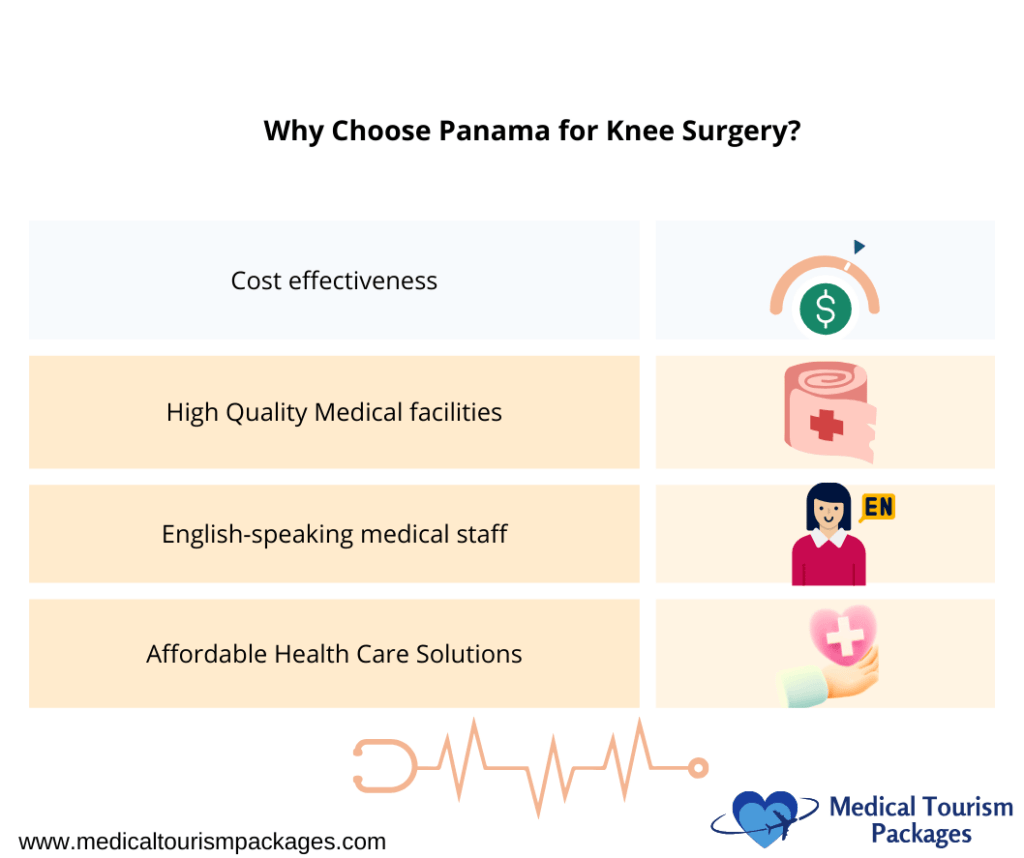
Panama offers affordable knee surgery without sacrificing quality. The country has JCI-accredited hospitals with US-trained surgeons. English-speaking staff make communication easy throughout your medical journey.
As a medical tourism destination, Panama combines cost savings with clinical quality that matches top US centers.
Panama City’s medical facilities use state-of-the-art technology. They follow international healthcare standards. The dollarized economy eliminates currency exchange risks for American patients seeking orthopedic surgery options abroad.
Which Hospitals in Panama Have JCI Accreditation?
The best hospitals in Panama City hold JCI accreditation from Joint Commission International. This gold-standard certification means they meet rigorous patient safety and quality care standards. JCI-accredited facilities undergo regular evaluations.
| Hospital Name | Accreditations |
|---|---|
| Hospital Punta Pacifica | JCI (Joint Commission International) |
| Clinica Hospital San Fernando | JCI (Joint Commission International) |
| Centro Medico Paitilla | JCI and ISO 9001:2000 |
For more details on hospital quality, see our complete guide to medical tourism in Panama.
Do Panama Hospitals Have English-Speaking Staff?
Yes, Panama City hospitals have English-speaking medical staff. The Panama Canal Zone history created strong cultural ties with the United States. Many doctors trained in US medical schools and speak fluent English.
This eliminates language barriers during consultations, surgery, and recovery. You can discuss treatment plans and post-operative care in English. International patient offices help coordinate all aspects of your visit.
| Hospital/Clinic Name | English-speaking Staff Availability |
|---|---|
| Hospital Punta Pacifica | High |
| Clinica Hospital San Fernando | Moderate |
| Centro Medico Paitilla | High |
Which Hospitals and Surgeons Perform Knee Replacement in Panama?
The best hospitals for knee replacement in Panama City include Hospital Punta Pacifica and Clinica Hospital San Fernando. Both hold JCI accreditation. Hospital Punta Pacifica partners with Johns Hopkins Medicine International for clinical protocols.
Choosing the right surgeon requires checking credentials and experience. Look for board-certified orthopedic surgeons with fellowship training in joint replacement, and review our full guide to orthopedic surgery in Panama. Our partner surgeons perform hundreds of knee replacements annually.
What International Accreditations Should You Look For?
You should look for JCI accreditation from Joint Commission International or ISO certification. These standards show a hospital meets rigorous criteria for patient safety and quality care. Panama City has multiple JCI-accredited facilities.
Hospital Punta Pacifica’s Johns Hopkins affiliation means they follow US-level clinical protocols. Clinica Hospital San Fernando partners with Tulane University and Baptist Health International. These affiliations ensure continuous medical education for staff, similar to the standards patients find when considering orthopedic surgery in Colombia.
How Can You Evaluate a Surgeon’s Expertise?
You can evaluate a surgeon by checking their training, certifications, and surgical volume. Look for fellowship training in joint reconstruction. Membership in the American Academy of Orthopaedic Surgeons (AAOS) indicates quality credentials.
Ask about the number of knee replacements they perform yearly. High-volume surgeons generally have better outcomes. Dr. Salomon Dayan trained at the Hospital for Joint Diseases in New York. Dr. Jose Felix Castillo completed fellowships in Colombia and the US, and many of the same specialists also perform shoulder surgery in Panama.
Where Can You Find Real Patient Feedback?
Real patient feedback is available on platforms like Healthgrades, Medigo, and RealSelf. Medical tourism forums and social media groups share firsthand experiences. These reviews help you understand what to expect from surgery in Panama.
Our patient coordinators can connect you with past patients willing to share their stories. Reading testimonials helps you make an informed decision about your surgeon and hospital choice.
What Should You Do Before Surgery in Panama?
Before surgery, you should gather medical records and complete required tests. Your surgical team in Panama City needs to assess your health status. Proper preparation helps customize your surgery plan and reduces risks.
Follow dietary and medication guidelines provided by your surgeon. Arrange accommodations close to your hospital in Panama City. Planning ahead ensures a smooth medical journey.
What Medical Documents and Tests Do You Need?
You need a complete medical history and recent imaging of your knee. Blood tests, cardiac evaluation, and clearance letters from your doctor are required. These documents help your Panama City surgeon plan your procedure.
| Document/Test Type | Description | Purpose |
|---|---|---|
| Medical History | Past and current medical conditions | Helps surgical team understand your health background |
| Blood Tests | CBC, blood typing, clotting factors | Assesses overall health and identifies surgical risks |
| Imaging Studies | X-rays, MRI, or CT scans of the knee | Evaluates knee damage and guides surgical approach |
| Cardiac Evaluation | ECG and stress test if needed | Confirms heart health for surgery |
| Clearance Letters | From primary care physician or specialists | Confirms suitability for knee replacement |
What Dietary and Medication Guidelines Should You Follow?
You should avoid foods and supplements that affect blood clotting. Stop taking vitamin E, garlic supplements, and green tea before surgery. Your surgeon will provide specific timelines for dietary restrictions.
- Dietary Restrictions: Avoid foods that affect blood clotting like vitamin E, garlic supplements, and green tea.
- Medication Adjustments: Pause blood thinners like warfarin under your doctor’s guidance. Tell your surgical team about all medications and supplements.
How Should You Arrange Accommodations and Transportation?
You should book accommodations near your hospital in Panama City’s Punta Pacifica or Paitilla districts. Hotels in these areas are close to medical facilities. Many offer services for medical tourists including wheelchair access.
| Accommodation Type | Recommended Areas | Transportation Services |
|---|---|---|
| Hotels | Punta Pacifica, El Cangrejo, Paitilla | Shuttle services, taxi, Uber |
| Apartments | Central Panama City locations | Rental car with English-speaking driver |
| Recovery Houses | Near major hospitals | Transport to appointments and airport included |
What Happens During the Knee Surgery Process?
During the surgery process, you’ll have consultations, the procedure itself, and post-operative hospital care. Your journey begins with evaluations 1-2 days before surgery. Panama City hospitals complete pre-op testing quickly compared to US scheduling delays.
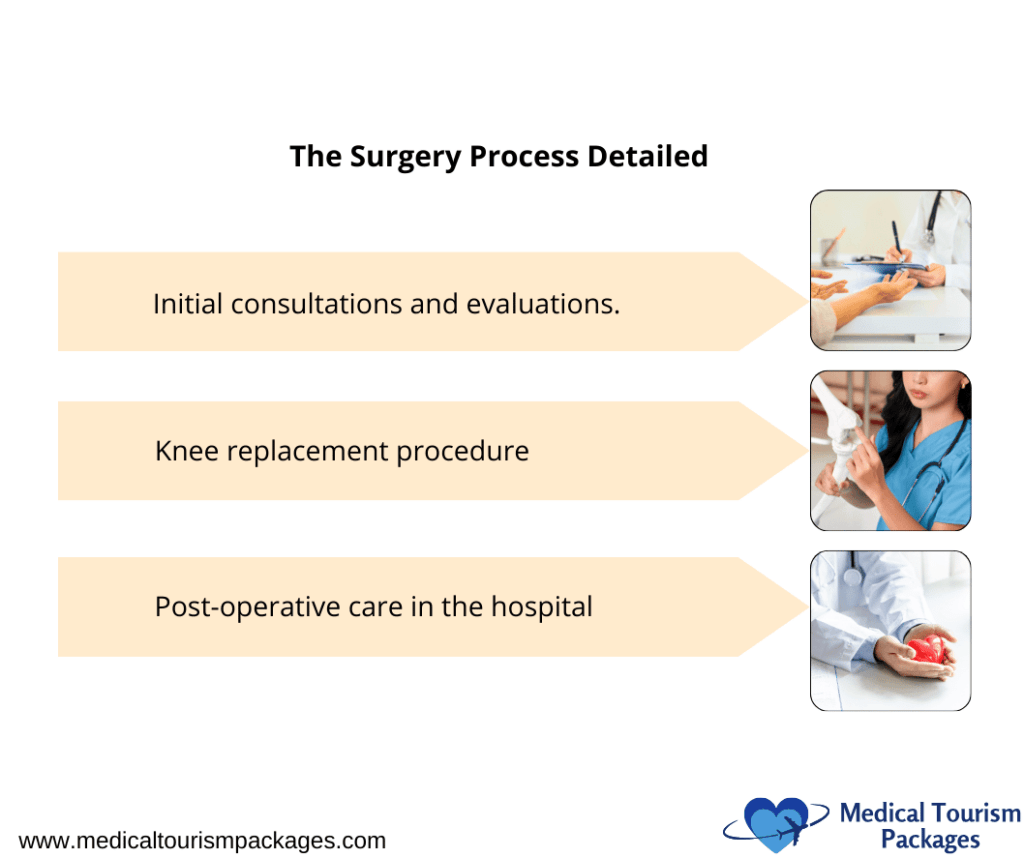
The surgery removes damaged bone and cartilage from your knee. Your surgeon implants metal and plastic components to rebuild the joint. Recovery care begins immediately in the hospital under your medical team’s supervision.
What Happens During the Initial Consultation?
During the consultation, you meet your surgical team in Panama City. They review your medical records and explain the procedure. Diagnostic tests confirm your knee’s condition and finalize the surgical plan.
This meeting allows you to ask questions about risks and expected outcomes. Your surgeon customizes the approach based on your anatomy and health status. Consultations typically happen 1-2 days before surgery.
What Are the Steps of Knee Replacement Surgery?
The steps begin with anesthesia to ensure your comfort. Your surgeon removes damaged portions of your knee joint. They implant artificial components made of durable metal and plastic to rebuild your knee.
Panama City surgeons use FDA-approved implants from major manufacturers like Zimmer Biomet and Stryker. Each step is planned to reduce pain and restore mobility. Surgery typically takes 1-2 hours.
What Post-Operative Care Do You Receive in the Hospital?
Post-operative care includes pain management, wound monitoring, and early physical therapy. Nurses watch for complications like infection or blood clots. You typically stay 3-5 days in Panama City hospitals.
Physical therapy often starts the day after surgery. Therapists help you stand and walk with assistance. This extended monitoring helps ensure safe recovery before discharge.
How Does Recovery Work After Knee Surgery in Panama?
Recovery starts with in-hospital rehabilitation right after surgery. You then transition to outpatient physical therapy in Panama City. Most patients stay 10-14 days total for initial recovery and follow-up appointments.

Panama City offers high-quality rehabilitation services designed for your needs. Programs focus on restoring knee function and flexibility. You’ll receive guidance for continued recovery at home.
Learn more about recovery timelines in our guide to orthopedic surgery in Panama.
What In-Hospital Rehabilitation Services Are Available?
In-hospital rehabilitation includes exercises to restore knee mobility and strength. Therapists guide you through movements to reduce pain and swelling. You begin walking with assistance within 24 hours of surgery.
This early intervention sets a strong foundation for recovery. Healthcare professionals monitor your progress closely. Extended hospital stays in Panama City allow proper stabilization before discharge.
What Outpatient Physical Therapy Options Exist?
Outpatient therapy options in Panama City include manual therapy, aquatic therapy, and strength training. Clinics offer personalized programs based on your recovery needs. Sessions typically occur 2-3 times per week.
| Outpatient Rehabilitation Center | Services Offered | Location |
|---|---|---|
| Panama Physical Therapy Clinic | Manual therapy, aquatic therapy, strength training | Panama City |
| Central Rehab Panama | Custom exercise programs, occupational therapy | Panama City |
| New Life Rehabilitation | Sports rehabilitation, post-surgical care | David |
| Pacific Coast Physiotherapy | Manual therapy, electrotherapy, ultrasound therapy | Coronado |
| HealthBridge Panama | Balance training, functional mobility, pain management | Boquete |
How Can You Recover Effectively at Your Accommodation?
You can recover effectively by following prescribed exercises at your hotel or rental. Gentle stretching and strengthening exercises promote knee health. Eat nutritious foods, stay hydrated, and avoid stress on your knee.
Recovery houses near Panama City hospitals offer 24/7 nursing care. Home nursing services can visit your hotel for wound care and medication. These options provide professional support between therapy sessions.
How Should You Plan Your Return Home?
You should plan your return by scheduling a final check-up with your Panama City surgeon. They’ll confirm your knee is healing properly before you travel. Arrange follow-up appointments with a doctor at home.
During travel, keep your leg elevated and take short walks to promote circulation. Wear compression stockings and manage pain with prescribed medication. Most patients can fly safely 10-14 days after surgery.
What Is the Post-Surgery Check-Up Schedule?
The check-up schedule includes a final visit with your Panama City surgeon before departure. This confirms your surgical site is healing well. Your surgeon provides documentation for continued care at home.
What Are the Guidelines for Safe Travel After Surgery?
The guidelines for safe travel include keeping your leg elevated during flights. Walk periodically to promote blood circulation. Wear compression stockings and take pain medication as prescribed.
Stay hydrated throughout your journey. Following these tips reduces complication risks and ensures a comfortable return home.
How Do You Adjust to Life After Knee Replacement?
You adjust to life after knee replacement by continuing physical therapy exercises. Make home modifications to prevent falls. Follow a healthy lifestyle and attend regular follow-up appointments.
Most patients resume normal activities within 6-8 weeks. Full recovery may take up to six months with ongoing therapy. Your new knee can last 15-20 years with proper care.
What Legal Considerations Should International Patients Know?
International patients should know about visa requirements, healthcare laws, and patient rights in Panama. US citizens don’t need a visa for stays up to 180 days. This covers the typical 2-3 week medical trip.
Panama’s healthcare laws protect patient privacy and require informed consent. Understanding these regulations helps you navigate care confidently. JCI-accredited hospitals follow international safety standards, and you can review the full picture on whether Panama is safe for medical tourism.
Do You Need a Medical Visa for Panama?
You do not need a medical visa if you’re from the US, Canada, or EU. These citizens can stay up to 180 days without a visa. This covers the typical knee replacement trip of 2-3 weeks.
| Step | Requirement | Description |
|---|---|---|
| 1 | Application Form | Complete visa application for medical treatment (if needed) |
| 2 | Passport | Valid passport with at least 6 months validity |
| 3 | Medical Records | Documents showing need for treatment |
| 4 | Financial Proof | Evidence of funds for medical and living expenses |
| 5 | Invitation Letter | Letter from Panama hospital confirming appointment |
What Are Panama’s Healthcare Laws?
Panama’s healthcare laws establish standards for medical services, patient safety, and provider responsibilities. Law 68 (2003) mandates informed consent and patient confidentiality. JCI-accredited hospitals exceed these local requirements.
Understanding these laws helps you know what care standards to expect. Hospitals must provide information about treatments and obtain your consent. Your medical records remain confidential under Panamanian law.
What Privacy and Patient Rights Do You Have?
You have rights to privacy, informed consent, and confidential medical records in Panama. Healthcare facilities must explain treatments and obtain your agreement. Your personal information is protected by law.
Ask about the hospital’s data protection policies during your consultation. JCI-accredited facilities follow strict confidentiality protocols. These protections ensure your medical information stays secure.
What Results Can You Expect from Knee Replacement in Panama?
Results from knee replacement in Panama include significant pain relief and improved mobility. Patients report returning to activities they couldn’t do before surgery. The procedure has high success rates at Panama City’s top hospitals.
Long-term benefits include better joint function and improved quality of life. Many patients can walk, climb stairs, and exercise comfortably again. These outcomes match results at leading US medical centers, and similar success rates apply to rotator cuff surgery in Panama.
What Do Patients Say About Their Experiences?
Patients describe their experiences as life-changing. They praise the skilled care from Panama City surgeons and attentive hospital staff. Many highlight the personal attention they received throughout their journey.
Testimonials mention relief from years of chronic pain and restored independence. Past patients often recommend Panama for the quality of care and significant cost savings.
What Are the Long-Term Benefits of Knee Replacement?
The long-term benefits include lasting pain relief and improved joint function. Most patients enjoy 15-20 years of improved mobility from their new knee. This affects overall health, including mental and emotional well-being.
You can return to hobbies and activities that pain prevented. Many patients report better sleep and more active lifestyles. These benefits make knee replacement a valuable solution for chronic knee problems, and comparable outcomes are reported for shoulder surgery in Colombia.
How Does Knee Replacement Improve Quality of Life?
Knee replacement improves quality of life by eliminating chronic pain and restoring movement. Patients describe dramatic shifts in daily activities. Simple tasks like walking or climbing stairs become comfortable again.
Many return to sports and exercise they had given up. These improvements empower patients to live more active, fulfilling lives free from knee pain, with similar mobility gains reported for rotator cuff surgery in Colombia.
Frequently Asked Questions
What Is Knee Replacement Surgery?
Knee replacement surgery is a procedure that relieves pain and restores function in damaged knee joints. Surgeons replace damaged bone and cartilage with artificial metal and plastic components. This surgery helps when medication and physical therapy no longer provide relief.
Why Should You Choose Panama for Knee Replacement?
You should choose Panama for 50-75% cost savings, JCI-accredited hospitals, and US-trained surgeons. English-speaking staff make communication easy. The dollarized economy eliminates currency risks for American patients.
How Much Does Knee Replacement Cost in Panama?
Knee replacement in Panama costs $10,000-$15,000 for a complete treatment program. This includes surgeon fees, hospital stay, anesthesia, and implants. The same procedure costs $35,000-$50,000+ in the United States.
What Is the Recovery Process Like in Panama?
The recovery process includes a 3-5 day hospital stay followed by outpatient physical therapy. Most patients walk with assistance within days. Plan to stay in Panama City 10-14 days total for initial recovery and follow-up care.
What Legal Considerations Should You Know?
You should know that US citizens don’t need a visa for stays up to 180 days. Confirm the hospital’s JCI accreditation and review patient rights. Panama’s healthcare laws require informed consent and protect your privacy.
Are Panama’s Orthopedic Surgeons Internationally Trained?
Yes, Panama’s orthopedic surgeons are internationally trained. Many completed fellowships at US institutions like the Hospital for Joint Diseases in New York. They belong to organizations like the American Academy of Orthopaedic Surgeons.
How Long Should You Stay in Panama After Surgery?
You should stay in Panama 2-3 weeks total. This includes 3-5 days in the hospital and 7-14 days for recovery, follow-up appointments, and initial physical therapy. This allows surgeons to confirm you’re fit for travel.
Is Knee Surgery in Panama Safe?
Yes, knee surgery in Panama is safe at JCI-accredited hospitals with experienced surgeons. Hospital Punta Pacifica partners with Johns Hopkins Medicine International. Modern facilities meet international safety standards and use FDA-approved implants.
Ready to Start Your Knee Replacement Journey?
Medical Tourism Packages coordinates your entire knee replacement journey in Panama. We connect you with JCI-accredited hospitals, board-certified orthopedic surgeons, and arrange travel and accommodations. Our bilingual team provides support from consultation through recovery.
Contact us today for a free consultation and personalized quote.