Book Appointment Now


Face lifts (aka Rhytidectomy) in Panama: Surgery, Recovery, Results
 By
By
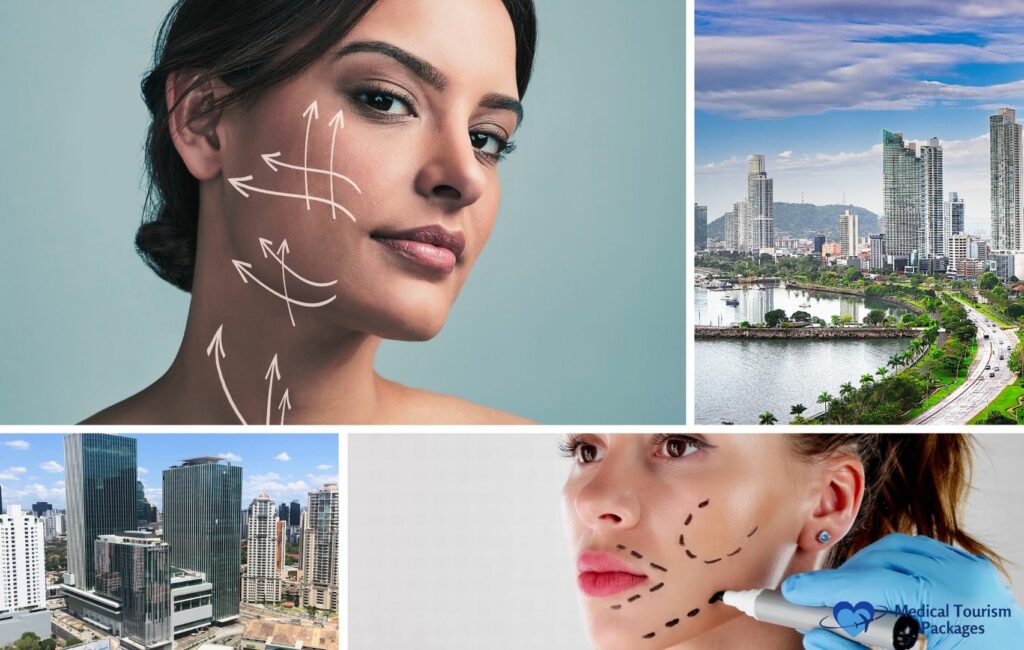
Face lifts in Panama cost $4,500-$8,000, which is 60-70% less than US prices. Board-certified surgeons perform these procedures in JCI-accredited hospitals.
A rhytidectomy in Panama City, Central America ranges from $4,500 for SMAS lifts to $8,000+ for Deep Plane techniques. JCI-accredited hospitals like Punta Pacifica (Johns Hopkins affiliated) provide US-equivalent safety standards with bilingual staff.
Our network connects you with APCPER-certified plastic surgeons in Panama City. Each surgeon is verified for credentials, facility accreditation, and patient outcomes. Below, you’ll find procedure types, cost comparisons, recovery timelines, and what to expect as an international patient.
What Is a Face Lift?
A face lift, or rhytidectomy, is a cosmetic surgery that creates a more youthful facial appearance. The procedure reduces visible signs of aging on the face and neck. These include sagging skin, deep wrinkles, and jowls.
Surgeons achieve this transformation through several key techniques:
- Removing excess skin that causes sagging
- Tightening underlying tissues for structural support
- Repositioning skin on the face and neck for natural contours
- Combining with neck lift treatments for comprehensive rejuvenation
The procedure varies in scope. Options range from minimally invasive techniques to comprehensive surgical adjustments. The right approach depends on your needs and desired outcomes.
Why Choose Panama for Face Lifts?
Panama, specifically Panama City in Central America (not Panama City Beach, Florida), stands out as a top destination for affordable cosmetic surgery. The country combines cost savings with skilled surgeons and high-quality healthcare facilities. Patients save 60-70% compared to US prices without sacrificing care quality.
Panama’s location in Central America makes it easy to reach from North and South America. The country uses the US dollar, which protects patients from currency exchange risks. Surgeons here hold international training and certifications. Many hospitals meet JCI accreditation standards. English-speaking staff, travel assistance, and comprehensive post-operative care cater to international patients.
Why Is Panama Cost-Effective for Face Lifts?
Panama is cost-effective because operating expenses and cost of living are lower than in the US. Patients pay $4,500-$8,000 for a face lift here. The same procedure costs $15,000-$25,000 in the United States. This makes high-quality cosmetic surgery accessible to more people.
Are Surgeons in Panama Qualified?
Yes, surgeons in Panama are highly qualified. Many trained at prestigious international institutions. Top surgeons like Dr. Luis Picard-Ami hold triple board certification from the US, Canada, and Panama. Dr. Jacqueline Richa was the first Panamanian surgeon trained at Mayo Clinic. These credentials ensure patients receive care equal to North American standards.
What Are Panama’s Healthcare Facilities Like?
Panama’s healthcare facilities meet international standards. Hospital Punta Pacifica holds JCI accreditation and partners with Johns Hopkins Medicine International. Clínica Hospital San Fernando also maintains JCI accreditation. These hospitals use advanced medical technology and follow strict safety protocols.
English-speaking staff and services for international patients make Panama a leading medical tourism destination.
What Types of Face Lifts Are Available in Panama?
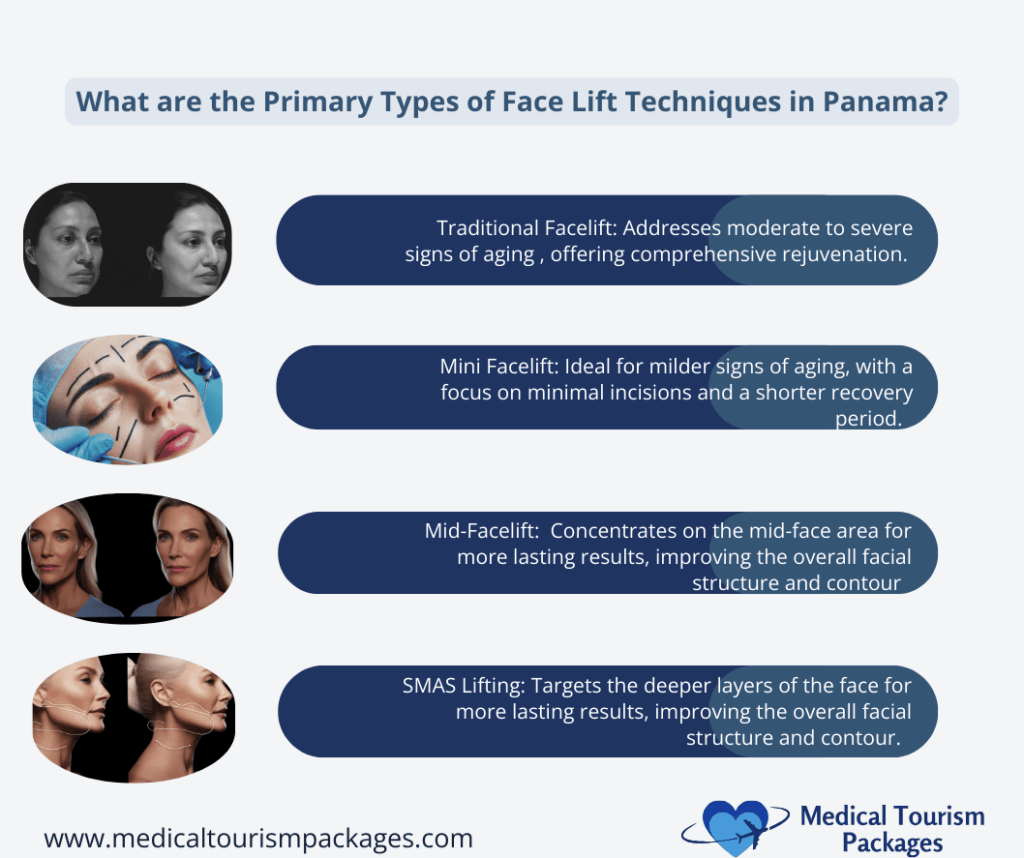
The types of face lifts available in Panama include traditional surgical approaches and non-surgical options. Each type targets different aesthetic goals and recovery preferences. The table below shows the main options, recovery times, and key insights.
| Face Lift Type | Best For | Average Recovery Time | Additional Insights |
|---|---|---|---|
| Traditional Face Lift | Comprehensive rejuvenation | 2-4 weeks | Addresses extensive aging signs; most thorough results. |
| Deep Plane Lift | Severe sagging | 3-6 weeks | Targets deeper facial structures; results last 10-15 years. |
| SMAS Lift | Natural contouring | 2-4 weeks | Focuses on the muscle layer; popular standard technique. |
| Mini Face Lift | Mild to moderate aging | 1-2 weeks | Minimally invasive with shorter recovery time. |
| S-Lift | Lower face and neck | 1-2 weeks | Uses shorter S-shaped incisions for targeted lifting. |
| Short Scar Facelift | Less visible scarring | 1-2 weeks | Limited incisions result in minimal scarring. |
| Thread Lifts | Subtle lift without surgery | Less than 1 week | Non-surgical option using temporary sutures. |
| PDO Thread Lift | Collagen stimulation | 5-7 days | Offers immediate and progressive results. |
| Silhouette InstaLift | Mid-face elevation | 5-7 days | Uses absorbable sutures; enhances facial volume. |
Note: Always verify your surgeon’s credentials and hospital privileges before booking. Look for APCPER membership and privileges at JCI-accredited hospitals like Punta Pacifica or San Fernando.
For more information about cosmetic procedures in Panama, see our complete guide to plastic surgery in Panama.
How Do You Choose the Right Surgeon in Panama?
You choose the right surgeon by verifying credentials, reviewing patient results, and evaluating their consultation approach. Your surgeon’s expertise determines your results. This applies whether you want a traditional face lift or an instalift treatment.
Look for surgeons with proven track records. Patient reviews and before/after photos show what outcomes to expect. A good surgeon will assess your needs, set realistic expectations, and explain the procedure in detail.
What Credentials Should Your Surgeon Have?
Your surgeon should have board certification and membership in the Panamanian Association of Plastic, Aesthetic and Reconstructive Surgery (APCPER). Top surgeons in Panama City also hold US or Canadian certifications. Verify that your surgeon has operating privileges at a JCI-accredited hospital like Punta Pacifica or San Fernando.
How Do Patient Reviews and Photos Help?
Patient reviews and before/after photos help you evaluate a surgeon’s skill. Reviews share real experiences about care quality and satisfaction. Photos show the surgeon’s ability to create natural-looking results. Request to see photos of patients with similar aging concerns to yours.
What Should Happen During Your Consultation?
During the consultation, your surgeon should assess your individual needs and discuss realistic outcomes. A good surgeon explains the procedure in depth. This includes risks and expected recovery time. You should feel informed, valued, and confident in your decision.
What Happens During Face Lift Surgery?
During face lift surgery, your surgeon follows a careful process designed for the best results. The journey includes consultation, the procedure itself, and recovery. Understanding each step helps you set proper expectations.
The process starts with an initial consultation. Your surgeon assesses your facial structure and discusses your goals. Then comes the surgery phase. Your surgeon plans the anesthesia type, incision techniques, and approach for lifting skin and tissues. Recovery follows with wound care, pain management, and follow-up appointments.
What Happens During the Consultation?
During the consultation, your surgeon evaluates your facial anatomy, skin condition, and overall health. This meeting helps you both agree on goals and realistic outcomes. You can submit photos beforehand for a virtual assessment if traveling from abroad.
How Does Your Surgeon Assess Your Needs?
Your surgeon assesses your needs by examining your face in detail. They check skin laxity, facial structure, and aging patterns. This analysis helps them recommend the best face lift technique for your concerns. If you want comprehensive rejuvenation, they may also evaluate your neck.
Why Is Discussing Expectations Important?
Discussing expectations is important because it creates a clear understanding of what surgery can achieve. Honest communication about results and limitations leads to higher satisfaction. Your surgeon should explain both the benefits and realistic limits of the procedure.
What Happens During the Surgery?
During the surgery, your surgeon executes the planned approach with precision. The procedure is tailored to your anatomy and aesthetic goals. This is when the surgeon’s expertise creates your rejuvenated appearance.
What Type of Anesthesia Is Used?
The type of anesthesia used depends on the procedure’s complexity. Options include local anesthesia with sedation or general anesthesia. Your surgeon and anesthesiologist choose based on your safety and comfort. JCI-accredited hospitals in Panama City use board-certified anesthesiologists.
What Incision Techniques Do Surgeons Use?
Surgeons use incision techniques chosen for your specific procedure. The goal is to achieve the best results while minimizing visible scars. Incisions are placed in natural creases, within the hairline, or behind the ears. Your surgeon’s skill in placement is key to natural-looking results.
What Is the Recovery Process?
The recovery process requires careful attention to post-operative instructions. You manage discomfort, prevent complications, and gradually return to normal activities. Your surgical team guides you through each stage. Most patients stay in Panama City for 10-14 days for initial recovery.
What Immediate Care Do You Need?
You need immediate care focused on pain management, infection prevention, and swelling reduction. Follow your surgeon’s instructions about medications and wound care. Keeping incisions clean is essential for proper healing.
Why Are Follow-Up Appointments Important?
Follow-up appointments are important because they monitor your healing progress. Your surgeon checks incisions and addresses any concerns. These visits confirm that recovery is on track. Plan to attend all scheduled appointments before leaving Panama City.
How Long Is Recovery After a Face Lift?
Recovery takes 2-4 weeks for most patients to resume normal activities. The timeline varies by procedure type. Traditional surgical face lifts need more recovery time than non-surgical instalift treatments. Final results become fully visible over several months as swelling subsides.
Panama City’s tropical climate requires special care. Stay hydrated and avoid direct sun on healing skin. Use high-SPF sunscreen and wear hats outdoors. Following your surgeon’s aftercare instructions is essential for smooth recovery.
What Does Immediate Post-Operative Care Involve?
Immediate post-operative care involves managing discomfort, reducing swelling, and preventing infection. Key practices include:
- Resting with your head elevated to minimize swelling
- Applying cold compresses as your surgeon directs
- Following your prescribed medication schedule
- Keeping incision sites clean and dry
Following these guidelines is vital for successful early recovery.
How Is Pain Managed After Surgery?
Pain is managed through prescribed medications. Your surgeon provides specific instructions for medication use. Most patients experience manageable discomfort that decreases within the first week. Recovery houses in Panama City include nursing support for medication schedules.
How Should You Care for Wounds?
You should care for wounds by gently cleaning incision areas as instructed. Apply any prescribed ointments and keep wounds dry. Proper wound care prevents infection and minimizes scarring. Your surgical team will demonstrate the correct technique before you leave the hospital.
What Long-Term Care Do Results Require?
Results require long-term care including a healthy lifestyle and sun protection. Use moisturizers and sunblock daily. Schedule regular check-ups every 6-12 months to monitor your skin. These practices help maintain your rejuvenated appearance for years.
Why Is Sun Protection Critical in Panama?
Sun protection is critical in Panama because the tropical climate has intense UV exposure. Use broad-spectrum sunscreen daily. Seek shade during peak sun hours. Wear protective clothing and hats. Sun damage can accelerate aging and affect your surgery results.
What Lifestyle Changes Help Recovery?
Lifestyle changes that help recovery include eating a balanced diet, staying hydrated, and avoiding smoking. Limit alcohol consumption. These practices support healing and help maintain the rejuvenating effects of your face lift long-term.
What Are the Risks of Face Lift Surgery?
The risks of face lift surgery include infection, nerve damage, and scarring. These complications are rare with experienced surgeons and proper care. Understanding these risks helps you make informed decisions. JCI-accredited hospitals in Panama City maintain low complication rates.
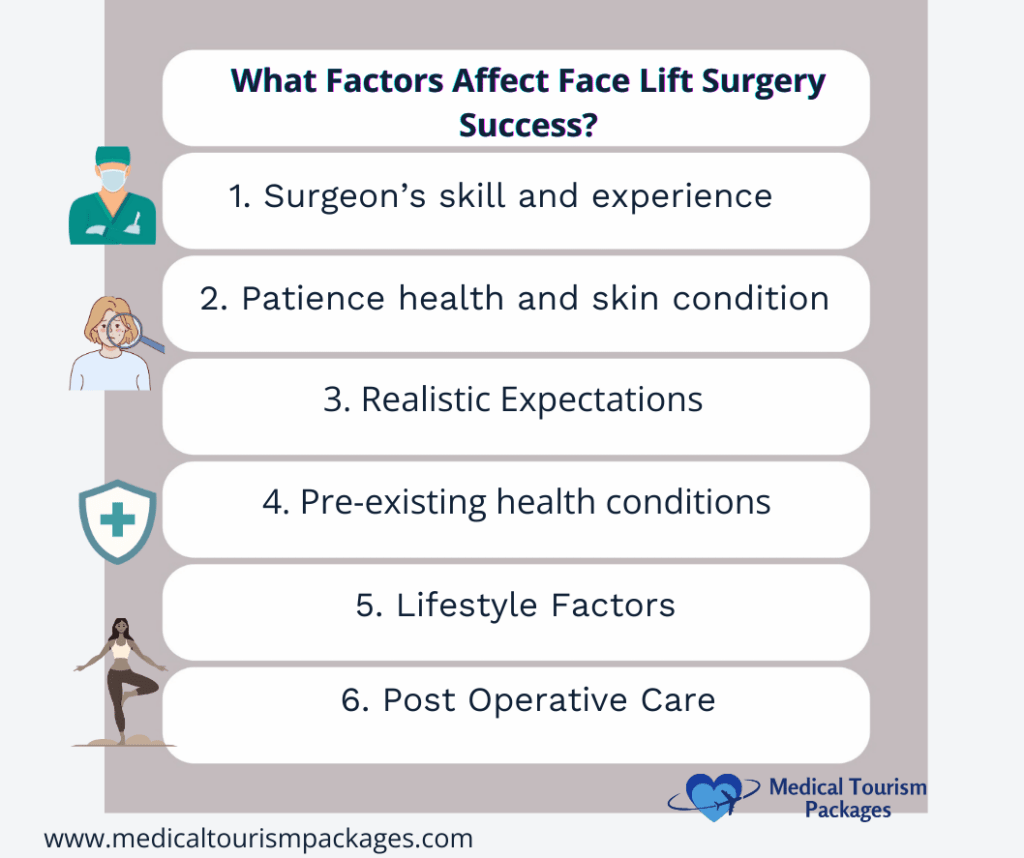
Infection risk is less than 2% in well-managed surgical environments. Nerve damage occurs in less than 1% of procedures. Skilled surgeons use advanced techniques to minimize scarring. Discuss all risks with your surgeon before proceeding.
How Do Surgeons Prevent Infection?
Surgeons prevent infection through strict sterilization practices and detailed aftercare instructions. Panama’s JCI-accredited hospitals maintain high cleanliness standards. Proper wound care after surgery further reduces infection risk. The national average for surgical infections in cosmetic procedures remains low.
What Is the Risk of Nerve Damage?
The risk of nerve damage is rare, occurring in less than 1% of procedures. When it occurs, symptoms like numbness or altered movement are usually temporary. Normal sensation typically returns as healing progresses. Surgeons in Panama City use precision techniques that minimize this risk.
Will You Have Visible Scars?
You will have scars, but skilled surgeons place them where they are least visible. Incisions hide within natural creases, the hairline, or behind ears. Laser treatments and silicone gel can improve scar appearance over time. Most scars fade significantly within the first year.
What Results Can You Expect from a Panama Face Lift?
You can expect natural-looking rejuvenation from a Panama face lift. Results focus on subtle, effective improvements. Skilled surgeons create a refreshed appearance that complements your natural features. The goal is improvement without obvious signs of surgery.
Results typically last many years. Deep Plane face lifts last 10-15 years. SMAS lifts last 5-7 years. Factors like skin type, age, and lifestyle affect longevity. Proper aftercare and healthy habits extend your results.
How Natural Do Results Look?
Results look natural when performed by expert surgeons. Panama City surgeons specialize in techniques that complement your features. The enhancements appear organic. You’ll look refreshed and youthful without the “pulled” or “overdone” appearance.
How Long Do Results Last?
Results last for years, depending on the technique used. Deep Plane face lifts provide the longest-lasting results at 10-15 years. SMAS lifts typically last 5-7 years. Your skin type, age, and lifestyle affect how long results persist. Following aftercare guidelines extends the benefits.
How Much Does a Face Lift Cost in Panama?
A face lift costs $4,500-$8,000 in Panama, depending on the technique. This is 60-70% less than US prices. The savings don’t compromise quality. Panama offers world-class care at accessible prices.
The table below compares total costs including surgery, aftercare, and accommodation:
| Cost Component | Panama (USD) | USA (USD) | Europe (USD) |
|---|---|---|---|
| Surgery Cost | $4,500 – $8,000 | $15,000 – $25,000 | $10,000 – $20,000 |
| Aftercare | Included or up to $500 | $1,000 – $2,000 | $800 – $1,500 |
| Accommodation (2 weeks) | $2,100 – $3,500 | N/A | N/A |
| Total Estimated Cost | $7,100 – $12,000 | $16,000 – $29,000 | $10,800 – $23,000 |
Note: Costs are estimates and vary based on individual needs and surgeon experience. Contact us for an accurate quote.
How Do Panama Costs Compare to the USA?
Panama costs compare favorably to the USA with savings of 50-70%. These savings don’t mean lower quality. Panama’s healthcare system offers JCI-accredited facilities and highly skilled surgeons. Lower operating costs allow for more affordable prices.
How Do Panama Costs Compare to Europe?
Panama costs compare similarly to Europe with savings of 50-70%. European patients find Panama’s care competitive in quality. The country’s dollarized economy provides stable pricing. You know exactly what you’ll pay without currency exchange risks.
What Should International Patients Know?
International patients should know several key factors for a smooth medical tourism journey. Panama City, Central America welcomes medical tourists with English-speaking staff, accommodation partnerships, and clear visa requirements.
Most US, Canadian, and European citizens don’t need a visa for stays under 90 days. Medical facilities partner with local hotels for special rates. Many patients stay at recovery houses that provide nursing care, meals, and transportation to appointments.
| Consideration | Details |
|---|---|
| Language | English-speaking staff available at JCI hospitals. Translation services provided when needed. |
| Currency | Panama uses US dollars. No exchange rate risks or conversion fees. |
| Accommodation | Recovery houses offer 24/7 nursing, meals, and transport. Hotels partner with hospitals for discounts. |
| Visa Requirements | Most Western citizens need no visa for stays under 90 days. Bring passport and travel documents. |
| Flight Access | Tocumen International Airport has direct flights from major US and Canadian cities. |
| Legal Framework | Panama’s healthcare follows strict safety guidelines. JCI accreditation ensures international standards. |
Plan to arrive 1-2 days before surgery for your in-person consultation. Expect to stay 10-14 days total for proper initial recovery before flying home.
How Do You Prepare for Face Lift Surgery?
You prepare for face lift surgery through medical evaluations and lifestyle adjustments. Proper preparation minimizes surgical risks and helps recovery. Whether planning a traditional face lift or instalift treatment, these steps are essential.
What Medical Evaluations Are Required?
Medical evaluations required include blood tests, imaging studies, and medical history review. These assessments identify health issues that could affect surgery. Your surgeon may adjust the surgical plan based on results. Patients over 45 or with heart conditions need cardiology clearance.
You may need to fast for certain tests. Discuss medication adjustments with your healthcare provider beforehand.
What Lifestyle Changes Should You Make?
Lifestyle changes you should make include:
- Quit smoking: Stop at least 4-6 weeks before surgery. Smoking impairs healing and increases complications.
- Limit alcohol: Avoid alcohol in the weeks before your procedure.
- Stop certain medications: Discontinue aspirin, NSAIDs, and vitamin E as directed. These increase bleeding risk.
These changes create the best conditions for healing.
What Long-Term Care Does a Face Lift Require?
A face lift requires long-term care to maintain results. Consistent skincare and sun protection extend your investment. Regular check-ups help catch any concerns early.
Focus on hydration using products with hyaluronic acid and ceramides. Apply broad-spectrum sunscreen daily. Antioxidants like vitamin C support skin health. Schedule check-ups every 6-12 months. You can complete follow-ups with local doctors while staying in contact with your Panama City surgeon.
For patients who combined face lift with neck lift procedures, specific neck care routines help maintain results in that area. Ask your surgeon for personalized long-term care recommendations.
Frequently Asked Questions About Facelifts in Panama
What is a face lift?
A face lift, or rhytidectomy, is a cosmetic surgical procedure that reduces visible signs of aging. Surgeons tighten underlying tissues, remove excess skin, and reposition facial and neck skin. The result is a more youthful, refreshed appearance.
Why choose Panama for a face lift?
Panama offers face lifts at 60-70% less than US prices with equal quality. The country has JCI-accredited hospitals, internationally trained surgeons, and English-speaking staff. Panama City, Central America is easy to reach from the US and uses the dollar for stable pricing.
What types of face lifts are available in Panama?
The types available include traditional face lifts, Deep Plane lifts, SMAS lifts, mini face lifts, and non-surgical options. Thread lifts and instalift treatments offer alternatives with shorter recovery. Each procedure targets specific aging concerns and recovery preferences.
How much does a face lift cost in Panama?
A face lift in Panama costs $4,500-$8,000 depending on technique. SMAS lifts cost $4,500-$6,000. Deep Plane lifts cost $6,000-$8,000+. These prices are 60-70% less than the $15,000-$25,000 charged in the USA.
What is the recovery time for a face lift in Panama?
Recovery time is 2-4 weeks for most patients to resume normal activities. Non-surgical options like thread lifts require less than a week of downtime. Plan to stay in Panama City for 10-14 days. Full results appear over several months as swelling subsides.
What are the risks of a face lift?
The risks include infection (less than 2%), nerve damage (less than 1%), and scarring. These are rare with experienced surgeons at JCI-accredited hospitals. Discuss all risks with your surgeon during consultation.
Can I combine a face lift with a neck lift?
Yes, you can combine a face lift with a neck lift. Many patients choose this combination for comprehensive rejuvenation. The procedures address aging in both areas for more harmonious results. Your surgeon can evaluate whether you’re a good candidate.
What makes instalift treatments different from traditional face lifts?
Instalift treatments differ because they’re non-surgical. They use absorbable sutures to lift facial tissues. Recovery takes only 5-7 days versus 2-4 weeks for surgical lifts. Results are more subtle and last 1-2 years. They’re ideal for patients seeking improvement without surgery.
Ready to Start Your Face Lift Journey?
Medical Tourism Packages coordinates your entire face lift journey in Panama. We connect you with board-certified plastic surgeons at JCI-accredited hospitals in Panama City. Our team arranges travel and accommodations, and provides bilingual support throughout your recovery. Get a free consultation for a personalized quote.
Contact us today to start planning.