Book Appointment Now

Breast Reduction in Panama | Affordable Cosmetic Surgery with Trusted Surgeons
 By
By
Breast reduction in Panama costs $4,000-$6,000, which is 50-60% less than US prices, performed by APCPER-certified surgeons at JCI-accredited hospitals.
Surgeons like Dr. Luis A. Picard-Ami Jr. and Dr. Jacqueline M. Richa operate at Hospital Punta Pacifica and Clinica San Fernando. Both facilities hold JCI accreditation, the gold standard for international healthcare safety.
Our network connects you with board-certified surgeons across Panama City, each verified for credentials and hospital affiliations. Below, you’ll find cost breakdowns, surgeon profiles, technique comparisons, and recovery timelines for breast reduction mammoplasty.
What Is Breast Reduction Surgery?
Breast reduction is a surgical procedure that removes excess breast tissue, fat, and skin to reduce breast size and weight. Also called reduction mammaplasty, this surgery helps relieve physical discomfort from overly large breasts.
The procedure addresses symptoms like neck pain, back pain, and skin irritation under the breast crease. It also improves body proportions and helps patients engage in physical activities more comfortably.
During surgery, the surgeon removes excess tissue through carefully planned incisions. The nipples may be repositioned to create a natural-looking breast contour. Most patients report significant improvement in physical symptoms and a boost in self-confidence after the procedure.
The decision to undergo breast reduction is personal. Patients should consult with a qualified plastic surgeon who can explain the procedure, potential risks, and recovery expectations.
How Much Does Breast Reduction Cost in Panama?
Breast reduction in Panama costs $4,000-$6,000 on average. This is 50-60% less than prices in the US, Canada, and Europe. The lower cost does not mean lower quality care.
Panama City offers high standards and modern healthcare facilities for this procedure. The price typically includes surgeon fees, hospital costs, anesthesia, and post-operative care essentials.
Patients should also budget for travel, accommodation, and follow-up appointments. Even with these added costs, the total remains significantly lower than US prices. Panama’s dollarized economy means quoted prices stay stable without currency exchange risks.
How Do Panama Costs Compare to the US?
Panama costs compare favorably to the US across all major categories. The table below shows the key differences between these destinations.
| Location | Avg. Cost (USD) | Board-Certified Surgeons | Includes Recovery Stay | Language Support |
|---|---|---|---|---|
| Panama | $4,000-$6,000 | Yes | Yes (in typical packages) | English-Spanish |
| United States | $8,000-$15,000 | Yes | No (typically separate) | English |
| Canada | $8,000-$13,000 | Yes | No | English-French |
| Mexico | $3,000-$5,000 | Varies | Sometimes | Spanish-English |
| Colombia | $3,000-$4,500 | Yes | Varies | Spanish-English |
What Does the Surgery Price Include?
The surgery price includes several key components. Understanding what’s covered helps you budget accurately for your procedure in Panama City.
| Included in Cost | Description |
|---|---|
| Surgeon’s Fee | Professional services for the procedure and follow-up visits while in Panama. |
| Hospital Charges | Operating room, nursing staff, and overnight stay at the facility. |
| Anesthesia | Fees for the board-certified anesthesiologist and medications. |
| Post-operative Supplies | Surgical bra, initial medications, and wound care materials. |
| Follow-up Visits | Post-operative check-ups before you are cleared to fly home. |
Additional costs not typically included are pre-operative lab tests, travel expenses, accommodation, and prescription medications after discharge. Discuss all potential costs with your medical provider before booking.
Why Choose Panama for Breast Reduction Surgery?
Panama offers a compelling mix of affordable costs, skilled surgeons, and modern healthcare facilities. The country uses the US dollar as currency, which eliminates exchange rate risks for American patients.
Panama City is home to surgeons who trained at top US and Canadian medical institutions. Many hold board certifications from multiple countries. The healthcare facilities meet international standards and use the latest surgical technology.
The warm climate and beautiful scenery provide a comfortable backdrop for recovery. Panama is also easily accessible with direct flights from major US cities like Miami, Atlanta, Houston, and New York.
Who Are Panama’s Top Plastic Surgeons?
Panama’s top plastic surgeons include Dr. Luis A. Picard-Ami Jr., Dr. Jacqueline M. Richa, and Dr. Joseph Setton. All are regulated by the Asociacion Panamena de Cirugia Plastica (APCPER).
Dr. Luis A. Picard-Ami Jr. brings over 30 years of experience. He holds triple board certification from the American Board of Plastic Surgery, the Royal College of Canada, and Panama. He trained at McGill University and the University of Miami.
Dr. Jacqueline M. Richa is the only Panamanian plastic surgeon trained at the Mayo Clinic in the USA. She focuses on personalized care and scar minimization techniques.
Dr. Joseph Setton operates out of Clinica Setton in Panama City’s Punta Pacifica district. He is known for natural-looking results and advanced techniques to minimize scarring. Learn more about our best plastic surgeons in Panama.
Which Panama City Hospitals Perform This Procedure?
The hospitals that perform this procedure include Hospital Punta Pacifica and Clinica Hospital San Fernando. Both hold JCI accreditation, the gold standard for global healthcare safety.
Hospital Punta Pacifica is affiliated with Johns Hopkins Medicine International. It has been JCI accredited since 2011. The hospital features advanced ICUs, modern diagnostic imaging, and private suites for international patients.
Clinica Hospital San Fernando was the first hospital in Panama to achieve JCI accreditation in 2011. Founded in 1949, it maintains affiliations with Tulane Medical Center and Baptist Health South Florida.
Which Breast Reduction Technique Is Right for You?
The right technique depends on your breast size, skin elasticity, and desired results. Your surgeon will recommend the best approach during your consultation. Surgeons in Panama are skilled in all three main techniques.
What Is the Anchor (Inverted-T) Technique?
The anchor technique uses three incisions: around the areola, vertically down to the breast crease, and horizontally along the crease. This method allows maximum tissue removal and breast reshaping.
This technique works best for patients needing significant reduction, typically more than 500 grams per breast. It effectively treats severe sagging and provides dramatic, long-lasting results. The trade-off is more visible scarring in an anchor shape.
What Is the Lollipop (Vertical) Technique?
The lollipop technique uses two incisions: around the areola and vertically down to the breast crease. It avoids the horizontal scar along the breast fold, resulting in less overall scarring.
This approach works best for moderate reduction with noticeable sagging. It creates a perkier, more projected shape. Many surgeons prefer this technique when the patient’s anatomy allows.
Can Liposuction Alone Reduce Breast Size?
Liposuction alone can reduce breast size for select candidates. This option works best for patients whose breasts are primarily fatty tissue with good skin elasticity.
The procedure uses small incisions to suction out fat. Benefits include minimal scarring and faster recovery. However, it cannot address significant sagging, remove glandular tissue, or reposition the nipple. Your surgeon will determine if you qualify based on your breast composition.
What Are the Benefits of Breast Reduction Surgery?
The benefits include both physical relief and emotional improvement. Most patients report life-changing results after this procedure.
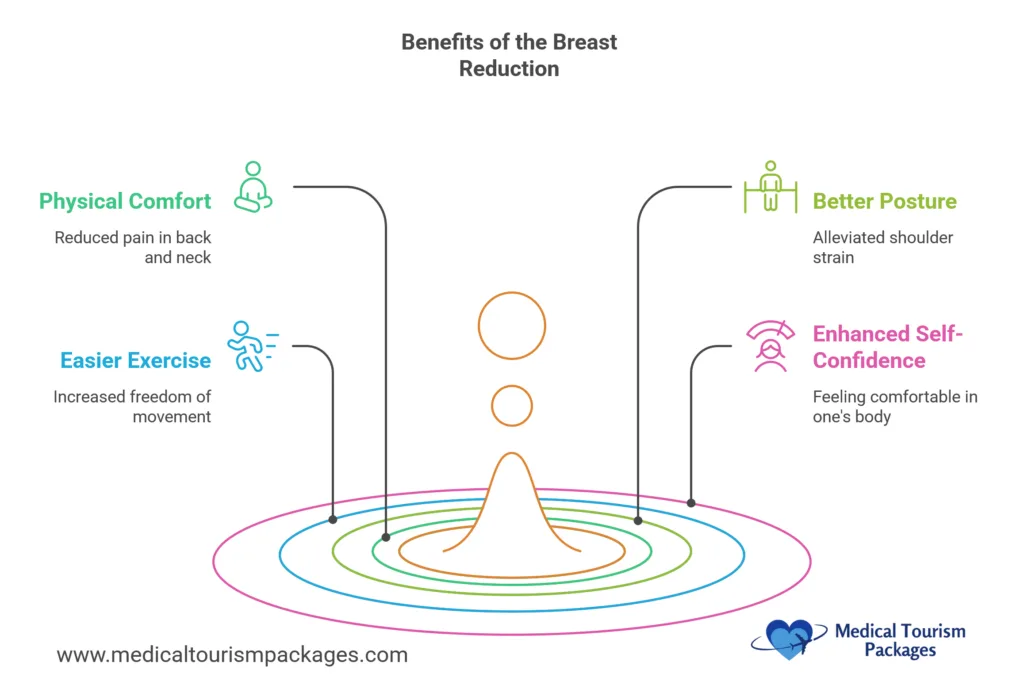
Physical relief: Most patients experience significant reduction in back, neck, and shoulder pain. Studies show the majority report substantial improvement in daily comfort after surgery.
Improved body proportion: Smaller breasts create a more balanced body shape. Patients find it easier to shop for clothing that fits well and feels comfortable.
Better posture: Reducing breast weight helps patients stand taller and maintain proper spinal alignment. This further reduces chronic pain issues.
Increased activity: Patients can exercise and participate in physical activities that were uncomfortable or impossible before surgery.
Boosted confidence: Many patients report improved self-esteem and body image after breast reduction. They feel more comfortable in their skin.
How Do You Choose the Right Surgeon in Panama?
You can choose the right surgeon by verifying credentials, reviewing past work, and assessing communication ability. Taking time to research ensures a successful outcome.
How Do You Verify Board Certification?
You can verify board certification by checking with APCPER, Panama’s official plastic surgery association. Also look for international certifications from US or Canadian boards.
| Credential | What It Means | Why It Matters |
|---|---|---|
| APCPER Membership | Surgeon is certified by Panama’s plastic surgery board | Confirms specialized training in plastic surgery |
| ASPS/ABPS Certification | US board certification in plastic surgery | Meets rigorous American standards |
| ISAPS Membership | Member of International Society of Aesthetic Plastic Surgery | Committed to ongoing education and ethics |
Avoid surgeons who only use the title “cosmetic surgeon.” This term can be used by doctors without specialized plastic surgery training. Always confirm full credentials before booking.
Why Does Language Support Matter?
Language support matters because clear communication ensures you understand the procedure, risks, and recovery instructions. Misunderstandings can affect your results and safety.
Most top surgeons in Panama City speak fluent English. Many trained in the US or Canada. Medical tourism packages also include bilingual coordinators who assist throughout your stay.
Should You Review Before and After Photos?
Yes, you should review before and after photos before choosing a surgeon. These images show the surgeon’s skill level and what results you can realistically expect.
Look for photos of patients with similar breast size and shape to yours. Pay attention to scar quality and overall symmetry. Ask for photos that show results at different healing stages.
What Is the Recovery Process After Breast Reduction?
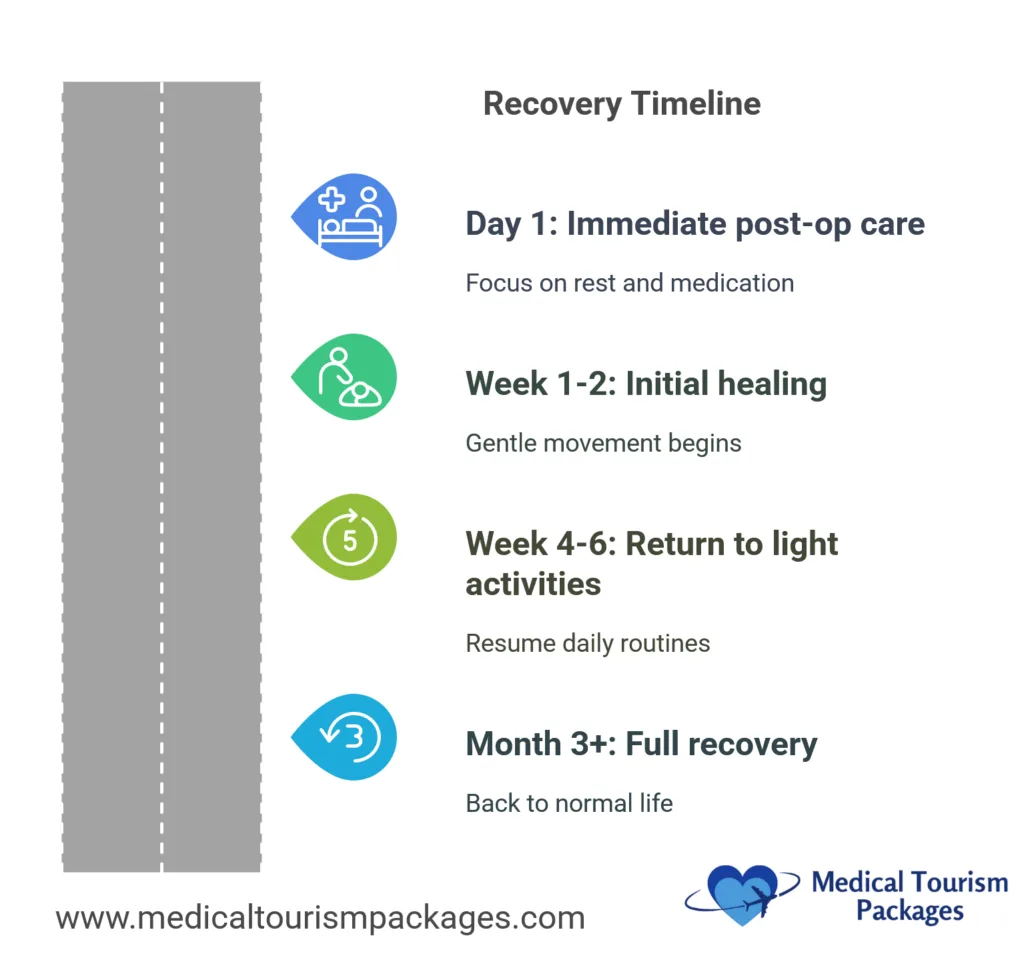
The recovery process takes 4-6 weeks for most patients. You will need to stay in Panama City for 10-14 days before flying home. Following your surgeon’s instructions ensures optimal healing.
What Is the Day-by-Day Recovery Timeline?
The day-by-day timeline helps you plan your stay and set realistic expectations. Recovery progresses through several distinct phases.
Days 1-3: This is the acute phase with peak swelling and discomfort. You’ll stay overnight at the hospital. Drains may be placed to remove fluid. Short walks help prevent blood clots.
Days 4-7: Pain transitions to soreness. Drains are typically removed. You can shower if your surgeon approves. Avoid raising arms above shoulder height.
Days 10-14: Sutures may be removed. You’ll have a final check-up before flying home. Most patients are cleared to travel by day 10-14.
Weeks 3-4: Return to non-strenuous work. Swelling continues to decrease.
Week 6: Resume full exercise and heavy lifting with surgeon approval.
Months 6-12: Scars mature and fade. Breasts settle into their final natural shape.
How Do You Minimize Scarring Long-Term?
You can minimize scarring by following your surgeon’s care protocol consistently. Start scar treatment once your incisions have healed enough, usually 3-4 weeks post-surgery.
Silicone therapy: Use silicone gel sheets or topical silicone gel daily. This hydrates the scar and regulates collagen production. Continue for 3-6 months.
Sun protection: Keep scars covered or use SPF 30+ sunscreen. UV exposure can cause permanent darkening of fresh scars.
Laser treatment: For scars that remain red or raised, pulsed dye laser or fractional CO2 laser can help. These treatments start around 4-6 weeks post-surgery.
What Are the Risks of Breast Reduction Surgery?
The risks include infection, scarring, sensation changes, and effects on breastfeeding ability. Understanding these risks helps you make an informed decision.
How Is Infection Risk Managed?
Infection risk is managed through antibiotics and proper wound care. Your surgeon will prescribe medication and provide detailed care instructions.
Watch for warning signs like increased redness, swelling, warmth, or unusual discharge. Report these symptoms immediately. Early treatment prevents serious complications.
Will Breast Reduction Affect Nipple Sensation?
Breast reduction may affect nipple sensation temporarily or, in rare cases, permanently. Most patients experience some numbness or increased sensitivity initially.
Sensation typically returns over several months as nerves heal. Large reductions carry higher risk of permanent changes because nerves may be stretched or cut.
Can You Breastfeed After Breast Reduction?
You may be able to breastfeed after breast reduction, but it is not guaranteed. The surgery removes glandular tissue and may cut milk ducts.
Surgeons use techniques that preserve the nipple pedicle to maximize breastfeeding chances. Discuss your future pregnancy plans with your surgeon before the procedure.
What Happens During Your Consultation?
During the consultation, your surgeon will discuss your goals, examine your breasts, and explain the procedure in detail. This meeting is essential for planning a successful surgery.
The surgeon will take measurements and assess your breast tissue, skin elasticity, and nipple position. These factors determine which surgical technique is best for you.
You will receive a detailed explanation of the procedure, recovery timeline, and potential risks. Come prepared with questions about:
- What size do you want your breasts to be after surgery?
- What physical activities do you hope to do more comfortably?
- Which incision technique will be used and why?
- What results can you realistically expect?
Virtual consultations are available before you travel to Panama City. This allows you to discuss your goals and ask questions before committing to the trip.
Frequently Asked Questions
What is breast reduction surgery?
Breast reduction is a surgical procedure that removes excess breast tissue, fat, and skin to reduce breast size and weight. It relieves physical discomfort like neck, back, and shoulder pain while improving body proportions and self-confidence.
Why choose Panama for breast reduction surgery?
Panama offers breast reduction at 50-60% less than US prices with board-certified surgeons and JCI-accredited hospitals. The dollarized economy ensures price stability. Panama City provides excellent flight connections and a comfortable recovery environment.
How much does breast reduction surgery cost in Panama?
Breast reduction in Panama costs $4,000-$6,000 on average. This includes surgeon fees, hospital charges, anesthesia, and post-operative care. The same procedure costs $8,000-$15,000 in the United States.
What is the recovery process for breast reduction surgery?
Recovery takes 4-6 weeks total. Plan to stay in Panama City for 10-14 days. Light activities resume within 1-2 weeks. Avoid strenuous exercise for 6 weeks. Wear a supportive bra and follow all post-operative care instructions.
What are the risks and complications of breast reduction?
Risks include infection, scarring, asymmetry, and changes in nipple sensation. Breastfeeding ability may also be affected. Choosing a board-certified surgeon and following care instructions helps minimize these risks.
Are the surgeons in Panama board-certified?
Yes, all surgeons in our network are board-certified by APCPER, Panama’s official plastic surgery association. Many also hold certifications from US and Canadian boards and trained at top international institutions.
Is it safe to travel for breast reduction surgery?
Yes, medical tourism to Panama is safe when you choose JCI-accredited facilities and board-certified surgeons. Our packages include bilingual coordinators and support services to ensure a safe, well-managed medical journey.
How long should I plan to stay in Panama for surgery and recovery?
Plan to stay in Panama City for 10-14 days. This allows time for pre-operative consultations, the surgery itself, and follow-up appointments. Your surgeon will clear you to fly home once initial healing is confirmed.
Can I combine this surgery with other procedures?
Yes, many patients combine breast reduction with liposuction, tummy tuck, or breast lift for comprehensive results in one trip. Your surgeon will evaluate your health and goals to determine safe combinations.
Ready to Start Your Breast Reduction Journey?
Medical Tourism Packages coordinates your entire breast reduction journey in Panama. We connect you with APCPER-certified surgeons at JCI-accredited hospitals, arrange travel and accommodations, and provide bilingual support throughout your stay in Panama City.
Contact us today for a free consultation and personalized quote.