Book Appointment Now

Orthopedic Surgery in Colombia: Expert Care, Big Savings
 By
By
Colombia offers world-class orthopedic care in JCI-accredited hospitals. Waiting times are just 2-4 weeks compared to 6-12 months elsewhere. Surgeons in Bogotá, Medellín, and Cali use advanced robotic technology. They perform everything from joint replacements to complex spine surgery.
This guide explains how to plan your orthopedic surgery in Colombia. You’ll learn about top hospitals, surgeon credentials, and recovery options. We cover costs, safety standards, and post-operative care. This guide covers costs, surgeon credentials, hospital accreditation, and recovery logistics for orthopedic procedures in Colombia.
What Makes Colombia Excellent for Orthopedic Care?
Colombia’s orthopedic care combines medical excellence with accessibility. The country invested heavily in state-of-the-art medical technology. Colombia also developed strong surgeon training programs, and the safety of medical tourism in Colombia is well-documented. This makes it a leading option for orthopedic treatments abroad.
Leading hospitals in Bogotá, Medellín, and Cali employ internationally-trained surgeons. These specialists perform routine joint replacements and complex spinal surgeries. They use the latest surgical techniques and advanced medical technology.
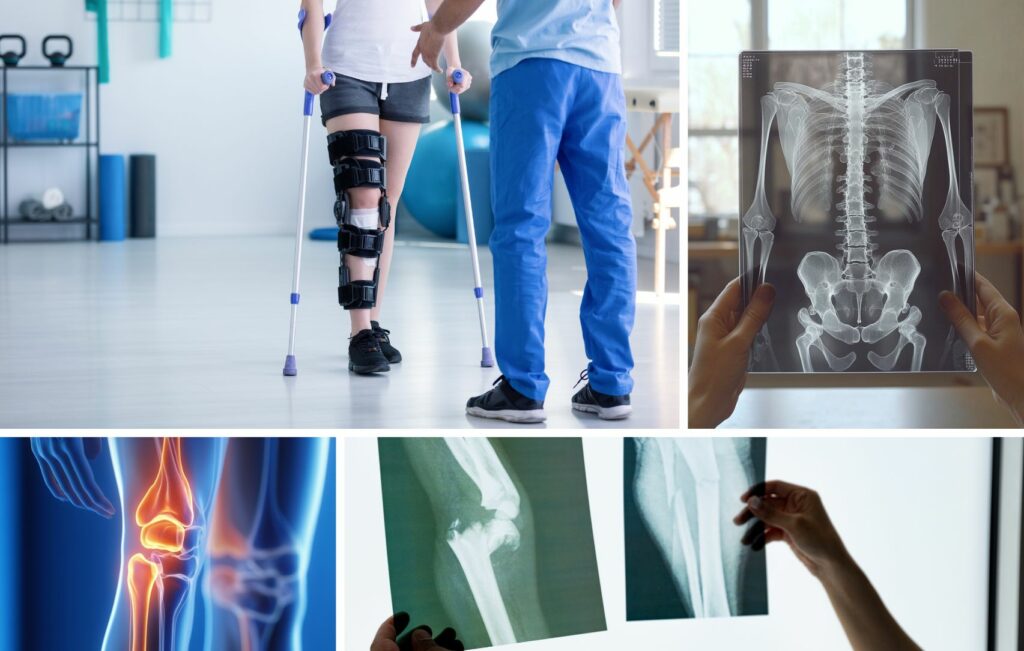
Colombian orthopedic care takes a holistic approach to recovery. Rehabilitation services include physical therapy and comprehensive post-surgical care. This integrated approach helps patients achieve the best outcomes. It also improves quality of life after treatment.
Colombia’s strategic focus on medical tourism enhanced its orthopedic reputation. Competitive pricing runs 60-70% less than U.S. costs. High care standards make Colombia an attractive option. Patients recover in mild climates while receiving internationally accredited medical care.
What Accreditations and Success Rates Should You Know?
Multiple Colombian hospitals hold JCI accreditation, the same gold standard applied to Johns Hopkins and Mayo Clinic. The inspection process and safety protocols are identical. Many Colombian orthopedic centers actually exceed benchmarks set by their U.S. counterparts. Hip replacements show a 98% success rate, knee replacements achieve 97%, and these rates match or exceed international standards.
Why Choose Colombia for Orthopedic Surgery?
Choosing Colombia for orthopedic surgery offers compelling benefits that extend far beyond cost savings. The combination of affordability, expertise, and accessibility makes Colombia stand out among medical tourism destinations.
While procedures cost 50-70% less than in the U.S. or Canada, the real advantage lies in the complete offering. You’ll find internationally-credentialed surgeons who speak English fluently and specialize in treating patients from North America. Instead of waiting 6-12 months for surgery at home, you can schedule your procedure within 2-4 weeks, a crucial difference when you are dealing with chronic pain or limited mobility.
Colombia’s mild climate supports post-surgical recovery. Medellín maintains year-round temperatures of 22-28°C (72-82°F), and dedicated recovery houses in El Poblado provide medical-grade aftercare within minutes of major hospitals.
How Much Can You Save Compared to the U.S.?
The table below compares average costs for common orthopedic procedures in Colombia, the United States, and Canada.
| Procedure | Cost in Colombia (USD) | Cost in USA (USD) | Cost in Canada (USD) | Savings |
|---|---|---|---|---|
| Hip Replacement | $8,000-12,000 | $40,000-55,000 | $20,000-40,000 | 70-80% |
| Knee Replacement | $7,000-12,500 | $35,000-50,000 | $18,000-35,000 | 70-80% |
| Spinal Fusion | $12,000-20,000 | $60,000-100,000 | $30,000-70,000 | Up to 80% |
| ACL Reconstruction | $4,500-7,000 | $20,000-30,000 | $15,000-45,000 | 75-80% |
| Rotator Cuff Repair | $5,000-7,000 | $25,000-35,000 | $18,000-30,000 | 75-80% |
These savings represent real financial relief for thousands of patients annually. Many use the money they save to extend their stay, allowing for more comprehensive rehabilitation or simply more comfortable recovery accommodations. Patients also compare costs with orthopedic surgery in Panama for additional options. The following sections cover the hospitals and surgeons available in Colombia.
Which Hospitals Offer the Best Orthopedic Care?
Bogotá’s medical district houses some of Latin America’s most advanced orthopedic centers. When you walk into Fundación Santa Fe de Bogotá, you’ll find robotic surgery systems and comprehensive joint replacement programs that have helped thousands regain mobility. Hospital Universitario San Ignacio has built its reputation on complex spine surgeries and sports medicine, while Clínica del Country specializes in minimally invasive procedures that significantly shorten recovery times.
Those preferring Medellín’s spring-like climate have equally impressive options. Hospital Pablo Tobón Uribe has gained international recognition for its joint replacement and trauma care programs, treating over 2,000 international patients annually. Clínica Las Américas draws athletes from across the Americas for sports medicine and arthroscopic procedures, offering specialized recovery programs that get you back to your active lifestyle faster.
How Long Will You Wait for Surgery?
Here is how scheduling timelines in Colombia compare to average wait times in the U.S. and Canada.
| Procedure | Colombia Wait Time | USA Wait Time | Canada Wait Time |
|---|---|---|---|
| Hip Replacement | 2-4 weeks | 3-6 months | 6-12 months |
| Knee Replacement | 2-4 weeks | 4-7 months | 6-12 months |
| Spinal Fusion | 3-5 weeks | 3-6 months | 9-14 months |
| ACL Reconstruction | 2-3 weeks | 2-5 months | 5-10 months |
The difference between suffering for months versus scheduling surgery in weeks cannot be overstated. For patients living with chronic pain or mobility limitations, Colombia’s rapid scheduling transforms quality of life almost immediately. Similar wait times apply for knee replacement in Panama. This speed does not compromise quality; it simply reflects Colombia’s investment in medical tourism infrastructure and hospital capacity dedicated to international patients.
What Orthopedic Procedures Are Available in Colombia?
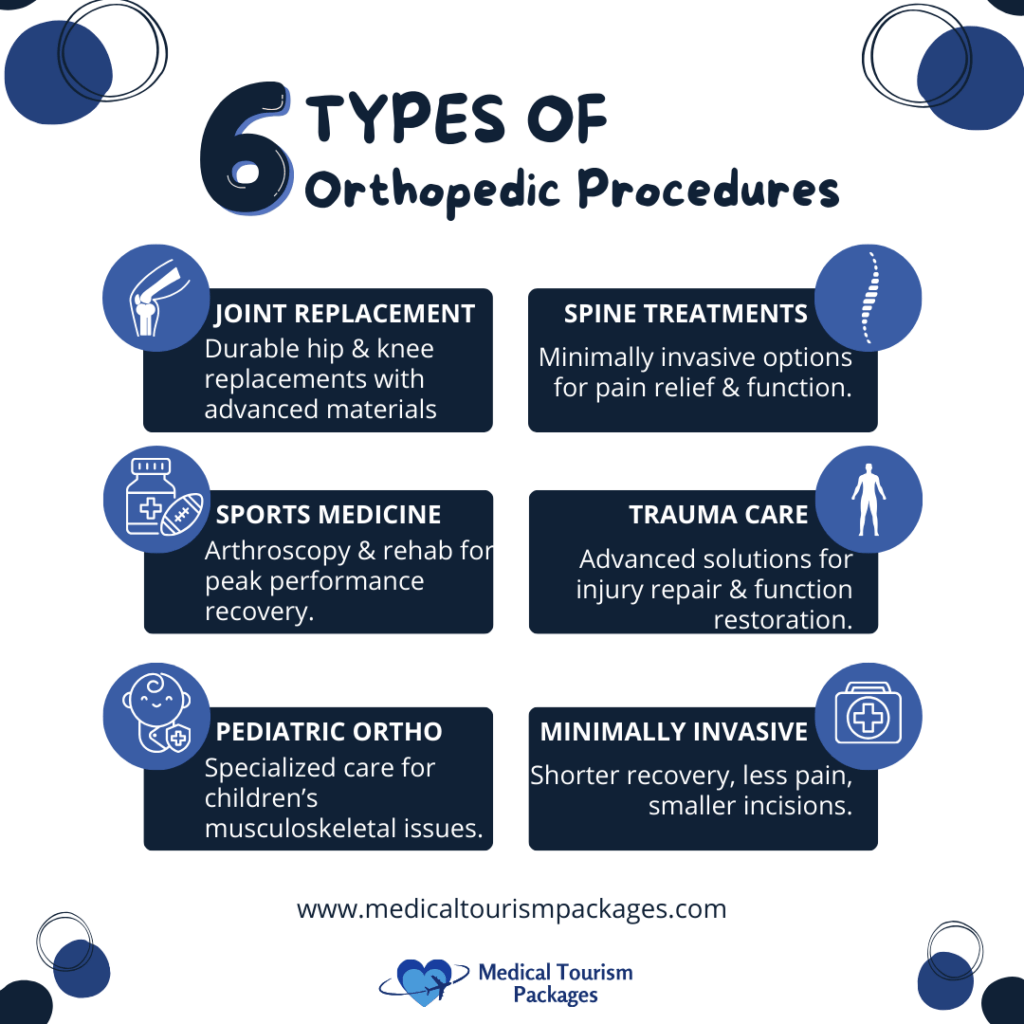
Colombian orthopedic centers perform a full range of procedures using the latest surgical techniques, from routine joint replacements to complex spinal reconstructions.
What Joint Replacement Options Exist?
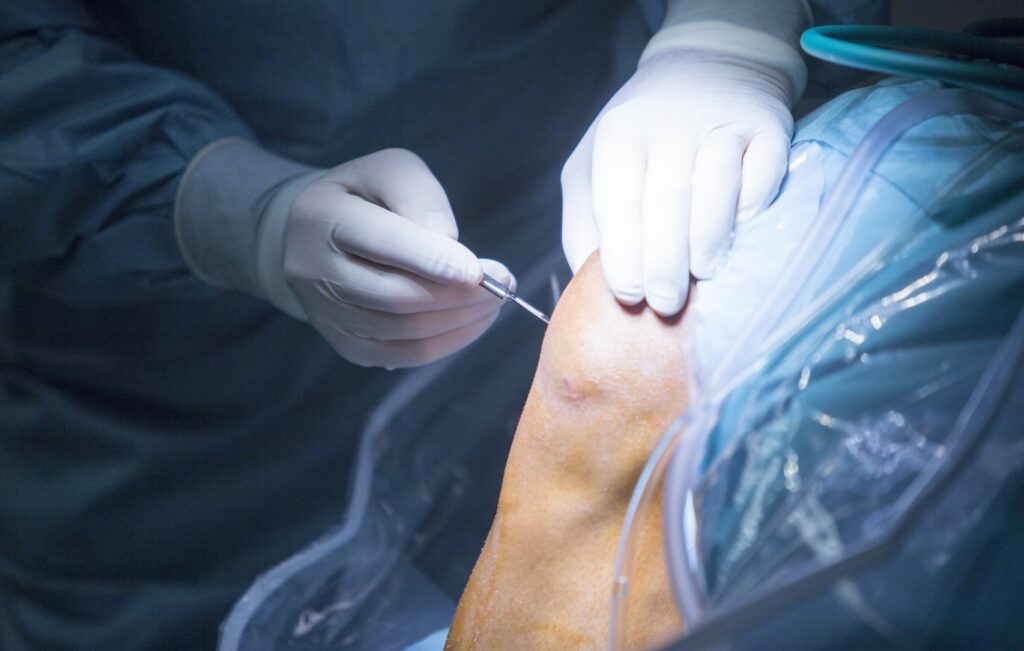
Colombian surgeons excel in hip and knee replacements using ceramic and titanium implants that last 15-20 years. For patients considering knee replacement in Colombia, computer-assisted navigation ensures precise implant placement, achieving better outcomes and faster recovery times than traditional methods allow.
Patients choosing orthopedic surgery in Bogotá or Medellín benefit from 3D imaging technology that enables comprehensive pre-surgical planning, allowing surgeons to customize each procedure to match your unique anatomy perfectly.
What Spine Treatments Can You Get?
Colombian spine specialists treat herniated discs, spinal stenosis, and scoliosis using both traditional and minimally invasive techniques. With laser spine surgery and endoscopic procedures, recovery time drops from months to just weeks, allowing you to return to normal life much faster.
What Sports Medicine Services Are Offered?
Athletes from across America choose Colombia for sports injury treatment, where arthroscopic surgery handles ACL tears, rotator cuff repairs, and meniscus injuries through tiny incisions that minimize scarring and accelerate return to sport. For dedicated procedures, explore shoulder surgery in Colombia.
What Trauma Care Is Available?
Complex fracture repair and limb reconstruction services utilize advanced materials and 3D-printed implants, with Colombian trauma surgeons handling challenging cases referred from throughout South America.
Is Pediatric Orthopedic Care Available?
Specialized pediatric orthopedists treat congenital conditions, growth abnormalities, and childhood sports injuries through family-centered care that ensures both children and parents feel supported throughout treatment.
What Are the Benefits of Minimally Invasive Surgery?
Colombian surgeons pioneer minimally invasive techniques that reduce hospital stays by 50%, with smaller incisions meaning less pain, minimal scarring, and recovery in 4-6 weeks instead of 3-4 months.
What Do Recovery Times Look Like?
Recovery times and success rates vary by procedure type. The table below provides general estimates.
| Procedure Category | Common Procedures | Recovery Time | Success Rate |
|---|---|---|---|
| Joint Replacement | Hip, Knee, Shoulder | 6-12 weeks | 97-98% |
| Spine Surgery | Disc Replacement, Fusion, Decompression | 4-8 weeks | 95% |
| Sports Medicine | ACL, Rotator Cuff, Meniscus | 3-6 months | 96% |
| Minimally Invasive | Arthroscopy, Endoscopy | 2-4 weeks | 98% |
| Trauma Care | Fracture Repair, Reconstruction | 8-16 weeks | 94% |
| Pediatric | Scoliosis, Club Foot, Hip Dysplasia | Varies | 95% |
Recovery Milestones for Major Procedures
Here is what to expect at each stage of recovery for the most common orthopedic procedures.
| Procedure | Hospital Stay | Walking | Return to Work | Full Recovery |
|---|---|---|---|---|
| Hip Replacement | 2-3 days | 1-2 weeks | 6-8 weeks | 3-6 months |
| Knee Replacement | 2-3 days | 2-3 weeks | 6-8 weeks | 3-6 months |
| ACL Repair | 1 day | 2-4 weeks (with brace) | 2-3 months | 6-9 months |
| Spine Surgery | 3-5 days | 1-2 weeks | 4-6 weeks | 3-4 months |
For comparisons with other destinations, see our guide to rotator cuff repair in Panama.
How Do You Plan Your Medical Journey?
Understanding recovery times helps set realistic expectations, but planning your actual medical journey requires specific steps. Successful orthopedic surgery in Colombia begins with careful planning, and the process is straightforward. Here’s your step-by-step guide to organizing treatment from initial consultation to your flight home.
How Does the Initial Consultation Work?
Picture this: You’re sitting at home in your comfortable chair, laptop open, connecting via video call with an orthopedic surgeon in Bogotá who’s reviewing the X-rays you uploaded last week. Within 30 minutes, the surgeon has explained your torn meniscus, outlined the arthroscopic procedure recommended, and discussed realistic recovery expectations based on your age and activity level. Before the call ends, you’ll have a detailed written proposal: surgery specifics, three-day hospital stay, complete cost breakdown showing you’ll save $18,000 compared to having the procedure done locally. Most consultations cost nothing or just $50-100, a small investment for answers that often provide more clarity than you received from doctors back home.
What Documents Do You Need?
Prepare these essential documents for your Colombian medical team:
- Medical History: Last 5 years of relevant records in PDF format (English or Spanish)
- Imaging Studies: X-rays, MRI, CT scans from within 6 months as digital DICOM files
- Blood Tests: Complete blood count and coagulation studies as lab reports
- Medications List: Current prescriptions with dosages in written format
- Travel Documents: Valid passport with 6+ months validity (scanned copy)
How Do You Arrange Travel and Lodging?
Direct flights connect major U.S. cities to Bogotá and Medellín. Flights from Miami, Atlanta, or Houston take 3-6 hours. Book 4-6 weeks in advance for best prices.
Finding comfortable accommodation near your hospital takes minimal effort thanks to Colombia’s developed medical tourism infrastructure. Medical hotels located within walking distance of major hospitals charge $40-80 per night and provide nursing support for post-operative care. For a more comprehensive experience, recovery houses offer weekly rates at $500-1000 that include meals, transportation to appointments, and a supportive environment with other medical travelers. Extended stays become surprisingly affordable in serviced apartments, running $800-1500 per month with full kitchens and housekeeping, suitable for patients requiring extended post-operative recovery periods.
Do You Need a Visa for Medical Travel?
Most patients do not need a special visa. Here is what to expect based on your nationality.
| Nationality | Visa Required | Stay Duration | Extension Available |
|---|---|---|---|
| USA/Canada | No (tourist entry) | 90 days | Yes, 90 more days |
| Europe (most) | No (tourist entry) | 90 days | Yes, 90 more days |
| Medical Visa | Optional | 1 year | Renewable |
Most North American and European patients won’t need to navigate complex visa applications. You can enter Colombia as a tourist and receive your medical care within that framework. The 90-day tourist period provides ample time for surgery and recovery, with extension options if unexpected complications require additional healing time. For those planning longer stays or multiple procedures, the optional medical visa offers year-long renewable access.
What Payment Methods Are Accepted?
Colombian hospitals offer transparent, all-inclusive pricing that eliminates surprise bills. Your quote typically covers surgeon and anesthesiologist fees, your private or semi-private hospital room, all operating room time and equipment, necessary implants or prosthetics, medications during hospitalization, and initial physical therapy sessions. This comprehensive approach means the price you are quoted is the price you will pay, a refreshing change from U.S. healthcare’s complex billing systems.
Payment methods accepted:
| Payment Type | Details |
|---|---|
| Deposit (upon scheduling) | 30-50% of total cost |
| Balance (day of surgery) | Remaining 50-70% |
| Credit Cards (Visa, Mastercard) | Accepted with 3-5% processing fee |
| Wire Transfer (5 days before) | No additional fees |
| Medical Financing | 6-24 month payment plans available |
The payment structure protects both you and the hospital through a straightforward deposit-and-balance system. Most hospitals prefer wire transfers since they avoid credit card processing fees, but they understand international patients often prefer the protection credit cards offer. The financing options make even Colombia’s already affordable procedures accessible to patients who need to spread costs over time.
Will Your Insurance Cover Surgery in Colombia?
Some U.S. insurance plans cover international surgery, making Colombia’s already affordable orthopedic procedures even more attractive. Contact your provider to verify coverage before booking. You will typically need pre-authorization from your insurance company, a letter of medical necessity from your U.S. doctor, a detailed treatment plan from the Colombian hospital, and an itemized cost breakdown. The process requires patience and paperwork, but securing even partial insurance coverage can reduce your out-of-pocket costs substantially.
Consider purchasing medical travel insurance ($200-500) covering complications, trip cancellation, and emergency evacuation.
How Should You Prepare for Surgery?
Proper preparation ensures the best surgical outcomes. Here is what you need to do before your trip.
What Medical Tests Do You Need Before Surgery?
Get medical clearance from your primary physician 2-4 weeks before travel. Your doctor will order tests based on your age and medical history. Patients over 50 need an EKG to assess heart function, those with breathing problems require a chest X-ray, diabetics need blood sugar testing to ensure glucose control, and anyone with heart disease history needs a comprehensive cardiac evaluation. These tests protect your safety and give the Colombian surgical team baseline information to personalize your care.
Will You Need Additional Tests in Colombia?
Colombian hospitals may repeat certain tests to ensure current information. Budget $200-500 for additional diagnostics if needed. Modern imaging equipment in Bogotá and Medellín matches international standards.
How Should You Manage Your Medications?
With your doctor’s approval, stop blood thinners 5-7 days before surgery. Keep taking blood pressure medications unless told otherwise. Diabetics should adjust insulin or oral medications based on fasting requirements. Avoid NSAIDs like ibuprofen and aspirin for one week before surgery.
What Lifestyle Changes Help Recovery?
Stop smoking at least 4-6 weeks before surgery to reduce infection risk by 50%. Avoid alcohol entirely 48 hours before surgery. Start strengthening muscles around the surgical site with prescribed exercises. Increase protein intake and aim to lose 5-10 pounds if overweight.
How Do You Choose the Right Hospital?
Which Are the Best Hospitals in Bogotá?
These JCI-accredited and nationally certified hospitals lead orthopedic care in the capital.
| Hospital | Accreditation | Specialties | Success Rate |
|---|---|---|---|
| Fundación Santa Fe | JCI Certified | Joint Replacement, Robotics | 98% |
| Hospital Universitario San Ignacio | JCI Certified | Spine, Sports Medicine | 97% |
| Clínica del Country | JCI Certified | Minimally Invasive Surgery | 98% |
| Clínica Shaio | ICONTEC | Trauma, Reconstruction | 96% |
Notice that success rates cluster between 96-98%. These are not marketing claims but documented outcomes tracked through international accreditation systems. JCI certification means these hospitals meet the same rigorous standards as top American medical centers, while ICONTEC represents Colombia’s national quality standards. Your choice between them often comes down to which specialty aligns with your specific procedure and which location fits your recovery plans.
Which Are the Top Centers in Medellín?
Medellín’s top orthopedic hospitals treat thousands of international patients each year.
| Hospital | Technology | International Patients/Year | Languages |
|---|---|---|---|
| Hospital Pablo Tobón Uribe | 3D Planning, Navigation | 2,000+ | English, Portuguese |
| Clínica Las Américas | Arthroscopy Suite | 1,500+ | English, French |
| Clínica El Rosario | Robotic Surgery | 1,000+ | English |
These hospitals treat thousands of international patients annually. All offer multilingual staff and dedicated international patient departments. Patients also consider shoulder surgery in Panama as an alternative destination.
What Technology and Safety Standards Are in Place?
Operating rooms feature robotic platforms like MAKO and ROSA for minimally invasive joint replacements, computer-assisted navigation for precision implant placement, and intraoperative CT scanners for real-time guidance. Laminar flow ventilation keeps surgical site infection rates under 1%. All hospitals maintain 24/7 ICUs, on-site blood banks, and rapid response teams. Most surgeons speak English, and dedicated international patient departments provide interpreters, airport pickup, appointment coordination, and English-language medical reports.
What Can You Expect During Recovery?
Colombian orthopedic centers provide comprehensive rehabilitation programs that accelerate recovery.
What Happens Immediately After Surgery?
Multimodal pain management combines medications, nerve blocks, and anti-inflammatory protocols to reduce opioid needs by 60%. Most joint replacement patients walk within 4-6 hours of surgery. Specialized nurses provide continuous monitoring to catch potential complications early.
What Physical Therapy Will You Receive?
Customized rehabilitation includes:
- Phase 1 (Days 1-7): Gentle range of motion, breathing exercises
- Phase 2 (Weeks 2-4): Strength building, balance training
- Phase 3 (Weeks 4-12): Functional training, sport-specific exercises
Therapy sessions cost $30-50 compared to $150-200 in the United States.
What Rehabilitation Facilities Are Available?
Specialized recovery centers offer hydrotherapy pools, anti-gravity treadmills, and cryotherapy chambers. Occupational therapists work alongside physical therapists to help you return to daily activities.
How Does Follow-Up Care Work?
Continuous care after returning home ensures optimal long-term outcomes from your orthopedic surgery in Colombia.
Hospitals use wearable sensors and mobile apps to track your range of motion and gait after you return home. Your surgeon reviews the data remotely and adjusts your therapy via WhatsApp or video call. Typical follow-up schedule:
- 2 weeks post-surgery: video call (included in most care plans)
- 6 weeks: progress evaluation ($50-75)
- 3 months: final assessment ($50-75)
Your home doctor receives a full surgical report within 48 hours, including implant specifications and post-operative protocols. Colombian surgeons are available for physician-to-physician consultation calls. Long-term support includes annual telemedicine check-ups, lifetime warranties on certain implants, and revision surgery discounts.
What Are Your Legal Rights and Protections?
Colombia provides strong legal protections for medical tourists, ensuring safe and ethical treatment.
What Rights Do You Have as a Patient?
Colombian law guarantees:
- Informed consent: All procedures explained in your language
- Privacy protection: Medical records kept confidential
- Choice of provider: Right to change doctors or hospitals
- Access to records: Complete medical files provided upon request
Are You Protected from Malpractice?
Protection measures include:
- Mandatory malpractice insurance for all surgeons
- Coverage up to $1 million per incident
- Independent review boards for complaints
- Legal representation available in English
How Is Your Medical Data Protected?
Colombia follows international standards for medical data:
- HIPAA-compliant record handling
- Encrypted digital communications
- Restricted access to patient information
- Data deletion upon request
FAQs About Orthopedic Surgery in Colombia
Why choose Colombia for orthopedic surgery?
Colombia offers orthopedic surgery at 50-70% less cost than North America. Top hospitals provide world-class treatment with international accreditations. Waiting times are just 2-4 weeks instead of months. Recovery facilities are available in Bogotá, Medellín, and Cali.
What orthopedic procedures are available in Colombia?
Colombian hospitals perform hip, knee, and shoulder replacements, spinal fusion and disc replacement, ACL reconstruction, rotator cuff repair, meniscus surgery, fracture repair, scoliosis correction, and arthroscopic procedures. Minimally invasive options are available for most surgeries.
How much does orthopedic surgery cost in Colombia?
Hip replacement costs $8,000-12,000 (vs. $40,000-55,000 in the U.S.), knee replacement $7,000-12,500, ACL reconstruction $4,500-7,000, and spinal fusion $12,000-20,000. Prices typically include surgeon fees, hospital stay, implants, and initial physical therapy.
Is orthopedic surgery safe in Colombia?
Yes. Major hospitals hold JCI accreditation (the same standard as Johns Hopkins and Mayo Clinic). Surgical site infection rates stay below 1%. Hip replacement success rates reach 98%, knee replacements 97%. Hospitals use robotic surgery platforms, computer-assisted navigation, and maintain 24/7 ICUs with dedicated rapid response teams.
Where should I have orthopedic surgery in Colombia?
Bogotá and Medellín are top destinations for orthopedic surgery. Bogotá has advanced facilities like Fundación Santa Fe and Hospital Universitario San Ignacio. Medellín offers Hospital Pablo Tobón Uribe and Clínica Las Américas. Medellín has perfect year-round weather for recovery. Both cities have medical tourism infrastructure and English-speaking staff.
How long is recovery after orthopedic surgery in Colombia?
Recovery depends on the procedure. Joint replacements: walk in 1-2 weeks, return to work in 6-8 weeks, full recovery in 3-6 months. ACL repair: walk with brace in 2-4 weeks, full recovery in 6-9 months. Spine surgery: walk in 1-2 weeks, full recovery in 3-4 months. Physical therapy costs $30-50 per session (vs. $150-200 in the U.S.).
How Do You Schedule Orthopedic Surgery in Colombia?
Medical Tourism Packages coordinates your entire orthopedic surgery journey in Colombia. We connect you with JCI-accredited hospitals in Bogotá, Medellín, and Cali. Our team arranges your travel and accommodations. We provide bilingual support throughout your treatment.
Get a free consultation to discuss your specific needs. You’ll receive a personalized quote for your procedure. We help with everything from initial planning to post-operative care. Our facilitators ensure you receive the best orthopedic care Colombia offers.
Contact us today to start planning your affordable orthopedic surgery in Colombia.