Book Appointment Now

Latin America Travel Guide: Best Places, Costs & How to Plan
 By
By
Latin America offers Americans 50-80% savings on JCI-accredited procedures, with Mexico receiving 1.2 million medical tourists annually alongside top-ranked hospitals in Panama, Colombia, and Costa Rica.
Latin America’s medical tourism market reached $10.34 billion in 2024, with JCI-accredited hospitals like Hospital Punta Pacifica (Johns Hopkins affiliate) and Hospital CIMA (VA-approved). Knee replacements cost $4,900-$12,500 versus $35,000-$50,000 in the US (70-80% savings).
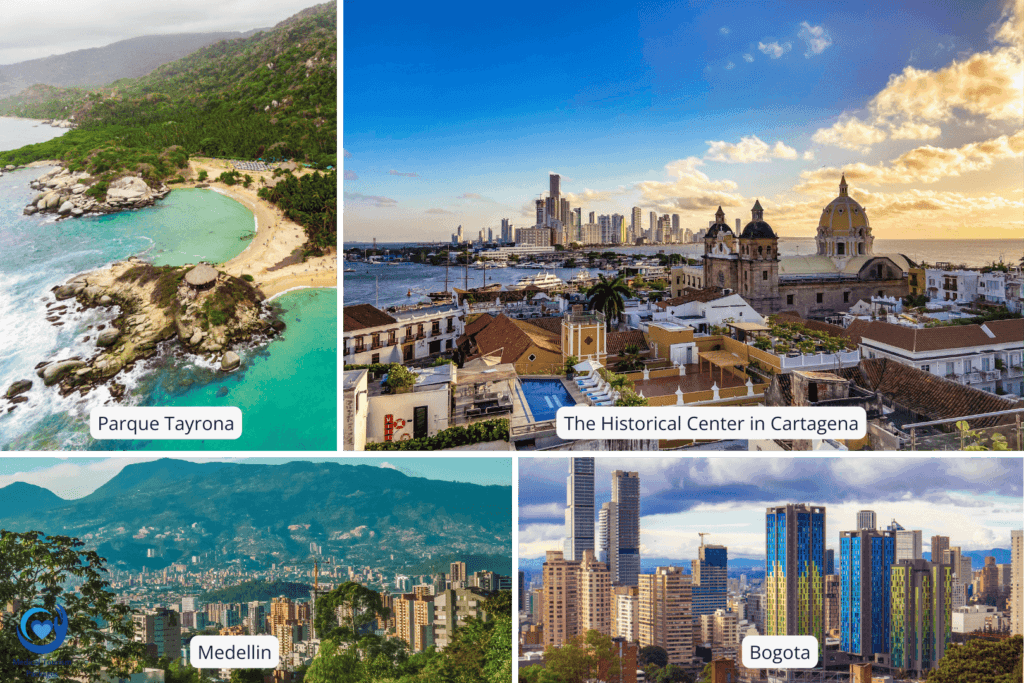
Our network connects verified travelers with JCI-accredited hospitals across Panama City, Medellin, Bogota, and San Jose, including Hospital Israelita Albert Einstein in Brazil and Fundacion Santa Fe de Bogota. Below, you will find destination guides, procedure cost comparisons, safety ratings, visa requirements, flight routes, and answers to the most common questions about traveling to Latin America.
What Is Latin America?
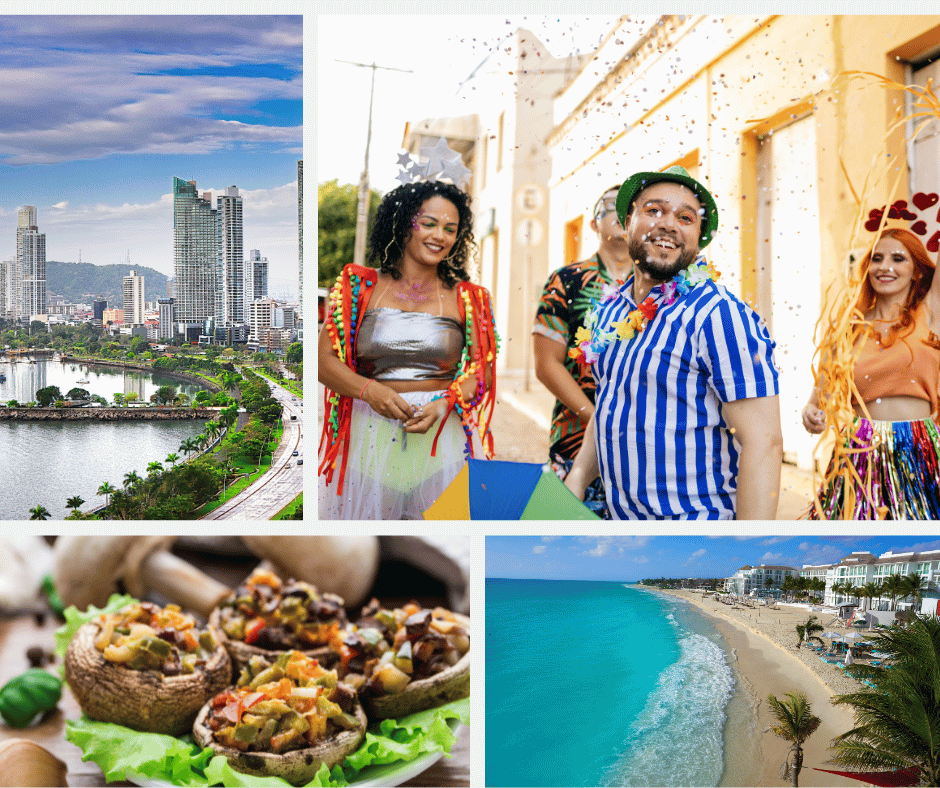
Latin America is a region of 33 countries stretching from Mexico through Central America, the Caribbean, and South America. The region shares Spanish, Portuguese, and French colonial roots. Over 650 million people call Latin America home across diverse climates, cultures, and landscapes.
What Countries Make Up Latin America?
The countries of Latin America include Mexico, Guatemala, Honduras, El Salvador, Nicaragua, Costa Rica, and Panama in Central America. South America adds Colombia, Brazil, Argentina, Peru, Chile, Bolivia, Ecuador, Uruguay, Paraguay, and Venezuela. Caribbean nations include Cuba, Dominican Republic, and Puerto Rico.
Spanish is the most common language across 18 countries. Brazil speaks Portuguese, making it the region’s largest country by area and population. French is spoken in Haiti and French Guiana. Indigenous languages like Quechua, Nahuatl, and Guarani survive across rural communities.
Why Do Americans Travel to Latin America?
Americans travel to Latin America for affordable vacations, rich culture, warm weather, and short flights from most US cities. Budget travelers spend $35 to 100 dollars daily, which is 50 to 70 percent less than Western Europe. Medical tourists save 50 to 80 percent on surgeries at JCI-accredited hospitals.
The Latin America medical tourism market reached $10.34 billion in 2024. It is projected to grow to $41.30 billion by 2032 at an 18.9% annual growth rate. Mexico alone receives 1.2 million medical tourists each year. Panama City, Bogota, and San Jose are growing hubs for American patients.
What Makes Latin America Unique Compared to Other Regions?
Latin America is unique because it combines ancient civilizations, tropical ecosystems, and modern cities within a few hours of US airports. No other region offers Inca ruins, Amazon rainforest, Caribbean beaches, and Patagonian glaciers in the same continent.
The region spans every climate zone. Medellin stays 75 degrees Fahrenheit year-round. The Amazon reaches 90 degrees with high humidity. Patagonia drops below freezing in winter. This variety means travelers can find ideal weather any month of the year.
What Are the Best Places to Visit in Latin America?
The best places to visit in Latin America include Mexico City for culture, Medellin for medical tourism, Cusco for history, San Jose for nature, and Buenos Aires for food. Each country offers a different experience at prices well below US and European destinations.
Which Are the Top Countries for First-Time Visitors?
The top countries for first-time visitors are Mexico, Colombia, Costa Rica, Peru, Argentina, and Panama. These six countries have the best tourist infrastructure, safe neighborhoods, direct US flights, and English-speaking services in major cities.
- Mexico: Direct flights from 30+ US cities. Beach resorts, ancient ruins, and world-class food. No visa needed for stays up to 180 days.
- Colombia: Medellin and Bogota offer affordable city experiences. Top destination for orthopedic and cosmetic medical tourism.
- Costa Rica: Safest country in Central America. Rainforests, volcanoes, and two JCI-accredited hospitals in San Jose.
- Peru: Home to Machu Picchu and world-famous ceviche. Budget-friendly at $45 to 95 dollars per day.
- Argentina: Buenos Aires has European-style architecture, tango culture, and excellent steak. Low safety risk for tourists.
- Panama: Uses US dollars as official currency. Hospital Punta Pacifica has Johns Hopkins affiliation. Three-hour flight from Miami.
What Are the Most Popular Cultural and Historical Sites?
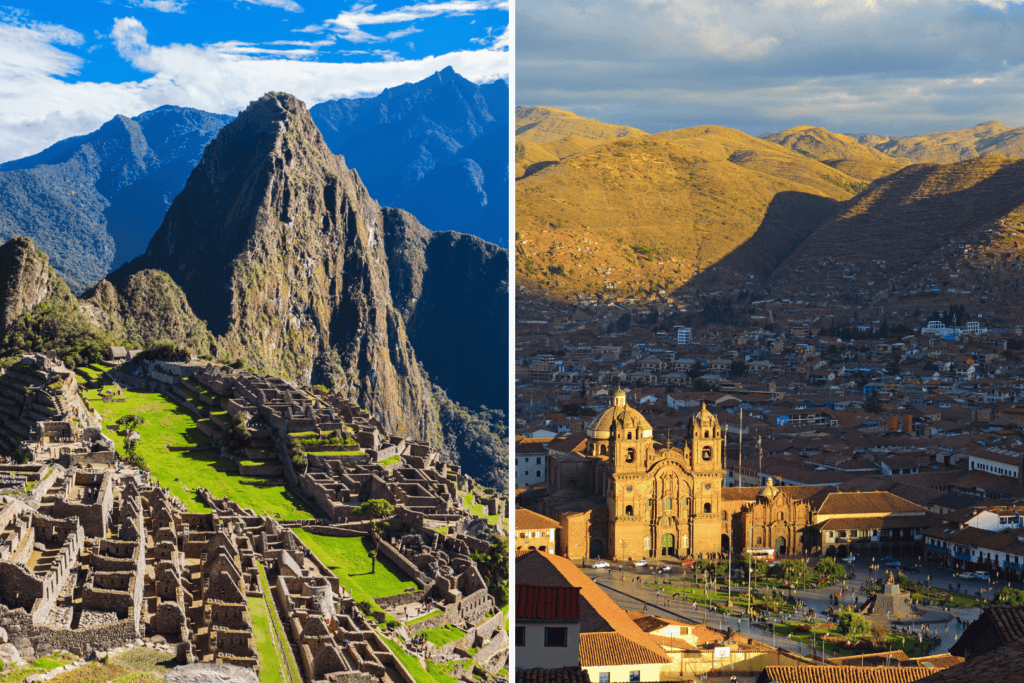
The most popular cultural and historical sites include Machu Picchu in Peru, Chichen Itza in Mexico, Cartagena’s walled city in Colombia, and the Galapagos Islands in Ecuador. These UNESCO World Heritage Sites attract millions of visitors every year.
- Machu Picchu (Peru): 15th-century Inca citadel at 7,970 feet. Accessible by the Inca Trail (4-day hike) or train from Cusco.
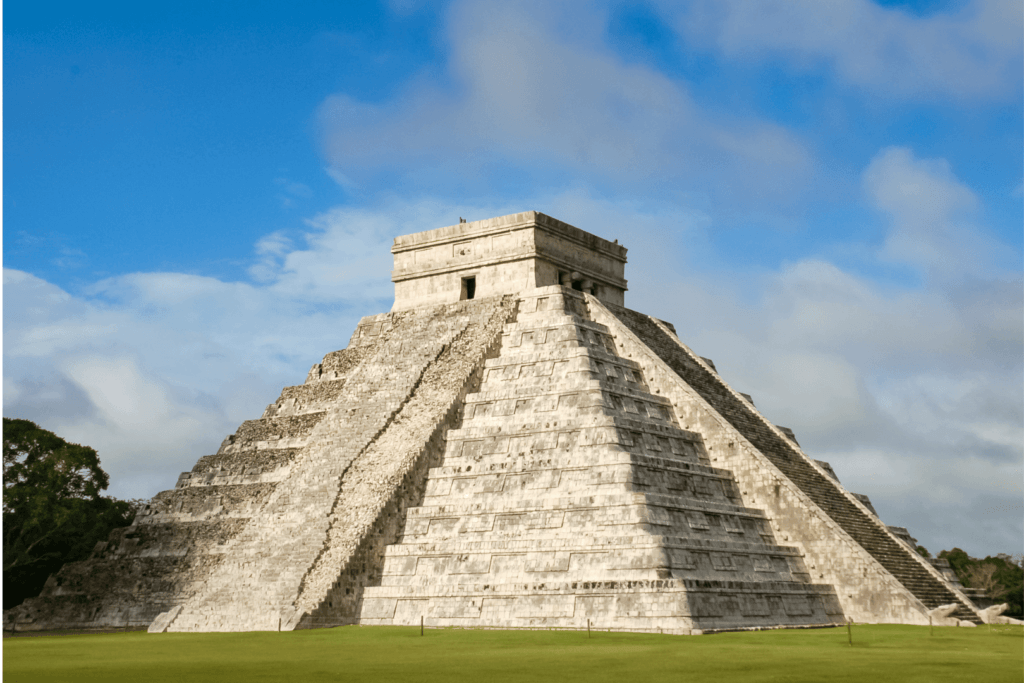
- Chichen Itza (Mexico): Ancient Mayan pyramid and one of the New Seven Wonders of the World. Day trip from Cancun or Merida.
- Cartagena (Colombia): Colonial walled city with colorful streets and Caribbean beaches. A top port for cruise ships.
- Buenos Aires (Argentina): Known as the “Paris of South America” for its European architecture, tango shows, and cafe culture.
- Galapagos Islands (Ecuador): Unique wildlife including giant tortoises, marine iguanas, and hammerhead sharks. Strict conservation rules limit visitors.
What Are the Top Nature and Adventure Destinations?
The top nature and adventure destinations are the Amazon rainforest, Patagonia, Galapagos Islands, Tayrona National Park in Colombia, and Arenal Volcano in Costa Rica. Latin America holds 40% of the world’s biodiversity across these regions.
- Amazon Rainforest (Brazil/Peru/Colombia): World’s largest tropical forest. River tours from Manaus, Iquitos, or Leticia.
- Patagonia (Argentina/Chile): Glaciers, mountains, and trekking routes. Torres del Paine is one of the world’s best hiking parks.
- Tayrona National Park (Colombia): Caribbean beaches meet jungle trails. Located 5 hours from Cartagena.
- Arenal Volcano (Costa Rica): Hot springs, zip-lining, and rainforest hikes. Three hours from San Jose by car.
- Atacama Desert (Chile): Driest desert on Earth. Stargazing, salt flats, and geysers near San Pedro de Atacama.
When Is the Best Time to Visit Latin America?
The best time to visit Latin America depends on the country. Most Central American destinations are best from December to April (dry season). South America’s summer runs December to February. Medical tourists should book during off-peak months for lower flight and hotel costs.
| Country | Best Months | Dry Season | Rainy Season | Notes |
|---|---|---|---|---|
| Mexico | Nov-Apr | Nov-May | Jun-Oct | Hurricane season Jun-Nov on coasts |
| Colombia | Dec-Mar, Jul-Aug | Dec-Mar | Apr-Jun, Sep-Nov | Medellin has mild weather year-round |
| Costa Rica | Dec-Apr | Dec-Apr | May-Nov | Pacific coast driest; Caribbean wetter |
| Peru | May-Sep | May-Oct | Nov-Apr | Inca Trail dry season May-Sep |
| Brazil | Apr-Oct | May-Sep (varies) | Dec-Mar | Carnival in Feb-Mar; peak pricing |
| Argentina | Oct-Apr | Oct-Mar (Patagonia) | Varies by region | Wine harvest Mar-Apr in Mendoza |
| Panama | Dec-Apr | Dec-Apr | May-Nov | Sep is cheapest month for flights |
How Much Does It Cost to Travel in Latin America?
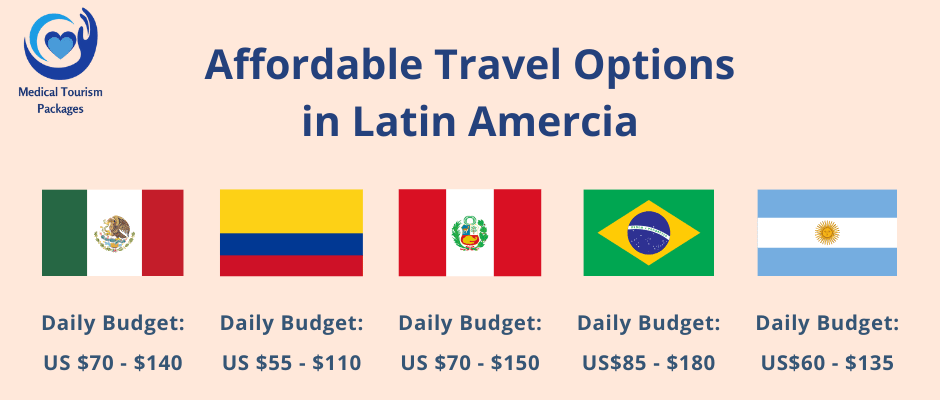
Travel in Latin America costs $35 to 120 dollars per day depending on the country and travel style. Budget travelers in Bolivia and Colombia spend under $50 daily. Mid-range travelers in Costa Rica and Brazil spend $65 to 120 dollars per day including hotel, food, and transport.
What Are the Daily Travel Budgets by Country?
The daily travel budgets range from $35 in Bolivia to $120 in Costa Rica and Brazil. A full month of backpacking in cheaper countries costs $1,200 to $1,300, which averages about 38 dollars per day. Mid-range hotels and restaurants cost $50 to 150 per night.
| Country | Budget/Night | Mid-Range/Night | Daily Spend | Notes |
|---|---|---|---|---|
| Colombia | $8-18 hostel | $50-100 hotel | $40-80 | Good value internal flights |
| Mexico | $10-20 hostel | $60-120 hotel | $45-90 | Cheaper than Western Europe |
| Peru | $10-25 hostel | $60-120 hotel | $45-95 | Trek permits add seasonal costs |
| Brazil | $15-35 hostel | $70-140 hotel | $60-120 | Peak pricing at Carnival/New Year |
| Argentina | $10-25 hostel | $50-110 hotel | $45-100 | Currency volatility affects costs |
| Bolivia | Budget ~$35/day | $50-90 hotel | $35-63 | One of the cheapest in the region |
| Costa Rica | $15-30 hostel | $70-150 hotel | $65-120 | Among the most expensive in LATAM |
How Do Flight Costs Compare for Major Destinations?
Flight costs for major Latin American destinations range from $200 round-trip (Miami to Panama City) to $800 round-trip (Los Angeles to Bogota). Copa Airlines, Avianca, and American Airlines offer the most direct routes. Booking one month ahead saves 15 to 25 percent on airfare.
| Origin City | Destination | Airlines | Flight Time | Round-Trip Cost |
|---|---|---|---|---|
| Miami | Panama City | Copa, American, Spirit | ~3h | $200-$450 |
| New York | Panama City | Copa, United, JetBlue | ~5h | $300-$600 |
| Houston | Panama City | United, Copa | ~3.5h | $250-$500 |
| Miami | Bogota | Avianca, American | ~4h | $250-$500 |
| New York | Bogota | Avianca, Copa, American | ~6h | $300-$650 |
| Houston | Bogota | United, Avianca | ~4.5h | $280-$550 |
| Los Angeles | Panama City | Copa (via hub) | ~7h+ | $400-$700 |
| Los Angeles | Bogota | Avianca, Copa | ~9h+ | $450-$800 |
Domestic flights within Colombia cost as low as $18 one-way between Bogota and Medellin. Avianca, LATAM, and JetSmart operate these budget routes. September is the cheapest month to fly to Panama during its rainy season.
What Currency Do You Use in Latin America?
You use local currencies in most Latin American countries. Panama is the exception because it uses the US dollar as its official currency. This makes Panama the most convenient destination for American medical tourists who want to avoid exchange rate losses.
| Country | Currency | Code | USD Accepted? | Credit Cards |
|---|---|---|---|---|
| Panama | US Dollar | USD | Yes (official) | Widely accepted |
| Colombia | Colombian Peso | COP | Limited (tourist areas) | Widely in cities |
| Mexico | Mexican Peso | MXN | Some tourist areas | Widely accepted |
| Costa Rica | Costa Rican Colon | CRC | Widely at tourist spots | Common |
| Peru | Peruvian Sol | PEN | Some tourist areas | Common in cities |
| Brazil | Brazilian Real | BRL | Rarely | Widely accepted |
| Argentina | Argentine Peso | ARS | Major hotels/tourist areas | Common; cash useful |
Use in-country ATMs at banks for the best exchange rates. Avoid airport exchange counters which charge 5 to 15 percent markups. Always pay in local currency when using credit cards abroad to skip dynamic conversion fees.
What Are the Cheapest Countries to Visit in Latin America?
The cheapest countries to visit in Latin America are Bolivia, Nicaragua, and Colombia. Budget travelers in Bolivia spend as little as 35 dollars per day. Colombia offers $8 to 18 dollar hostels and $2 to 5 dollar meals in cities like Medellin and Bogota.
Mid-range travelers should consider Peru and Argentina. Peru costs $45 to 95 per day with hotel and food included. Argentina’s currency volatility often works in favor of dollar-holding travelers. Costa Rica and Brazil sit at the higher end, costing $65 to 120 daily.
For medical tourists, cost goes beyond daily travel budgets. Colombia and Mexico offer the deepest procedure savings at 50 to 80 percent below US prices. Panama adds convenience because its dollar-based economy removes currency exchange risk entirely.
Which Latin American Countries Are Best for Medical Tourism?
The best Latin American countries for medical tourism are Mexico, Colombia, Panama, Costa Rica, and Brazil. Mexico leads with 1.2 million medical tourists per year. Colombia offers the deepest savings at 50 to 80 percent below US prices. Panama has the only Johns Hopkins-affiliated hospital in Central America. Our guide to which country has the best medical tourism in Latin America provides a detailed procedure-by-procedure breakdown.
Why Do Americans Choose Latin America for Medical Procedures?
Americans choose Latin America for medical procedures because they save 50 to 80 percent compared to US costs at JCI-accredited hospitals. A knee replacement that costs $35,000 to $50,000 in the US costs $4,900 to $12,500 in Mexico or Colombia.
The savings come from lower operating costs, not lower quality. Hospitals like Hospital Punta Pacifica in Panama City maintain Johns Hopkins Medicine affiliation. Hospital Internacional de Colombia in Bucaramanga partners with the Mayo Clinic Care Network. These affiliations require hospitals to meet the same quality standards as top US facilities.
Short flight times add to the appeal. Miami to Panama City takes 3 hours. Miami to Bogota takes 4 hours. US patients can fly to their surgery, recover, and return home within 7 to 14 days for most procedures.
Which Country Is Best for Each Procedure?
The best country depends on the procedure. Mexico is best for dental work and bariatric surgery. Colombia leads in orthopedics and cosmetic surgery. Brazil ranks number one globally for cosmetic procedures per the International Society of Aesthetic Plastic Surgery (ISAPS 2023).
| Country | Specialty Strength | JCI Hospitals | Key Advantage |
|---|---|---|---|
| Mexico | Dental, bariatric, cosmetic | 8+ | Proximity to US; border clinics in Los Algodones |
| Colombia | Orthopedic, cosmetic, cardiac | 6-7 | Deepest savings (50-80%); Mayo Clinic network |
| Panama | Orthopedic, general surgery | 2 | Johns Hopkins affiliation; USD currency |
| Costa Rica | Dental, general surgery | 2 | Safest country; only VA-approved hospital |
| Brazil | Cosmetic (#1 globally) | 25+ | Highest volume; Albert Einstein Hospital |
| Argentina | Cardiology, cosmetic | Several | Southern Cone safety; skilled specialists |
Los Algodones in Mexico sees over 1 million dental tourists per year. This small border town near Yuma, Arizona has more than 350 dental clinics within a few walkable blocks. US patients cross the border on foot for same-day dental work.
Which Are the JCI-Accredited Hospitals in Latin America?
The JCI-accredited hospitals in Latin America include Hospital Punta Pacifica in Panama, Hospital CIMA in Costa Rica, Hospital Internacional de Colombia, Fundacion Santa Fe de Bogota, Hospital Clinica Biblica, and Hospital Israelita Albert Einstein in Brazil. JCI accreditation means these hospitals meet 1,200+ safety standards.
| Hospital | Country | JCI Since | International Affiliation | Specialty |
|---|---|---|---|---|
| Hospital Punta Pacifica | Panama | 2011 | Johns Hopkins Medicine | Cardiology, orthopedics, oncology |
| Clinica Hospital San Fernando | Panama | 2011 | None specified | Multi-specialty, dental |
| Hospital Internacional de Colombia | Colombia | 6 consecutive cycles | Mayo Clinic Care Network | Orthopedics, cardiology, transplants |
| Fundacion Santa Fe de Bogota | Colombia | Active | US academic partners | Hip/knee replacement, oncology |
| Hospital Clinica Biblica | Costa Rica | First in Central America | None specified | Dental, orthopedics, cardiac |
| Hospital CIMA | Costa Rica | Active | US Dept. of Veterans Affairs | General surgery, dental, orthopedics |
| Hospital Israelita Albert Einstein | Brazil | Active | Planetree designation | Oncology, cardiac, complex surgery |
Hospital CIMA in San Jose, Costa Rica is the only hospital in Central America approved by the US Department of Veterans Affairs. US veterans can receive care there under VA benefits. Fundacion Santa Fe de Bogota ranks number one in Latin America for orthopedics according to Newsweek and Statista 2025.
How Much Can You Save on Surgery in Latin America?
You can save 50 to 80 percent on surgery in Latin America compared to US prices. A knee replacement costs $4,900 to $12,500 versus $35,000 to $50,000 in the US. Dental implants cost $750 to $1,800 versus $3,500 to $6,000 in the US.
| Procedure | Mexico Cost | Colombia Cost | US Cost | Savings |
|---|---|---|---|---|
| Knee Replacement | $4,900-$8,280 | $7,000-$12,500 | $35,000-$50,000 | 70-80% |
| Hip Replacement | $5,500-$9,000 | $8,000-$14,000 | $35,000-$55,000 | 70-80% |
| Dental Implant (single) | $750-$1,200 | $1,000-$1,800 | $3,500-$6,000 | 60-75% |
| All-on-4 Full Mouth | $8,000-$12,000 | $7,000-$11,000 | $20,000-$30,000 | 50-70% |
| Breast Implants | $3,500-$5,500 | $3,000-$5,000 | $8,000-$12,000 | 50-65% |
| Gastric Sleeve | $4,500-$8,500 | $5,000-$9,000 | $15,000-$23,000 | 55-75% |
| Tummy Tuck | $3,900-$6,500 | $3,500-$6,000 | $8,000-$15,000 | 50-70% |
| Rhinoplasty | $2,500-$5,000 | $2,200-$4,500 | $7,000-$15,000 | 55-75% |
Medical tourism packages typically include consultation, procedure, anesthesia, hospital stay (one to five nights), and airport transfers. Some packages also include hotel accommodation during recovery. Most top clinics accept US dollars, credit cards, and wire transfers. Learn more about orthopedic surgery packages in Latin America, including knee and hip replacement options at JCI-accredited hospitals.
How Do You Plan a Trip to Latin America?
You plan a trip to Latin America by checking visa requirements, booking flights, arranging travel insurance, and preparing medical records if traveling for procedures. Most Latin American countries allow US citizens to enter visa-free for 90 days. Start planning two to three months before departure.
Do US Citizens Need a Visa to Visit Latin America?
US citizens do not need a visa for most Latin American countries. Mexico allows 180-day stays. Colombia, Panama, Costa Rica, Peru, Chile, and Argentina allow 90-day visa-free stays. Brazil requires an e-Visa since January 2024. Bolivia charges a $160 visa fee valid for 10 years.
| Country | Visa Required? | Max Stay | Notes |
|---|---|---|---|
| Mexico | No | 180 days | Tourist card (FMM) required |
| Colombia | No | 90 days | Passport valid 6+ months required |
| Panama | No | 90-180 days | Tourist stamp at entry; extensions available |
| Costa Rica | No | 90 days | Return ticket may be requested |
| Peru | No | 90 days | Passport valid 6+ months |
| Chile | No | 90 days | Reciprocity fee eliminated |
| Argentina | No | 90 days | Reciprocity tax eliminated |
| Brazil | Yes (e-Visa) | 90 days | E-Visa required since January 2024 |
| Bolivia | Yes | 90 days | $160 visa fee; valid 10 years |
| Venezuela | Yes | Varies | US State Dept. Level 4: Do Not Travel |
Canadian citizens enjoy similar visa-free access for most countries. All travelers should verify their passport is valid for at least 6 months (six months) beyond their travel date. Some countries request proof of return flights at entry.
What Are the Best Airlines and Routes from the US?
The best airlines for flying from the US to Latin America are Copa Airlines, Avianca, American Airlines, United, and JetBlue. Copa Airlines operates the most nonstop routes to Panama City from US hubs. Avianca connects to Bogota and Medellin from Miami, New York, and Houston.
| Destination | Best US Origins | Top Airlines | Flight Time | Round-Trip Cost |
|---|---|---|---|---|
| Panama City | Miami, Houston, NYC | Copa, American, United | 3-5h | $200-$600 |
| Bogota | Miami, Houston, NYC | Avianca, American, Copa | 4-6h | $250-$650 |
| Medellin | Miami, Fort Lauderdale | Avianca, Spirit | 3.5-4h | $250-$500 |
| San Jose (CR) | Miami, Houston, LA | American, United, Southwest | 3-5.5h | $250-$550 |
| Mexico City | All major US cities | American, United, Delta | 3-5h | $200-$500 |
Book flights one month ahead for the best prices. September is the cheapest month for Panama flights during the rainy season. Domestic Colombia flights between Bogota and Medellin start at $18 one-way on Avianca, LATAM, and JetSmart.
What Travel Insurance Do Medical Tourists Need?
Medical tourists need international medical travel insurance that covers procedures, complications, and malpractice. Standard travel insurance does not cover elective surgeries abroad. Purchase a policy that includes medical evacuation, surgical complications, and trip cancellation protection before booking flights.
- International medical travel insurance: Covers surgical complications, extended hospital stays, and follow-up care. Essential for all medical tourists.
- Malpractice coverage: Legal protections differ from the US. Choose a policy that includes malpractice for procedures done abroad.
- Medical evacuation: Covers emergency transport to a US hospital if needed. Costs $50,000 to $100,000 without insurance.
- Trip cancellation: Protects your investment if surgery is postponed or your health status changes before travel.
- Standard travel insurance: Covers lost luggage, flight delays, and minor emergencies. Not a substitute for medical travel insurance.
What Should You Pack and Prepare Before Traveling?
You should pack medical records, prescription lists, and comfortable recovery clothing before traveling. Send digital copies of dental X-rays or medical files to your clinic 7 to 10 days before your appointment. Bring originals in a waterproof folder.
- Passport: Valid for at least 6 months (six months) beyond your travel date. Carry a photocopy separately.
- Medical records: X-rays, blood work, and past surgical reports. Send digital copies to your clinic ahead of time.
- Prescription list: Write all medications in generic names. Bring enough supply for your full trip plus 5 extra days.
- Physician referral letter: A letter from your US doctor explaining your condition. Helps the overseas team plan treatment.
- Emergency contacts: US Embassy number, hospital contact, and your travel insurance policy number.
- Phone and data plan: Buy a local SIM card on arrival or activate international roaming. Download offline maps and translation apps before departure.
Is It Safe to Travel in Latin America?
Yes, Latin America is safe for travelers who choose the right countries and neighborhoods. Uruguay, Chile, and Costa Rica rank among the safest countries in the region. Medical tourism hubs like Panama City, Medellin, and San Jose have dedicated tourist areas with strong police presence and low crime rates.
What Are the Safest Countries in Latin America?
The safest countries in Latin America are Uruguay, Chile, Argentina, Costa Rica, and Panama. These nations have the lowest homicide rates and strongest tourist infrastructure in the region. El Salvador has dropped to 1.9 per 100,000 homicide rate, making it safer than some US cities.
| Country | Safety Rank (LATAM) | Homicide Rate | US State Dept Level | Medical Tourism Fit |
|---|---|---|---|---|
| Uruguay | #1 | ~8/100,000 | Level 2 | Limited infrastructure |
| Chile | #2 | ~4.4/100,000 | Level 2 | Growing; Santiago hospitals |
| Argentina | #3 | ~3.8/100,000 | Level 1 | Cardiology, cosmetic |
| Costa Rica | #4 | Low (GPI #54) | Level 2 | Excellent; VA-approved hospital |
| Panama | #5 | Low | Level 2 | Excellent; Johns Hopkins affiliate |
| El Salvador | #6 | 1.9/100,000 | Level 3 | Emerging |
Costa Rica ranks number 54 on the Global Peace Index worldwide. Panama holds a Level 2 advisory (“Exercise Increased Caution”), the same level as France and the United Kingdom. Colombia holds a Level 3 advisory, but major cities like Medellin and Bogota are considered safe for medical tourists. Our complete guide for American medical tourists in Colombia covers safe neighborhoods, hospital options, and what to expect during your stay.
Which Neighborhoods Are Safest for Medical Tourists?
The safest neighborhoods for medical tourists are Punta Pacifica in Panama City, El Poblado in Medellin, Usaquen in Bogota, and Escazu in San Jose. These areas host the main hospitals, international hotels, and embassies. They have 24/7 security and low crime rates.
- Panama City: Punta Pacifica (home to Hospital Punta Pacifica), Costa del Este (gated community feel, 24/7 security), Obarrio and San Francisco (central, safe, with restaurants).
- Medellin: El Poblado is the medical and tourist hub. Heavily policed and internationally recognized as safe for visitors.
- Bogota: Usaquen and Chapinero are upscale districts with strong police presence. Close to top hospitals including Fundacion Santa Fe.
- San Jose (Costa Rica): Escazu and Santa Ana are upscale suburbs near Hospital CIMA. Popular with US retirees and medical tourists.
Avoid El Chorrillo and Curundu in Panama City, the Colombia-Venezuela border zone, and rural conflict areas in Colombia. Stick to recommended neighborhoods and use hospital-arranged transport.
What Safety Precautions Should Travelers Follow?
Travelers should use Uber or hospital transport, avoid street taxis, and keep valuables in hotel safes. Download emergency apps and save US Embassy phone numbers before arrival. Stay in recommended neighborhoods after dark.
- Use Uber or hospital-arranged cars. Avoid hailing street taxis, especially at night.
- Keep valuables in hotel safes. Carry only what you need for the day. Leave backup copies of documents at the hotel.
- Save emergency numbers. US State Department hotline: +1-202-501-4444 (from abroad) or 1-888-407-4747 (from US or Canada).
- Register with STEP. The Smart Traveler Enrollment Program notifies you of safety updates from the US Embassy.
- Download offline maps and translator apps. Google Maps works offline. Google Translate downloads Spanish for offline use.
| Country | US Embassy Phone | Local Emergency | Tourist Police |
|---|---|---|---|
| Panama | +507-317-5000 | 911 | SENAFRONT tourism unit |
| Colombia | +57-1-275-2000 | 123 (police) / 132 (ambulance) | Available in major cities |
| Costa Rica | +506-2519-2000 | 911 | OIJ tourist hotline |
| Mexico | +52-55-2579-2000 | 911 | SECTUR tourist hotline: 078 |
What Cultural and Culinary Experiences Await in Latin America?
Cultural and culinary experiences in Latin America include ancient ruins, colorful festivals, world-famous cuisine, and outdoor adventures. From Rio’s Carnival to Mexico’s Day of the Dead, the region offers unique traditions found nowhere else. Medical tourists can combine recovery time with cultural exploration.
What Cultural Traditions Make Latin America Memorable?
The cultural traditions that make Latin America memorable include Carnival in Brazil, Dia de los Muertos in Mexico, and Inti Raymi in Peru. Music genres like cumbia, tango, salsa, and samba originated here. Colonial architecture in cities like Cartagena and Antigua dates back 500 years.

Indigenous heritage is woven into daily life across the region. Quechua communities near Cusco maintain traditions from the Inca Empire. Maya descendants in Guatemala and Mexico preserve ancient weaving and farming methods. This living cultural history sets Latin America apart from any other travel destination.
What Foods Should You Try in Latin America?
You should try tacos and mole in Mexico, ceviche in Peru, arepas in Colombia, asado in Argentina, gallo pinto in Costa Rica, and brigadeiros in Brazil. Each country has a unique food culture shaped by indigenous, African, and European influences.
- Tacos and mole (Mexico): Street tacos cost $1 to 2 each. Oaxacan mole uses 20+ ingredients including chili peppers and chocolate.
- Ceviche (Peru/Ecuador): Fresh raw fish cured in citrus juice. Peru’s national dish. Best in Lima’s coastal restaurants.
- Arepas (Colombia/Venezuela): Grilled corn cakes stuffed with cheese, beans, or meat. Found at street stands for $1 to 3.
- Asado (Argentina): Traditional barbecue. Beef ribs and chorizo grilled over open flame. A social Sunday tradition.
- Gallo pinto (Costa Rica): Rice and beans mixed together. The national breakfast dish. Served with eggs and plantains.
- Brigadeiros (Brazil): Chocolate truffles made from condensed milk. Brazil’s most popular sweet. Found at every celebration.
What Are the Best Adventure Activities in Latin America?
The best adventure activities in Latin America are hiking the Inca Trail in Peru, trekking Patagonia in Argentina, touring the Amazon by river, surfing in Costa Rica, and scuba diving in the Galapagos Islands. These experiences are available year-round depending on the destination.
- Inca Trail (Peru): 4-day trek to Machu Picchu. Permits required and limited to 500 hikers per day. Book 6 months ahead.
- Patagonia trekking (Argentina/Chile): Torres del Paine W-Trek takes 4 to 5 days. Best from November to March.
- Amazon river tours (Brazil/Peru): Multi-day boat trips from Manaus or Iquitos. Spot pink dolphins, caimans, and macaws.
- Surfing (Costa Rica): Pacific coast breaks at Tamarindo and Santa Teresa. Warm water year-round. Lessons from $40 per session.
- Scuba diving (Galapagos/Belize): Hammerhead shark schools, manta rays, and whale sharks. Galapagos requires advanced certification.
- Zip-lining (Costa Rica): Arenal Volcano canopy tours through cloud forest. Fly over treetops at 100+ feet. Family-friendly options available.
Frequently Asked Questions About Traveling to Latin America
The best country depends on your procedure. Mexico is best for dental work and bariatric surgery, with 1.2 million medical tourists per year. Colombia leads in orthopedics and cosmetic surgery with 50-80% savings. Panama offers Johns Hopkins-affiliated Hospital Punta Pacifica and uses US dollars. Costa Rica has the only VA-approved hospital in Central America at Hospital CIMA.
Yes, surgery is safe at JCI-accredited hospitals in Latin America. These facilities meet 1,200+ quality and safety standards, the same requirements as top US hospitals. Hospital Punta Pacifica has Johns Hopkins affiliation. Hospital Internacional de Colombia partners with the Mayo Clinic Care Network. Choose JCI-accredited facilities and stay in recommended neighborhoods like El Poblado or Punta Pacifica.
You can save 50 to 80 percent on medical procedures in Latin America. A knee replacement costs $4,900-$12,500 in Mexico or Colombia versus $35,000-$50,000 in the US. Dental implants cost $750-$1,800 versus $3,500-$6,000 in the US. Cosmetic procedures like breast implants save 50-65% compared to American prices.
No, US citizens do not need a visa for Colombia, Mexico, or Panama. Mexico allows stays up to 180 days with a tourist card. Colombia and Panama allow 90-day visa-free stays. Your passport must be valid for at least 6 months beyond your travel date. Some airlines may request proof of a return flight.
The best time to visit Latin America is December through April for most Central American countries (dry season). Peru is driest from May to September for Inca Trail hiking. Brazil’s best months are April through October. Medical tourists should book September flights to Panama for the cheapest airfare.
Most US health insurance plans do not cover elective procedures done in Latin America. US veterans may use VA benefits at Hospital CIMA in Costa Rica, the only VA-approved facility in Central America. All medical tourists should purchase international medical travel insurance that covers surgical complications, malpractice, and medical evacuation before traveling.
JCI-accredited hospitals are facilities certified by Joint Commission International, the gold standard for international healthcare quality. These hospitals meet 1,200+ safety and quality standards, the same requirements as top US hospitals. Latin America has 40+ JCI-accredited facilities, with Brazil having 25+, Mexico 8+, and Colombia 6-7. Verify accreditation at jointcommissioninternational.org.
You can find a reputable hospital by checking JCI accreditation at jointcommissioninternational.org and reviewing international affiliations. Look for hospitals partnered with Johns Hopkins, Mayo Clinic, or the US VA. Hospital Punta Pacifica in Panama, Hospital CIMA in Costa Rica, and Hospital Internacional de Colombia are top-rated JCI facilities for international patients.
You should bring US dollars, which are accepted in tourist areas across most Latin American countries. Panama uses USD as its official currency, so no exchange is needed. For Colombia, Mexico, Brazil, and other countries, use in-country bank ATMs for the best exchange rates. Avoid airport exchange counters that charge 5-15% markups.
You should plan to stay 7 to 14 days for most medical tourism trips in Latin America. Dental procedures like implants or veneers take 5 to 10 days. Orthopedic surgeries like knee replacement need 10 to 14 days for recovery. Cosmetic procedures typically require 7 to 12 days. Allow extra time for a pre-surgery consultation and follow-up appointments.
Ready to Start Your Medical Tourism Journey?
Medical Tourism Packages coordinates medical travel across Colombia, Panama, Costa Rica, Mexico, and Argentina.
Contact us today for a free consultation and personalized medical tourism package.