Book Appointment Now



Knee Replacement Surgery in Costa Rica: Affordable Orthopedic Care with Expert Surgeons
 By
By
Knee replacement surgery in Costa Rica costs $11,000–$15,000, 60–75% less than U.S. prices, performed by Harvard-trained surgeons at JCI-accredited hospitals in San José.
Costa Rica’s top orthopedic centers use robotic systems like Johnson & Johnson VELYS and Corin OMNIBotics for precise implant placement. Patients save $20,000–$38,000 compared to U.S. surgery, with packages including hospital stays, airport transfers, and bilingual coordinators.
Our network connects you with board-certified orthopedic surgeons at Hospital CIMA, Hospital Clínica Bíblica, and Hospital La Católica—each verified for JCI accreditation and international patient outcomes. Below, you’ll find cost breakdowns, procedure options, recovery timelines, and preparation steps.
What Is Knee Replacement Surgery?
Knee replacement surgery removes damaged bone and cartilage from your knee joint. Your surgeon replaces these damaged parts with an artificial joint. The new joint is made of metal alloys and high-grade plastics.
This surgery is also called knee arthroplasty. Doctors recommend it when arthritis or injury causes severe knee pain. Other treatments like medication and physical therapy must fail first. Most patients see major improvements in daily activities. They can walk, climb stairs, and get in and out of chairs with less pain.
Why Should You Choose Costa Rica for Knee Replacement?
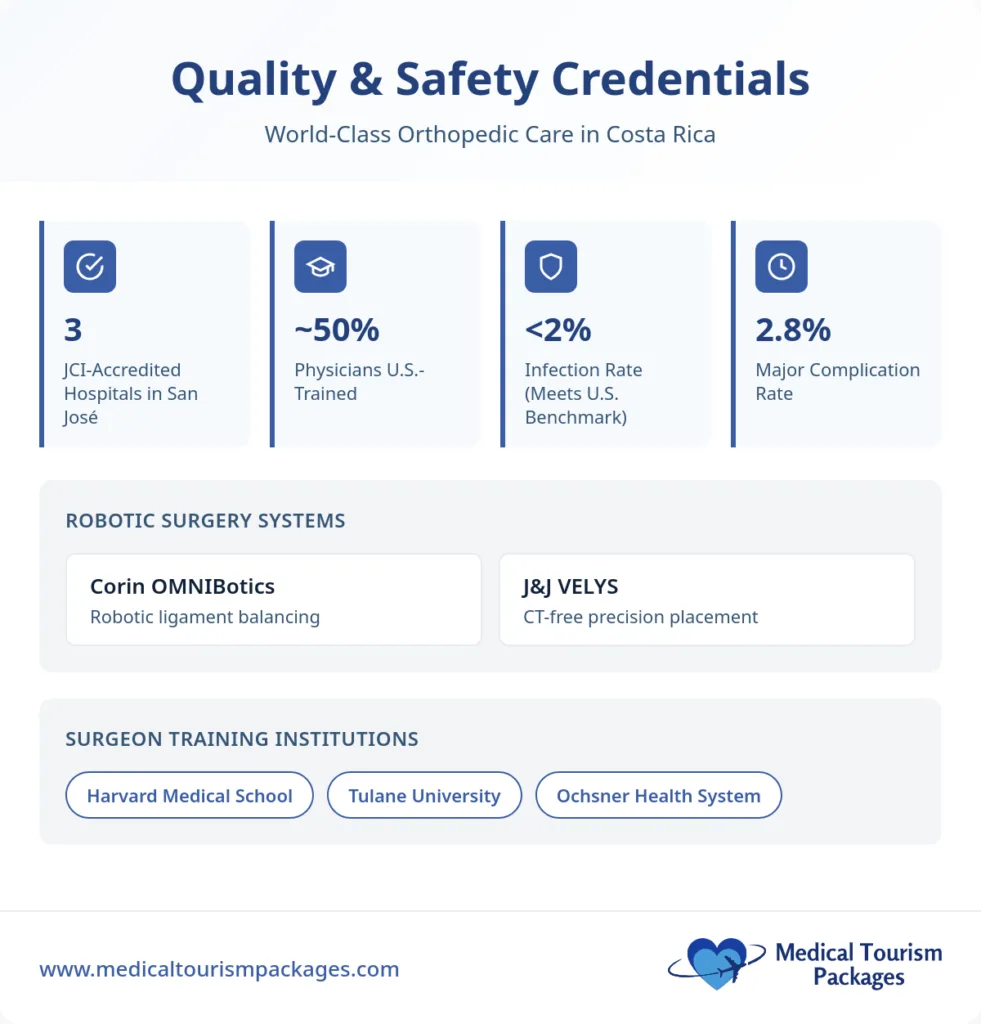
You should choose Costa Rica for three main reasons: cost savings, quality care, and fast scheduling. Private hospitals offer world-class orthopedic care at 60–86% less than U.S. prices. Many surgeons trained at top U.S. institutions like Harvard Medical School.
Key reasons patients choose Costa Rica:
- Major cost savings: Treatment costs 60–86% less than in the U.S. Patients save $20,000–$35,000 on surgery alone, even after travel costs.
- JCI-accredited hospitals: Top facilities in San José meet the highest international standards. Joint Commission International accreditation confirms patient safety and quality care.
- U.S.-trained surgeons: About 50% of physicians at leading hospitals trained in the U.S. Many completed fellowships at Harvard, Tulane, and Ochsner Health System.
- No long waits: You can schedule knee replacement within weeks. This eliminates months-long wait times common in public healthcare systems.
What Types of Knee Replacement Procedures Are Available?
Costa Rican orthopedic centers offer two main procedures: total knee replacement and partial knee replacement. The right choice depends on how much damage your knee has.
Total Knee Replacement (TKA) replaces all three parts of your knee joint. Surgeons use this when arthritis affects your entire knee. They remove damaged surfaces from your thighbone, shinbone, and kneecap. Then they attach metal and plastic parts to replace these surfaces.
Partial Knee Replacement (PKA) replaces only the damaged section. This works when only one part of your knee has arthritis. Recovery is faster because surgeons preserve healthy bone and cartilage.
What Robotic Surgery Options Does Costa Rica Offer?
Costa Rica’s top hospitals use cutting-edge robotic systems for better results. These systems help surgeons place implants more precisely.
- Corin OMNIBotics/ApolloKnee: This system uses robotic ligament balancing. The BalanceBot technology helps position implants correctly. Patients often recover faster with more natural knee movement.
- Johnson & Johnson VELYS: This system works without CT scans. It helps surgeons optimize implant placement and predict joint stability. The technology preserves soft tissue around your knee for faster healing.
Which Hospitals Perform Knee Replacement in Costa Rica?
Three JCI-accredited hospitals in the San José area perform knee replacement surgery. All three meet the highest international standards for patient safety.
- Hospital CIMA San José: This hospital runs an Orthopedics Center of Excellence. Operating rooms feature 3D and 4K imaging technology. Orthopedic services are available 24/7 for scheduled surgeries and emergencies.
- Hospital Clínica Bíblica: Operating since 1929, this hospital partners with Tulane University and Ochsner Health System. About 50% of physicians trained in the United States.
- Hospital La Católica: This facility offers full orthopedic services with bilingual staff. Patient coordinators help international patients navigate their care.
For more details on choosing the right facility, see our complete guide to orthopedic surgeries.
How Much Does Knee Replacement Cost in Costa Rica?
Knee replacement in Costa Rica costs $11,000–$15,000. This is 64–75% less than U.S. prices. Most patients save $20,000–$38,000 compared to having surgery at home.
How Do Costa Rica Prices Compare to U.S. Prices?
Costa Rica offers major savings without sacrificing quality. The table below shows typical cost differences.
| Location | Average Cost Range | Typical Package Price | Savings vs. US |
|---|---|---|---|
| Costa Rica | $11,000 – $15,000 | $12,500 | 64% – 75% |
| United States | $35,000 – $50,000 | $42,500 | — |
| Your Potential Savings | — | — | $20,000 – $38,000 |
Even with airfare and hotels, most patients save over $15,000 compared to U.S. surgery.
What Is Included in Treatment Packages?
Costa Rican hospitals use bundled pricing with no surprise bills. You know exactly what you’ll pay before surgery.
| Included Services | Details |
|---|---|
| Surgeon Fees | Complete fees for your orthopedic surgeon |
| Anesthesia | All anesthesia services and fees |
| Hospital Stay | 3–5 nights in a private room with nursing care and meals |
| Implant Cost | High-quality implants from Zimmer Biomet, Stryker, or DePuy Synthes |
| Pre/Post-Surgery Tests | Lab work, imaging, and medical evaluations |
| Ground Transportation | Airport transfers and transport to your hospital and hotel |
| Initial Physical Therapy | Rehabilitation sessions during your hospital stay |
Budget $1,500–$6,500 extra for items not included. These include long-term physical therapy at home, airfare, extended hotel stays, and prescriptions after discharge.
How Do You Prepare for Knee Surgery in Costa Rica?
Good preparation makes your surgery go smoothly. Start by researching hospitals and verifying credentials. Organize your travel documents well before your trip.
Essential preparation steps:
- Research JCI-accredited hospitals: Look for Joint Commission International accreditation. This confirms the hospital meets international standards for patient safety and quality.
- Verify your surgeon’s credentials: Ask about education, fellowship training, and board certifications. Look for surgeons who trained at U.S., Canadian, or European institutions.
- Check your passport: Your passport must be valid for at least 6 months after your departure date. U.S. citizens can stay up to 180 days on a tourist visa.
- Get a hospital letter: Request a formal letter with your appointment dates and treating physician. This helps with immigration and creates a record of your scheduled treatment.
- Request a cost breakdown: Ask for an itemized quote listing all included services. Clarify what happens if you need extended care due to complications.
What Happens During the Knee Replacement Process?
The knee replacement process has three main phases: pre-surgery testing, the surgery itself, and post-operative care. Each phase follows international protocols.
| Phase | Timing | What Happens | Key Goals |
|---|---|---|---|
| Pre-Surgery Assessment | 24–48 hours before surgery | Blood tests, heart evaluation, chest X-rays, and joint examination | Ensure you’re medically cleared and customize your surgical plan |
| Surgical Procedure | 1–2 hours | Surgeon removes damaged bone, places implant using robotic guidance, tests stability | Remove damaged tissue and position your new joint for long-term success |
| Post-Operative Care | 3–5 days | Recovery room monitoring, pain management, wound care, DVT screening, physical therapy | Prevent complications, manage pain, and begin safe movement |
Hospitals in San José use computer-assisted surgery and robotic platforms like the VELYS system. This technology reduces tissue trauma and speeds recovery.
What Does Recovery Look Like in Costa Rica?
Recovery starts right after surgery and follows a structured timeline. Physical therapy begins within hours of your procedure. The full recovery process takes about 12 weeks. Your first two weeks in Costa Rica are critical for long-term success.
What Are the Goals During the First Week After Surgery?
The first week focuses on five key objectives. These set the foundation for successful healing.
- Keeping your knee calm: Pain medication, ice therapy, and elevation control swelling and promote healing.
- Protecting your incision: Staff keep the wound clean with regular dressing changes using sterile protocols.
- Watching for infection: Medical staff monitor for redness, warmth, fever, or worsening pain. Early detection allows quick treatment.
- Preventing blood clots: Compression devices, blood thinners, and ankle exercises reduce clot risk. Blood clots are a serious concern after knee surgery.
- Starting gentle movement: Physical therapists guide safe, assisted exercises. Early movement prevents stiffness and improves circulation.
How Long Should You Stay in Costa Rica After Surgery?
You should plan to stay 10–14 days after surgery. This allows time for proper wound healing and medical clearance for flying. Flying too soon after knee surgery increases blood clot risk.
Recovery centers in Escazú like Las Cumbres Inn offer 24-hour nursing care. These facilities provide private rooms, nutritious meals, and medical staff on call. This level of care reduces readmission risk from minor post-discharge issues.
Physical therapists can visit your recovery center. This eliminates the need to travel for therapy sessions when you have limited mobility. You get consistent, quality care during the most critical recovery period.
Read our guide for American medical tourists in Costa Rica for more planning tips.
How Do You Coordinate Follow-Up Care After Returning Home?
You need seamless coordination between your Costa Rican team and home doctors. Proper planning ensures continuous care after you leave Costa Rica.
| Timing | Action Required | Who’s Responsible | Purpose |
|---|---|---|---|
| Before Leaving Costa Rica | Receive complete surgical documentation | Hospital provides; you deliver to home doctor | Ensures complete information transfer |
| 30 and 60 Days Post-Surgery | Virtual check-in appointments | Costa Rican surgeon conducts via video | Assess recovery and adjust rehab plan |
| Within 1 Week of Returning | In-person appointment with local doctor | You schedule; local doctor conducts | Establish local medical oversight |
| 3, 6, and 12 Months Post-Surgery | Follow-up with X-rays | Local specialist or Costa Rican surgeon via telemedicine | Verify implant position and bone integration |
Your surgical documentation includes operative reports, implant specifications, lab results, and physical therapy protocols. Keep copies for your home physician and physical therapist.
What Are the Risks of Knee Replacement Surgery?
Knee replacement surgery carries risks like any major procedure. Understanding these risks helps you make informed decisions. Costa Rican hospitals use advanced technology and strict protocols to minimize complications.
What Complications Can Occur and How Are They Prevented?
Three main risks require attention: infection, blood clots, and implant issues. The table below explains each risk and prevention methods.
| Risk | What It Means | How It’s Prevented |
|---|---|---|
| Infection | Bacteria can develop around the artificial joint. This causes pain, swelling, and possible implant failure. U.S. benchmark rate is 2% or less. | Costa Rican hospitals use Antimicrobial Stewardship Programs. They achieve 80% appropriate antibiotic selection. Sterile techniques and wound monitoring catch infections early. |
| Blood Clots (DVT) | Clots can form in leg veins due to reduced movement. If a clot reaches your lungs, it becomes life-threatening. | Blood thinners, compression devices, and early physical therapy prevent clots. Ankle exercises and hydration also help. |
| Implant Issues | Components may not fit correctly or could loosen over time. This affects knee function and implant lifespan. | High-quality implants from top manufacturers ensure durability. Robotic-assisted surgery improves precision. Experienced surgeons minimize technical errors. |
One leading hospital reported a 12.7% overall complication rate across 1,960 surgeries. Major complications requiring significant treatment occurred in only 2.8% of cases.
Patients with diabetes, obesity, or weak immune systems may face slightly higher risks. Discuss your specific risk factors with your surgeon during consultations. Following medication schedules, doing prescribed exercises, and reporting symptoms quickly reduces your risk.
Is Knee Replacement in Costa Rica Worth It?
Yes, knee replacement in Costa Rica is worth it for most patients. You get maximum quality at minimum cost. JCI accreditation, Harvard-trained surgeons, and robotic surgery confirm the quality of care.
Patients save 60–75% compared to U.S. prices. This means actual savings of $20,000–$38,000. Transparent bundled pricing eliminates surprise bills.
Professional medical tourism support makes your journey easy. You get dedicated patient coordinators, bilingual staff, and specialized recovery centers with 24-hour nursing. Physical therapists visit your accommodation. Studies show 82–89% of knee replacement patients are satisfied with their results.
For patients who delay surgery due to cost, face long wait times, or struggle with high deductibles, Costa Rica provides immediate access to life-changing treatment.
Frequently Asked Questions
How long does knee replacement surgery take in Costa Rica?
The surgical procedure takes 1–2 hours. You will stay in the hospital for 3–5 days after surgery. Plan for a total stay of 10–14 days in Costa Rica before flying home.
Is knee replacement in Costa Rica safe?
Yes. The top hospitals hold JCI accreditation, the same international standard used by leading U.S. medical centers. About 50% of physicians trained in the United States. Major complication rates are 2.8% or less.
What is included in a knee replacement package?
Packages typically include surgeon fees, anesthesia, hospital stay (3–5 nights), implants, pre- and post-surgery tests, airport transfers, and initial physical therapy. Airfare and extended accommodations are not included.
How much can I save on knee replacement in Costa Rica?
Most patients save $20,000–$38,000 compared to U.S. prices. Knee replacement costs $11,000–$15,000 in Costa Rica versus $35,000–$50,000 in the United States.
When can I fly home after knee replacement surgery?
You should wait 10–14 days before flying. This allows time for wound healing and reduces blood clot risk. Your surgeon will provide medical clearance before you travel.
Do Costa Rican surgeons speak English?
Yes. Surgeons at JCI-accredited hospitals in San José are fluent in English. Hospitals also provide bilingual patient coordinators to assist throughout your care.
What type of knee implants do Costa Rican hospitals use?
Hospitals use premium implants from the same manufacturers as U.S. hospitals: Zimmer Biomet, Stryker, and DePuy Synthes. These implants are FDA-approved and widely used worldwide.
Will my U.S. doctor accept follow-up care after surgery abroad?
Most U.S. physicians accept patients who had surgery abroad when provided complete documentation. You will receive operative reports, implant specifications, and rehabilitation protocols to share with your home doctor.
Ready to Start Your Knee Replacement Journey?
Medical Tourism Packages coordinates your entire knee replacement journey in Costa Rica. We connect you with certified orthopedic surgeons, arrange your travel and accommodations, and provide bilingual support throughout your treatment. Get a free consultation to discuss your mobility goals and receive a personalized quote.
Contact us today to start planning your affordable knee replacement in Costa Rica.