Reservar cita

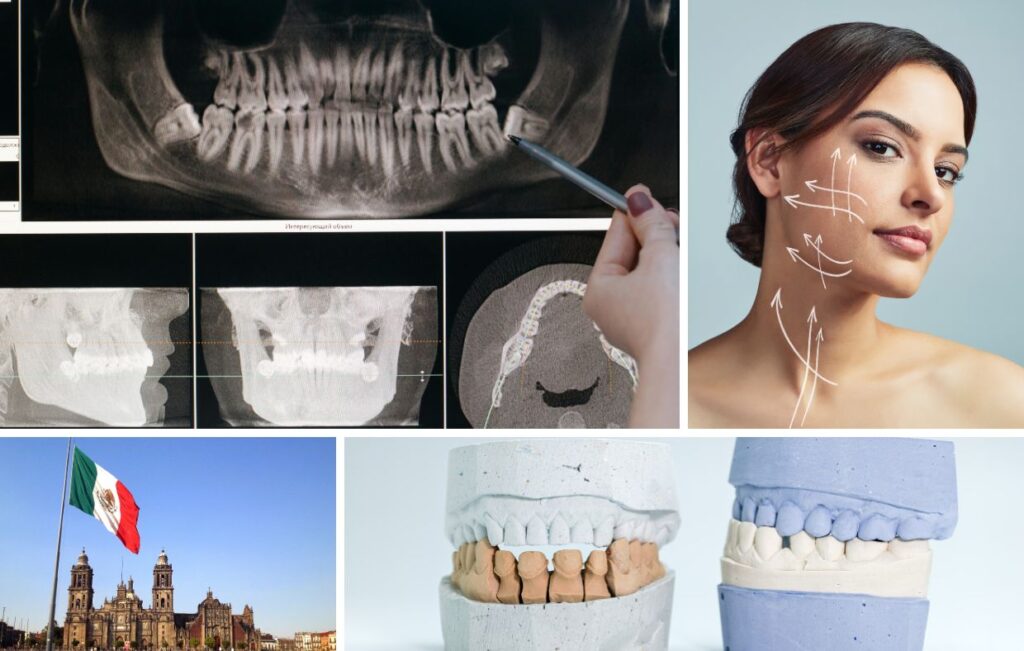
Maxillofacial Surgery in Mexico: Costs, Top Surgeons, and Complete Patient Guide
 Por
Por
Maxillofacial surgery in Mexico costs 60% to 80% less than US prices at JCI-accredited hospitals with COEMFA-certified surgeons.
Double jaw surgery in Mexico costs $8,000 to $12,000 versus $40,000 to $60,000 in the US. Single implants start at $750. COEMFA-certified surgeons complete 10 to 12 years of specialized training. Many hold dual certifications from Mexican and American boards.
This guide covers costs, top cities, surgeon credentials, safety records, and recovery timelines for maxillofacial surgery in Mexico. You will find data for Tijuana, Mexico City, Monterrey, Cancun, and Guadalajara. Use this guide to plan jaw surgery, dental implants, or TMJ treatment with confidence.
¿Qué es la cirugía maxilofacial?
Maxillofacial surgery is a specialty that connects dentistry and medicine. It focuses on surgical treatment of diseases, injuries, and defects of the face, mouth, and jaws. Surgeons train extensively in both fields to treat conditions that affect function and appearance.
Common procedures include orthognathic surgery to reposition misaligned jaws. Surgeons also perform TMJ surgery to repair damaged joints. Dental implants range from single teeth to full-arch restorations like All-on-4 and zygomatic implants. Facial reconstruction after trauma and aesthetic procedures like rhinoplasty and genioplasty are also available. These surgeries treat overbites, underbites, and TMJ disorders that cause chronic pain. They also address chewing and speech problems, sleep apnea linked to jaw structure, missing teeth, and facial bone fractures.
Why Choose Mexico for Maxillofacial Surgery?
Mexico offers large cost savings with high quality standards. Facility costs run 80% to 90% lower than US clinics. This is due to reduced overhead and state-subsidized medical education. Mexican clinics still use premium materials from global suppliers. These include titanium implants from Sweden and 3D imaging systems from Germany.
Mexico gives North American patients four key advantages:
- Excellent accessibility — Short flight times, land border access from California and Texas, and no visa required for stays under 180 days.
- JCI-accredited hospitals — These facilities meet strict safety standards with robotic surgery systems and integrated intensive care units.
- No wait times — Patients get immediate scheduling without weeks or months of delays common in North America.
- Specialized recovery infrastructure — Medical houses are staffed by nurses trained in post-operative maxillofacial care.
What Does Maxillofacial Surgery Cost in Mexico?
Maxillofacial surgery in Mexico costs 60% to 80% less than US prices. Double jaw surgery runs $8,000 to $12,000 versus $40,000 to $60,000 in the US. Single dental implants start at $750. The table below shows typical prices for common procedures.
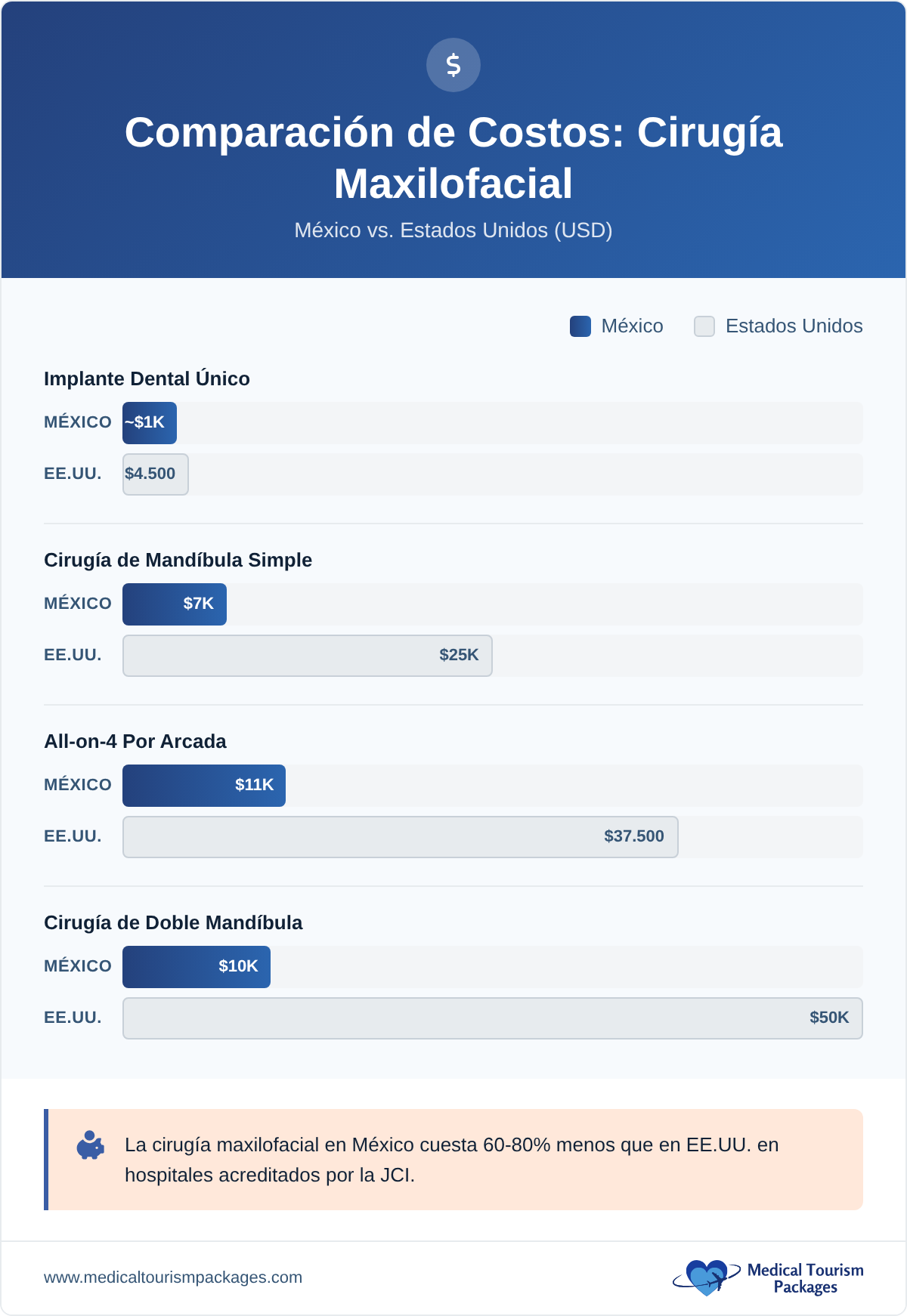
Maxillofacial Surgery Costs
| Procedimiento | México | EE.UU. | Canadá | Ahorro |
|---|---|---|---|---|
| Cirugía de doble mandíbula | $8,000–$12,000 | $40,000–$60,000 | $35,000–$55,000 | 75–80% |
| Cirugía de una sola mandíbula | $5,000–$9,000 | $20,000–$30,000 | $18,000–$28,000 | 70-75% |
| TMJ Replacement | $5,000–$10,000 | $25,000–$45,000 | $22,000–$40,000 | 75–80% |
| All-on-4 Per Arch | $7,100–$15,000 | $25,000–$50,000 | $22,000–$45,000 | 60–80% |
| Implante único | $750–$1,200 | $3,000–$6,000 | $3,500–$6,500 | 70–80% |
| Zygomatic Implants | $13,950 | $35,000–$50,000 | $32,000–$48,000 | 60–70% |
Urban procedures in Mexico City and Guadalajara cost 20% to 30% more than border towns like Tijuana. Advanced 3D imaging adds 10% to 15% to total cost. Custom titanium plates add another 15% to 20%. Even with these additions, total costs remain much lower than North American prices.
Which Mexican Cities Are Best for Maxillofacial Surgery?
The five best Mexican cities for maxillofacial surgery are Tijuana, Mexico City, Monterrey, Cancun, and Guadalajara. Each city offers different advantages based on your procedure type and travel preferences. The table below compares key features.
Top Mexican Cities for Maxillofacial Surgery
| Ciudad | Hospitals | Especialización | Ahorro | Acceda a |
|---|---|---|---|---|
| Tijuana | CosMed Clinic | High-volume restorative | 70–80% | Land/air, Fast-Pass lane |
| Ciudad de México | Médica Sur, ABC | Casos complejos | 50–65% | International airport |
| Monterrey | TecSalud | Complex trauma, TMJ | 60–65% | International airport |
| Cancún | Hospital Galenia | Luxury recovery | 50–65% | Resort setting |
| Guadalajara | Wellness clinics | Digital dentistry | 65-70% | Tech manufacturing hub |
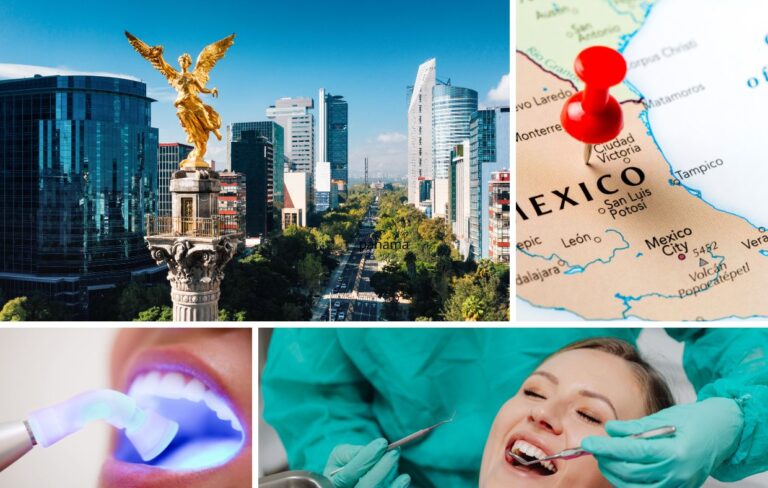
Tijuana is the world’s most visited medical tourism destination. Its California border location allows easy land crossing with a Medical Fast-Pass lane. Mexico City and Monterrey handle complex cases at JCI-accredited hospitals with ICU support. Cancun suits patients who want luxury recovery in a resort setting. Guadalajara leads in technology-driven dentistry with locally manufactured devices.
What Accreditations Should Mexican Clinics Have?
Mexican clinics should have JCI accreditation for the highest safety standard. COEMFA board certification is required for maxillofacial surgeons. Look for CSG and COFEPRIS compliance as well.
Look for these four key accreditations before booking:
- JCI (Joint Commission International) — This is the top standard for hospital quality worldwide. Mexico has 9 to 10 JCI-accredited hospitals. These include Centro Médico ABC in Mexico City, Hospital Galenia in Cancun, and Hospital San José TecSalud in Monterrey. These facilities meet the same benchmarks as top US hospitals.
- CSG (General Health Council of Mexico) — This confirms compliance with infection control and patient safety rules.
- COFEPRIS (Federal Commission for Protection against Sanitary Risk) — This is required for all facilities. It ensures hygiene standards and medical device safety.
- COEMFA (Mexican Council of Oral and Maxillofacial Surgery) — This is the surgeon board certification. It mirrors US ABOMS standards and requires passing both a written and an oral exam.
How Do You Plan Maxillofacial Surgery in Mexico?
Successful medical tourism in Mexico requires planning across three phases: pre-travel research, travel preparation, and recovery planning.
What Should You Do Before Traveling for Surgery?
Start by researching COEMFA board-certified surgeons. Verify facility JCI or CSG accreditation through official certificates or databases. Request before-and-after photos of similar cases to assess skill level. Arrange virtual consultations to review your treatment plan and 3D imaging before traveling. Confirm the facility has 3D CBCT imaging for precise surgical planning.
For more guidance on planning your trip, read our complete guide to medical tourism in Mexico.
What Travel Documents Do You Need for Mexico?
US and Canadian citizens need no visa for stays under 180 days. You will receive an FMM document on arrival. Return this document to immigration when you leave. Air travel requires a full passport. Land crossings accept passport cards. Flight costs range from $300 to $800 depending on your city and season.
How Long Must You Stay in Mexico After Surgery?
Surgeons require 7 to 14-day stays for major procedures. This allows monitoring for complications. Specialized recovery houses with trained nurses cost $1,400 to $2,800 for 14 days. These facilities prepare medically necessary diets from liquids to soft foods. They also provide 24/7 nursing support. You will be cleared to fly only after passing the critical recovery phase.
What Credentials Should Mexican Maxillofacial Surgeons Have?
Your surgeon should have COEMFA board certification and at least 10 to 12 years of specialized education. The full training pathway includes these stages:
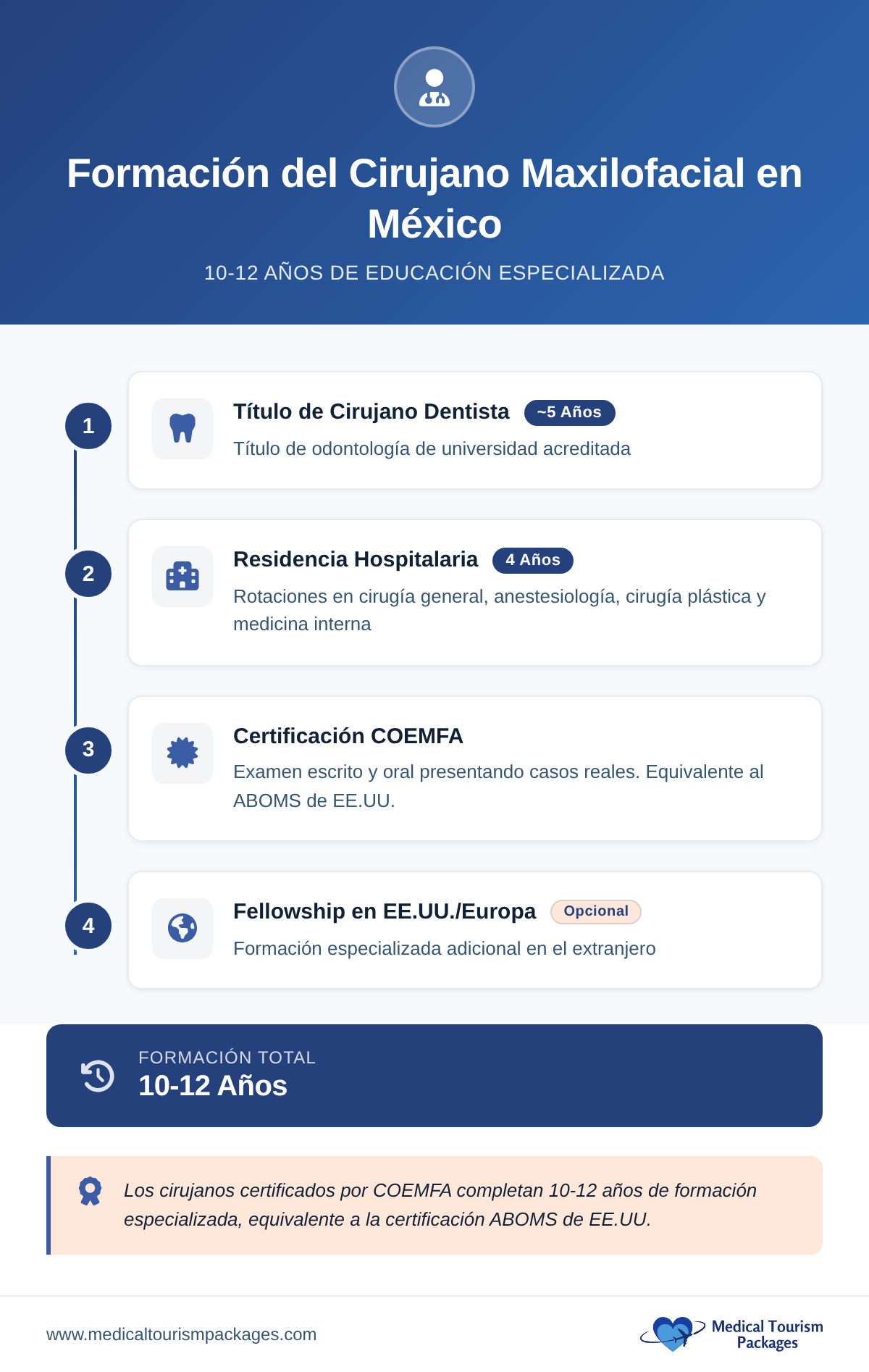
- Cirujano Dentista degree — A dentistry degree from an accredited university is the starting point.
- 4-year hospital-based residency — This includes rotations in general surgery, anesthesiology, plastic surgery, and internal medicine.
- COEMFA board certification — Surgeons must pass a written Qualifying Examination and an Oral Certifying Examination. Candidates present real cases to senior surgeons. This process mirrors US ABOMS standards.
- US or European fellowship — Many top surgeons complete additional training abroad for specialized skills.
When evaluating surgeons, request documentation of COEMFA certification, residency completion, and experience with your specific procedure. For guidance on selecting a qualified surgeon, see our guide to affordable orthopedic and surgical care in Mexico.
How Safe Are Maxillofacial Clinics in Mexico?
JCI-accredited clinics in Mexico are very safe. They meet the same benchmarks as top US hospitals. These facilities have advanced CT and MRI scanners, robotic surgery systems, and integrated intensive care units. CMQ Hospitals report infection rates of 0.00% to 0.40% in surgical units. The global average is 2.1% to 15.8% — much higher.
This safety record comes from strict protocols. These include:
- Antibiotic prophylaxis — Antibiotics are given exactly one hour before incision.
- Chlorhexidine pre-operative bathing — Patients bathe with antibacterial soap before surgery.
- Sterile technique — All surgical instruments are handled under strict sterile conditions.
- Air quality monitoring — Operating room air is checked frequently.
A five-year study found a 30-day complication rate of 6%. This aligns with the 4% Latin American average. Most complications are minor, such as localized infection or temporary numbness. These resolve with standard care.
What Are Success Rates for Maxillofacial Surgery in Mexico?
Success rates at leading Mexican facilities match US and European benchmarks. Orthognathic surgery achieves over 90% success for both function and appearance outcomes. TMJ replacement shows 85% to 90% success with significant pain reduction and better mobility. Dental implant survival rates reach 95% to 98% at 5 to 10 years. These results equal top international clinics.
These results come from advanced technology and skilled surgeons. Surgeons in Tijuana and Mexico City use 3D planning software to simulate procedures before surgery. They also use AI diagnostic tools for facial analysis and 3D-printed titanium implants for complex cases. High surgical volumes combined with rigorous training produce strong outcomes.
¿Cuánto tiempo dura la recuperación después de una cirugía maxilofacial?
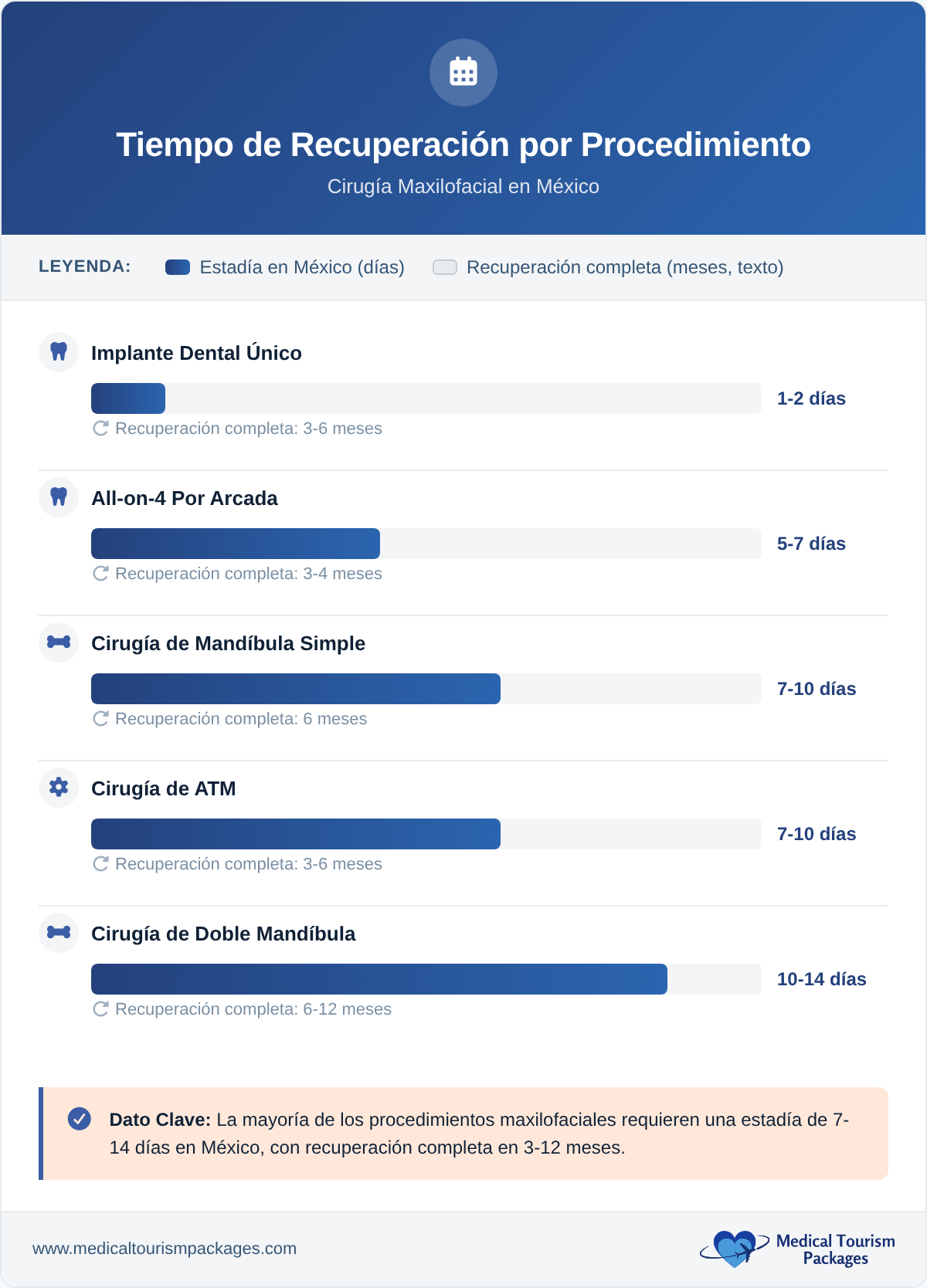
Recovery time depends on the procedure. Double jaw surgery requires a 10 to 14-day stay in Mexico and up to 12 months for full recovery. Single implants need only 1 to 2 days in Mexico. The table below shows full timelines for common procedures.
Recovery Timeline by Procedure
| Procedimiento | Mexico Stay | Vuelta al trabajo | Recuperación total |
|---|---|---|---|
| Cirugía de doble mandíbula | 10-14 días | 2–4 weeks | 6–12 months |
| Cirugía de una sola mandíbula | 7-10 días | 2 semanas | 6 meses |
| All-on-4 Arch | 5-7 días | 1 semana | 3–4 months |
| TMJ Surgery | 7-10 días | 2-3 semanas | 3–6 months |
| Implante único | 1–2 días | 0.5 weeks | 3–6 months |
Hospital stays last 1 to 3 hours after the procedure. Then patients transfer to recovery accommodation. Jaw surgery patients start with a liquid diet and move to soft foods as healing allows. Surgeons may attach braces 6 weeks after surgery to finish alignment. Braces stay on for 6 to 12 months. The required Mexico stay ensures medical supervision during the critical healing phase.
What Aftercare Do Mexican Clinics Provide?
Reputable clinics provide full aftercare to keep you safe after you return home. Aftercare includes follow-up appointments, telemedicine access, and complete digital documentation. Here is what you can expect:
- Initial follow-up — Appointments occur at 7 to 14 days to assess healing, remove sutures, and adjust medications. You can choose in-person visits or virtual consultations.
- Digital exit package — Before leaving, you receive high-resolution scans, an operative report in English, prescriptions, dietary guidelines, warning signs, and contact information.
- EMR-compatible records — Documents use international EMR standards. Your local providers can access all surgical documentation easily.
- Home-country physician coordination — Clinics set up protocols with your local doctors for suture removal, medication management, and monitoring.
- Telemedicine access — You can connect with your surgical team by video for any concerns after returning home.
Is Mexico Right for Your Maxillofacial Surgery?
Mexico is a strong choice if you verify accreditation, surgeon credentials, and recovery support before you book. Patient satisfaction exceeds 95% at accredited Mexican facilities. Use this checklist to confirm essential quality standards before committing.
Pre-Surgery Verification Checklist
- Facility: JCI or CSG accreditation confirmed
- Surgeon: COEMFA board certification and residency completion verified
- Technology: 3D CBCT imaging available
- Recovery: Recovery house with nursing care arranged
- Follow-up: Telemedicine protocol established
- Documentation: English-language exit package confirmed
Patients at accredited facilities in Tijuana, Mexico City, and Monterrey report excellent consultation times and modern care environments. Mexican facilities combine institutional-grade surgery with advanced technology and personalized attention. You get life-changing maxillofacial care at prices that work.
You can also review our Latin America medical tourism statistics to understand the broader quality and safety context.
What Questions Do Medical Tourists Ask Most Often About Maxillofacial Surgery in Mexico?
How long should I stay in Mexico after maxillofacial surgery?
Stay duration depends on your procedure. Simple procedures like a single dental implant require only 1 to 2 days. Complex procedures like double jaw surgery require 10 to 14 days. TMJ replacement and single jaw surgery require 7 to 10 days. Your surgeon will clear you to fly after verifying your healing progress. US and Canadian citizens do not need a visa for stays up to 180 days.
¿Los hospitales mexicanos están acreditados según las normas internacionales?
Yes, Mexico has 9 to 10 JCI-accredited hospitals. Joint Commission International (JCI) is the same standard used by top US hospitals. Centro Médico ABC in Mexico City and Hospital Galenia in Cancun both hold JCI accreditation. Hospital San José TecSalud in Monterrey is also JCI-accredited. These hospitals meet the same patient safety standards as US medical centers.
Do maxillofacial surgeons in Mexico speak English?
Yes, most specialized maxillofacial surgeons at JCI-accredited hospitals in Mexico speak English fluently. Facilities in Tijuana, Mexico City, and Cancun serve a large volume of US and Canadian patients. International patient coordinators provide bilingual support throughout your treatment. This removes the language barrier that can complicate medical care abroad.
¿Qué ocurre si tengo complicaciones al volver a casa?
Reputable Mexican clinics work directly with your home-country primary care physician. They set up coordination protocols before you leave. Your surgeon provides a complete digital exit package with records in English. This allows your local doctors to manage follow-up care. Many surgical packages include telemedicine follow-up appointments. You can contact your surgical team by video for any post-operative concerns.
Is it safe to fly after maxillofacial surgery in Mexico?
Yes, it is safe to fly after the required waiting period. For simple procedures like single implants, you can fly within 1 to 2 days. For jaw surgery, surgeons recommend a stay of 7 to 14 days before flying. Cabin pressure changes and blood clot risk require adequate healing time first. Your surgeon will clear you for flight after checking your healing progress.
What training do maxillofacial surgeons in Mexico have?
Mexican maxillofacial surgeons complete 10 to 12 years of specialized training. They begin with a dentistry degree from an accredited university. This is followed by a four-year hospital-based residency in Oral and Maxillofacial Surgery. Residency includes rotations in general surgery, anesthesiology, plastic surgery, and internal medicine. After residency, surgeons must pass COEMFA board certification exams. Many also complete fellowships at US or European centers. COEMFA certification mirrors US ABOMS standards.
Ready to Start Your Maxillofacial Surgery Journey in Mexico?
Medical Tourism Packages coordinates your entire maxillofacial surgery journey in Mexico. We connect you with COEMFA-certified surgeons at JCI-accredited hospitals. We arrange your travel and recovery accommodations. We also provide bilingual support throughout your treatment. Get a free consultation to discuss your treatment goals and receive a personalized quote.
Contáctenos hoy mismo para comenzar a planificar su cirugía maxilofacial asequible en Panamá.