Reservar cita



Su guía definitiva para conseguir carillas dentales en Colombia
 Por
Por
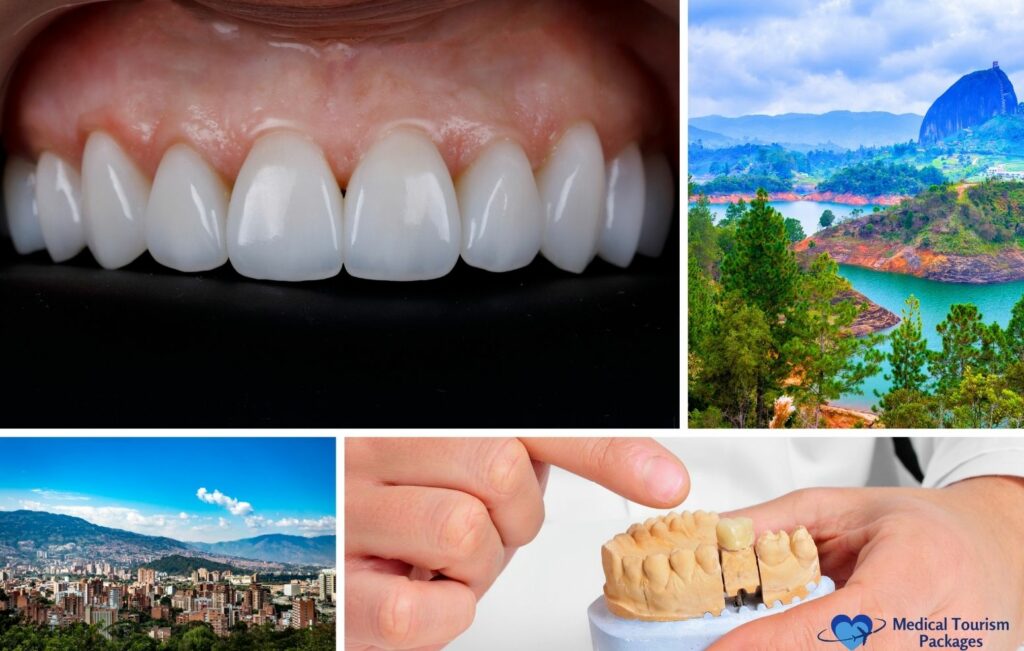
Las carillas dentales en Colombia cuestan entre $300 y 650 por diente para la porcelana en 2026, lo que supone un ahorro de entre 60 y 80% en comparación con los precios de Estados Unidos, al tiempo que se mantienen los estándares de calidad establecidos por el sistema sanitario, clasificado en el puesto 22 por la OMS, que atiende a más de 20 000 pacientes dentales internacionales al año.
Especialistas colombianos en Medellín, Bogotá, Cali y Cartagena realizan transformaciones de sonrisas utilizando IPS e.max y carillas de zirconia en clínicas certificadas. Dentistas verificados por ReTHUS, como el Dr. Juan Fidel Díez de Unilaser y la Dra. Yazmín Escudero, realizan colocaciones de carillas en 24-48 horas con materiales aprobados por el INVIMA, garantías completas y laboratorios CAD/CAM internos.
Medical Tourism Packages te conecta con dentistas cosméticos certificados por la junta en las principales ciudades dentales de Colombia. Cada clínica está verificada en cuanto a la certificación de habilitación, las credenciales profesionales y los resultados de los pacientes. A continuación, encontrarás comparaciones detalladas de costos, recomendaciones de clínicas por ciudad, plazos de los procedimientos, capacidades tecnológicas, guías de planificación de viajes y respuestas a preguntas frecuentes sobre cómo obtener carillas en Colombia.
¿Por qué elegir Colombia para realizarse carillas dentales en 2026?
Colombia es un destino líder para las carillas dentales porque ofrece un ahorro de 60-80% en comparación con los precios de Norteamérica sin sacrificar la calidad. El sistema de salud del país ocupa el puesto 22 a nivel mundial según la OMS, por delante de Estados Unidos, que ocupa el puesto 37, con más de 20 000 pacientes dentales internacionales tratados anualmente.
Ciudades como Medellín, Bogotá, Cali y Cartagena se han convertido en centros especializados en turismo dental, con clínicas de última generación que cuentan con personal bilingüe y equipamiento de nivel internacional. Se prevé que el sector del turismo médico en América Latina alcance los 1,63 billones de dólares en 2032, y que los servicios dentales representen el 23,51 % de la industria colombiana.
¿Qué hace que Colombia sea un destino privilegiado para el cuidado dental?
Colombia atrae a turistas dentales gracias a sus dentistas bien formados que utilizan tecnología moderna, combinada con precios entre un 60 y un 80 % más bajos que los de Estados Unidos. El apoyo del gobierno al turismo dental en Colombia y la estricta supervisión regulatoria garantizan una atención de calidad, y los servicios dentales representan el 23,51 % de los 16,3 mil millones de dólares que mueve la industria del turismo médico en Colombia.
Las clínicas colombianas utilizan los mismos sistemas CAD/CAM y materiales de primera calidad que se encuentran en las instalaciones norteamericanas. Los dentistas suelen realizar cursos de posgrado en el extranjero y mantienen afiliaciones con organizaciones como la Asociación Dental Americana. El sector ha experimentado una tasa de crecimiento del 22,91 %, y en 2026 se alcanzará un punto de estabilización en el que la calidad y las acreditaciones internacionales se habrán convertido en los principales diferenciadores competitivos.
¿Cómo se compara el sistema sanitario colombiano con el resto del mundo?
El sistema de salud de Colombia ocupa el puesto 22 a nivel mundial según la Organización Mundial de la Salud, superando tanto a Estados Unidos, en el puesto 37, como a Canadá, en el 30. Esta clasificación refleja los altos estándares de formación de los especialistas, la moderna infraestructura médica y el compromiso nacional con la calidad de la atención sanitaria, lo que hace que Colombia sea especialmente atractiva para el turismo dental.
El Ministerio de Salud supervisa todas las clínicas dentales a través de la Resolución 3100, que establece normas de habilitación obligatorias. Los dentistas profesionales completan cinco años de estudios universitarios en la facultad de odontología, más un año de servicio público obligatorio, y todos ellos están verificados a través del registro oficial ReTHUS. El Instituto Nacional de Vigilancia de Medicamentos y Alimentos (INVIMA) funciona como el equivalente a la FDA de Colombia, regulando todos los materiales dentales para garantizar que solo se utilicen marcas reconocidas a nivel mundial como Straumann, Nobel Biocare e Ivoclar.
¿Qué estándares de calidad siguen las clínicas dentales colombianas?
Las clínicas dentales colombianas siguen el marco de Habilitación, que exige siete normas fundamentales, entre las que se incluyen la verificación de las licencias del personal, los requisitos de infraestructura, el mantenimiento del equipo médico y el cumplimiento de los protocolos clínicos. Las clínicas de renombre ofrecen garantías de entre 5 y 15 años para las carillas de porcelana y cuentan con un seguro de responsabilidad profesional que cubre específicamente a los pacientes internacionales.
Las siete normas garantizan un control de calidad integral: credenciales universitarias verificadas y servicio social gubernamental obligatorio, espacio clínico adecuado con zonas de esterilización específicas, mantenimiento y calibración periódicos de los equipos, procedimientos internacionales de esterilización y diagnóstico, materiales aprobados por el INVIMA, seguro de responsabilidad profesional para los viajeros médicos y protocolos de seguridad de los pacientes documentados. La tasa de referencia de 98.2% sugiere que el sector se autorregula en gran medida a través de la reputación y el compromiso con el éxito clínico.
¿Cuánto cuestan las carillas dentales en Colombia en 2026?
Las carillas cuestan entre $300 y 650 por diente en el caso de la porcelana y entre $120 y 400 en el caso del composite en Colombia en 2026, lo que supone un ahorro de entre 60 y 80% en comparación con los precios de EE. UU., que oscilan entre $900 y 2500 por diente. Una transformación completa de la sonrisa con 16 carillas de porcelana cuesta entre 4800 y 7400 pesos colombianos en Colombia, frente a los 16 000-40 000 pesos colombianos en Estados Unidos.
Esta dramática diferencia de precios se debe al menor costo de vida y a los gastos operativos en Colombia, donde los laboratorios dentales cobran entre $100 y 200 por cada carilla, en comparación con los $400-600 que se cobran en Estados Unidos. Las clínicas colombianas de renombre utilizan los mismos materiales de primera calidad que se encuentran en las instalaciones norteamericanas, incluyendo disilicato de litio IPS e.max, circonio y porcelana feldespática, todos ellos aprobados por el INVIMA y fabricados por marcas reconocidas internacionalmente.
¿Cuál será el costo promedio por carilla en 2026?
Las carillas individuales en Colombia cuestan entre $120 y 250 para las compuestas, entre $300 y 500 para las de porcelana IPS e.max, entre $350 y 550 para las de circonio y entre $450 y 650 para las ultrafinas sin preparación. Estos precios incluyen el procedimiento completo con consulta, preparación dental, carillas temporales, fabricación personalizada en laboratorio y adhesión final con cemento dental de primera calidad.
| Tipo de chapa | Colombia Costo por diente (USD) | EE. UU./Canadá Costo por diente (USD) | Ahorro medio |
|---|---|---|---|
| Carilla compuesta | $120 – $250 | $500 - $1.500 | 75% |
| Porcelana (IPS e.max) | $300 – $500 | $1,000 – $2,500 | 70% |
| Carilla de zirconia | $350 – $550 | $1,200 – $3,000 | 71% |
| Ultrafino / Sin preparación | $450 – $650 | $1,500 - $3,500 | 70% |
Las clínicas de alta gama han mitigado el aumento de los costos de los materiales mediante la integración de laboratorios cerámicos internos, lo que les permite un mayor control sobre los costos de producción y los plazos de entrega. Los precios varían en función de las credenciales de los especialistas, la ubicación de la clínica y si los sistemas CAD/CAM internos permiten realizar carillas en el mismo día.
¿Cuánto cuestan los paquetes completos de remodelación de la sonrisa?
Los paquetes completos de remodelación de la sonrisa en Colombia oscilan entre $1,800-4,000 para un arco superior parcial (6-8 carillas) y $8,000-10,400 para un paquete HD premium de 20 carillas. Los paquetes estándar suelen incluir 10 carillas por $2,900-5,200 o 16 carillas por $4,800-7,400, y el tratamiento se completa en 5-10 días.
| Tipo de paquete | Recuento de unidades | Coste estimado (USD) | Marco temporal |
|---|---|---|---|
| Arco superior parcial | 6 – 8 carillas | $1,800 – $4,000 | 5 – 7 días |
| Transformación estándar de la sonrisa | 10 carillas | $2,900 – $5,200 | 5 – 7 días |
| Sonrisa integral | 16 Carillas | $4,800 – $7,400 | 7 – 10 días |
| Rejuvenecimiento completo | 20 carillas | $6,000 – $8,000 | 7 – 10 días |
| Paquete Premium “HD” | 20 carillas (Elite) | $8,000 – $10,400 | 8 – 12 días |
Los paquetes suelen incluir consultas de diseño digital de sonrisas, restauraciones temporales y traslados al aeropuerto. Han surgido opciones de financiamiento flexibles con tasas de interés a partir del 4.99% y plazos de hasta 144 meses, lo que hace que las transformaciones integrales de la sonrisa sean accesibles a un sector demográfico más amplio.
¿Cómo se comparan los costos: Colombia, EE. UU. y Canadá?
Los costos son muy competitivos en comparación con Colombia, donde las carillas de porcelana cuestan entre $300 y 650 por diente, frente a los $900-2,500 en Estados Unidos y los $660-1,850 en Canadá. Un juego completo de 16 carillas cuesta entre 4800 y 7400 pesos colombianos en Colombia, frente a los 16 000-40 000 pesos colombianos en Estados Unidos, lo que supone un ahorro superior a 701 pesos colombianos para la mayoría de los pacientes.
| País | Carilla de porcelana (por diente) | Juego completo (16 carillas) est. |
|---|---|---|
| Colombia | $300 – $650 | $4,800 – $7,400 |
| EE.UU. | $900 – $2500 | $16,000 – $40,000+ |
| Canadá | $660 – $1,850 | $14,800+ |
| REINO UNIDO | $1,070 – $1,380 | $21,400+ |
Incluso teniendo en cuenta los gastos de viaje, un viaje típico que incluye 8 carillas de porcelana, vuelos, alojamiento y comidas cuesta entre $3,500 y 7,800 en total, a menudo entre 40 y 60% menos que el costo de las carillas solas en Estados Unidos o Canadá. Solicite un presupuesto personalizado para conocer el ahorro exacto en su caso.
¿Qué factores influyen en el precio final?
El precio final depende del tipo de material (la porcelana es más cara que el composite), el número de carillas (se aplican descuentos por volumen), la reputación y especialización del dentista, la ubicación de la ciudad (Cali es la más competitiva, Cartagena es ligeramente más cara), la complejidad del caso y los tipos de cambio favorables del dólar estadounidense frente al peso colombiano en 2026.
- Selección de materiales: La porcelana (especialmente la e.max o la zirconia de alta calidad) es más cara que la resina compuesta. Las carillas ultrafinas sin preparación son las más caras debido a las técnicas de fabricación especializadas que requieren.
- Precio por volumen: El precio por carilla suele disminuir cuando se tratan varios dientes. Una sola carilla puede costar $500, mientras que una boca completa de 20 carillas cuesta una media de $350 cada una.
- Credenciales de los dentistas: Los especialistas con formación internacional o certificaciones avanzadas pueden cobrar entre un 15 y un 20 % más. Sin embargo, su experiencia suele justificar el sobreprecio en casos complejos.
- Ubicación geográfica: Cali suele ofrecer los precios más competitivos, entre $300 y 450 por chapa. Medellín oscila entre $300 y 500, Bogotá entre $350 y 550, y Cartagena entre $400 y 600 debido a su orientación turística.
- Complejidad del caso: Los trabajos preliminares, como el tratamiento de caries ($60-80 cada uno), endodoncias ($150-300) o enfermedades de las encías, se suman al total. La preparación o reconstrucción extensa de los dientes aumenta los costos.
- Ventajas del tipo de cambio: El dólar estadounidense se mantiene fuerte frente al peso colombiano en 2026. Este tipo de cambio favorable amplifica el poder adquisitivo de los viajeros norteamericanos.
¿Qué incluye su cotización (y cuáles son los posibles extras)?
Su presupuesto suele incluir la consulta inicial y el examen (con un valor de $50-100), la preparación dental, las carillas provisionales, la fabricación personalizada en laboratorio, la adhesión final con cemento dental de primera calidad y, a menudo, el traslado gratuito desde el aeropuerto y el transporte local. Los posibles extras incluyen diagnósticos ($50-150), limpieza profesional ($80-150), blanqueamiento ($100-300) y protectores nocturnos personalizados ($150-300).
La mayoría de los presupuestos completos de carillas cubren todo el ciclo del tratamiento, incluyendo la consulta inicial con visualización digital del diseño de la sonrisa, la preparación de los dientes bajo anestesia local, las carillas temporales, el trabajo de laboratorio personalizado con materiales de primera calidad como e.max o zirconia, la adhesión final con cemento dental avanzado activado por luz y, a menudo, el traslado desde el aeropuerto, el transporte local y la asistencia para el alojamiento.
Los costos adicionales comunes incluyen diagnóstico por imágenes ($50-150), limpieza profunda profesional ($80-150), blanqueamiento dental para igualar las carillas ($100-300), contorneado de encías ($250-500), tratamiento de caries ($60-80 por diente), endodoncia ($150-300) y protectores nocturnos personalizados ($150-300). Incluso con estos extras, los costos totales siguen siendo muy inferiores a los precios de Norteamérica.
¿Qué son las carillas dentales y quién las necesita?
Las carillas dentales son láminas ultrafinas (de 0,3 a 0,5 mm de grosor) fabricadas en porcelana cerámica o resina compuesta que cubren la superficie frontal de los dientes. Corrigen problemas estéticos como manchas profundas, astillas, grietas, desalineaciones leves y espacios, creando transformaciones espectaculares en la sonrisa, a menudo denominadas “dientes colombianos” debido a la excelente calidad y el precio asequible de este país.
Las carillas son una solución cosmética permanente que se adhiere de forma segura a la estructura dental natural mediante un cemento dental avanzado. La elección entre porcelana y composite depende de su presupuesto, plazos y objetivos estéticos, ya que la porcelana ofrece una mayor durabilidad y resistencia a las manchas, mientras que el composite es una alternativa más asequible y rápida.
¿De qué están hechas las carillas dentales?
Las carillas dentales están hechas de cerámica de porcelana (como disilicato de litio IPS e.max o circonio) o materiales de resina compuesta. Estas láminas ultrafinas miden solo entre 0,3 y 0,5 mm de grosor y se fabrican a medida para cubrir la superficie frontal de los dientes, proporcionando una solución estética que imita el aspecto y la translucidez del esmalte dental natural.
Las carillas de porcelana utilizan materiales cerámicos avanzados, como el disilicato de litio IPS e.max (el estándar de oro con una resistencia a la flexión de 400 MPa y excelentes propiedades de reflexión de la luz), circonio para una mayor resistencia en casos difíciles y porcelana feldespática para una translucidez más natural. Las carillas compuestas utilizan materiales de resina del color de los dientes que el dentista aplica directamente en capas, cada una de las cuales se esculpe y se endurece con una luz de curado. Todos los materiales utilizados en Colombia están aprobados por el INVIMA, lo que garantiza las mismas marcas reconocidas internacionalmente que se encuentran en las clínicas dentales de Norteamérica y Europa.
¿Qué problemas solucionan las carillas?
Las carillas corrigen las manchas profundas resistentes al blanqueamiento, los dientes astillados o agrietados, el esmalte desgastado, los dientes ligeramente torcidos o deformados y los pequeños espacios entre los dientes. Los especialistas colombianos crean transformaciones espectaculares de la sonrisa con los “dientes colombianos” al abordar estos problemas estéticos, mejorando tanto la apariencia como la confianza del paciente con técnicas mínimamente invasivas.
- Decoloración grave: manchas por tetraciclina, fluorosis o manchas intrínsecas profundas que no responden al blanqueamiento profesional. Las carillas de porcelana ocultan completamente estos problemas con un tono brillante y de aspecto natural.
- Astillas y grietas: Daños leves a moderados causados por accidentes, rechinar de dientes o desgaste. Las carillas restauran la apariencia original del diente y protegen la estructura restante de daños mayores.
- Esmalte desgastado: Años de cepillado agresivo, alimentos ácidos o reflujo ácido pueden desgastar el esmalte. Las carillas reconstruyen la apariencia del diente y añaden una capa protectora.
- Desalineación leve: Dientes ligeramente torcidos, superpuestos o desiguales que no requieren un tratamiento de ortodoncia completo. Las carillas crean la ilusión de una alineación recta.
- Espacios entre los dientes: Los espacios pequeños a moderados (diastemas) se pueden cerrar con carillas. Esto ofrece una alternativa inmediata al tratamiento de ortodoncia para los problemas estéticos de espaciado.
- Forma irregular de los dientes: dientes demasiado pequeños, con formas extrañas o contornos irregulares. Las carillas crean uniformidad y mejoran la estética general de la sonrisa.
¿Quién es un candidato ideal para las carillas?
Los candidatos ideales tienen encías sanas sin enfermedad periodontal activa, dientes sanos sin caries grandes sin tratar, esmalte dental suficiente para la adhesión, dientes que no están muy desalineados, sin hábitos de rechinar los dientes (o disposición a usar un protector nocturno), buenas prácticas de higiene bucal y expectativas realistas de mejora estética.
Las encías deben estar sanas y libres de enfermedades activas, lo que requiere tratamiento antes de colocar las carillas. Los dientes deben estar en buen estado estructural y tener suficiente esmalte (se eliminarán entre 0,3 y 0,5 mm). Los dientes muy desalineados requieren primero un tratamiento de ortodoncia, ya que las carillas solo pueden corregir problemas estéticos menores de alineación. Si rechina los dientes, debe comprometerse a usar un protector nocturno personalizado ($150-300) para proteger su inversión, ya que sin él, el rechinar de dientes agrietará o astillará las carillas prematuramente.
¿En qué se diferencian las carillas de porcelana y las carillas compuestas?
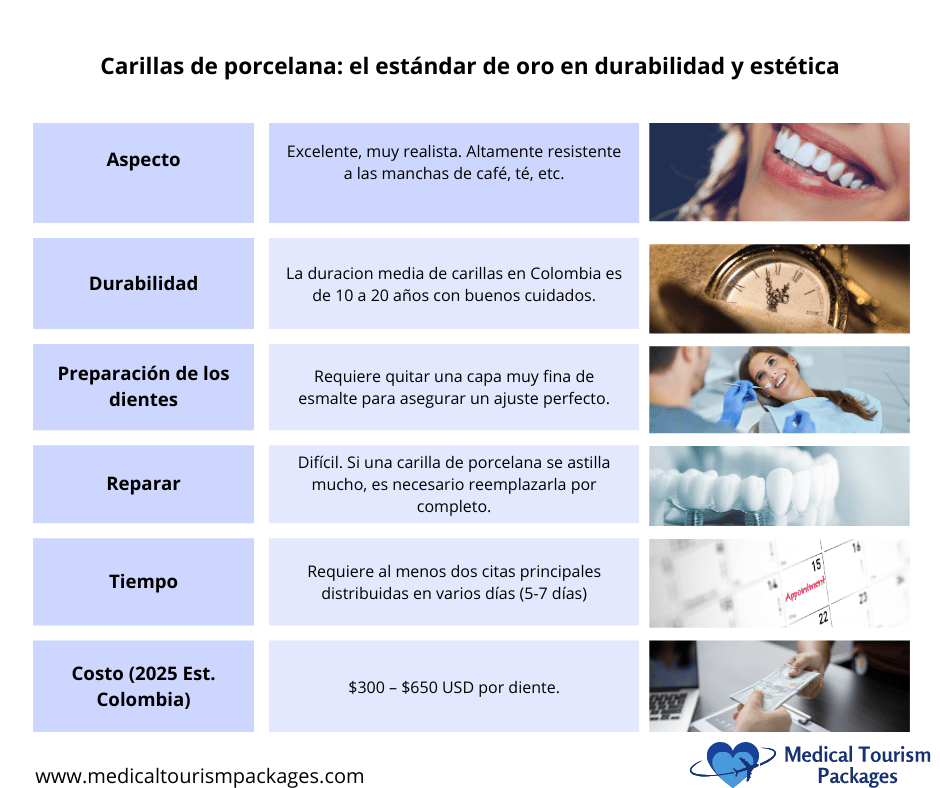
Las carillas de porcelana destacan por su apariencia y durabilidad, con una vida útil de entre 10 y 20 años y resistencia a las manchas, pero cuestan entre $300 y 650 por diente y requieren la eliminación de entre 0,3 y 0,5 mm de esmalte. Las carillas de composite cuestan menos, entre $120 y 400 por diente, requieren una eliminación mínima de esmalte y se completan en 1-2 días, pero solo duran entre 5 y 10 años y se manchan más fácilmente.
| Característica | Carillas de porcelana | Carillas de composite |
|---|---|---|
| Apariencia | Excelente, muy realista, altamente resistente a las manchas. | De bueno a muy bueno, menos translúcido, manchas con el tiempo. |
| Durabilidad | Resistente y duradero, 10-20 años. | Menos duradero, de 5 a 10 años (a menudo de 5 a 7). |
| Preparación dental | Eliminación de esmalte de 0,3-0,5 mm (irreversible) | Eliminación mínima o nula del esmalte (potencialmente reversible). |
| Opciones de reparación | Difícil, normalmente requiere un reemplazo completo. | Más fácil, los chips se pueden reparar con compuesto añadido. |
| Tiempo de tratamiento | 5-7 días hábiles (2 o más citas para análisis de laboratorio) | 1-2 citas al día (posibilidad de citas para el mismo día) |
| Costo (Colombia 2026) | $300-650 USD por diente | $120-400 USD por diente |
| Materiales utilizados | E.max (disilicato de litio), porcelana feldespática, circonio. | Resina compuesta del color de los dientes |
Elija porcelana para obtener la máxima durabilidad, resistencia a las manchas y un aspecto natural. Elija composite si tiene limitaciones presupuestarias, necesita una preparación dental mínima o dispone de poco tiempo en Colombia. Ambos materiales pueden ofrecer resultados excelentes en manos expertas.
¿Qué son las carillas sin preparación y las carillas ultrafinas?
Las carillas sin preparación y ultrafinas, como Lumineers, son láminas de porcelana de solo 0,3 mm de grosor que requieren una eliminación mínima o nula del esmalte. Estas carillas “tipo lente de contacto” cuestan entre $450 y 650 por diente en Colombia y conservan la estructura dental natural, pero su idoneidad depende de su situación dental específica, la forma de los dientes y sus objetivos estéticos.
Las carillas sin preparación preservan el esmalte natural y hacen que el procedimiento sea potencialmente reversible. Sin embargo, no son adecuadas para todo el mundo, ya que los dientes que ya son prominentes pueden parecer voluminosos, las decoloraciones graves pueden verse a través de la porcelana ultrafina y los dientes con irregularidades significativas en su forma necesitan una preparación tradicional para obtener los mejores resultados. Especialistas colombianos como el Dr. Juan Fidel Díez, de Medellín, se especializan en técnicas de preparación mínima utilizando aumento y mediciones precisas para eliminar solo el mínimo de esmalte necesario.
¿Cuáles son las mejores ciudades para realizarse carillas dentales en Colombia?
Las mejores ciudades para realizarse carillas dentales en Colombia son Medellín (conocida por su innovación y rápidas transformaciones), Bogotá (ideal para casos multidisciplinarios complejos), Cali (la “Capital del Diseño de Sonrisas”, especializada en estética natural) y Cartagena (perfecta para unas vacaciones dentales de lujo). Cada ciudad ofrece ventajas únicas en cuanto a precios, especializaciones y experiencia de viaje.
Cada lugar ofrece entornos clínicos, estructuras de precios y experiencias culturales distintos. Su elección dependerá de su presupuesto, la complejidad del tratamiento, el entorno que prefiera y si desea combinar el cuidado dental con actividades vacacionales. Las cuatro ciudades mantienen altos estándares de seguridad en sus principales zonas de turismo dental.
¿Por qué Medellín es la mejor opción para las carillas dentales en 2026?
Medellín es la mejor opción porque ofrece laboratorios internos de vanguardia que permiten transformaciones de carillas en 24-48 horas, una concentración de especialistas formados en EE. UU., un clima agradable durante todo el año y precios competitivos de $300-500 por carilla. Clínicas como Unilaser (Dr. Juan Fidel Díez) y la Dra. Yazmín Escudero en El Poblado se especializan en transformaciones rápidas y de alta calidad de la sonrisa para pacientes internacionales.
Medellín se ha ganado el apodo de “Medellín, ciudad saludable” por su clúster dental. La ciudad fue pionera en los flujos de trabajo CAD/CAM internos con los sistemas CEREC PrimeMill, que pueden fresar carillas e.max individuales en menos de 15 minutos, lo que permite realizar restauraciones en el mismo día o al día siguiente. Unilaser, dirigida por el Dr. Juan Fidel Díez, formado en la Universidad de Nueva York, se especializa en técnicas de micropreparación que preservan al máximo el esmalte. La Dra. Yazmín Escudero ofrece “transformaciones en 24-48 horas” para carillas de porcelana e.max utilizando el diseño digital de sonrisas y el fresado interno. El clima de la “Ciudad de la Eterna Primavera” se mantiene agradable durante todo el año, con temperaturas entre 15 y 26 °C, y los vuelos directos desde Miami duran solo 3,5 horas y cuestan entre $300 y 500 ida y vuelta.
¿Qué hace que Bogotá sea ideal para casos dentales complejos?
Bogotá es ideal para casos complejos porque cuenta con las instalaciones dentales más grandes de Colombia, con equipos multidisciplinarios, integración con sistemas hospitalarios para respaldo quirúrgico y la mayor concentración de especialistas avanzados. Clínicas como Dentinno y La Clínica Dental ofrecen servicios integrales, desde ortodoncia hasta cirugía maxilofacial, con precios que oscilan entre $350 y 550 por carilla.
Como capital de Colombia, Bogotá atrae a los mejores especialistas con múltiples especializaciones y afiliaciones académicas. La integración con sistemas hospitalarios más grandes proporciona una red de seguridad en caso de que surjan complicaciones o sea necesaria una intervención quirúrgica. El Aeropuerto Internacional El Dorado conecta con prácticamente todas las principales ciudades de Norteamérica. Sin embargo, Bogotá se encuentra a 2640 metros de altitud, por lo que algunos visitantes experimentan efectos leves de la altitud al principio, por lo que se recomienda mantenerse hidratado y dedicar un día a la aclimatación.
¿Por qué Cali es conocida como la capital del diseño de sonrisas?
Cali es conocida como la capital del diseño de sonrisas porque sus especialistas, como la Dra. Sara Restrepo, priorizan la estética natural frente a las “sonrisas de Hollywood” artificiales, utilizando el diseño digital de sonrisas y el análisis facial en 3D. Los dentistas de Cali se centran en la armonía facial y en enfoques conservadores, y ofrecen los precios más competitivos de Colombia, entre $300 y 450 por carilla, en los barrios de Granada y El Peñón.
Los especialistas de Cali priorizan la individualidad sobre las sonrisas “perfectas” uniformes, analizando la dinámica de los labios, las proporciones faciales y la morfología dental. La Dra. Sara Restrepo utiliza el software Digital Smile Design (DSD) para previsualizar los resultados antes de cualquier preparación dental, asegurando la alineación con las preferencias estéticas personales. Conocida como la capital colombiana de la salsa, la ciudad ofrece vibrantes experiencias culturales. Los precios en Cali suelen ser los más competitivos de Colombia debido a un costo de vida ligeramente más bajo, aunque la calidad sigue siendo excelente.
¿Cuándo elegir Cartagena para hacer turismo dental?
Debe elegir Cartagena si desea combinar un tratamiento dental de alta calidad con unas vacaciones de lujo en el Caribe, en un entorno declarado Patrimonio de la Humanidad por la UNESCO. Clínicas como el Centro de Implantes de la Costa (Dr. Julio Oliver) cobran entre $500 y 600 por cada carilla, pero incluyen servicios de conserjería bilingüe, experiencias de viaje integradas y recuperación en un paraíso tropical.
Cartagena representa el modelo de “vacaciones dentales” con una impresionante arquitectura colonial, playas caribeñas y un ambiente vacacional. El Centro de Implantes de la Costa ofrece paquetes completos que coordinan todos los aspectos de su visita, incluyendo reservas en hoteles de lujo, transporte privado, excursiones a la playa y reservas en restaurantes. El precio elevado refleja la experiencia integral. Si su principal preocupación es el presupuesto, Medellín o Cali ofrecen una mejor relación calidad-precio, pero si desea combinar el tratamiento con unas vacaciones inolvidables, el precio elevado de Cartagena merece la pena.
¿Quiénes son los mejores dentistas y clínicas para carillas en Colombia?
Entre los mejores dentistas para carillas en Colombia se encuentran el Dr. Juan Fidel Díez, de Unilaser, en Medellín (formado en la NYU, especialista en micropreparación); la Dra. Yazmín Escudero, en Medellín (transformaciones en 24-48 horas); la Dra. Sara Restrepo, en Cali (experta en estética natural), y el Dr. Julio Oliver, en Cartagena (especialista en vacaciones dentales de lujo). Todos ellos cuentan con la certificación ReTHUS, especializaciones de posgrado y formación internacional.
Seleccionar el proveedor adecuado es la decisión más importante en su viaje de turismo dental. No se centre solo en el precio, priorice las credenciales, la experiencia, las opiniones de los pacientes y la calidad de la comunicación. Los mejores dentistas colombianos combinan la habilidad técnica con la sensibilidad artística, entendiendo que las carillas sirven para realzar sus rasgos faciales únicos y crear una sonrisa naturalmente hermosa.
¿Qué credenciales debe buscar en un dentista colombiano?
Debe buscar la verificación del registro ReTHUS (que confirma la licencia legal), la especialización de posgrado (Especialización) en Odontología Operativa Estética o Rehabilitación Oral, experiencia significativa en odontología cosmética (se prefiere más de 5 años), formación internacional (programas estadounidenses o europeos), fluidez en inglés para una comunicación clara y afiliaciones profesionales con organizaciones como la AACD o la FOC.
La verificación ReTHUS es obligatoria, todos los dentistas colombianos deben estar registrados en la base de datos oficial gestionada por el Ministerio de Salud a través de la plataforma SISPRO. Busque especializaciones de posgrado más allá de los cinco años estándar de la facultad de odontología más un año de servicio público obligatorio. La formación internacional en instituciones como la NYU, la Universidad de Pensilvania o la Universidad de Michigan indica un compromiso con la educación continua y la exposición a técnicas avanzadas. La pertenencia a la Academia Americana de Odontología Cosmética (AACD) o a la Federación Odontológica Colombiana (FOC) demuestra un compromiso profesional continuo y una práctica ética.
¿Cómo evalúa a su proveedor de carillas dentales?
Evalúa a tu proveedor buscando reseñas independientes en Google, foros especializados en turismo dental y redes sociales, analizando portafolios de antes y después para ver si los resultados son naturales y la calidad de las fotos es buena, realizando consultas virtuales exhaustivas en las que se pregunte sobre los materiales, la tecnología, los riesgos, los costos y los plazos, y verificando los protocolos de esterilización de la clínica, el equipo moderno y la acreditación voluntaria ISO 9001.
Busque reseñas en Google utilizando el nombre de la clínica en español y en inglés, y consulte foros de turismo dental como RealSelf y MedicalTourism.com para obtener opiniones detalladas y específicas. Estudia críticamente los portafolios de antes y después: ¿los resultados parecen naturales, con variaciones adecuadas, o artificialmente uniformes? ¿Las fotos son de alta calidad y específicas de la clínica, y no imágenes de archivo? Realiza consultas virtuales exhaustivas con preguntas preparadas sobre marcas específicas de materiales, sistemas CAD/CAM, volumen mensual de casos, riesgos específicos y cobertura exacta de la garantía. Evalúa la calidad de la comunicación y la capacidad de respuesta. Pregunta por los protocolos de esterilización: las clínicas de renombre utilizan autoclaves de grado hospitalario y explican con entusiasmo sus procedimientos de control de infecciones.
¿Qué clínicas se especializan en carillas de porcelana en 2026?
Las clínicas especializadas en carillas de porcelana incluyen Unilaser en Medellín (Dr. Juan Fidel Díez, laboratorio propio, $450-500 por carilla), Clínica Dra. Yazmín Escudero en Medellín (transformaciones rápidas, $400-500), Dra. Sara Restrepo en Cali (estética natural, $350-450), Centro de Implantes de la Costa en Cartagena (Dr. Julio Oliver, modelo de lujo, $500-600) y Dentinno en Bogotá (multidisciplinario, $400-550).
Medellín: Unilaser (Dr. Juan Fidel Díez)
- Credenciales: Formado en la Facultad de Odontología de la Universidad de Nueva York, título superior en odontología estética.
- Especialización: técnicas de micropreparación que preservan al máximo el esmalte.
- Ubicación: El Poblado, el exclusivo distrito médico de Medellín.
- Precio: $450-500 por carilla de porcelana.
- Tecnología: Laboratorio interno CEREC CAD/CAM para una fabricación rápida.
- Por qué se recomienda: Pionero en los tratamientos conservadores con carillas en Colombia, se centra en la preservación del esmalte dental y obtiene excelentes resultados con una invasividad mínima.
Medellín: Clínica Dra. Yazmín Escudero
- Especialización: transformaciones e.max en 24-48 horas para viajeros con tiempo limitado.
- Ubicación: Ciudad del Río, moderna zona médica cerca de El Poblado.
- Precio: $400-500 por carilla de porcelana.
- Tecnología: Diseño digital de la sonrisa, fresado interno para su finalización en la misma semana.
- Por qué se recomienda: El flujo de trabajo optimizado permite una transformación completa de la sonrisa en menos de una semana.
Cali: Clínica Dra. Sara Restrepo
- Especialización: Diseño digital de sonrisas, análisis facial en 3D, enfoque conservador.
- Precio: $350-450 por carilla de porcelana (el más competitivo)
- Tecnología: Software DSD avanzado, escaneo intraoral, análisis de proporciones faciales.
- Por qué se recomienda: Maestría artística, crea carillas que complementan los rasgos faciales individuales, evita resultados estereotipados.
Cartagena: Centro de Implantes de la Costa (Dr. Julio Oliver)
- Especialización: Trabajos en porcelana de alta gama en entornos turísticos.
- Precio: $500-600 por carilla de porcelana (precio premium).
- Servicios: Conserjería integral (hotel, excursiones, transporte, reservas en restaurantes).
- Por qué lo recomendamos: experiencia de lujo integral, perfecta para combinar tratamientos con unas vacaciones en el Caribe.
Bogotá: Dentinno
- Tipo: Gran centro dental multidisciplinario.
- Especialización: Casos complejos que requieren múltiples especialistas.
- Precio: $400-550 por carilla de porcelana
- Servicios: Ortodoncia, implantología y cirugía maxilofacial, todo bajo un mismo techo.
- Por qué se recomienda: Atención integral con respaldo quirúrgico, ideal para pacientes que necesitan un tratamiento en varias etapas.
¿Qué tecnología usarán las clínicas dentales colombianas en 2026?
Las clínicas dentales colombianas utilizan el software Digital Smile Design (DSD) con escáneres intraorales 3D, sistemas CAD/CAM como CEREC PrimeMill para carillas en el mismo día, materiales de primera calidad como el disilicato de litio IPS e.max y la zirconia, y cemento dental avanzado activado por luz. Esta tecnología cumple con los estándares norteamericanos, y algunas clínicas de Medellín fresan carillas individuales en menos de 15 minutos.
Las clínicas líderes invierten millones en el mismo equipo que se utiliza en las mejores instalaciones de EE. UU., lo que elimina las diferencias de calidad con los países desarrollados. Los flujos de trabajo digitales mejoran los resultados, las impresiones tradicionales con masilla tienen limitaciones de precisión, mientras que los escaneos digitales capturan detalles a nivel de micras, lo que garantiza que las carillas se ajusten perfectamente y maximiza el éxito a largo plazo.
¿Cómo funciona el diseño digital de sonrisas (DSD)?
Digital Smile Design funciona utilizando escáneres intraorales 3D como iTero y 3shape para crear modelos digitales precisos de sus dientes con una precisión de micras, sustituyendo las incómodas impresiones con masilla. A continuación, el software le permite previsualizar su sonrisa final antes del tratamiento, realizando ajustes en la forma y el color de los dientes, lo que garantiza su satisfacción antes de comenzar cualquier preparación dental irreversible.
El dentista mueve una pequeña varita alrededor de la boca, capturando miles de puntos de datos por segundo para crear un modelo 3D perfecto. El software DSD superpone los posibles diseños de carillas, lo que permite ver exactamente cómo quedarán las diferentes formas, tamaños y tonos, y realizar ajustes de forma digital. Una vez aprobado el diseño, el archivo digital se envía al laboratorio, lo que garantiza un ajuste perfecto y minimiza los ajustes durante la prueba y la colocación final.
¿Qué son el CAD/CAM y el fresado interno?
La tecnología CAD/CAM (diseño y fabricación asistidos por computadora) permite a las clínicas colombianas diseñar y fresar carillas internamente utilizando sistemas como CEREC PrimeMill. Las clínicas avanzadas de Medellín pueden fresar carillas e.max individuales a partir de bloques de cerámica en menos de 15 minutos, lo que permite realizar restauraciones en el mismo día, eliminando los tiempos de espera tradicionales del laboratorio y reduciendo los costos, al tiempo que se mantiene una calidad superior.
La fabricación tradicional de carillas requiere enviar las impresiones a laboratorios externos, lo que añade entre 2 y 5 días hábiles y entre 100 y 200 pesos por carilla en concepto de honorarios de laboratorio. El CAD/CAM interno elimina tanto los retrasos como los gastos. El CEREC PrimeMill talla las carillas a partir de bloques de cerámica sólida utilizando fresas de diamante con una precisión extraordinaria, a menudo superior a la de las carillas hechas a mano. El fresado interno puede eliminar la necesidad de carillas temporales, y las carillas en el mismo día significan que usted sale con restauraciones permanentes en una sola cita.
¿Qué materiales se utilizan: E-max, circonio y otros?
Las clínicas colombianas utilizan disilicato de litio IPS e.max (el estándar de oro con una resistencia a la flexión de 400 MPa y una excelente translucidez), circonio multicapa para mayor resistencia, carillas ultrafinas de 0,3-0,5 mm y porcelana feldespática para un aspecto natural de primera calidad. Todos los materiales están aprobados por el INVIMA y son fabricados por las mismas marcas internacionales (Ivoclar, Straumann) que se utilizan en Norteamérica.
IPS e.max sigue siendo la opción más popular, ya que ofrece un equilibrio ideal entre una resistencia a la flexión de 400 MPa y una translucidez que imita el esmalte natural. La zirconia proporciona una resistencia aún mayor para los hábitos de rechinar los dientes o los molares, y la zirconia multicapa moderna ofrece una estética mejorada. Las carillas ultrafinas tienen un grosor de solo 0,3-0,5 mm y requieren una eliminación mínima de esmalte, aunque no son adecuadas para decoloraciones graves o dientes ya prominentes. La porcelana feldespática crea la translucidez más natural, pero es más frágil. La aprobación de la INVIMA garantiza que solo se comercialicen marcas reconocidas internacionalmente, por lo que no recibirá materiales genéricos o de calidad inferior.
¿Cómo funciona la tecnología del cemento dental y la adhesión?
El cemento dental utiliza sistemas de unión de resina activados por luz que crean uniones permanentes más resistentes que los adhesivos tradicionales cuando se curan con luz azul especializada. El cemento dental de alta calidad que se emplea en las clínicas colombianas cuenta con protocolos avanzados de grabado y preparación de superficies, lo que contribuye a la vida útil de 15 a 20 años de las carillas de porcelana de calidad mediante la unión química y mecánica a nivel molecular.
El proceso de adhesión comienza con un grabado con ácido fosfórico para crear irregularidades microscópicas que aumentan la superficie de retención mecánica. Los cementos de resina modernos también se adhieren químicamente, ya que contienen moléculas que reaccionan tanto con la porcelana como con la estructura dental. Este mecanismo de adhesión dual crea una adhesión extremadamente fuerte y, cuando se coloca correctamente, la carilla se convierte prácticamente en parte del diente. La luz de curado activa los fotoiniciadores, iniciando una reacción en cadena de polimerización que transforma el cemento líquido en un sólido con una resistencia tremenda en cuestión de segundos. Esta adhesión avanzada explica por qué las carillas colocadas correctamente duran entre 15 y 20 años.
¿Cómo funciona el proceso de colocación de carillas en Colombia?
El proceso de colocación de las carillas se realiza mediante un procedimiento de siete pasos: consulta inicial con diseño digital de la sonrisa, preparación de los dientes con anestesia local, impresiones digitales, fabricación en laboratorio durante 2-5 días (o en el mismo día con CEREC), prueba de ajuste con retoques, adhesión final con cemento de alta calidad y cuidados posteriores. El proceso completo dura entre 5 y 10 días para las carillas de porcelana.
La mayoría de los pacientes internacionales pasan entre 7 y 10 días en Colombia para someterse a un tratamiento de carillas de porcelana, incluyendo días de margen para el viaje. Las citas dentales propiamente dichas suelen tener lugar durante 5-7 días hábiles. Las clínicas colombianas han optimizado este flujo de trabajo para los turistas médicos con una programación eficiente y franjas horarias por la mañana y por la tarde, lo que le permite disponer de tiempo libre para explorar la ciudad entre cita y cita.
¿Qué sucede durante la consulta inicial y el examen?
Durante la consulta inicial, se analizan los objetivos estéticos y se realiza una evaluación completa de la salud bucal, que incluye radiografías y escaneos 3D. El dentista utiliza el software Digital Smile Design para crear una maqueta de su nueva sonrisa, lo que le permite previsualizar y aprobar el diseño. Esta consulta tiene un valor de $50-100, pero a menudo es gratuita cuando se procede con el tratamiento.
Muchas clínicas inician el proceso de forma remota para pacientes internacionales mediante el envío de fotos o consultas por video. La consulta presencial en Colombia consiste en un examen de los dientes, las encías y la mordida, con radiografías que revelan problemas ocultos y escaneos 3D que capturan dimensiones precisas. El diseño digital de la sonrisa crea maquetas de los posibles resultados mostrando diferentes formas, tamaños y colores de los dientes, lo que garantiza la alineación de las expectativas antes de cualquier preparación irreversible de los dientes. Recibirá un plan de tratamiento por escrito en el que se especificará el número de carillas, el tipo de material, los costos, el calendario y las condiciones de la garantía, así como cualquier trabajo preliminar necesario.
¿Cómo se realiza la preparación dental?
La preparación dental se realiza con anestesia local para mayor comodidad, eliminando una fina capa de esmalte (0,3-0,5 mm) de los dientes que recibirán las carillas de porcelana. Los especialistas colombianos utilizan cada vez más técnicas de preparación mínima para preservar al máximo la estructura natural del diente. El proceso es irreversible en la mayoría de los casos de porcelana, mientras que las carillas de composite pueden requerir una eliminación mínima o nula del esmalte.
La anestesia local garantiza que no sienta dolor durante la preparación, y hay opciones de sedación disponibles para los pacientes ansiosos. El dentista utiliza fresas de precisión para eliminar exactamente entre 0,3 y 0,5 mm de esmalte, creando espacio para que la carilla quede al ras y una superficie rugosa para una adhesión óptima del cemento. Especialistas como el Dr. Juan Fidel Díez en Medellín utilizan aumento y medición digital para los enfoques de micropreparación. En el caso de las carillas compuestas, a menudo no es necesaria la preparación del diente, lo que hace que el compuesto sea potencialmente reversible.
¿Cómo se toman las impresiones?
Las impresiones se toman utilizando escáneres intraorales digitales como iTero y 3shape, que capturan miles de puntos de datos por segundo, creando modelos 3D precisos sin los incómodos moldes tradicionales de masilla. Este enfoque digital proporciona una mayor precisión, comodidad para el paciente y una integración perfecta con los sistemas de fabricación CAD/CAM, con archivos digitales enviados instantáneamente a los laboratorios.
El escaneo digital elimina las molestias, las náuseas, el sabor desagradable y las limitaciones de precisión de las impresiones tradicionales con masilla. La pequeña y cómoda varilla de escaneo se mueve alrededor de la boca durante unos minutos mientras usted respira con normalidad. El escáner captura la información del color para ayudar al laboratorio a igualar con precisión el tono natural de sus dientes. Los archivos digitales se envían instantáneamente al laboratorio sin retrasos por mensajería, o se introducen directamente en las fresadoras internas para agilizar el flujo de trabajo.
¿Cuánto tiempo lleva la fabricación de las carillas?
La fabricación de las carillas tarda entre 2 y 5 días hábiles en el caso de las carillas de porcelana enviadas a laboratorios externos, o el mismo día en el caso de las clínicas que cuentan con sistemas CAD/CAM CEREC internos. Las carillas temporales protegen los dientes durante la espera. Los laboratorios colombianos cobran entre $100 y $200 por cada carilla (frente a los $400-600 en EE. UU.), y utilizan porcelana Emax y feldespática de primera calidad con aplicación multicapa para lograr una translucidez natural.
El proceso habitual consiste en tomar las impresiones el primer día, fabricar las carillas entre el segundo y el quinto día, y colocarlas definitivamente el sexto o séptimo día. Los laboratorios colombianos certificados mantienen un estricto control de calidad utilizando los mismos materiales y técnicas que los laboratorios estadounidenses, aplicando porcelana en múltiples capas para crear profundidad y translucidez. Las clínicas de primera calidad con laboratorios propios ofrecen un servicio más rápido, y algunas clínicas de Medellín completan todo el proceso en 24-48 horas. Durante la fabricación, se utilizan carillas temporales que protegen los dientes preparados y mantienen la estética. Se deben evitar los alimentos duros y tratar con cuidado estas carillas temporales de resina, que son menos duraderas.
¿Qué sucede durante la prueba de ajuste y los ajustes?
Durante la prueba de ajuste, el dentista coloca las carillas en los dientes sin cemento permanente para comprobar el ajuste, el color y el aspecto general. Su opinión es fundamental en esta fase, ya que se pueden realizar pequeños ajustes en la forma, la longitud o el tono antes de la adhesión definitiva. El dentista se asegura de que la mordida sea cómoda y de que las carillas se alineen correctamente con los dientes adyacentes.
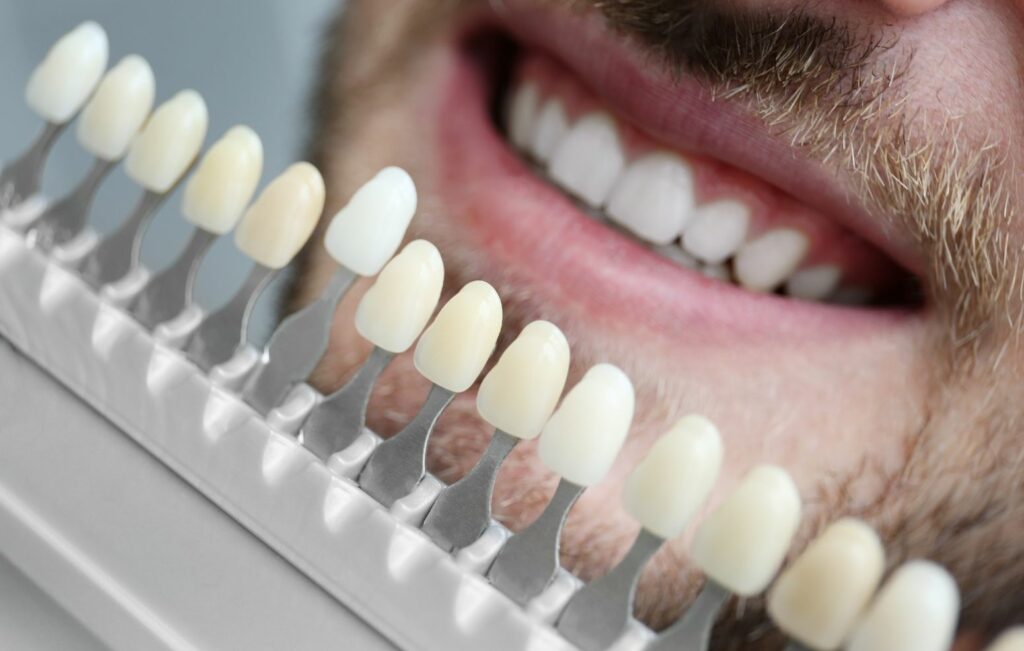
La prueba de ajuste utiliza cemento temporal o no utiliza cemento para facilitar su extracción. El dentista le pedirá que sonría, hable y compruebe su aspecto en un espejo con luz natural o luces de espectro completo. Esta es su última oportunidad para realizar cambios, así que diga si algo le parece mal en cuanto a la longitud, el brillo o la forma. Un ligero pulido y lijado puede solucionar muchos problemas, mientras que los cambios importantes requieren rehacer las carillas en el laboratorio. El dentista también comprueba su mordida para asegurarse de que las carillas no resulten incómodas ni interfieran en el movimiento de la mandíbula. Tómese su tiempo, los dentistas de prestigio recomiendan una evaluación exhaustiva y algunos incluso envían fotos a familiares o amigos para que den su opinión.
¿Cómo se adhieren las carillas a los dientes?
Las carillas se adhieren a los dientes limpiando y grabando primero la superficie del esmalte, aplicando luego un cemento de resina especial a la carilla, colocándola con precisión sobre el diente y utilizando una luz de curado para endurecer la unión de forma permanente. En el caso de las carillas de porcelana, se elimina el exceso de cemento y se pule la superficie. En el caso de las carillas compuestas, la resina se aplica en capas, se esculpe directamente y se cura.
En el caso de las carillas de porcelana, se retiran las carillas temporales y se pulen los dientes a fondo, ya que cualquier residuo compromete la adhesión. Se graba el esmalte con gel de ácido fosfórico para crear irregularidades microscópicas que faciliten la adhesión mecánica. Después de enjuagar, se aplica el agente adhesivo tanto al esmalte como al interior de la carilla de porcelana. Se aplica cemento de resina, se coloca la carilla con cuidado y se elimina la mayor parte del exceso de cemento con un cepillo antes de que la luz de curado endurezca el cemento en segundos. Después del curado inicial, se elimina con cuidado el exceso de cemento restante con instrumentos finos y se pulen todas las superficies. Evite los alimentos extremadamente duros durante 24 horas mientras el cemento completa su proceso de fraguado.
En el caso de las carillas compuestas, el dentista aplica resina del color de los dientes en capas directamente sobre los dientes, esculpiendo cada capa y endureciéndola con una luz de curado para lograr un control artístico. Una vez colocadas y curadas todas las capas, se realiza un pulido meticuloso para crear una superficie lisa y brillante que imita el esmalte natural. La adhesión compuesta suele completarse en una sola cita: usted llega con sus dientes naturales y se va con las carillas terminadas.
¿Qué cuidados de seguimiento se proporcionan?
El cuidado de seguimiento incluye la revisión de la mordida para garantizar la comodidad, ajustes finales, instrucciones detalladas sobre higiene bucal y alimentos que se deben evitar, una breve cita de seguimiento antes de salir de Colombia, recomendación de un protector nocturno personalizado ($150-300) y documentación de garantía por escrito con una cobertura de 5 a 15 años. El dentista se asegura de que usted comprenda los requisitos de mantenimiento a largo plazo y le proporciona información de contacto para futuras consultas.
La mayoría de las clínicas programan una cita de seguimiento al día siguiente para comprobar cómo se sienten las carillas después de 24 horas de uso y tratar cualquier molestia menor o problema de mordida. Las instrucciones de cuidado son fundamentales: cepillarse los dientes dos veces al día con pasta dental no abrasiva, usar hilo dental a diario con cuidado alrededor de los bordes de las carillas, evitar usar las carillas como herramientas y no morder directamente alimentos duros como las manzanas, sino cortarlos en trozos. Se recomienda encarecidamente a todo el mundo el uso de un protector nocturno personalizado, que es esencial si se rechinan los dientes, y que cuesta entre $150 y 300 para proteger su inversión. La documentación de la garantía escrita especifica la cobertura por defectos de fabricación y fallos prematuros en condiciones de uso normal, excluyendo los daños causados por accidentes, rechinar los dientes sin protector nocturno o una higiene bucal deficiente. La clínica proporciona información de contacto para futuras consultas, y muchas ofrecen asistencia por correo electrónico después de regresar a casa.
¿Cómo planear su viaje a Colombia para realizarse carillas dentales en 2026?
Planifique su viaje para colocarse carillas dentales verificando los requisitos de visado (la mayoría de los visitantes no necesitan visado para estancias de hasta 90 días), reservando vuelos (a partir de $300-550 desde Miami), buscando alojamiento cerca de la clínica ($40-120 por noche para opciones de gama media), presupuestando $3,500-7,800 en total para 8 carillas, incluido el viaje, y completando el formulario obligatorio Check-Mig 72 horas antes de la salida. La mayoría de los pacientes pasan entre 7 y 10 días en Colombia.
Comience por seleccionar su clínica y dentista, y confirme la disponibilidad para las fechas que prefiera. La mayoría de las clínicas requieren un depósito de 20-30% para reservar su lugar. Reserve los vuelos y el alojamiento después de confirmar las citas con el dentista para evitar conflictos de horarios. Muchas clínicas recomiendan hoteles específicos y pueden ofrecer descuentos; alojarse cerca de la clínica minimiza el estrés del transporte.
¿Cuáles son los requisitos de visa para Colombia en 2026?
Los ciudadanos de EE. UU., Canadá, Reino Unido, UE y Australia no necesitan visa para estancias turísticas de hasta 90 días en Colombia, con posibles extensiones de 90 días (180 días como máximo al año). Debe tener un pasaporte válido, completar el formulario obligatorio Check-Mig en línea dentro de las 72 horas antes de volar y los canadienses pagan una tarifa de entrada de aproximadamente $40-50 USD a su llegada.
El formulario Check-Mig es obligatorio para todos los viajeros y debe completarse a través del sitio web de Migración Colombia entre 72 horas y 1 hora antes de cada vuelo (tanto de entrada como de salida). Ten a la mano la confirmación. Tu pasaporte debe tener una validez mínima de seis meses a partir de la fecha de salida prevista. Algunas aerolíneas pueden solicitar una prueba de continuación del viaje o de regreso.
Preguntas frecuentes sobre las carillas dentales en Colombia
Aquí encontrará respuestas a las preguntas más frecuentes que recibimos en Medical Tourism Packages sobre los tratamientos de carillas dentales en Colombia. Si tiene alguna pregunta adicional, póngase en contacto con nuestros coordinadores.
¿Cuánto duran las carillas dentales de Colombia?
Las carillas de Colombia duran entre 10 y 15 años en el caso de la porcelana y entre 5 y 7 años en el caso del composite, con los cuidados adecuados en 2026. La vida útil depende de la calidad del material (IPS e.max es el que más dura), de sus hábitos de higiene bucal, de evitar los alimentos duros, de usar un protector nocturno si rechina los dientes y de acudir a revisiones semestrales con su dentista.
Las carillas de porcelana de alta calidad fabricadas con disilicato de litio IPS e.max pueden durar entre 15 y 20 años con un cuidado excepcional. Las clínicas colombianas utilizan los mismos materiales de primera calidad que se encuentran en las instalaciones norteamericanas. Su compromiso con el mantenimiento determina la longevidad más que el país donde se realiza el tratamiento. La mayoría de las clínicas colombianas ofrecen garantías de 5 a 15 años para las carillas de porcelana que cubren defectos de fabricación y fallas prematuras bajo uso normal, excluyendo daños por accidentes, rechinar los dientes sin un protector nocturno o caries por mala higiene bucal.
¿La calidad es realmente tan buena como en mi país de origen?
Sí, la calidad de las mejores clínicas colombianas cumple con los estándares norteamericanos porque utilizan equipos idénticos (sistemas CAD/CAM CEREC PrimeMill), los mismos materiales (IPS e.max, cemento 3M ESPE) y dentistas certificados por ReTHUS con formación internacional. El sistema sanitario colombiano ocupa el puesto 22 en la clasificación mundial de la OMS, por delante de Estados Unidos, que se encuentra en el puesto 37.
Las clínicas líderes invierten millones en la misma tecnología que se utiliza en las mejores instalaciones de Estados Unidos. El software Digital Smile Design, los escáneres intraorales 3D como iTero y los laboratorios de fresado internos crean carillas con una precisión idéntica. La clave está en seleccionar clínicas de renombre, verificar a los dentistas a través del registro ReTHUS, comprobar la certificación Habilitación y leer reseñas independientes.
¿Cuántas citas o viajes necesitaré para los veneers colombianos?
En 2026, necesitará un viaje de entre 7 y 10 días para las carillas de porcelana, que incluirá la consulta, la preparación de los dientes, las carillas temporales, la fabricación en laboratorio (de 3 a 5 días), la adhesión final y las revisiones de seguimiento. Las carillas compuestas solo requieren de 1 a 2 días y se completan en el mismo día. Si se necesita cirugía de encías o un trabajo de preparación extenso, es posible que necesite dos viajes separados.
Calendario típico de las carillas de porcelana: Días 1-2: consulta y preparación; días 3-7: carillas temporales mientras el laboratorio crea las permanentes; días 8-9: adhesión final y ajustes; día 10: seguimiento final antes de la salida. Muchas clínicas de Medellín ofrecen ahora transformaciones en 24-48 horas utilizando fresado CAD/CAM interno. Las carillas compuestas se pueden completar en una sola cita, en la que el dentista aplica y esculpe la resina directamente sobre los dientes. Usted llega con sus dientes naturales y se va horas más tarde con las carillas terminadas.
¿Cuáles son los riesgos o posibles inconvenientes de ponerse carillas en Colombia?
Los principales riesgos son la dificultad para manejar las complicaciones después de regresar a casa, la calidad variable entre las clínicas, lo que requiere una cuidadosa selección, las posibles barreras lingüísticas (aunque las mejores clínicas cuentan con personal bilingüe) y la necesidad de coordinación entre su dentista colombiano y su dentista de origen para el seguimiento. Una investigación exhaustiva y el uso de paquetes de turismo médico para proveedores previamente seleccionados reducen significativamente estas preocupaciones.
Si surgen problemas meses después, volver a Colombia para las reparaciones puede resultar incómodo y costoso. Algunas clínicas ofrecen consultas remotas a través de fotos y videollamadas o descuentan los costos de tratamientos anteriores en las reparaciones realizadas en visitas posteriores. Antes de comprometerse, analice detalladamente los términos de la garantía y los procedimientos de cuidados posteriores. Las barreras lingüísticas existen principalmente en las clínicas económicas, mientras que las clínicas de turismo dental de alta gama cuentan con personal totalmente bilingüe y dentistas con experiencia en comunicar los planes de tratamiento a pacientes internacionales, con planes de tratamiento escritos y desgloses de costos en inglés.
¿Hay otros países que ofrecen carillas dentales?
Sí, Panamá y Costa Rica también ofrecen excelentes alternativas de carillas dentales con un ahorro significativo en los costos y una atención de calidad comparable a la de Colombia. Panamá ofrece carillas de porcelana a un precio de $350-600 por diente en dólares estadounidenses y a 2.5 horas de vuelo desde Miami. Costa Rica cobra $400-650 por diente y cuenta con décadas de experiencia en turismo dental.
Panamá: A solo 2.5-3 horas de Miami, con el dólar estadounidense como moneda oficial, clínicas dentales modernas con dentistas formados en Estados Unidos, ahorros de 50-70% con carillas de porcelana a $350-600 por diente, y la posibilidad de combinar el tratamiento con visitas al Canal de Panamá o escapadas a la playa. Más información sobre la corrección de la sonrisa en Panamá.
Con una reputación en turismo dental consolidada a lo largo de décadas, las clínicas suelen contar con certificaciones estadounidenses o europeas, ofrecen carillas de porcelana a un precio de $400-650 por diente, con un ahorro de 50-65%, y son populares por combinar los tratamientos dentales con actividades de ecoturismo, como excursiones a la selva tropical y relajación en la playa. Medical Tourism Packages facilita los servicios dentales en Panamá, Costa Rica y Colombia con un apoyo integral que incluye la preselección de clínicas, la coordinación del tratamiento, el alojamiento y la asistencia logística local.
¿Existen opciones de financiamiento disponibles para pacientes internacionales?
Sí, hay opciones de financiamiento disponibles a través de clínicas colombianas que aceptan tarjetas de crédito, planes de pago internos durante el tratamiento, empresas de financiamiento de turismo médico con tasas de 4.99% y plazos de 144 meses, y algunas tarjetas de crédito para servicios de salud con sede en EE. UU. que se aceptan en clínicas premium. Revise cuidadosamente los términos, ya que el financiamiento internacional puede tener tasas de interés más altas que las opciones nacionales.
Muchas clínicas colombianas trabajan con empresas internacionales de financiamiento médico especializadas en préstamos para turismo médico, con aprobación rápida, normalmente en 24 horas, y tasas que varían en función de la solvencia y el plazo del préstamo. Las tarjetas de crédito siguen siendo el método de pago más común, y la mayoría de las clínicas premium aceptan Visa, Mastercard y American Express. El uso de una tarjeta de crédito ofrece protección en las compras y permite disputar los cargos si surgen problemas, y algunas tarjetas ofrecen seguro de viaje cuando se reservan vuelos con ellas.
¿Cuánto cuestan las carillas dentales en Colombia, incluyendo el viaje?
El costo total de 8 carillas de porcelana en Colombia, incluyendo el viaje, oscila entre $3,500 y 7,800 en 2026, desglosado en $2,400-5,200 para las carillas, $300-550 para los vuelos de ida y vuelta desde Miami, 400-1200 dólares por 10 días de alojamiento de gama media y 300-600 dólares por comidas y transporte local. Esto supone un ahorro de 40-601 dólares en comparación con el costo de las carillas por sí solas en Estados Unidos o Canadá.
| Categoría de gasto | Coste (USD) |
|---|---|
| 8 Carillas de porcelana | $2,400 – $5,200 |
| Vuelos de ida y vuelta (desde EE.UU.) | $300 – $550 |
| Alojamiento (10 días, gama media) | $400 – $1,200 |
| Comidas y transporte local | $300 – $600 |
| Total estimado | $3,500 – $7,800 |
Incluso con todos los gastos de viaje incluidos, el costo total sigue siendo entre 40 y 601 TP3T inferior al que pagaría solo por las carillas en Norteamérica. El ahorro en el costo compensa con creces un viaje memorable a Colombia. Solicite un presupuesto personalizado a Medical Tourism Packages para conocer el precio exacto.
¿Qué incluye la consulta y el examen dental?
Su consulta dental inicial en Colombia incluye una evaluación integral de su salud bucal, radiografías digitales e imágenes en 3D, discusión de sus objetivos estéticos, planificación del tratamiento con el software Digital Smile Design, presupuesto por escrito del costo total del procedimiento y evaluación de sus hábitos de higiene bucal. Esta consulta (con un valor de entre $50 y 100) suele ser gratuita cuando se decide continuar con el tratamiento.
- Evaluación completa de la salud bucodental por su equipo dental
- Radiografías digitales e imágenes en 3D para una planificación precisa del tratamiento.
- Discusión sobre sus objetivos estéticos y el resultado deseado para su sonrisa.
- Planificación del tratamiento mediante el software Digital Smile Design con vista previa.
- Presupuesto por escrito de la intervención dental completa
- Evaluación de sus prácticas de higiene bucal y requisitos de mantenimiento.
La consulta garantiza que usted y el dentista estén de acuerdo con el plan de tratamiento antes de comenzar cualquier trabajo irreversible. Podrá ver una vista previa de su nueva sonrisa y solicitar ajustes. Muchos pacientes aprecian esta fase de planificación minuciosa más que las consultas apresuradas que han experimentado en sus países de origen.
¿Listo para comenzar su viaje de carillas dentales en Colombia?
Medical Tourism Packages coordina todo su viaje a Colombia para realizarse carillas dentales. Le ponemos en contacto con especialistas certificados en Medellín, Bogotá, Cali y Cartagena, organizamos el viaje y el alojamiento, y le ofrecemos asistencia bilingüe durante todo el tratamiento y la recuperación.
Nuestra red incluye solo clínicas acreditadas con dentistas verificados por ReTHUS, materiales aprobados por la INVIMA y garantías completas. Le ayudamos a comparar presupuestos, programar consultas y planificar cada detalle de la transformación de su sonrisa. Contáctenos hoy mismo para obtener una consulta gratuita y un presupuesto personalizado para un paquete de carillas.