Book Appointment Now

Rhinoplasty Surgery in Panama: Affordable Precision and Natural Results
 By
By
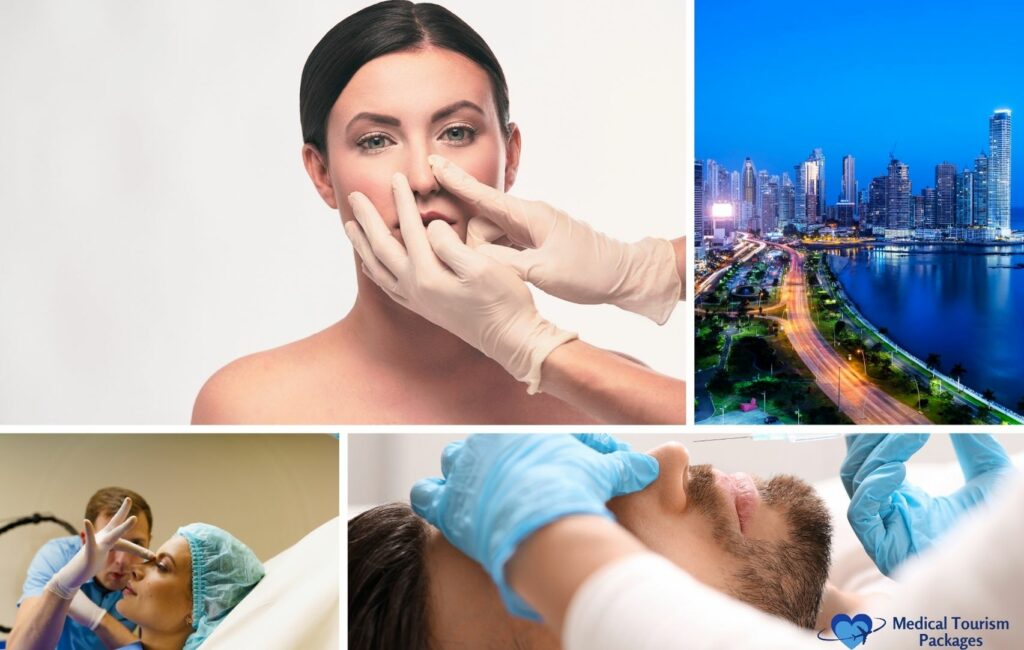
Rhinoplasty in Panama delivers natural-looking results at 50-70% lower costs than the US, performed by board-certified surgeons at JCI-accredited hospitals affiliated with Johns Hopkins Medicine International.
A nose job in Panama costs $2,500-$4,500 versus $5,000-$15,000 in the United States. Hospital Punta Pacifica and Clínica Hospital San Fernando, Panama’s only two JCI-accredited facilities, serve 50,000+ international patients annually with surgeons trained at top US and European institutions.
Our network connects you with ABPS-certified plastic surgeons in Panama City, each verified for credentials, facility accreditation, and patient safety protocols. Below, you’ll find comprehensive cost comparisons, top clinic profiles, procedure type details, recovery timelines, travel planning guides, and answers to frequently asked questions about rhinoplasty in Panama.
What is Rhinoplasty in Panama?
Rhinoplasty in Panama is a surgical procedure to reshape the nose for cosmetic or functional purposes, performed by board-certified plastic surgeons at internationally accredited facilities. The procedure costs $2,500-$4,500 in Panama City, representing 50-70% savings compared to US prices while using identical surgical techniques and technology.
Rhinoplasty addresses both cosmetic concerns like nose size, shape, or symmetry and functional issues such as breathing difficulties from structural defects. Hospital Punta Pacifica and Clínica Hospital San Fernando, Panama’s only two JCI-accredited hospitals, offer comprehensive rhinoplasty services with internationally trained surgeons. Learn more about plastic surgery procedures available in Panama.
What is the Difference Between Cosmetic and Functional Rhinoplasty?
Cosmetic rhinoplasty reshapes the nose’s appearance to improve facial harmony, while functional rhinoplasty corrects structural problems that obstruct breathing. Many patients combine both approaches in a single surgery to address aesthetic goals and breathing issues simultaneously, which typically costs $3,500-$5,000 in Panama versus $10,000-$20,000 in the US.
Functional rhinoplasty treats deviated septums, nasal polyps, sinus obstructions, and nasal valve collapse. These medical conditions cause chronic congestion, snoring, sleep apnea, and reduced airflow. Surgeons use techniques like septoplasty (straightening the nasal septum) and turbinate reduction (shrinking swollen tissues) to restore proper breathing while maintaining or improving nasal appearance.
Cosmetic rhinoplasty focuses on refining the nasal bridge, tip, nostrils, or overall size and shape. Common aesthetic concerns include dorsal humps (bumps on the bridge), bulbous tips, wide nostrils, asymmetry, or disproportionate size relative to facial features. Surgeons reshape bone and cartilage using precise techniques developed through thousands of procedures.
What Techniques Do Panama Surgeons Use?
Panama surgeons use open rhinoplasty, closed rhinoplasty, ultrasonic rhinoplasty, and preservation rhinoplasty techniques depending on the complexity of the case. Hospital Punta Pacifica uses Vectra 3D imaging systems for surgical planning, allowing patients to visualize results before surgery through computer modeling that shows the projected outcome from multiple angles.
- Open rhinoplasty: External incision across the columella (tissue between nostrils) provides maximum visibility and access for complex structural changes
- Closed rhinoplasty: All incisions hidden inside nostrils, leaving no visible scars, ideal for minor refinements and tip adjustments
- Ultrasonic rhinoplasty: Piezoelectric devices precisely reshape nasal bones with less trauma, bruising, and swelling than traditional methods
- Preservation rhinoplasty: Maintains natural nasal structures by repositioning rather than removing bone and cartilage, resulting in more natural appearance
How Much Does Rhinoplasty Cost in Panama?
Rhinoplasty costs $2,500-$4,500 in Panama at JCI-accredited hospitals compared to $5,000-$15,000 in the United States, representing 50-70% savings. All-inclusive packages include surgeon fees, facility costs, anesthesia, post-operative care, recovery accommodation for 7-14 days, airport transfers, and English-speaking patient coordination throughout the treatment journey.
What Do Different Rhinoplasty Procedures Cost?
Different rhinoplasty procedures vary in cost based on surgical complexity and technique requirements:
| Procedure Type | Panama Cost | US Cost | Savings |
|---|---|---|---|
| Standard Rhinoplasty | $2,500-$4,500 | $5,000-$15,000 | 50-70% |
| Open Rhinoplasty | $3,000-$4,500 | $8,000-$15,000 | 50-66% |
| Closed Rhinoplasty | $2,500-$4,000 | $5,000-$12,000 | 50-68% |
| Revision Rhinoplasty | $3,500-$5,500 | $10,000-$20,000 | 60-70% |
| Non-Surgical Rhinoplasty | $800-$1,500 | $1,500-$3,000 | 40-50% |
Revision rhinoplasty costs more due to increased surgical complexity. Previous surgery creates scar tissue and altered anatomy that require advanced techniques to correct. Only surgeons with extensive rhinoplasty experience should perform revisions, as success rates average 80% compared to 85-90% for primary procedures.
How Do Costs Compare to the US and Canada?
Panama rhinoplasty costs 50-70% less than US prices and 30-60% less than Canadian prices while maintaining identical surgical standards:
| Country | Standard Rhinoplasty | Revision Rhinoplasty | Average Total Savings |
|---|---|---|---|
| Panama | $2,500-$4,500 | $3,500-$5,500 | Baseline |
| United States | $5,000-$15,000 (avg $7,600) | $10,000-$20,000 | $5,000-$12,000 |
| Canada | $4,300-$18,000 (avg $6,700) | $12,000-$18,000 | $3,500-$10,000 |
| Colombia | $2,800-$4,500 | $4,000-$6,000 | Similar pricing |
| Mexico | $2,000-$5,000 | $3,500-$7,000 | Comparable range |
Canadian patients from Vancouver, Toronto, and Montreal save 30-60% by choosing Panama over domestic options. Flight costs from Toronto to Panama City average $400-$700 round-trip with 5-hour direct flights on Copa Airlines, making total trip costs (surgery plus travel) still 40-50% below Canadian surgery-only prices.
What’s Included in Rhinoplasty Packages?
All-inclusive rhinoplasty packages at JCI-accredited hospitals include comprehensive medical care and logistical support:
- Surgeon consultation and fees: Initial evaluation, surgical procedure, and follow-up appointments (typically 5-7 days and 11-12 days post-surgery)
- Operating room and facility fees: Use of state-of-the-art surgical suites with advanced monitoring equipment and sterile environments
- Anesthesia and anesthesiologist: Board-certified anesthesiologist and all medications required during surgery and immediate recovery
- Post-operative care and medications: Pain management, antibiotics, anti-inflammatory drugs, and wound care supplies for home recovery
- Recovery accommodation: 7-14 days in nearby hotel or recovery facility (varies by package level chosen)
- Airport transfers: Round-trip transportation between Tocumen International Airport and hotel/hospital in private vehicles
- English-speaking patient coordinator: Bilingual staff member coordinates appointments, transportation, and addresses questions throughout stay
- Daily nurse visits: Home or hotel visits 14-30 days post-surgery for wound care, medication management, and mobility guidance
What Payment Options Are Available?
Panama accepts US dollars and Panamanian Balboas at a fixed 1:1 exchange rate, eliminating currency conversion fees for American patients. Hospital Punta Pacifica and Clínica Hospital San Fernando accept Visa, Mastercard, and American Express credit cards with international processing, though some clinics offer 5-10% discounts for cash or wire transfer payments.
Financing options through local Panamanian banks provide 12-48 month payment plans at 4.99-8.99% APR for qualified international patients with credit verification. Medical tourism financing companies like PatientFi and Advance Care Card offer specialized healthcare loans with approval decisions within 24-48 hours based on credit scores above 650.
What Are the Top Rhinoplasty Clinics in Panama?
Panama has only two JCI-accredited hospitals performing rhinoplasty: Hospital Punta Pacifica (affiliated with Johns Hopkins Medicine International) and Clínica Hospital San Fernando (first hospital in Panama to receive JCI accreditation). These facilities meet international safety standards equivalent to top US hospitals, with surgical site infection rates of 0.5% compared to US average of 2-3%.
Which Hospitals Have JCI Accreditation?
Only two hospitals in Panama hold Joint Commission International accreditation for plastic surgery services:
| Hospital | Location | Accreditations | International Affiliation | Key Technology |
|---|---|---|---|---|
| Hospital Punta Pacifica | Punta Pacifica, Panama City | JCI | Johns Hopkins Medicine International (only in Central America) | Vectra 3D imaging, VASER lipo, BodyTite RF, Renuvion J-Plasma |
| Clínica Hospital San Fernando | Panama City | JCI (first in Panama) | Various international medical partnerships | Modern surgical facilities, advanced imaging and monitoring |
| Panama Aesthetics | Panama City | Ministry of Health licensed, APCPER member | Surgeons trained in USA/Europe | Modern surgical suite with advanced anesthesia monitoring |
JCI accreditation requires hospitals to meet 1,300+ rigorous standards covering patient safety, infection control, medication management, and surgical protocols. Accredited facilities undergo unannounced inspections every three years to maintain certification. Hospital Punta Pacifica has maintained continuous JCI status since 2009, demonstrating sustained quality excellence.
What is the Johns Hopkins Medicine International Affiliation?
Hospital Punta Pacifica is the only hospital in Central America affiliated with Johns Hopkins Medicine International, bringing world-renowned protocols and expertise to Panama. Johns Hopkins physicians rotate through the facility providing training, consultation, and quality oversight to ensure surgical standards match those at Johns Hopkins Hospital in Baltimore, consistently ranked among America’s top hospitals.
The Johns Hopkins affiliation means surgical safety checklists, infection prevention protocols, and quality metrics mirror those used at Johns Hopkins facilities worldwide. Hospital Punta Pacifica’s surgical site infection rate of 0.5% compares favorably to the US national average of 2-3%, demonstrating superior infection control practices. Patient satisfaction scores consistently exceed 90% across all surgical specialties including plastic surgery.
Johns Hopkins-trained physicians provide consultations on complex cases and participate in ongoing medical education for local surgeons. This knowledge transfer ensures Panama’s surgical teams stay current with latest rhinoplasty techniques, including ultrasonic bone sculpting, preservation approaches, and advanced grafting methods developed at leading academic medical centers.
What Technology Do Panama Clinics Use?
Panama’s top rhinoplasty facilities use cutting-edge surgical technology identical to equipment found in leading US plastic surgery centers:
- Vectra 3D imaging systems: Create three-dimensional computer models of your face allowing you to preview surgical results from multiple angles before committing to surgery
- VASER liposuction technology: Ultrasound-assisted fat removal for patients combining rhinoplasty with chin or neck contouring for complete facial harmony
- BodyTite radiofrequency-assisted procedures: Minimally invasive skin tightening technology for facial procedures requiring both structural changes and skin adjustment
- Renuvion J-Plasma technology: Cold plasma energy for precise tissue tightening during advanced rhinoplasty and revision cases
- Piezoelectric ultrasonic devices: Allow surgeons to reshape nasal bones with extreme precision while protecting delicate surrounding tissues from trauma
Why Choose Panama for Rhinoplasty?
Panama offers 50-70% cost savings on rhinoplasty compared to US prices while maintaining JCI international safety standards and Johns Hopkins quality protocols. Proximity to the United States (3-5 hour flights from major cities), US dollar currency eliminating exchange rate concerns, and established medical tourism infrastructure serving 50,000+ international patients annually make Panama an ideal destination for cosmetic surgery.
What Are the Cost Savings?
Savings range from $3,000 to $12,000 depending on procedure complexity:
| Procedure | Panama | US | You Save |
|---|---|---|---|
| Standard Rhinoplasty | $3,500 (average) | $7,600 (average) | $4,100 (54%) |
| Revision Rhinoplasty | $4,500 (average) | $15,000 (average) | $10,500 (70%) |
| Non-Surgical Rhinoplasty | $1,150 (average) | $2,250 (average) | $1,100 (49%) |
Even including international flights ($300-$600 round-trip from Miami), accommodation ($80-$200/night for 10-14 days), and meals, total out-of-pocket costs remain 40-50% below US surgery-only prices. Medical tourism packages often bundle these expenses at discounted rates, with some clinics including recovery accommodation in their surgical fees.
What Credentials Do Panama Surgeons Have?
Panama has 12 plastic surgeons holding American Board of Plastic Surgery (ABPS) certification, the gold standard credential in North America. APCPER (Panama Association of Plastic, Reconstructive, and Aesthetic Surgery) membership indicates completion of rigorous accredited training similar to requirements for American Society of Plastic Surgeons membership in the United States.
Most rhinoplasty specialists in Panama City completed fellowships and advanced training at top institutions in the United States, Europe, or South America. They maintain membership in international organizations like International Society of Aesthetic Plastic Surgery (ISAPS), which requires documented surgical experience, peer recommendations, and adherence to ethical standards.
CRITICAL REGULATORY NOTE: Panama allows any licensed physician to perform cosmetic surgery procedures, not just board-certified plastic surgeons. This makes credential verification essential. Always confirm your surgeon holds specialized plastic surgery training and board certification from recognized bodies like ABPS or equivalent international certifications before proceeding with surgery.
How Safe is Rhinoplasty in Panama?
Rhinoplasty at JCI-accredited facilities in Panama has an 85-90% success rate with experienced surgeons, identical to success rates in the United States. Major complication rates average 0.7% (less than 1 in 100 patients experience significant problems), while minor complications like temporary swelling, bruising, or numbness occur in 15-20% of cases and resolve within weeks to months.
Safety statistics for rhinoplasty in Panama compare favorably to international benchmarks. The revision rate averages 9.8% (meaning 90.2% of patients achieve satisfactory results with their first surgery), with patient satisfaction scores of 84.6%. Hospital Punta Pacifica’s infection rate of 0.5% significantly outperforms the US national average of 2-3%, demonstrating superior infection control protocols.
Common minor complications resolve with proper aftercare and include temporary nasal congestion, mild asymmetry during healing, prolonged swelling in thick-skinned patients, minor bleeding in first 48 hours, and temporary numbness in nasal tip or upper lip. Serious complications like infection, septal perforation, or breathing impairment occur in less than 1% of cases at accredited facilities with board-certified surgeons.
What Types of Rhinoplasty Procedures Are Available in Panama?
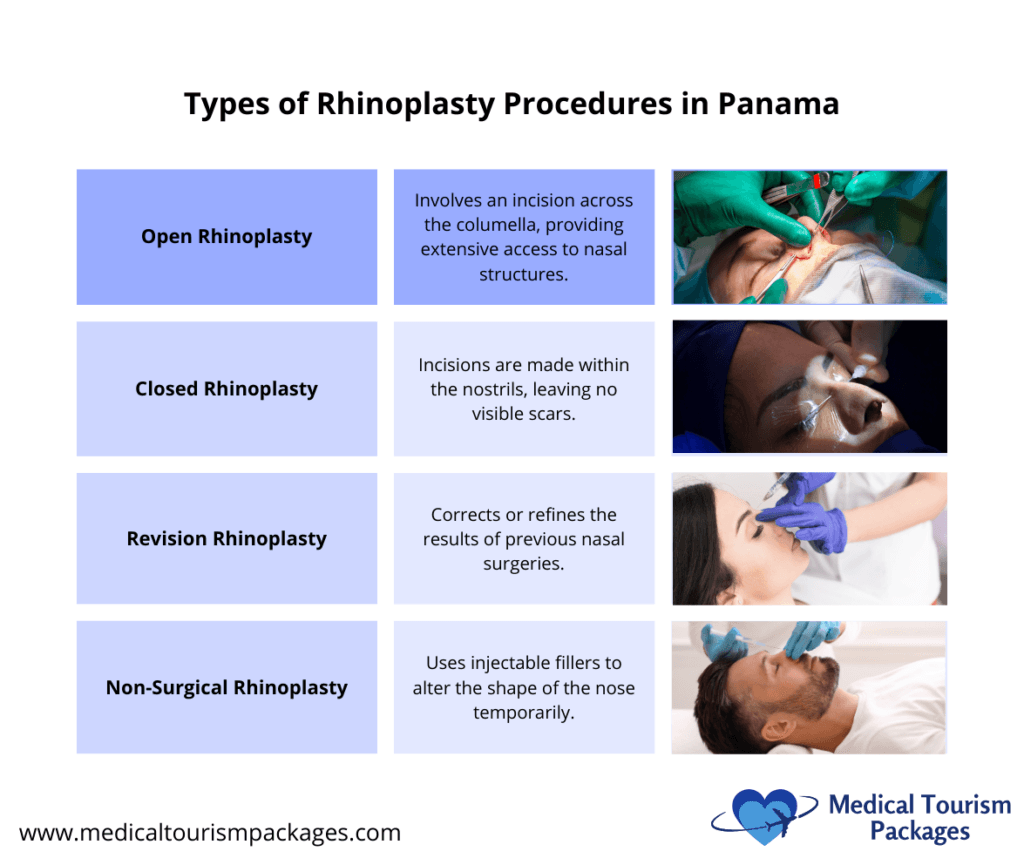
Panama surgeons perform open rhinoplasty, closed rhinoplasty, revision rhinoplasty, ethnic rhinoplasty, and non-surgical rhinoplasty using the same techniques employed at leading US plastic surgery centers. The choice of technique depends on your specific anatomy, aesthetic goals, previous surgeries, skin thickness, and extent of changes required to achieve desired results.
What is Open Rhinoplasty and When is it Used?
Open rhinoplasty involves an external incision across the columella (the tissue strip between your nostrils), allowing the surgeon to lift the skin and see the entire nasal structure directly. This technique is used for major structural modifications, complex tip work, revision surgeries, correcting severe asymmetry, significant bridge reduction or augmentation, and cases requiring extensive cartilage grafting from ears or ribs.
Recovery from open rhinoplasty takes 2-4 weeks for initial healing, with the splint removed after 5-7 days and most swelling subsiding by week 2. The small columellar scar typically fades to barely visible within 6-12 months. Patients can fly home 11-12 days post-surgery and resume desk work after 10-14 days, though strenuous exercise should wait 6-8 weeks.
Open rhinoplasty costs $3,000-$4,500 in Panama versus $8,000-$15,000 in the United States. The technique provides surgeons with unparalleled visibility and precision for complex cases where millimeter-level accuracy determines success. Most revision rhinoplasties require the open approach due to scar tissue and altered anatomy from previous surgery.
What is Closed Rhinoplasty and Who Should Get It?
Closed rhinoplasty involves all incisions hidden inside the nostrils, leaving no visible external scars. This approach is ideal for minor to moderate changes, refining the nasal tip, removing small dorsal humps, narrowing the nasal bridge, adjusting nostril size, and patients with thin skin who heal well with less swelling.
Recovery is typically faster than open rhinoplasty, with 90-95% of swelling resolved by week 2 and patients returning to work within 7-10 days. The closed technique causes less tissue trauma, resulting in reduced bruising and swelling. Final results appear sooner, usually within 3-6 months versus 12 months for open rhinoplasty.
Closed rhinoplasty costs $2,500-$4,000 in Panama compared to $5,000-$12,000 in the US. The technique requires advanced surgical skill because surgeons work through limited openings without direct visualization. Not all surgeons perform closed rhinoplasty, so verify your surgeon’s experience with this specific approach during consultation.
What is Revision Rhinoplasty?
Revision rhinoplasty corrects unsatisfactory results from previous nose surgery, whether aesthetic (you’re unhappy with the appearance) or functional (breathing problems developed or worsened). Approximately 10-15% of rhinoplasty patients seek revision surgery, either from the same surgeon for minor adjustments or from a revision specialist for more significant corrections.
Revision rhinoplasty is technically more challenging than primary rhinoplasty due to scar tissue formation, altered blood supply, weakened structural support, and limited remaining cartilage for grafting. Success rates average 80% compared to 85-90% for first-time procedures. The surgery costs $3,500-$5,500 in Panama versus $10,000-$20,000 in the US.
Common reasons for revision include breathing difficulties not present before surgery, visible irregularities or asymmetries, excessive narrowing of nasal airways, tip drooping or rotation issues, persistent hump or saddle deformity, nostril asymmetry, or simply dissatisfaction with overall appearance. Most surgeons recommend waiting 12 months after primary rhinoplasty before pursuing revision to allow complete healing and final result assessment.
What is Ethnic Rhinoplasty?
Ethnic rhinoplasty preserves your ethnic and cultural facial features while refining the nose to achieve better facial balance and harmony. This specialized approach respects the unique nasal characteristics of African American, Asian, Hispanic, Middle Eastern, and other ethnic backgrounds rather than imposing Western aesthetic standards.
Techniques often include building up a low nasal bridge using cartilage grafts (common in Asian rhinoplasty), refining a wide nasal base while maintaining ethnic character, adjusting thick nasal skin to reveal underlying definition, reshaping a bulbous tip without over-narrowing, and creating natural proportions appropriate for your facial features.
Ethnic rhinoplasty requires cultural sensitivity and technical expertise in working with thicker skin, different cartilage structures, and varying aesthetic ideals across cultures. Surgeons experienced in ethnic rhinoplasty understand that a beautiful nose complements your entire face rather than conforming to a single standard of beauty. The procedure costs the same as standard rhinoplasty, $2,500-$4,500 in Panama.
What is Non-Surgical Rhinoplasty?
Non-surgical rhinoplasty uses injectable dermal fillers (typically hyaluronic acid products like Juvederm or Restylane) to temporarily reshape the nose without surgery. The procedure takes 15-30 minutes in-office with immediate results and no downtime, costing $800-$1,500 in Panama versus $1,500-$3,000 in the US.
Non-surgical rhinoplasty can smooth dorsal humps (by filling the areas above and below), lift a drooping tip, improve symmetry, straighten mild crookedness, and camouflage minor irregularities. The filler results last 6-18 months depending on the product used and your metabolism, after which the procedure must be repeated to maintain results.
Limitations include inability to reduce nose size (fillers only add volume), inability to narrow the nasal base or nostrils, inability to improve breathing, and temporary nature requiring repeated treatments. Non-surgical rhinoplasty works best as a trial run before committing to surgery or for patients wanting subtle refinements without surgical risks and recovery time.
How Do You Plan Your Rhinoplasty Trip to Panama?
Planning a rhinoplasty trip to Panama involves booking flights 8-12 weeks in advance for best rates, arranging accommodation in safe neighborhoods near clinics, obtaining travel insurance with medical coverage, gathering medical records and consultation photos, and coordinating with your chosen facility for appointment scheduling. Most clinics provide bilingual patient coordinators who guide you through the entire process from initial inquiry to post-surgery follow-up.
Do US and Canadian Citizens Need a Visa for Panama?
No, US and Canadian citizens do not need a visa for tourist or medical stays up to 180 days (six months) in Panama. You need only a valid passport with at least 3 months remaining validity beyond your travel dates, proof of onward travel (return ticket or confirmed flight to another destination), and proof of sufficient funds ($500 cash or valid credit card).
Immigration officers at Tocumen International Airport typically ask about your visit purpose. Medical tourism is recognized and accepted, so you can honestly state you’re visiting for medical treatment. The immigration process takes 15-30 minutes on average. English-speaking immigration officers are available if needed, though most interactions are brief and straightforward.
US citizens should register with the US Embassy in Panama through the Smart Traveler Enrollment Program (STEP) for safety updates. The embassy is located at Building 783, Demetrio Basilio Lakas Avenue, Clayton, Panama. Emergency contact is +507-317-5000. For life-threatening emergencies, call 911 for immediate Panamanian emergency services (police, ambulance, fire).
How Much Do Flights Cost to Panama City?
Flight costs to Panama City vary by departure city and season, with prices generally lower April-November:
| Origin City | Flight Time | Airlines | Round-Trip Cost (2026) |
|---|---|---|---|
| Miami, FL | 3 hrs 4 min | Copa, American | $299-$602 |
| New York (JFK/EWR) | 5 hrs 30 min | Copa, United | $400-$700 |
| Houston, TX | 4 hrs 15 min | Copa, United | $350-$650 |
| Los Angeles, CA | 6 hrs 45 min | Copa, United | $450-$750 |
| Washington DC | 5 hrs | Copa, American, United | $299+ |
| Toronto, Canada | 5 hrs 30 min | Copa, Air Canada | $450-$800 |
| Fort Lauderdale, FL | 3 hrs 15 min | Spirit, Copa | $250-$500 |
Copa Airlines is Panama’s flag carrier with the most flights to Panama City, offering direct service from 15+ US cities. Budget airlines like Spirit offer lower fares but charge for carry-on bags, seat selection, and other services included on full-service carriers. Book 8-12 weeks in advance for best pricing, and consider flying midweek (Tuesday-Thursday) for lower fares.
Where Should You Stay During Recovery?
Stay in safe, modern neighborhoods close to your clinic for convenient follow-up appointments:
- Punta Pacifica: Modern high-rise district with upscale shopping and medical centers, home to Hospital Punta Pacifica. Very safe with strong police presence and CCTV. Hotels $110-$200/night. Ideal for medical tourists due to proximity to top hospitals.
- Casco Viejo (Historic District): UNESCO World Heritage Site with well-preserved colonial architecture. Safe with heavy tourist police presence. Charming boutique hotels $80-$180/night. Walking distance to attractions and restaurants.
- El Cangrejo: Residential-commercial neighborhood 2-3 km from Casco Viejo. Tree-lined streets with local restaurants and supermarkets. Metro station access. Mid-range hotels like Continental Hotel ($80-$120/night), Hotel Riande Granada ($90-$130/night). Good safety record with authentic local experience.
- Obarrio: Business district with offices, restaurants, and nightlife. Well-monitored and safe. Close to banking district and major hospitals. Hotels $90-$160/night.
Avoid these areas: El Chorrillo (high crime rates), San Miguelito (not recommended for tourists), and Curundú (higher crime rates). Stay in well-lit, populated areas. Use official taxis or Uber (widely available) rather than walking alone at night. Hotel staff can recommend safe walking routes for your specific location.
What Currency Does Panama Use?
Panama uses both the Panamanian Balboa (PAB) and US Dollar (USD) at a fixed 1:1 exchange rate, meaning one Balboa equals one Dollar. US dollars circulate freely throughout Panama and are accepted everywhere, eliminating the need for currency exchange. Credit cards (Visa, Mastercard, American Express) are widely accepted at hospitals, hotels, and restaurants.
The 1:1 exchange rate has remained stable since the Balboa’s introduction, making budgeting simple for US and Canadian travelers. ATMs dispense both PAB and USD. No currency conversion fees apply when using US dollars. Some clinics offer 5-10% discounts for cash or wire transfer payments versus credit card payments due to merchant processing fees.
Tipping practices follow US customs: 10-15% at restaurants (often included in the bill as “servicio”), $1-2 per bag for porters, $5-10/day for housekeeping, and 10-15% for taxi drivers if providing exceptional service. Most service workers appreciate US dollars, making tipping straightforward for American visitors.
How Do You Choose a Rhinoplasty Surgeon in Panama?
Choose a rhinoplasty surgeon in Panama by verifying board certification from American Board of Plastic Surgery or equivalent international bodies, confirming membership in APCPER (Panama plastic surgery association), reviewing before-and-after photo galleries showing consistent natural results, checking JCI-accredited hospital privileges, and scheduling consultations with 2-3 surgeons to compare approaches and comfort levels.
What Credentials Should You Verify?
Verify these essential credentials before selecting your surgeon:
- American Board of Plastic Surgery (ABPS) certification: Gold standard credential; only 12 surgeons in Panama hold this certification
- APCPER membership: Panama Association of Plastic, Reconstructive, and Aesthetic Surgery indicates rigorous training completion
- JCI-accredited facility privileges: Surgeon has operating privileges at Hospital Punta Pacifica or Clínica Hospital San Fernando
- International training verification: Completed fellowships at top US, European, or South American institutions
- Medical malpractice insurance: Carries liability coverage for international patients
- Ministry of Health license: Valid license to practice medicine in Panama (basic requirement, but not sufficient alone)
- ISAPS membership: International Society of Aesthetic Plastic Surgery membership requires peer recommendations and ethical standards adherence
CRITICAL WARNING: Panama allows any licensed physician to legally perform cosmetic surgery procedures, regardless of plastic surgery specialization. A general practitioner, dermatologist, or other non-plastic-surgeon can offer rhinoplasty services. Always verify your surgeon completed specialized plastic surgery residency training and holds board certification specific to plastic surgery.
Why Are Before and After Photos Important?
Before-and-after photo galleries demonstrate a surgeon’s aesthetic style, technical capabilities, and consistency in achieving natural results. Look for diversity of results (proving the surgeon customizes approaches to individual features), consistency in quality across many patients, naturalness (results that enhance rather than look “operated”), and patients with similar facial features or concerns as yours.
High-quality photo galleries show multiple angles (front, side profile, three-quarter view, base view) in consistent lighting and positioning. Photos should include patients with various skin types, ethnicities, and starting anatomies to demonstrate versatility. Be wary of galleries showing only a few perfect cases or heavily edited photos that may not represent typical outcomes.
Ask to see photos of complications or revisions, not just perfect results. Honest surgeons acknowledge that not every case goes perfectly and show how they handle challenges. Request to see unedited photos during in-person consultation rather than relying solely on website galleries that may be selectively curated or professionally enhanced.
What Should You Ask During Consultations?
Ask these essential questions during your consultation:
- How many rhinoplasties have you performed? Look for 500+ procedures minimum; experienced specialists perform 1,000-3,000+ over their career
- What is your revision rate? Should be under 10%; rates above 15% indicate concerning outcome inconsistency
- What technique do you recommend for my case and why? Assess whether surgeon explains rationale clearly and considers your specific anatomy
- What are potential complications in my specific case? Generic risk lists are insufficient; surgeon should identify your individual risk factors
- What does recovery involve and when can I fly home? Verify the 11-12 day minimum stay recommendation matches your surgeon’s protocol
- What follow-up care do you provide after I return home? Confirm availability for virtual consultations and local referral network if complications arise
- Can I see your surgical facility? Legitimate surgeons welcome facility tours; refusal is a red flag
- What happens if I need a revision? Understand revision policies, costs, and timing requirements
How Important is Language Proficiency?
Language proficiency is critical for informed consent, understanding surgical plans, communicating concerns during recovery, and asking questions during follow-up appointments. JCI-accredited facilities like Hospital Punta Pacifica and Clínica Hospital San Fernando employ bilingual staff and English-speaking surgeons specifically to serve international patients safely and effectively.
Test language proficiency during initial consultation by gauging the surgeon’s ability to understand and respond to your questions naturally without relying on translators. Many Panama surgeons trained in the US speak fluent English. Patient coordinators facilitate communication, but your surgeon should communicate directly with you about medical decisions rather than always relying on intermediaries.
If language barriers exist, clinics should provide professional medical translation services (not just bilingual staff members without medical training). Some facilities offer pre-recorded materials in English and virtual consultations with translators present. Translation apps are insufficient for complex medical discussions involving surgical consent, risk disclosure, and recovery instructions.
What is the Rhinoplasty Recovery Timeline?
Rhinoplasty recovery progresses through distinct phases: Week 1 with splint and peak swelling, Weeks 2-4 when 90-95% of swelling resolves, Months 3-6 when refinement continues, and Month 12 when final results fully appear. Most patients return to desk work after 10-14 days, resume light exercise after 3-4 weeks, and restart strenuous activities after 6-8 weeks.
What Happens in Week 1 After Surgery?
The first week after rhinoplasty involves the most intensive recovery phase:
- Splint placement (Days 1-7): External splint protects your nose and maintains new shape during initial healing, removed at 5-7 day appointment
- Peak swelling (Days 1-3): Maximum swelling and bruising occur within first 72 hours, gradually improving thereafter
- Pain management: Mild to moderate discomfort controlled with prescribed pain medications; most patients describe pressure rather than sharp pain
- Activity restrictions: Strict bed rest first 24-48 hours with head elevated 30-45 degrees, no bending over or lifting objects heavier than 10 pounds
- Follow-up appointments: Typically scheduled at Days 1-2 (wound check) and Days 5-7 (splint removal)
- Nasal congestion: Breathing through mouth required due to internal packing, splints, or swelling blocking nasal passages
- Dietary modifications: Soft foods and room temperature liquids for first 48 hours to minimize chewing stress on facial structures
Keep your head elevated even while sleeping (use 2-3 pillows or recliner chair) to minimize swelling. Apply cool compresses to cheeks and under eyes (not directly on nose) for 10-15 minutes every hour while awake during Days 1-3. Avoid blowing your nose for 2 weeks even if congested; gentle saline rinses help clear nasal passages.
What Can You Expect in Weeks 2-4?
Weeks 2-4 bring significant visible improvement as 90-95% of swelling and bruising resolve by week 2. Splint removal at 5-7 days reveals your new nasal shape, though subtle swelling persists for months. Most patients describe feeling comfortable appearing in public by Day 10-14, with makeup concealing any residual bruising around eyes.
Return to desk work and light activities typically occurs at 10-14 days post-surgery. Avoid strenuous exercise, contact sports, activities causing facial flushing (hot yoga, saunas), wearing glasses directly on nose bridge (use tape or special support frames), and prolonged sun exposure (wear SPF 30+ sunscreen and hat). Social activities resume normally as visible signs fade.
Residual swelling concentrates in the nasal tip and may make your nose appear slightly larger or less defined than the ultimate result. This is normal and expected. The shape continues refining as subtle swelling resolves over subsequent months. Follow-up appointments at 2-3 weeks and 4-6 weeks monitor healing progress and address any concerns.
When Will You See Final Results?
Final rhinoplasty results appear at 12 months (one year) post-surgery when all swelling completely resolves and tissues fully settle into their permanent position. However, you see progressive improvement throughout the first year: at 3 months, the majority of swelling is gone and shape is clearly defined; at 6 months, residual swelling is largely resolved; and at 12 months, the absolutely final result is visible.
Thick-skinned patients experience longer swelling resolution timelines, sometimes extending to 18 months for complete refinement. Thin-skinned patients typically see final results sooner, often by 6-9 months. The nasal tip takes longest to fully refine because tip skin is thickest and holds fluid longer than other nasal areas.
Your nose continues subtle changes throughout your life due to natural aging, skin elasticity changes, and gravity effects. However, the structural changes made during rhinoplasty are permanent. Cartilage grafts, bone reshaping, and tip modifications maintain their position indefinitely unless trauma occurs or revision surgery is performed.
When Can You Fly Home After Surgery?
You can fly home 11-12 days after rhinoplasty surgery once your surgeon confirms proper healing at the follow-up appointment and clears you for air travel. This timeline allows splint removal at 5-7 days, assessment of healing progress, and verification that no complications require extended monitoring before departing Panama.
Flying earlier than 11 days risks complications from cabin pressure changes, inability to blow your nose during flight (uncomfortable with congestion), difficulty managing swelling at high altitude, and being away from your surgeon if bleeding or other issues occur. Most medical tourism packages include 10-14 days accommodation to meet this safe departure timeline.
Request an aisle seat for easier bathroom access and ability to stand/stretch during flight. Stay well-hydrated with water throughout the flight (cabin air is very dry). Use saline nasal spray every 1-2 hours to keep nasal passages moist. Avoid alcohol and caffeine which promote dehydration. Continue taking any prescribed medications on schedule during travel.
Is Rhinoplasty in Panama Safe?
Yes, rhinoplasty in Panama is safe when performed by board-certified plastic surgeons at JCI-accredited facilities like Hospital Punta Pacifica or Clínica Hospital San Fernando. These hospitals meet the same international safety standards as top US medical centers, with surgical site infection rates of 0.5% compared to US average of 2-3%, demonstrating superior infection control protocols and patient safety measures.
What Are Panama’s Medical Tourism Safety Standards?
Panama’s medical tourism industry serves 50,000+ international patients annually with a 15% annual growth rate, demonstrating sustained patient satisfaction and safety. JCI accreditation requires hospitals to meet 1,300+ rigorous standards covering patient safety protocols, infection control measures, medication management systems, surgical quality monitoring, staff credentialing requirements, and emergency response procedures.
The Ministry of Health (Ministerio de Salud – MINSA) regulates medical facilities and physician licensing in Panama. Facilities must maintain current licenses and submit to regular inspections. However, MINSA licensing alone does not guarantee international quality standards, which is why choosing JCI-accredited facilities provides additional safety assurance through independent third-party verification.
Panama’s medical tourism infrastructure has matured over 20+ years, with established protocols for international patient care, bilingual staff training, medical record systems compatible with US standards, and coordination with patients’ home physicians for continuity of care. Major hospitals maintain partnerships with US medical centers for complex case consultations and knowledge sharing. For comprehensive guidance, see our complete guide for American medical tourists in Panama.
What Should You Know About Surgeon Licensing?
CRITICAL REGULATORY WARNING: Panama allows any licensed physician to perform cosmetic surgery procedures, regardless of specialized plastic surgery training. A general practitioner, dermatologist, ENT specialist, or other non-plastic-surgeon can legally offer rhinoplasty services without completing plastic surgery residency training or board certification in plastic surgery.
This regulatory environment makes credential verification absolutely essential for patient safety. Always verify your surgeon completed an accredited plastic surgery residency program (typically 5-6 years after medical school), holds board certification from American Board of Plastic Surgery or equivalent international body, and maintains active membership in APCPER (Panama plastic surgery association).
Ask to see documentation of training credentials, board certification certificates, and hospital privileges at JCI-accredited facilities. Legitimate surgeons provide this information readily. Evasive responses, claims that credentials “don’t matter,” or inability to produce documentation are serious red flags indicating the surgeon may lack proper training for complex rhinoplasty procedures.
What Insurance and Protection Options Exist?
Protect yourself with appropriate insurance and understand legal recourse options:
- Medical evacuation insurance (strongly advised): Covers emergency air transport to US if serious complications require treatment unavailable in Panama; costs $100-$300 for single trip
- Travel insurance with medical complication coverage: Reimburses extended stay costs if complications delay your return home; verify policy covers elective surgery complications
- Verify surgeon carries malpractice insurance: Ask for proof of liability coverage; surgeons with hospital privileges at JCI facilities must carry insurance
- Understand legal recourse options in Panama: Medical malpractice lawsuits are possible through Panama court system; international patients can pursue legal action
- Credit card purchase protection: Some credit cards offer dispute resolution for services not delivered as promised; check your card’s medical procedure coverage
Medical evacuation insurance from companies like Medjet Assist or International SOS provides 24/7 coordination if emergency transport becomes necessary. While serious complications requiring evacuation are rare (less than 0.5% of cases), the peace of mind and financial protection justify the modest cost for major surgery abroad.
Frequently Asked Questions About Rhinoplasty in Panama
How much does rhinoplasty cost in Panama?
Rhinoplasty costs $2,500-$4,500 in Panama at JCI-accredited hospitals compared to $5,000-$15,000 in the United States. This represents 50-70% savings while using identical surgical techniques and technology. All-inclusive packages include surgeon fees, facility costs, anesthesia, post-operative care, recovery accommodation, airport transfers, and bilingual patient coordination.
Is rhinoplasty in Panama safe?
Yes, rhinoplasty in Panama is safe at JCI-accredited facilities like Hospital Punta Pacifica and Clínica Hospital San Fernando. These hospitals meet international safety standards with surgical site infection rates of 0.5% compared to US average of 2-3%. Success rates range from 85-90% with board-certified surgeons, identical to US outcomes.
What are the best rhinoplasty clinics in Panama?
The best rhinoplasty clinics are Hospital Punta Pacifica (JCI-accredited, Johns Hopkins Medicine International affiliation) and Clínica Hospital San Fernando (JCI-accredited, first in Panama). Only these two hospitals hold JCI accreditation for plastic surgery services. Hospital Punta Pacifica’s Johns Hopkins affiliation is unique in Central America, bringing world-renowned protocols and quality oversight.
Do I need a visa to travel to Panama for surgery?
No, US and Canadian citizens do not need a visa for tourist or medical stays up to 180 days in Panama. You need only a valid passport with at least 3 months remaining validity, proof of onward travel, and proof of sufficient funds ($500 cash or valid credit card). Medical tourism is recognized and accepted at immigration.
How long do I need to stay in Panama for rhinoplasty?
You should stay 10-14 days minimum for rhinoplasty in Panama. This allows for surgery, splint removal at 5-7 days, healing assessment, and safe clearance for air travel at 11-12 days. Most medical tourism packages include 7-14 days accommodation to meet this safe departure timeline and ensure proper recovery monitoring.
When can I fly home after rhinoplasty?
You can fly home 11-12 days after rhinoplasty surgery once your surgeon confirms proper healing and clears you for air travel. This timeline allows splint removal at 5-7 days and verification that no complications require extended monitoring. Flying earlier risks complications from cabin pressure changes and being away from your surgeon if issues occur.
What is the difference between open and closed rhinoplasty?
Open rhinoplasty involves an external incision across the columella (tissue between nostrils) providing maximum visibility for complex changes. Closed rhinoplasty has all incisions hidden inside nostrils leaving no visible scars, ideal for minor refinements. Open approach costs $3,000-$4,500 and takes longer to heal; closed costs $2,500-$4,000 with faster recovery.
Can rhinoplasty fix breathing problems?
Yes, functional rhinoplasty corrects structural problems causing breathing difficulties including deviated septums, nasal polyps, sinus obstructions, and nasal valve collapse. Surgeons use techniques like septoplasty and turbinate reduction to restore proper breathing. Many patients combine functional and cosmetic rhinoplasty in one surgery, costing $3,500-$5,000 in Panama versus $10,000-$20,000 in the US.
How long does rhinoplasty recovery take?
Rhinoplasty recovery takes 2-4 weeks for initial healing with most swelling resolved, 3-6 months for refinement to continue, and 12 months for final results to fully appear. Most patients return to desk work after 10-14 days, resume light exercise after 3-4 weeks, and restart strenuous activities after 6-8 weeks.
What credentials should my surgeon have?
Your surgeon should hold American Board of Plastic Surgery (ABPS) certification or equivalent, APCPER membership (Panama plastic surgery association), JCI-accredited facility privileges, international training verification, and medical malpractice insurance. Only 12 surgeons in Panama hold ABPS certification. Panama allows any licensed physician to perform cosmetic surgery, making credential verification essential for safety.
What is the Johns Hopkins affiliation?
Hospital Punta Pacifica is the only hospital in Central America affiliated with Johns Hopkins Medicine International. This brings world-renowned protocols, quality oversight, and expertise to Panama. Johns Hopkins physicians rotate through the facility providing training and consultation. Surgical safety checklists and infection prevention protocols match those at Johns Hopkins Hospital in Baltimore, consistently ranked among America’s top hospitals.
Can I get revision rhinoplasty in Panama?
Yes, Panama surgeons perform revision rhinoplasty to correct unsatisfactory results from previous surgery. Revision procedures cost $3,500-$5,500 versus $10,000-$20,000 in the US, representing 60-70% savings. Success rates average 80% compared to 85-90% for primary procedures due to increased complexity from scar tissue and altered anatomy. Most surgeons recommend waiting 12 months after primary rhinoplasty before pursuing revision.
What is non-surgical rhinoplasty and how much does it cost?
Non-surgical rhinoplasty uses injectable dermal fillers (Juvederm, Restylane) to temporarily reshape the nose without surgery. The procedure takes 15-30 minutes with immediate results and no downtime, costing $800-$1,500 in Panama versus $1,500-$3,000 in the US. Results last 6-18 months depending on the product used. It cannot reduce nose size or improve breathing, only add volume to camouflage irregularities.
How many surgeons in Panama are board-certified?
Only 12 plastic surgeons in Panama hold American Board of Plastic Surgery (ABPS) certification, the gold standard credential. APCPER membership (Panama Association of Plastic, Reconstructive, and Aesthetic Surgery) indicates rigorous training completion similar to American Society of Plastic Surgeons requirements. Panama allows any licensed physician to perform cosmetic surgery, making board certification verification essential before choosing your surgeon.
What happens if I have complications after returning home?
Top Panama surgeons provide virtual follow-up consultations and maintain referral networks with US physicians for complications. Medical evacuation insurance (strongly advised) covers emergency air transport if serious issues require treatment unavailable locally. Major complications requiring intervention occur in less than 0.7% of cases. Most facilities offer revision surgery if needed, though policies vary by clinic and situation.
Are Panama’s hospitals internationally accredited?
Yes, two hospitals hold Joint Commission International (JCI) accreditation: Hospital Punta Pacifica and Clínica Hospital San Fernando. JCI accreditation requires meeting 1,300+ rigorous standards covering patient safety, infection control, and surgical quality. Hospital Punta Pacifica’s surgical site infection rate of 0.5% compares favorably to US average of 2-3%, demonstrating superior protocols. Only these two facilities should be considered for rhinoplasty.
How do I choose between clinics in Panama?
Choose between Hospital Punta Pacifica (Johns Hopkins affiliation, Vectra 3D imaging, slightly higher cost) and Clínica Hospital San Fernando (first JCI in Panama, established reputation) based on specific surgeon credentials, before-after photo portfolio quality, consultation comfort level, and package inclusions. Both hospitals meet international safety standards. Verify your surgeon holds ABPS or equivalent board certification regardless of facility chosen.
Does Panama use US dollars?
Yes, Panama uses both Panamanian Balboas and US Dollars at a fixed 1:1 exchange rate. US dollars circulate freely and are accepted everywhere, eliminating currency exchange needs for American patients. Credit cards (Visa, Mastercard, American Express) are widely accepted. The fixed exchange rate has remained stable since the Balboa’s introduction, making budgeting simple for US and Canadian travelers.
Ready to Start Your Rhinoplasty Journey?
Medical Tourism Packages coordinates your entire rhinoplasty journey in Panama. We connect you with JCI-accredited hospitals like Hospital Punta Pacifica, arrange travel and accommodations, and provide bilingual support throughout your treatment and recovery.
Contact us today for a free consultation and personalized rhinoplasty package quote.