Book Appointment Now



Knee Arthroscopic Surgery in Panama: Cost, Recovery, and Quality for Medical Tourists
 By
By
Knee arthroscopic surgery in Panama costs 50-70% less than U.S. prices while meeting JCI accreditation standards. You pay $2,500-$7,500 for procedures at Johns Hopkins-affiliated facilities.
Meniscus repair costs $2,500-$3,800 versus $5,000-$18,000 in the US. ACL reconstruction costs $4,500-$7,500 versus $20,000-$50,000. Fellowship-trained surgeons at Hospital Punta Pacífica complete hundreds of procedures annually.
Our network connects you with JCI-certified facilities across Panama City. Each is verified for credentials, ROSA robotic systems, and patient outcomes. Below, you’ll find cost comparisons, procedure types, recovery timelines, and hospital profiles for knee arthroscopy in Panama.
What Is Knee Arthroscopic Surgery?
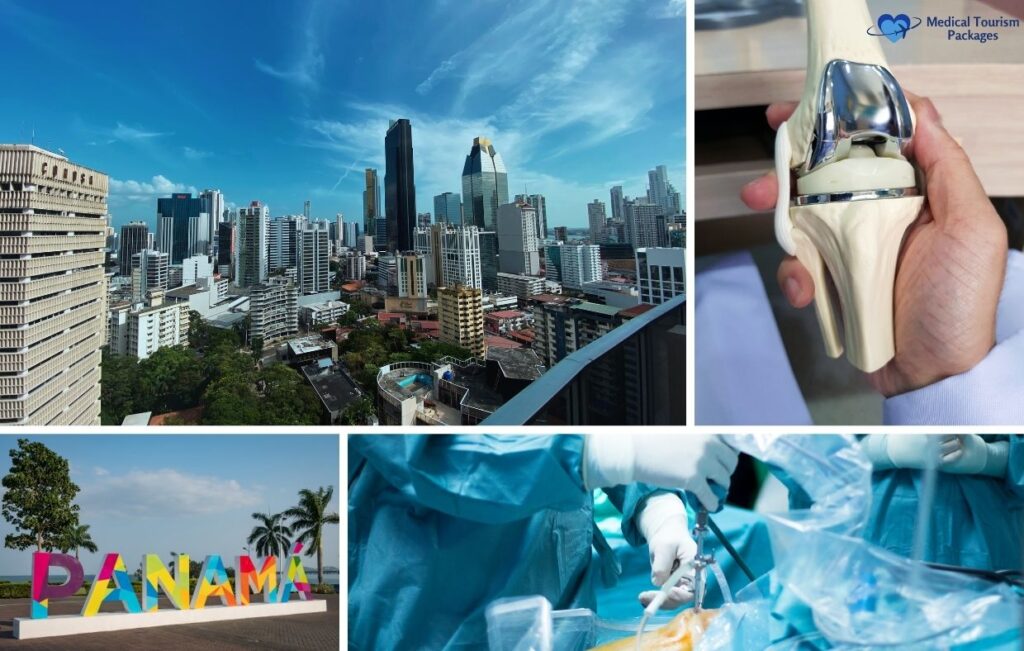
Knee arthroscopic surgery is a minimally invasive procedure. Surgeons view and repair damage inside your knee joint through 2 to 3 small incisions. Each is about the size of a buttonhole. The procedure works in several steps:
- Arthroscope insertion — A thin tube with a tiny camera goes through one incision. It transmits images to a video monitor for a clear view inside your knee.
- Surgical repair — Specialized instruments go through the other incisions. The surgeon can diagnose and repair damage with precision.
- Quick recovery — Hospital stays last only 1 to 2 days. Traditional open procedures require several days. The smaller incisions cause less tissue damage and reduced pain.
What Types of Knee Conditions Does Arthroscopy Treat?
Knee arthroscopy can diagnose and treat many problems. The most common conditions are:
- ACL and PCL tears from sports injuries or trauma
- Meniscal tears in the cartilage cushions between your thighbone and shinbone
- Cartilage defects on the smooth surface covering bone ends
- Inflamed synovium causing swelling in the joint lining
- Loose bodies such as bone or cartilage fragments floating in the joint
- Baker’s cysts that cause fluid-filled swelling behind the knee
Why Should You Choose Panama for Knee Arthroscopy?
You should choose Panama for 50-70% cost savings, JCI-accredited hospitals, and a dollarized economy. Panama offers several strategic advantages for knee arthroscopy.
- Dollarized economy — Panama uses the U.S. dollar. This removes currency exchange risks and lets you budget without conversion fees.
- Geographic accessibility — Direct flights from major U.S. hubs take only 2 to 4 hours.
- JCI-accredited hospitals — Facilities in Panama City meet the same standards as top U.S. medical centers. They use FDA-approved implants identical to U.S. operating rooms.
- Fellowship-trained surgeons — Orthopedic surgeons complete residencies at leading North American institutions.
- Tropical recovery environment — The warm climate reduces stress and positively impacts well-being during recovery.
Read our guide for American medical tourists in Panama for more planning tips.
How Does Panama Compare to the United States for Knee Surgery?
Panama’s top hospitals deliver equivalent care to leading U.S. medical centers. The overall complication rate for knee arthroscopy is 4.7% globally. Panama’s JCI-accredited facilities match this benchmark. Surgical site infection rates align with U.S. statistics.
The quality of nursing care often exceeds patient expectations. Panamanian hospitals maintain lower patient-to-nurse ratios. This means more personalized attention during your recovery. Surgeons remain directly available for questions throughout recovery.
What Types of Knee Arthroscopy Procedures Are Performed in Panama?
Surgeons in Panama City perform four main types of knee arthroscopy procedures. These include meniscus repair, ACL reconstruction, cartilage repair, and knee debridement. Each addresses specific knee joint problems with minimally invasive techniques.
What Is Meniscus Repair?
The meniscus is a C-shaped piece of cartilage. It acts as a shock absorber in your knee. When you walk with your knee straight, it transmits 50% of the force. When you bend your knee to 90 degrees, that percentage increases to 85%.
| Approach | Recovery Time | Long-Term Outcome | Best For |
|---|---|---|---|
| Repair | 4-6 months to return to sports | Preserves meniscus function; reduces arthritis risk | Tears in vascular “red zone”; younger, active patients |
| Resection | 2-3 months to return to activities | Increased osteoarthritis risk; accelerated cartilage wear | Irreparable tears in non-vascular “white zone”; older patients |
Surgeons in Panama City favor meniscal preservation whenever possible. They use advanced all-inside and inside-out suturing techniques. A successful repair preserves the meniscus tissue and its shock-absorbing function. This protects your knee joint for decades.
What Is ACL Reconstruction?
ACL reconstruction is the core of sports medicine in Panama. The ACL is one of four major ligaments. It stabilizes your knee joint. When torn, it typically doesn’t heal on its own. It requires surgical reconstruction.
Facilities in Panama City use robotic-assisted navigation systems. These include the ROSA and Mako robotic arms. Surgeons place bone tunnels with submillimeter precision. For complete information about all orthopedic procedures, see our complete guide to orthopedic surgery in Panama.
| Graft Type | Tissue Source | Best For | Key Advantage | Consideration |
|---|---|---|---|---|
| Autograft | Your own patellar tendon or hamstring | Younger, high-demand athletes | Superior integration; lower failure rates | Donor-site pain or weakness |
| Allograft | Cadaver donor tissue | Older patients; revision surgeries | No donor-site morbidity; faster surgery | Slightly higher failure rate in young athletes |
The general success rate for ACL reconstruction is 85% to 90%. Competitive athletes typically require 6 to 9 months of rehabilitation. This prepares them for safe return to collision sports.
What Cartilage Repair Techniques Are Available?
Panama has become a regional leader in regenerative medicine. The choice of technique depends on your age and activity level. It also depends on lesion size and location.
| Technique | Best Use Case | Key Features |
|---|---|---|
| Microfracture | Small lesions in patients under 40 | Cost-effective; stimulates fibrocartilage formation through small bone perforations |
| OATS | Smaller, high-load defects in weight-bearing areas | Transfers healthy bone and cartilage plugs from non-weight-bearing areas |
| MACI | Larger lesions requiring best long-term results | Two-step procedure using lab-grown cartilage cells; superior outcomes but higher cost |
How Much Does Knee Arthroscopic Surgery Cost in Panama?
Knee arthroscopy in Panama costs $2,500 to $7,500 depending on the procedure. These prices are 50% to 85% lower than U.S. self-pay rates. These prices reflect all-inclusive surgical packages at JCI-accredited facilities. All procedures occur in Panama City hospitals.
| Procedure Type | Panama Cost | USA Cost (Self-Pay) | Savings |
|---|---|---|---|
| Meniscus Repair | $2,500 – $3,800 | $5,000 – $18,000 | 50% – 79% |
| ACL Reconstruction | $4,500 – $7,500 | $20,000 – $50,000 | 77% – 85% |
| Cartilage Repair | $3,500 – $8,000 | $10,000 – $25,000 | 65% – 68% |
| Knee Debridement | $2,200 – $4,500 | $4,000 – $18,000 | 45% – 75% |
What Is Included in the Surgery Cost?
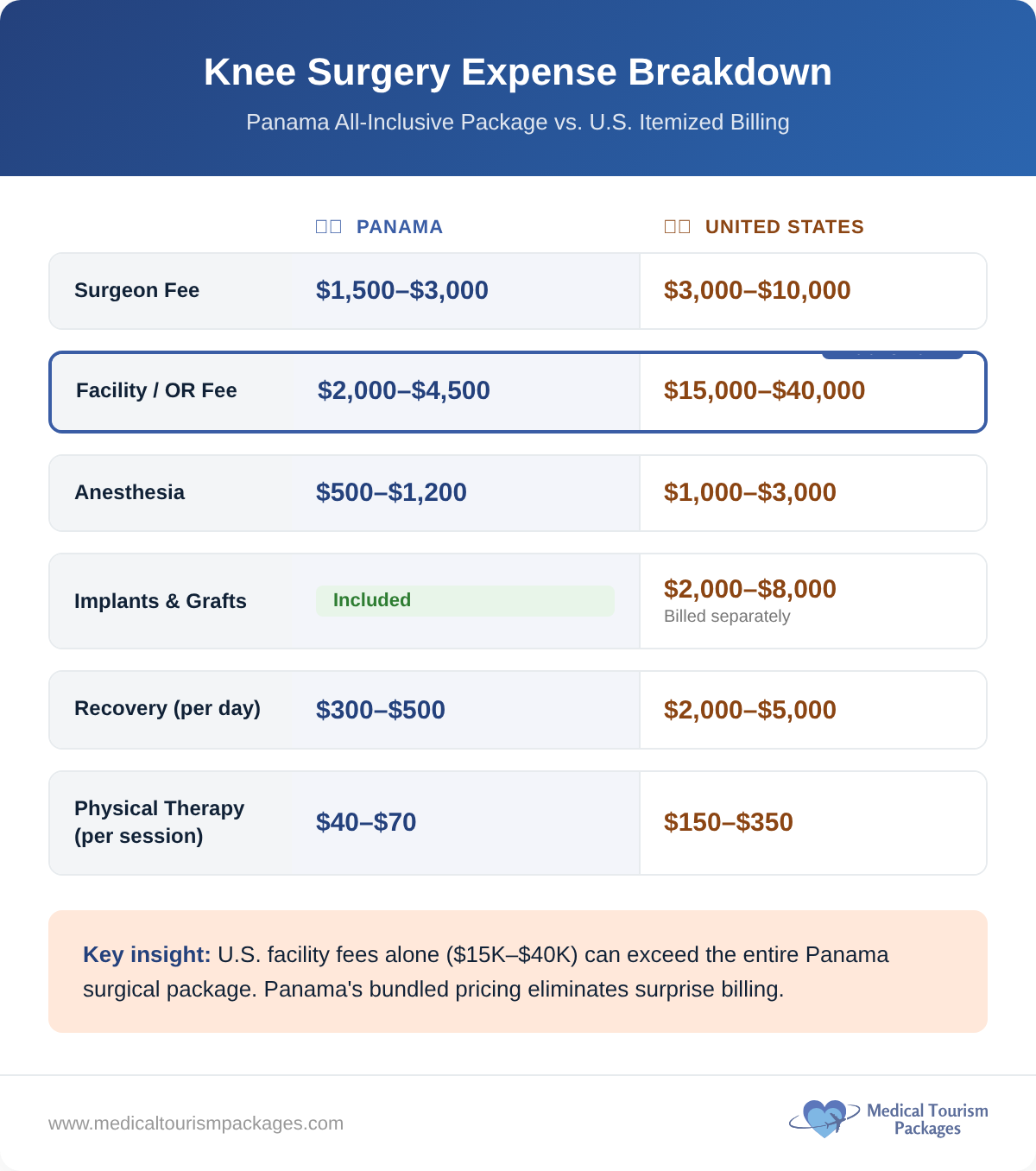
Panama’s all-inclusive surgery packages cover all major costs. These include the surgeon fee, facility charges, anesthesia, implants, recovery room, and physical therapy. You receive a single, predictable price quote. This removes surprise billing. In the United States, patients often receive separate bills from the surgeon, hospital, anesthesiologist, and imaging center.
| Expense Category | Panama Cost | USA Cost |
|---|---|---|
| Surgeon Professional Fee | $1,500 – $3,000 | $3,000 – $10,000 |
| Facility/Operating Room Fee | $2,000 – $4,500 | $15,000 – $40,000 |
| Anesthesia Services | $500 – $1,200 | $1,000 – $3,000 |
| Implants and Grafts | Included in package | $2,000 – $8,000 (billed separately) |
| Post-Op Recovery (per day) | $300 – $500 | $2,000 – $5,000 |
| Physical Therapy (per session) | $40 – $70 | $150 – $350 |
The facility fee difference is the largest factor. Panamanian hospitals operate with lower administrative overhead and labor costs. This translates to much lower operating room charges. Even after accounting for international travel expenses, most patients save several thousand dollars.
How Do Panama’s Prices Compare to Canada and Europe?
Panama offers competitive pricing advantages over other developed markets. Canadian patients typically pay $6,000 to $28,500 for private orthopedic procedures. Wait times in the public system exceed 12 months for non-emergency repairs.
European private healthcare costs fall between U.S. and Panamanian prices. They range from $4,500 to $14,000 for similar procedures. Panama still offers 50% to 70% cost reductions across all markets.
What Are the Best Hospitals for Knee Arthroscopy in Panama?
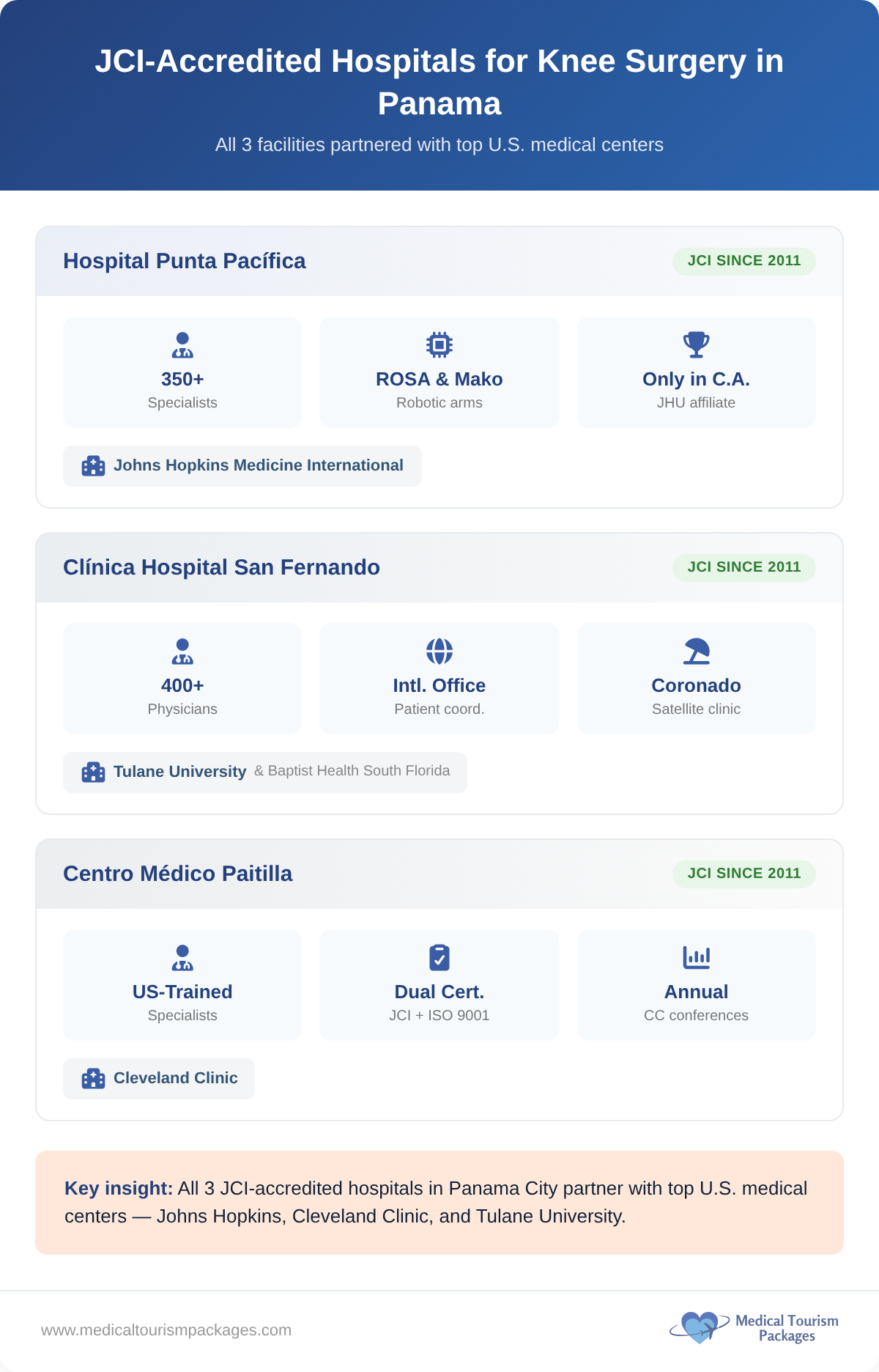
Three JCI-accredited hospitals in Panama City set the standard for orthopedic care. Each maintains partnerships with leading U.S. medical centers. They employ surgeons trained at top international institutions.
| Hospital | Key Affiliation | JCI Accredited | Special Technology | Specialists | Notable Features |
|---|---|---|---|---|---|
| Hospital Punta Pacífica | Johns Hopkins Medicine International (only in Central America) | Since 2011 | ROSA & Mako robotic arms | 350+ specialists | Most technically advanced in Latin America; upscale district location |
| Clínica Hospital San Fernando | Tulane University; Baptist Health South Florida | First in Panama (2011) | Standard arthroscopic equipment | 400+ physicians | International patient office; satellite clinic in Coronado |
| Centro Médico Paitilla | Cleveland Clinic | Since 2011 | Advanced imaging systems | US-trained specialists | Dual JCI and ISO 9001 certification; annual Cleveland Clinic conferences |
Each hospital is located in Panama City’s upscale medical districts. They are surrounded by international hotels that cater to medical tourists. Many nearby accommodations offer medical suites with ADA-compliant bathrooms and room for traveling companions.
Who Are the Leading Orthopedic Surgeons in Panama?
The leading orthopedic surgeons in Panama are board-certified specialists. They have extensive fellowship training in sports medicine and arthroscopic surgery. JCI-accredited facilities like Hospital Punta Pacífica, San Fernando, and Centro Médico Paitilla employ surgeons who complete rigorous training pathways.
What Training Do Panama Orthopedic Surgeons Have?
These surgeons follow a rigorous training pathway.
- Six-year medical degree from accredited universities
- Four-year residency in orthopedics and traumatology
- One to two-year fellowship in sports medicine and arthroscopic surgery, often at premier U.S. or top Latin American institutions
- Professional society membership in APOT and international organizations
High-volume proficiency directly links to better surgical outcomes. Surgeons who perform hundreds of procedures annually develop refined technique. They have faster operative times. They show better judgment in handling unexpected complications.
How Do You Verify a Surgeon’s Training?
Before committing to surgery, verify your surgeon’s credentials through these official sources.
- Panama medical registry — Download the Consejo Técnico de Salud app to check license status and specialty certification.
- U.S. board certification — Visit certificationmatters.org or use the American Board of Medical Specialties database.
- AANA membership — Verify through the Arthroscopy Association of North America directory.
- ISAKOS membership — Confirm participation in the International Society of Arthroscopy and Knee Surgery.
These verification steps take less than 30 minutes. They provide critical assurance about your surgeon’s qualifications.
What Is the Recovery Timeline After Knee Arthroscopy in Panama?
Recovery from knee arthroscopy follows a structured, predictable timeline. Your progress depends on the specific procedure performed. It also depends on your age, overall health, and commitment to rehabilitation.
| Recovery Phase | Timeline | Primary Objectives | Clinical Milestones |
|---|---|---|---|
| Phase I: Protection | Week 1-2 | Control swelling and pain | Achieve 0-90° range of motion; activate quadriceps |
| Phase II: Mobility | Week 3-6 | Restore normal walking pattern | Wean off crutches; walk without limping |
| Phase III: Strength | Week 7-12 | Build muscle mass | Climb stairs unassisted; single-leg balance |
| Phase IV: Function | Month 3-6 | Restore agility and sport-specific movements | Return to light jogging and cycling |
| Phase V: Full Return | Month 6-12 | Complete sport-specific training | Full return to pivot sports; performance testing clearance |
Simple procedures like meniscus debridement progress faster. They often allow return to most activities within 6 to 8 weeks. Complex reconstructions like ACL repair require the full timeline.
How Long Should You Stay in Panama After Surgery?
You should stay in Panama for a minimum of 10 to 14 days after knee arthroscopy. This duration allows for critical post-operative milestones. It provides time for intensive early rehabilitation.
Key milestones during your stay:
- Day 7-10 — Follow-up appointment to remove sutures and assess initial healing with in-person examination of incision sites
- Daily physical therapy — Sessions cost $40 to $70 each, versus $150 to $350 in the U.S.
- Simple procedures — May allow the shorter end of the 10 to 14 day range
- ACL reconstruction — Often needs 14 to 21 days in Panama City
When Can You Fly Home After Surgery?
Flying after knee surgery requires careful timing to prevent serious complications. The primary concern is deep vein thrombosis. These are blood clots that form in leg veins during prolonged immobility.
| Procedure Complexity | Short Flights (<4 hrs) | Long Flights (>6 hrs) | Key Consideration |
|---|---|---|---|
| Simple Procedures (debridement, loose body removal) | 2 days – 2 weeks | 14 days minimum | Must achieve adequate mobility and pain control |
| Meniscus Repair | 1-2 weeks | 6 weeks – 3 months | Partial weight-bearing restrictions apply |
| ACL Reconstruction | 2-3 weeks | 6 weeks – 3 months | Extended healing period; brace required |
| Cartilage Restoration | 2-3 weeks | 6 weeks – 3 months | Non-weight-bearing period necessary |
During any flight after knee surgery, request an aisle seat. This allows easy movement. Walk every hour. Perform ankle pumps and knee extensions while seated. Stay well-hydrated. These simple measures significantly reduce clot risk.
What Physical Therapy Options Are Available in Panama?
Panama City hosts specialized outpatient rehabilitation centers. These are designed specifically for orthopedic patients. Most facilities are located near major hospitals in the Punta Pacífica and Paitilla districts.
The key advantage is early integration. Rehabilitation begins within 24 hours of surgery while you are still in the hospital. Available treatment options include:
- Manual therapy — Hands-on techniques to restore joint mobility
- Neuromuscular electrical stimulation — Activates weakened quadriceps muscles
- Hydrotherapy — Temperature-controlled pools allow early weight-bearing exercises with reduced joint stress
- Progressive resistance training — Rebuilds muscle strength step by step
- Gait retraining — Establishes proper walking patterns and prevents compensatory problems
Starting exercises within the first 24 to 48 hours reduces swelling. It prevents scar tissue adhesions. It accelerates the timeline for achieving critical range of motion goals.
How Much Does Physical Therapy Cost?
Physical therapy in Panama costs $40 to $70 per session. This compares to $150 to $350 per session in the United States. This 70% to 80% cost difference changes what’s possible during recovery.
In Panama, you can afford daily sessions for two weeks. The total cost is $560 to $980. This intensive approach during the critical early window produces superior outcomes. Each session builds on the previous day’s progress.
What Are the Risks of Knee Arthroscopy in Panama?
The global complication rate for knee arthroscopy is 4.7% across all healthcare settings. Panama’s JCI-accredited hospitals match this benchmark. This applies when procedures are performed by fellowship-trained surgeons in accredited facilities.
| Complication | Global Benchmark | Panama Private JCI | Risk Mitigation Strategy |
|---|---|---|---|
| Surgical Site Infection | 0.84% | Equivalent | Strict JCI sterilization; prophylactic antibiotics; dental clearance |
| Deep Vein Thrombosis | 0.98% | Equivalent | Early mobilization within 24 hours; blood thinners when indicated |
| Pulmonary Embolism | 0.11% | Equivalent | Mandatory 14-day stay before long-haul flights; DVT prevention |
| Nerve Injury | <0.1% | Equivalent | High-definition arthroscopy; experienced high-volume surgeons |
The key variable isn’t the country where surgery occurs. It is the quality of the facility and the surgeon’s experience level. Choosing a JCI-accredited hospital gives you the same safety profile. You’d expect this at top U.S. medical centers.
How Does Panama Prevent Surgical Infections?
JCI-accredited hospitals in Panama follow the same infection control protocols mandated in U.S. hospitals. These measures create multiple layers of protection.
- High-temperature autoclaving — Kills all bacteria, viruses, and spores on surgical instruments
- Positive air pressure operating rooms — HEPA filtration removes airborne particles through 15 to 25 air exchanges per hour
- Strict hand hygiene and sterile barriers — Mandatory protocols with sterile gowns, gloves, and drapes around surgical sites
- Pre-operative dental clearance — Identifies hidden oral infections that could seed the surgical site (often missed during U.S. pre-operative clearance)
- Prophylactic IV antibiotics — Administered within 60 minutes before the first incision
- Daily incision monitoring — Checks for early signs of infection including redness, warmth, swelling, or drainage
What Are the Advantages and Disadvantages of Knee Arthroscopy in Panama?
Patients who have knee arthroscopy in Panama report these benefits consistently:
- High nursing care level with better patient-to-nurse ratios providing more bedside time and closer monitoring
- Personalized attention without the assembly line feeling, as surgeons perform fewer procedures per day
- Direct surgeon accessibility via phone, WhatsApp, or in-person visits throughout recovery
- Tropical recovery environment that reduces stress and anxiety while enhancing psychological well-being
- Cost savings of 60% or more making high-quality surgery accessible despite high deductibles or limited coverage
What Are the Disadvantages?
Consider these potential drawbacks before committing to surgery in Panama:
- International travel requirement during a vulnerable recovery period, adding physical stress and complication risks
- Distance from home healthcare system if complications develop after returning home
- Responsibility for credential verification requiring research time and diligence to confirm training and certifications
Is Knee Arthroscopy in Panama Right for You?
Panama delivers clinical excellence equivalent to top U.S. medical centers. This comes through JCI-accredited facilities in Panama City and FDA-approved implants. Fellowship-trained surgeons provide care at these facilities.
Cost savings of 60% or more make orthopedic care accessible. This helps patients facing financial barriers. The key to success lies in choosing JCI-accredited hospitals. Verify your surgeon holds fellowship training. Confirm membership in international professional societies like AANA or ISAKOS.
How long should I stay in Panama after knee arthroscopy?
You should stay 10 to 14 days after knee arthroscopy before flying home. Simple procedures like meniscus debridement need 10 days. Complex procedures like ACL reconstruction need 14 to 21 days. This allows suture removal and initial healing before flight. U.S. citizens do not need a visa for stays up to 90 days.
Are Panama hospitals accredited to international standards?
Yes, Panama has three JCI-accredited hospitals in Panama City. Joint Commission International is the same standard used by top U.S. hospitals. Hospital Punta Pacífica maintains direct affiliation with Johns Hopkins Medicine International. San Fernando was the first JCI-accredited facility in Panama. These hospitals meet the same patient safety standards as U.S. medical centers.
Do Panama orthopedic surgeons speak English?
Yes, most specialized orthopedic surgeons in Panama are fluent in English. Many complete fellowship training in the United States. International patient coordinators communicate clearly throughout your treatment journey. This removes language barriers that complicate medical tourism. All JCI-accredited facilities provide bilingual support staff.
What happens if I have complications after returning home?
Panama’s leading orthopedic surgeons work directly with your domestic primary care physician. They ensure seamless postoperative follow-up after you return home. Affiliations with Johns Hopkins Medicine create pathways for high-level consultation. Many surgical packages include telemedicine follow-up appointments. You can contact your surgeon directly via WhatsApp or phone.
Is it safe to fly after knee arthroscopy?
Yes, it is safe to fly after the recommended waiting period. Surgeons recommend a 10 to 14 day stay before flying home. Cabin pressure changes and the risk of blood clots require adequate healing time before flight. Your surgeon will clear you for flight after verifying your healing progress. Keep your knee elevated during the flight to reduce swelling.
What training do Panama orthopedic surgeons have?
Panama orthopedic surgeons are board-certified specialists with extensive fellowship training. They complete six-year medical degrees followed by four-year orthopedic residencies. After residency, they pursue one to two-year fellowships in sports medicine. Fellowship training often occurs at premier centers in the United States. They are members of APOT and international professional societies.
Ready to Start Your Knee Arthroscopy Journey in Panama?
Medical Tourism Packages coordinates your entire knee arthroscopy journey in Panama. We connect you with JCI-accredited hospitals in Panama City. We arrange your travel and accommodations. We provide bilingual support throughout your treatment.
Get a free consultation to discuss your knee health goals. Receive a personalized quote for surgery at Hospital Punta Pacífica or San Fernando.
Contact us today to start planning your affordable knee arthroscopy in Panama.