Book Appointment Now

Hair Implants in Colombia: A Comprehensive Guide
 By
By
Get a hair transplant in Colombia for $2,000-$5,000. This saves you 50-70% compared to U.S. prices. Certified surgeons in Bogota, Medellin, and Cartagena use FUE and FUT techniques. Our packages include airport pickup, hotels, and bilingual support throughout your stay.
Hair transplant surgery moves hair follicles from one area to another. This restores hair in balding or thinning spots. Colombia offers world-class hair restoration clinics with experienced surgeons at affordable prices. Read on to learn about costs, techniques, recovery, and how to choose the right surgeon.
What Are Hair Implants?
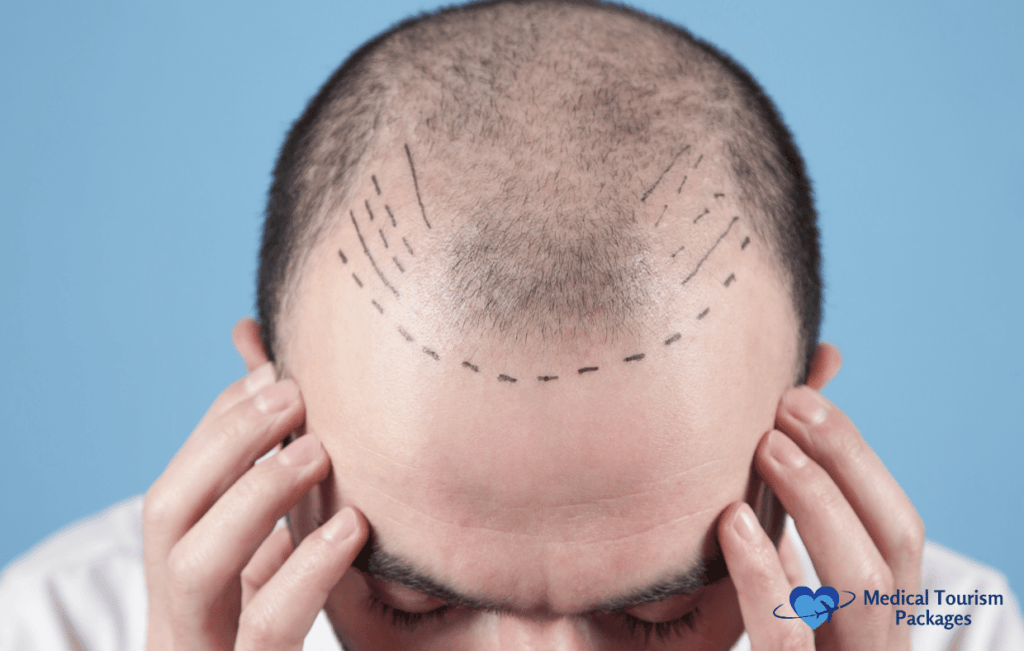
Hair implants are surgical procedures that restore hair growth in balding areas. The process moves hair follicles from a donor site to the thinning area. The donor site is usually the back or sides of the scalp. This technique improves appearance and boosts self-confidence.
Two main methods exist: FUE and FUT. FUE extracts individual follicles with minimal scarring. FUT removes a strip of skin with hair follicles. Both methods produce permanent results.
Surgery takes 4-8 hours depending on the transplant size. The results are permanent because follicles come from areas not affected by balding. FUE uses small incisions, requires no sutures, and heals quickly. Patients enjoy restored hair density and a more natural appearance.
What Medical Conditions Can Hair Transplants Treat?
Androgenetic Alopecia (Male/Female Pattern Baldness)
- Most common condition for hair transplant candidates
- Norwood 3 needs about 2,000-3,000 grafts for good results
- Norwood 6-7 typically needs 4,500-6,000+ grafts for full coverage
- Doctors use the Norwood-Hamilton scale (I-VII) for men and Ludwig scale (I-III) for women
Alopecia Areata
- Autoimmune condition that causes patchy hair loss
- Hair transplant works best when condition is stable for 2+ years
- Success depends on how the disease progresses
Traumatic Alopecia
- Results from burns, accidents, or surgical scars
- Requires special techniques for scar tissue
How Much Does Hair Transplant Surgery Cost in Colombia?
Hair transplant costs in Colombia vary by graft count. For 3,000 grafts, expect $3,500-$5,000 USD. For 5,000 grafts, costs range from $4,000-$8,000 USD. Prices can range from $2,000 for 2,000 grafts up to $10,000 for 8,000 grafts. This depends on the clinic and surgeon experience.
Clinics in Bogota, Medellin, and Cartagena offer skilled surgeons and modern facilities. These prices are 50-70% lower than U.S. costs for similar quality care.
Price Ranges by Technique:
- FUE: $1,500-$3,500
- DHI: $2,000-$4,000
- FUT: $1,200-$3,000
By Graft Count:
- 2,000 grafts: $2,000-$3,500
- 3,000 grafts: $3,500-$5,000
- 5,000 grafts: $4,000-$8,000
What Affects the Cost:
- Surgeon experience and clinic reputation affect pricing
- Package extras like hotels and transport change total cost
What Factors Affect the Cost?
Several factors affect hair transplant prices in Colombia. The technique used matters most. FUE costs more than FUT because it takes more time and skill. The number of grafts needed also affects the price.
Surgeon experience plays a big role. Top surgeons in Bogota and Medellin may charge more. Location within Colombia also matters. Larger cities may cost more due to higher demand. Extra services like pre-op tests and post-op care add to the total.
| Factor | Description | Impact on Cost |
|---|---|---|
| Technique | FUE takes more time than FUT | FUE costs more |
| Graft Count | More grafts needed for larger bald areas | More grafts = higher cost |
| Surgeon Experience | Top surgeons have better results | More experience = higher cost |
| City | Bogota and Medellin have more clinics | Larger cities may cost more |
| Extra Services | Hotels, transport, and post-op care | More services = higher total |
What Are the Benefits of Hair Transplant Surgery in Colombia?
Hair transplant and hair restoration surgery offer major benefits beyond looks. It provides a permanent fix for hair loss. You can regain a full head of hair. This can boost your self-esteem and confidence.
Unlike temporary fixes, hair transplants give lasting results. The transplanted hair grows naturally over time. Modern techniques like FUE and FUT are less invasive. Recovery times are shorter and scarring is minimal. In Colombia, you get high-quality care at lower prices than in the U.S.
For more details on hair restoration options, see our complete guide to hair implants.
What Aesthetic Improvements Can You Expect?
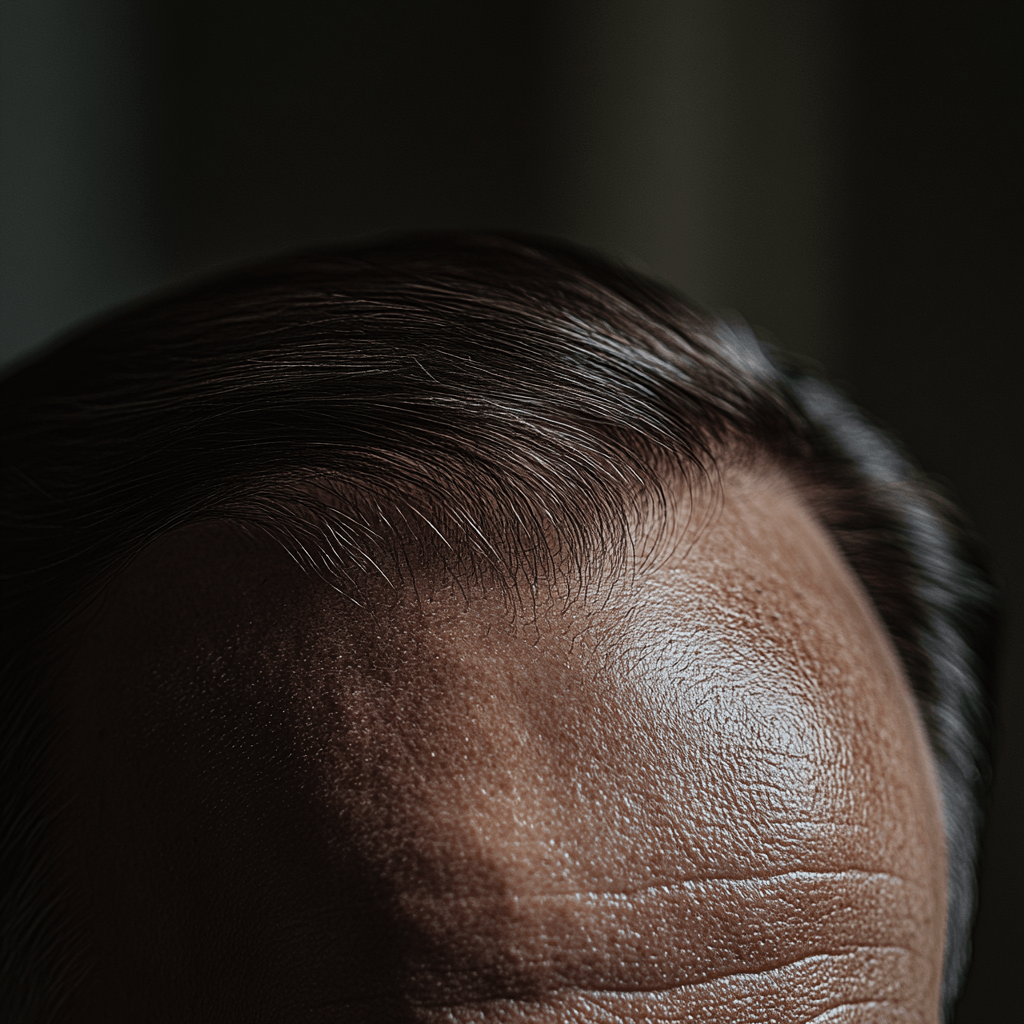
Hair transplant surgery fills in balding areas with natural, growing hair. You will look more youthful and healthy. Advanced techniques make results look natural and seamless. The new hair blends with your existing hair for a fuller look.
What Are the Psychological Benefits?
Hair restoration offers deep psychological benefits. Restoring hair boosts self-esteem and confidence. This can improve personal, social, and work relationships. Many patients feel renewed and positive after regaining control of their appearance. Better mental health and well-being often follow.
How Do You Choose the Right Surgeon in Colombia?
Choosing the right surgeon for hair restoration in Colombia takes careful research. Many options exist for hair transplants in Bogota, Medellin, or Cartagena. Here are key factors to consider.
First, check the surgeon’s qualifications and certifications. Make sure they are recognized by reputable medical boards. Experience matters. Look for a specialist in hair restoration with many successful procedures.
Review before-and-after photos from previous patients. Read patient testimonials for insight on overall satisfaction. A good surgeon will answer your questions about the procedure, recovery, and expected results.
Colombia has modern hair restoration clinics and highly skilled professionals. Whether you choose Bogota, Medellin, or Cartagena, thorough research will help you find the best option.
Why Are Certification and Experience Important?
Certification shows the surgeon meets professional standards. It confirms they have proper training. Experience matters because it shows they have treated many patients. Experienced surgeons handle complex cases better.
Together, certification and experience provide security. You know your surgeon is both qualified and skilled. This greatly affects the surgery’s success and your satisfaction.
How Is Hair Transplant Surgery Performed in Colombia?
Hair transplant surgery in Colombia uses state-of-the-art techniques. The process starts with a detailed pre-operative assessment. Surgeons create a personalized treatment plan. They typically use FUE or FUT methods.
FUE extracts individual hair follicles from the donor area. They are then implanted into balding regions. This minimizes scarring and reduces recovery time. FUT removes a strip of skin with hair follicles. These are then dissected and transplanted. Both procedures use local anesthesia for comfort.
Post-operative care ensures optimal healing and hair growth. Skilled surgeons and advanced techniques make Colombia a top destination for hair transplant surgery.
What Pre-Operative Assessments Are Required?
Before surgery, patients undergo comprehensive assessments. These evaluations tailor the surgery to individual needs. Doctors consider hair density, loss pattern, and overall health. This step ensures the best technique is selected for optimal results.
What Are the Main Hair Transplant Techniques?
Colombia uses two primary techniques: FUE and FUT. FUE is minimally invasive. Individual follicles are extracted and transplanted. It offers minimal recovery time. FUT removes a strip of hair-bearing skin from the donor area. This is better for extensive hair loss.
What Anesthesia Options Are Available?
Hair transplant surgeries in Colombia use local anesthesia. This ensures patients feel minimal discomfort. Some cases may also use sedation to help with relaxation. The choice depends on the patient’s health, preferences, and procedure complexity.
What Are the Steps in Hair Transplant Surgery?
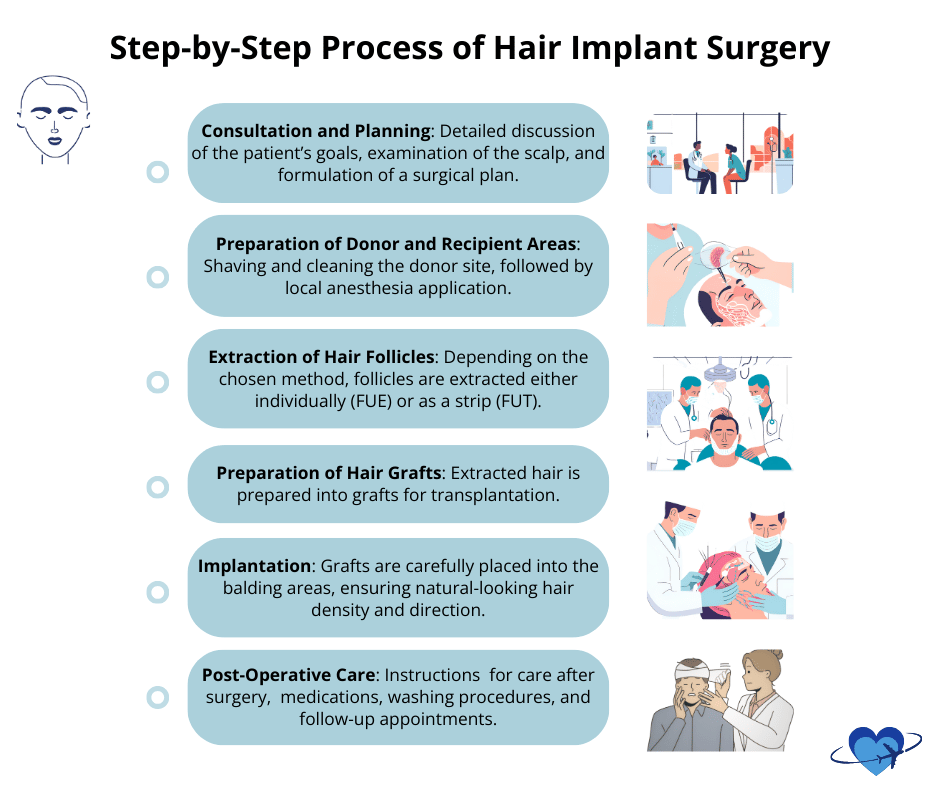
- Consultation and Planning: Discuss your goals. The surgeon examines your scalp and makes a surgical plan.
- Prepare Donor and Recipient Areas: Shave and clean the donor site. Apply local anesthesia.
- Extract Hair Follicles: Follicles are extracted individually (FUE) or as a strip (FUT).
- Prepare Hair Grafts: Extracted hair is prepared into grafts for transplant.
- Implant Grafts: Grafts are placed into balding areas for natural-looking density and direction.
- Post-Operative Care: Get instructions for aftercare, medications, washing, and follow-up appointments.
What Techniques Are Used in Hair Transplant Surgery?
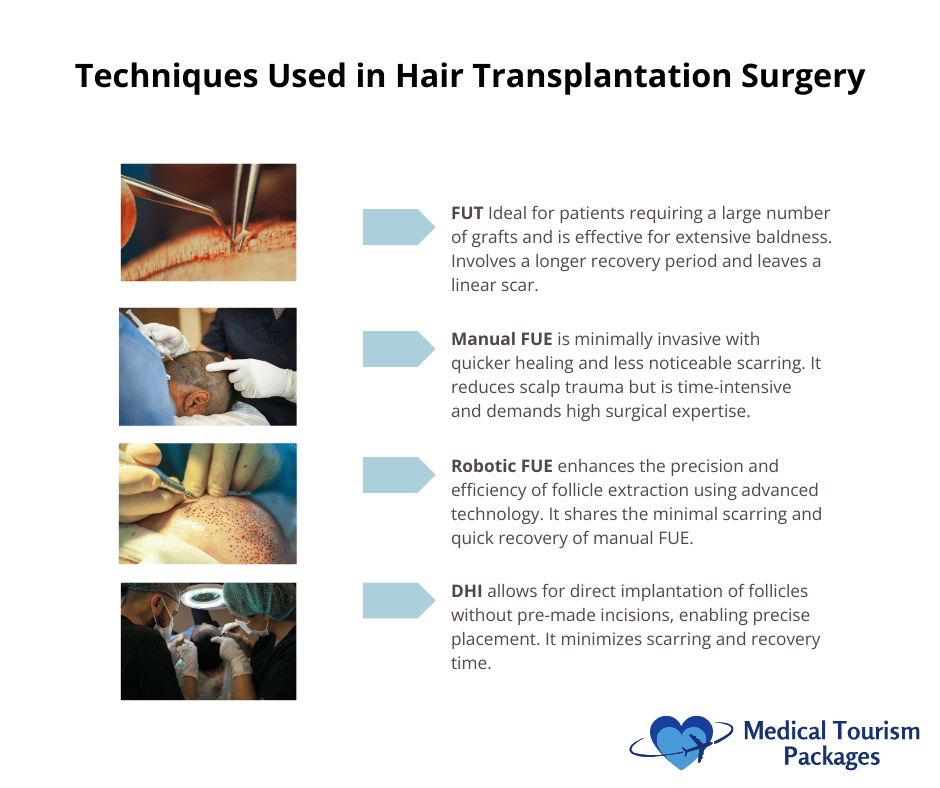
Hair transplant techniques move hair follicles to restore balding areas. They aim to restore hair density and create a natural hairline. FUT removes scalp tissue and divides it into smaller grafts. FUE uses small incisions to extract individual follicles. DHI uses a special tool to implant follicles directly. The ARTAS robotic system enhances FUE with computer assistance.
What Is the Manual FUE Technique?
Manual FUE is a cornerstone technique in hair transplants. It extracts individual follicular units with a special device. Local anesthesia ensures patient comfort. The procedure causes minor pain with manageable discomfort after. Small incisions under 1 mm promote faster healing. Manual FUE reduces scalp trauma and speeds recovery. It delivers natural, dense hair through careful follicle placement.
What Is the Robotic FUE Technique?
Robotic FUE uses the ARTAS system for precision technology. This method improves extraction efficiency and safety. It produces superior hair transplant results. Robotic help reduces patient discomfort and surgery time. It may also lower the chance of scarring. Robotic FUE is known for natural results with minimal downtime.
What Is the FUT Technique?
FUT removes a scalp strip to harvest follicular units. This traditional technique treats extensive baldness. It provides plenty of grafts for hair revival. Recovery from FUT may take weeks, longer than FUE. The strip is cut into individual grafts for implanting. FUT tends to leave more visible scarring due to skin removal.
What Is the DHI Technique?
Technical Details:
- Uses the Choi Implanter Pen for direct implantation
- Graft survival rate: 90-97% (higher than standard FUE)
- Single-step extraction and implantation process
- No pre-made incisions needed
Advantages:
- Less time between extraction and implantation
- Can implant without shaving entire recipient area
- Procedure typically takes 8 hours
- More precise control over angle and direction
Can You Get a Beard Transplant in Colombia?
Yes, you can get a beard transplant in Colombia. The process uses the same FUE or DHI techniques as scalp transplants.
Technical Details:
- Single-hair grafts work best for natural facial hair
- 45-degree angle implantation for proper hair direction
- Scalp donor hair grows faster than natural facial hair
- Regular trimming is needed after transplant
Recovery Timeline:
- 7-10 days for initial healing
- 3-4 months for growth to begin
- 12-18 months for full results
What Is the Recovery Process for Hair Transplant Surgery?
Recovery follows a clear timeline for optimal healing and hair growth. At first, you may have mild swelling, discomfort, and scabbing. These usually go away within the first week. Follow post-operative care instructions carefully. Take medications for pain and antibiotics to prevent infection.
Avoid strenuous activities and direct sunlight for a few weeks. You can wash your hair a few days after surgery. Be gentle to protect the grafts. New hair growth appears within 3-4 months. Full results show after 6-12 months. Regular follow-up appointments help monitor progress.
What Post-Operative Care Is Required?
After surgery, proper care ensures smooth recovery. You will get detailed instructions on caring for the treated area. Take prescribed medications to reduce infection risk and manage pain. Sleep with your head elevated. Keep the scalp dry and protected from sun and contaminants.
First 48-72 Hours:
- Take prescribed pain medications and antibiotics
- Sleep with head elevated
- Avoid alcohol for at least 48 hours
Week 1-2:
- Wash hair gently with prescribed antibacterial shampoo
- Avoid strenuous exercise to prevent sweating
- Transplanted grafts settle within 8-10 days
Month 1-3:
- Expect temporary hair shedding (this is normal)
- Attend regular follow-up appointments
How Long Does Recovery Take?
Recovery time varies, but swelling and discomfort usually fade in a few days. Scabbing around transplant sites clears within a week. Most people return to normal activities in a few days. Avoid heavy lifting and intense exercise for at least a month.
Initial Growth Phase (3-4 months):
- New hair typically starts appearing at 5-6 months
- Initial hair may be finer than the final result
6-Month Milestone:
- You will see significant improvement in hair density
- About 95% graft survival rate is achieved by this point
Final Results (12-18 months):
- About 80% of hair growth is visible at 12 months
- Full density and natural appearance achieved
- Hair matches surrounding hair characteristics
How Do You Manage Pain and Discomfort?
Pain and discomfort after surgery are usually mild. Prescribed or over-the-counter pain medications help manage them. Follow your surgeon’s instructions on medication. Apply ice packs to swollen areas. Avoid touching or scratching the scalp. Keep your head elevated. If pain persists or gets worse, contact your surgeon right away.
What Are the Risks and Considerations?
Hair transplant surgery in Colombia offers great results, but understand the potential risks. Common issues include minor swelling, bruising, and discomfort. These usually resolve within days to weeks. Infection and scarring are rare but possible. Proper post-operative care and choosing an experienced surgeon reduce these risks.
Temporary hair shedding called shock loss may occur. This is normal and not a sign of the final outcome. Keep realistic expectations about the growth timeline. Consult with a qualified surgeon to discuss these considerations in detail.
What Are Common Complications?
Common complications include minor swelling, bruising, and discomfort. These typically resolve within days to weeks. Infection and scarring are rare. Proper post-operative care minimizes these risks. Shock loss (temporary shedding) is normal. Understanding these risks helps set realistic expectations.
| Complication | Description | How to Manage | Prevention |
|---|---|---|---|
| Swelling | Common around forehead and eyes. Goes away in a few days. | Elevate head; apply cold compresses. | Pre-operative medication as surgeon advises. |
| Bruising | Can occur around treated areas. | Usually resolves on its own within a week. | Gentle technique during surgery. |
| Discomfort | Mild to moderate pain after surgery. | Take prescribed pain medications. | Proper surgical technique and aftercare. |
| Infection | Rare. Signs include redness, swelling, discomfort. | Antibiotics and proper wound care. | Sterile technique and post-op antibiotics. |
| Scarring | Depends on technique. FUE scars are minimal. | Scar treatments if needed. | Choose experienced surgeon. Follow aftercare. |
| Shock Loss | Temporary shedding of transplanted or nearby hair. | Usually resolves in a few months as new growth begins. | Educate patient that this is normal. |
What Factors Affect Surgery Success?
Several factors affect hair transplant success. Donor hair quality and the technique used matter most. Patient age, health, and lifestyle also play roles. Post-operative care is essential. Follow your surgeon’s instructions for scalp care. Realistic expectations help with satisfaction.
| Factor | Description | Impact |
|---|---|---|
| Donor Hair Quality | Density and quality at the donor site. | Determines coverage and natural look. |
| Technique Used | FUE vs. FUT and surgeon skill level. | Affects scarring, recovery, and results. |
| Patient’s Age | Younger patients may have ongoing hair loss. | May need future procedures. |
| Health Status | Health conditions can affect healing. | Good health leads to better outcomes. |
| Lifestyle | Smoking, alcohol, and diet. | Can impact healing and transplant life. |
| Post-Op Care | Following surgeon’s care instructions. | Essential for optimal healing and growth. |
| Local Climate | Sun and environmental factors. | Protect scalp for best results. |
| Expectations | Understanding what the procedure can do. | Leads to higher patient satisfaction. |
By considering these factors, patients can prepare better for their hair transplant in Colombia.
What Results Can You Expect from Hair Transplant Surgery?
You can expect major improvements in hair density and coverage. Transplanted hair may shed within a few weeks after surgery. This is normal and allows for new growth. True results become visible within 3-6 months. The most noticeable changes appear after 6-12 months.
The final outcome is a natural-looking hairline and fuller hair. Results are permanent with proper care. Results vary based on hair texture, density, and hair loss type. Regular follow-ups help manage expectations and track progress.
What Aesthetic Results Can You Expect?
Hair transplant surgery produces significant aesthetic improvements. You will notice a fuller head of hair. Bald spots are covered and hairlines restored. These changes are permanent. They blend seamlessly with natural hair growth. The improvements change how you see yourself and how others see you.
What Are the Psychological Benefits?
Beyond physical changes, hair transplants offer profound psychological benefits. Restoring hair increases self-esteem and confidence. This impacts social interactions and professional opportunities. Many patients feel more vibrant and rejuvenated. These benefits affect both outer appearance and inner well-being.
What Are Success Rates by Technique?
Graft Survival Rates:
- FUE: 60-70% at standard clinics
- DHI: 90-97% survival rate
- FUT: 85-95% survival rate
Factors Affecting Success:
- Graft storage temperature (4-8°C is best)
- Less time between extraction and implantation
- Surgeon experience and clinic protocols
- Patient aftercare compliance
How Do You Prepare for Surgery?
Preparation involves several steps for the best outcome. First, consult with your surgeon. Discuss the procedure and set realistic expectations. Address any health conditions that could affect surgery or recovery. You may need medical tests like blood work.
Avoid smoking and alcohol for at least a week before surgery. These can impair healing. Stop taking medications that increase bleeding. These include aspirin and ibuprofen. Prepare your home for comfortable recovery. Arrange for assistance if needed and stock up on essentials.
What Medical Tests Are Required?
Certain medical tests are needed before surgery. Blood tests check for conditions that might complicate surgery or recovery. Sometimes a scalp analysis is done. This assesses hair density and loss patterns. It helps create a tailored surgical plan.
What Lifestyle Adjustments Are Needed?
Patients should make lifestyle adjustments before surgery. Quit smoking and avoid alcohol at least a week before. These affect wound healing and blood flow. Reduce sun exposure. Avoid strenuous exercises that cause scalp sweating in the days before surgery.
What Are the Pre-Operative Instructions?
Pre-operative instructions are vital for surgery preparation. Stop taking medications that increase bleeding a week before. These include aspirin, ibuprofen, and certain vitamins. Wash your hair with prescribed antibacterial shampoo the day before. Get a good night’s sleep. Arrange transportation to and from the clinic.
How Do You Select a Surgeon in Colombia?
Selecting the right surgeon involves careful consideration. Check qualifications and certifications. Verify accreditation by reputable medical boards. Look for experience in hair restoration. Check the number of procedures performed and success rate.
Review before-and-after photos to see the surgeon’s skill. Read patient reviews and testimonials. Consider language if you don’t speak Spanish. Clear communication is important throughout the process.
By evaluating these aspects, you can find a qualified surgeon in Colombia who meets your needs.
How Do You Evaluate a Surgeon’s Qualifications?
- Accreditation: Confirm the surgeon is accredited by a reputable medical board.
- Specialization: Ensure they specialize in hair restoration with FUE and FUT techniques.
- Years of Experience: Look for a substantial track record in hair transplant surgeries.
- Success Rate: Ask about the surgeon’s success rate. Look for consistent positive outcomes.
- Patient Testimonials: Read or listen to testimonials from previous patients.
- Before-and-After Gallery: Review the surgeon’s portfolio to assess skill.
- Consultation Process: A thorough consultation should be offered. The surgeon evaluates your condition and discusses options.
- Ongoing Education: Check if the surgeon stays updated with new techniques.
- Communication Skills: Ensure the surgeon and team communicate well. This is important if you need English support.
- Post-Operative Support: Verify that comprehensive post-op care is available.
This checklist helps you assess and select a surgeon in Colombia who meets your standards.
Where Are the Best Locations for Hair Transplants in Colombia?
Colombia has several top destinations for hair transplants. Bogota, Medellin, and Cartagena are the most popular choices. Bogota has advanced medical facilities and highly trained specialists. Many have international experience. Medellin offers modern healthcare facilities with competitive prices. Cartagena appeals to those wanting a relaxing coastal recovery.
Each city has well-equipped clinics using FUE and FUT techniques. Choose based on personal preference, travel convenience, and desired recovery environment. Bogota and Medellin offer urban settings with top medical professionals. Cartagena provides a more relaxed atmosphere.
What Are the Best Hair Transplant Clinics in Colombia?
The best hair transplant clinics in Colombia share common features. They have JCI or local health ministry accreditation. Their surgeons hold certifications from recognized medical boards. They use advanced FUE, FUT, or DHI techniques with modern equipment.
Top clinics in Bogota and Medellin often have English-speaking staff. They offer transparent pricing with no hidden fees. Look for clinics with extensive before-and-after galleries. Patient reviews and testimonials help verify quality. Many clinics also provide medical tourism packages that include airport transfers, hotels, and post-op care.
Is Colombia a Good Choice for Hair Transplants?
Yes, Colombia is an excellent destination for hair transplants. It offers high-quality procedures at lower costs than many other countries. Cities like Bogota, Medellin, and Cartagena have modern clinics. They employ experienced specialists using advanced techniques like FUE and FUT. This makes Colombia popular for both local and international patients.
How Do You Travel to Colombia for Surgery?
Traveling to Colombia for surgery involves several steps. First, research and select a reputable clinic and surgeon. Schedule your surgery with enough time for recovery before returning home. Check travel requirements like passports and visas. See if any vaccinations are recommended.
Book flights and accommodations in advance. This secures better rates and ensures comfort near the clinic. Consider travel insurance that covers medical procedures abroad. Arrange transportation from the airport to your accommodation.
Learn local emergency numbers and your country’s embassy location. Plan a relaxed stay. Allow time for pre-surgical consultations and post-operative care. Make the most of your medical tourism experience.
Frequently Asked Questions About Hair Transplants in Colombia
How Much Does Hair Transplant Surgery Cost in Colombia?
Hair transplant surgery in Colombia costs $2,000-$5,000. This is much more affordable than in Western countries. Prices depend on the technique used, graft count, and surgeon experience. You can save significantly while still receiving high-quality care.
What Cosmetic Procedures Is Colombia Known For?
Colombia is known for many cosmetic procedures. These include plastic surgery, dental work, and weight loss surgeries. The country has a reputation for quality care at competitive prices. This attracts patients from around the world.
What Are the Qualifications of Surgeons in Colombia?
Surgeons performing hair transplants in Colombia are often highly qualified. Many hold certifications from international medical boards. They have extensive experience in hair restoration techniques. They stay updated with the latest advancements in the field.
How Long Does Recovery Take After Hair Transplant Surgery?
Recovery time varies, but most patients return to normal activities within a week. Initial healing takes up to two weeks. Full results become visible within 6-12 months as the transplanted hair grows in.
What Are the Risks of Hair Transplant Surgery in Colombia?
As with any surgery, there are risks involved. These include infection, unsatisfactory results, and anesthesia complications. Choosing a reputable and experienced surgeon can significantly reduce these risks.
How Do Colombia’s Prices Compare to Other Countries?
Colombia offers competitive hair transplant costs. Prices typically range from $2,000 to $5,000. This varies by graft count, surgeon experience, and package details. Colombia is known for advanced medical systems and skilled surgeons. Top clinics often collaborate with Turkish counterparts. This brings together experienced surgeons and cutting-edge techniques.
What Results Should You Expect from Hair Transplant Surgery?
You should expect natural-looking and long-lasting results. Individual outcomes may vary. The overall goal is a fuller head of hair. This enhances your appearance and boosts your confidence.
Ready to Start Your Hair Restoration Journey?
Medical Tourism Packages coordinates your entire hair transplant journey in Colombia. We connect you with certified surgeons in Bogota, Medellin, and Cartagena. We arrange your travel, accommodations, and provide bilingual support. Get a free consultation to discuss your hair restoration goals and receive a personalized quote.
Contact us today to start planning your affordable hair transplant in Colombia.