Book Appointment Now

Eye Lift (Blepharoplasty) in Panama: Rejuvenate Your Look in Paradise
 By
By
Blepharoplasty in Panama costs 50-70% less than in the United States, with APCPER-certified surgeons performing eyelid surgery at JCI-accredited hospitals affiliated with Johns Hopkins Medicine International.
Panama City’s two JCI-accredited hospitals, Hospital Punta Pacifica and Clinica Hospital San Fernando, offer upper blepharoplasty from $1,200, lower blepharoplasty from $1,500, and combined procedures from $2,500. Patient satisfaction rates exceed 93% with an overall success rate of 85-90%.
Our network connects you with board-certified plastic surgeons across Panama City, each verified for APCPER credentials, JCI facility accreditation, and patient outcomes. This guide covers cost comparisons, hospital profiles, procedure details, recovery timelines, travel planning guides, and answers to frequently asked questions about eyelid surgery in Panama.
What Is Blepharoplasty and How Does Eyelid Surgery Work?
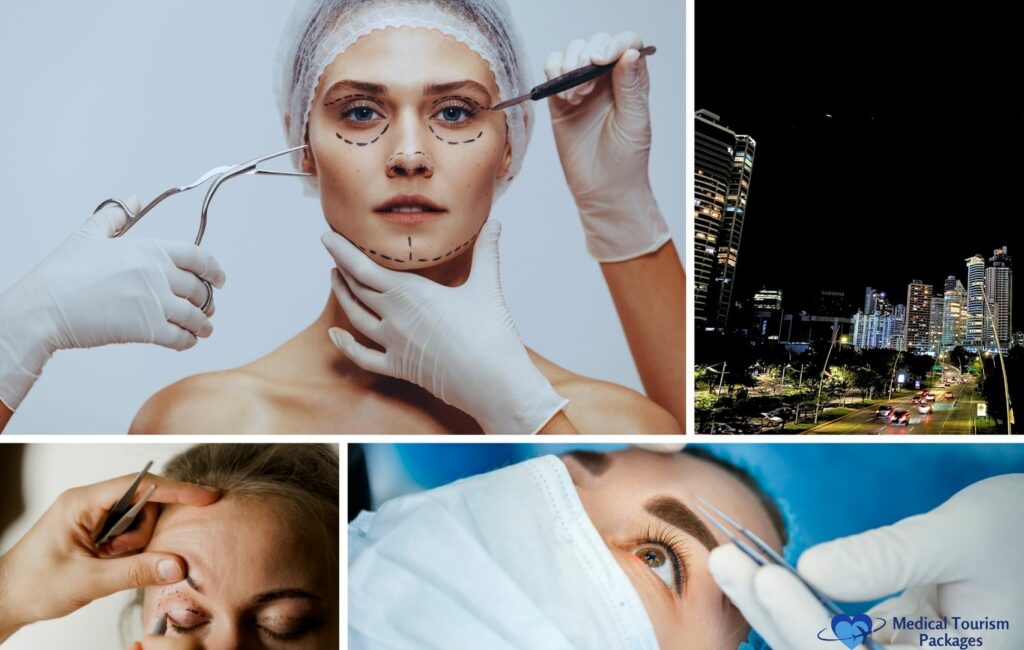
Blepharoplasty is a surgical procedure that removes excess skin, fat, and muscle from the eyelids. Surgeons in Panama City perform upper, lower, and combined eyelid surgery to restore a youthful appearance and improve vision obstructed by drooping lids.
This procedure targets aging signs around the eyes. It corrects sagging upper lids, puffy under-eye bags, and fine lines. Panama City clinics offer both surgical and non-surgical options for eyelid rejuvenation.
What Is the Difference Between Upper and Lower Blepharoplasty?
Upper blepharoplasty removes excess skin along the natural eyelid crease. Lower blepharoplasty targets puffy bags, dark circles, and wrinkles beneath the eyes. Combined procedures address both areas in a single session lasting one to three hours.
Upper eyelid surgery focuses on drooping skin that may block your visual field. The surgeon makes an incision in the natural crease, hiding the scar. This procedure is common among patients over 40 who notice hooded or heavy lids.
Lower eyelid surgery uses either external incisions or a transconjunctival approach. The transconjunctival technique makes the incision inside the eyelid. This method leaves no visible scar and works well for patients with puffy bags but good skin elasticity.
Can Droopy Eyelids Affect Your Vision?
Yes, droopy eyelids can block your peripheral vision and reduce your visual field. This condition, called ptosis, occurs when excess skin or weakened muscles cause the upper lid to sag. A visual field test confirms whether eyelid drooping affects your sight.
Functional blepharoplasty corrects vision-impairing eyelid drooping. Insurance providers may cover this procedure when tests show measurable vision loss. Your surgeon in Panama City can provide documentation for insurance claims. Cosmetic blepharoplasty, performed for appearance only, is not covered by insurance.
How Much Does Blepharoplasty Cost in Panama?
Blepharoplasty costs $1,200-$5,000 in Panama City, which is 50-70% less than United States prices. Panama’s JCI-accredited hospitals provide the same surgical standards found in American facilities, with prices that include surgeon fees, anesthesia, and facility costs.
What Are the Current Blepharoplasty Prices in Panama City?
Blepharoplasty prices in Panama City range from $1,200 for upper eyelid surgery to $5,000 for combined upper and lower procedures. Non-surgical eye lift treatments start at $500. All prices are in US dollars, as Panama uses the dollar as its official currency.
| Procedure | Panama City Cost (USD) | Includes |
|---|---|---|
| Upper Blepharoplasty | $1,200-$3,000 | Surgeon, anesthesia, facility |
| Lower Blepharoplasty | $1,500-$3,500 | Surgeon, anesthesia, facility |
| Combined Upper and Lower | $2,500-$5,000 | Surgeon, anesthesia, facility |
| Non-Surgical Eye Lift | $500-$1,500 | Treatment, follow-up |
How Do Panama’s Costs Compare to the US and Canada?
Panama’s costs compare favorably to both the US and Canada, with savings of 50-70% on eyelid surgery. The American Society of Plastic Surgeons reports average US surgeon fees of $3,359 for upper and $3,876 for lower blepharoplasty, not including facility or anesthesia costs.
| Procedure | Panama (USD) | United States (USD) | Canada (CAD) | Savings vs US |
|---|---|---|---|---|
| Upper Blepharoplasty | $1,200-$3,000 | $3,200-$5,800 | $2,500-$4,000 | 48-63% |
| Lower Blepharoplasty | $1,500-$3,500 | $4,000-$7,500 | $3,500-$7,000 | 53-63% |
| Combined Upper/Lower | $2,500-$5,000 | $5,000-$10,000+ | $5,500-$8,500 | 50-75% |
| Non-Surgical Eye Lift | $500-$1,500 | $1,500-$3,000 | $1,200-$2,500 | 50-67% |
What Is Included in a Blepharoplasty Package?
A blepharoplasty package in Panama City typically includes all surgical costs in one price. Panama uses the US dollar as its official currency, so you pay in dollars with no exchange rate risk or conversion fees.
- Surgeon fees: Board-certified plastic surgeon with APCPER credentials
- Facility costs: Operating room at a JCI-accredited hospital
- Anesthesia: Local with sedation or general anesthesia
- Pre-operative labs: Blood work and medical clearance
- Post-operative medications: Antibiotics, pain relief, eye drops
- Follow-up appointments: Post-surgery check-ups with your surgeon
Additional costs include hotel accommodations, flights, and travel insurance. Full-mouth (combined upper and lower) procedures offer better value than scheduling separate surgeries.
Why Should You Choose Panama for Eyelid Surgery?
You should choose Panama for eyelid surgery because of its JCI-accredited hospitals, US-trained surgeons, and 50-70% cost savings. Panama City attracts over 50,000 international patients each year for medical procedures at facilities affiliated with Johns Hopkins Medicine International. Learn why Panama is ideal for medical tourism.
Which Hospitals in Panama City Are JCI-Accredited?
The JCI-accredited hospitals in Panama City are Hospital Punta Pacifica and Clinica Hospital San Fernando. These two facilities meet international safety standards, with surgical site infection rates as low as 0.5%.
| Hospital | JCI Accredited | International Affiliation | Key Features |
|---|---|---|---|
| Hospital Punta Pacifica | Yes | Johns Hopkins Medicine International | VASER, BodyTite, Renuvion J-Plasma technology |
| Clinica Hospital San Fernando | Yes | First JCI-accredited in Panama | Full-service, multilingual staff |
| Hospital Nacional | No | MINSA licensed | General services |
| The Panama Clinic | No | MINSA licensed | Bone marrow transplant accreditation |
Hospital Punta Pacifica is the only Johns Hopkins Medicine International-affiliated hospital in Central America. Johns Hopkins actively trains doctors and nurses at this facility. It is located in the Punta Pacifica neighborhood, near upscale hotels ideal for recovery.
What Credentials Should Panama’s Plastic Surgeons Have?
Panama’s plastic surgeons should have APCPER membership as the minimum standard. Only 12 surgeons in Panama hold American FACS or Canadian FRCSC certification, the highest credential tier available.
- APCPER membership: Gold standard for plastic surgery certification in Panama
- FACS or FRCSC: American or Canadian board certification (only 12 hold this)
- MINSA licensing: Required by Panama’s Ministry of Health for all clinics
- JCI hospital affiliation: Surgeon operates at an accredited facility
- US or European training: Fellowship or residency at international institutions
Why Does Panama’s US Dollar Currency Benefit Medical Tourists?
Panama’s US dollar currency benefits medical tourists by removing exchange rate risk entirely. The Panamanian Balboa is pegged 1:1 to the US dollar, and American currency is legal tender throughout the country.
You pay the exact price quoted with no conversion fees or surprise charges. Credit cards are widely accepted at Panama City medical facilities. This transparency makes budgeting for your procedure simple compared to destinations with fluctuating currencies.
For more information about cosmetic procedures available in Panama, see our complete guide to plastic surgery in Panama.
How Do You Select the Right Surgeon in Panama City?
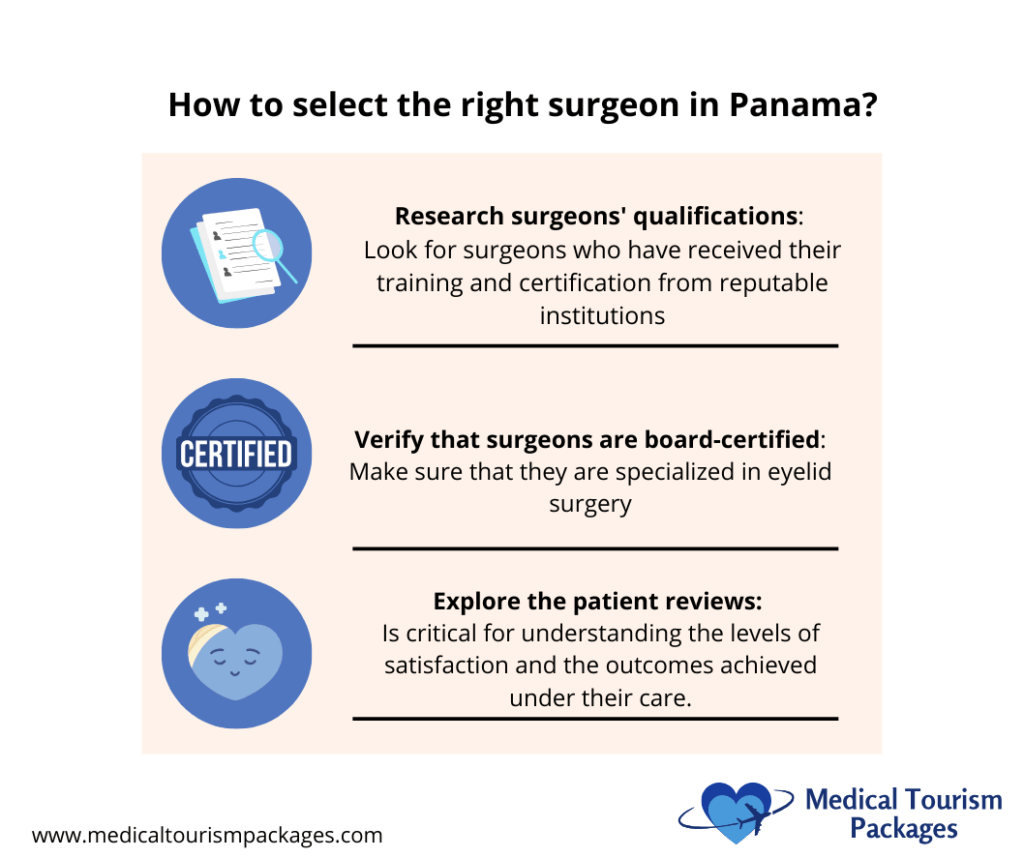
You select the right surgeon in Panama City by verifying APCPER board certification, checking JCI hospital affiliations, and reviewing before-and-after photos. Schedule a virtual consultation to discuss your goals and evaluate the surgeon’s experience with blepharoplasty procedures.
What Questions Should You Ask During a Virtual Consultation?
You should ask about board certification, procedure volume, and surgical approach during your virtual consultation. These questions help you evaluate whether the surgeon has the experience and credentials for your specific procedure.
- “Are you an APCPER member?” Confirms plastic surgery board certification in Panama
- “Do you hold FACS or FRCSC certification?” Verifies American or Canadian credentials
- “How many blepharoplasty procedures did you perform last year?” Look for 50 or more
- “What percentage of your patients are international?” Target 30% or higher
- “Which JCI-accredited hospital will you use?” Confirms facility standards
- “Do you recommend local or general anesthesia?” Understand the surgical plan
How Do You Verify a Surgeon’s Credentials in Panama?
You verify a surgeon’s credentials in Panama by checking the APCPER registry for board certification. This registry lists all qualified plastic surgeons in Panama who meet national training and examination standards.
Confirm the surgeon operates at a JCI-accredited hospital like Hospital Punta Pacifica or Clinica Hospital San Fernando. Review patient testimonials and before-and-after photos from previous blepharoplasty patients. Request documentation of training and fellowship programs completed at US or European institutions.
Learn more about finding qualified specialists in our guide to the best plastic surgeons in Panama.
What Happens During the Blepharoplasty Procedure?
During the blepharoplasty procedure, the surgeon removes excess skin, fat, and muscle through precise incisions along natural eyelid creases. The surgery takes one to three hours under local anesthesia with sedation or general anesthesia at a JCI-accredited facility in Panama City.
How Do You Prepare for Eyelid Surgery?
You prepare for eyelid surgery by completing a pre-operative assessment that includes vision testing, medical photography, and health clearance. Your surgeon’s team guides you through each step before your procedure date.
- Vision testing: Visual field exam confirms functional or cosmetic classification
- Medical photography: Before photos document your starting point for comparison
- Health clearance: Blood work and medical review confirm you are fit for surgery
- Medication adjustments: Stop blood thinners and certain supplements 7-10 days before
- Contact lens pause: Discontinue contact lenses before your procedure date
What Surgical Techniques Are Used for Upper and Lower Eyelids?
Surgical techniques for upper eyelids involve an incision along the natural crease to remove excess skin and tissue. Lower eyelid techniques use either an external incision under the lash line or a transconjunctival approach through the inside of the lid.
Upper blepharoplasty takes one to two hours. The surgeon removes or repositions fatty tissue and tightens muscles if needed. The incision heals within the natural fold, making scars nearly invisible after full recovery.
Lower blepharoplasty addresses bags and dark circles. The transconjunctival technique leaves no visible scar. Your surgeon selects the best approach based on your anatomy, skin elasticity, and desired results.
What Are Your Post-Operative Care Instructions?
Your post-operative care instructions focus on wound healing, medication management, and activity limits. Adhering to these instructions carefully helps you achieve the best results with minimal complications.
- Cold compresses: Apply for 10-15 minutes every hour during the first 48 hours
- Medications: Take prescribed antibiotics and pain relief on schedule
- Eye drops: Use lubricating drops to prevent dryness
- Head elevation: Sleep with your head raised for the first week
- Activity limits: Avoid bending, lifting, and exercise for 3-4 weeks
- Sun protection: Wear sunglasses outdoors to protect healing incisions
- Contact lenses: Wait at least two weeks (14 days) before wearing them again
What Are the Non-Surgical Alternatives to Eyelid Surgery?
The non-surgical alternatives to eyelid surgery include dermal fillers, Botox injections, RF microneedling, and CO2 laser treatments. These options cost $500-$1,500 in Panama City and offer rejuvenation with minimal downtime, though results last 6-18 months rather than years.
How Do Dermal Fillers and Botox Help Rejuvenate the Eye Area?
Dermal fillers and Botox help rejuvenate the eye area by restoring volume and relaxing wrinkle-causing muscles. Fillers address hollow under-eye areas and dark circles. Botox smooths crow’s feet and forehead lines around the eyes.
Dermal fillers use hyaluronic acid to add volume beneath the eyes. Results appear immediately and last 6-12 months. Botox relaxes the muscles that cause wrinkle lines. It takes effect within 3-5 days and lasts 3-6 months. Both treatments require no incisions or general anesthesia.
What Is RF Microneedling and How Does It Tighten Eyelid Skin?
RF microneedling is a non-surgical treatment that tightens eyelid skin by delivering radiofrequency energy through tiny needles. This stimulates collagen and elastin production in the deeper skin layers, creating a firming effect over several weeks.
CO2 laser treatments also tighten skin around the eyes. Panama City clinics equipped with VASER and Renuvion J-Plasma technology offer advanced skin-tightening options. These treatments work well for patients with mild sagging who want to avoid surgery. Recovery takes 3-5 days with minimal discomfort. Explore all available blepharoplasty and eye lift options in Latin America to compare your choices.
How Do Non-Surgical Results Compare to Blepharoplasty?
Non-surgical results compare to blepharoplasty as temporary alternatives with less downtime but shorter-lasting effects. Surgical blepharoplasty provides permanent correction, while non-surgical options need repeat treatments every 6-18 months.
| Factor | Surgical Blepharoplasty | Non-Surgical Eye Lift |
|---|---|---|
| Cost in Panama | $1,200-$5,000 | $500-$1,500 |
| Recovery Time | 7-14 days | 0-3 days |
| Results Duration | 5-10+ years | 6-18 months |
| Anesthesia | Local with sedation or general | Topical numbing |
| Best For | Excess skin, severe sagging, vision issues | Fine lines, mild volume loss, early aging |
| Repeat Treatments | Rarely needed | Every 6-18 months |
What Is the Recovery Timeline After Blepharoplasty?
The recovery timeline after blepharoplasty spans 1-2 weeks for initial healing and 3-6 months for final results. Most patients return to work within 7-10 days. Bruising and swelling peak at 48-72 hours (two to three days) and fade within two weeks.
What Should You Expect During the First Week?
You should expect bruising, swelling, and mild discomfort during the first week after blepharoplasty. Cold compresses and prescribed medications manage these symptoms effectively. Most patients feel comfortable enough to walk around after day two.
- Days 1-2: Rest at your recovery location, apply cold compresses regularly
- Day 3: Cleared to fly home if needed (3-5 days post-surgery is typical)
- Days 3-5: Light walking and gentle indoor activities resume
- Days 5-7: Sutures removed (if non-dissolving), bruising begins to fade
- End of week 1: Most visible swelling decreases significantly
Panama City offers a comfortable recovery environment. The Punta Pacifica neighborhood has hotels within walking distance of Hospital Punta Pacifica for easy follow-up visits.
When Can You Return to Normal Activities?
You can return to normal activities gradually over 3-6 weeks after blepharoplasty. Each milestone depends on your healing progress and your surgeon’s clearance.
| Activity | Timeline | Notes |
|---|---|---|
| Flying home | 3-5 days | Most patients cleared for air travel |
| Return to work | 7-10 days | Desk work and non-physical jobs |
| Contact lenses | 2 weeks (14 days) | Wait for incision healing |
| Light exercise | 2-3 weeks | Walking, gentle stretching |
| Full exercise | 3-4 weeks | Gym, running, swimming |
| Beach activities | 3-4 weeks | Avoid direct sun on incisions |
| Final results visible | 3-6 months | Complete scar maturation |
What Are the Risks and Success Rates of Eyelid Surgery?
The risks of eyelid surgery are low, with an overall complication rate of about 9.5%, mostly mild and temporary. Patient satisfaction rates exceed 93% for upper blepharoplasty and 96% for lower blepharoplasty, making it one of the safest cosmetic procedures available.
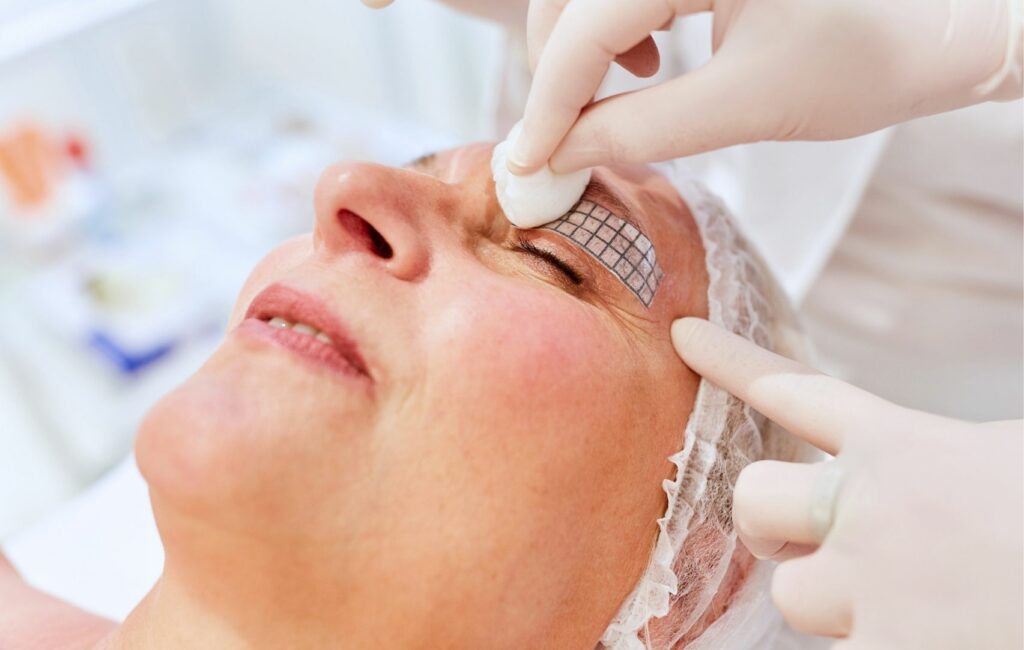
What Are the Common Side Effects After Blepharoplasty?
The common side effects after blepharoplasty are bruising, swelling, and temporary dry eyes. These effects resolve within two to three weeks as part of normal healing. Serious complications are rare when an experienced surgeon performs the procedure.
- Bruising: Peaks at 48-72 hours, fades within 10-14 days
- Swelling: Most noticeable in the first week, resolves over 2-3 weeks
- Dry eyes: Temporary, managed with lubricating eye drops
- Blurry vision: Brief and caused by ointments, not surgical damage
- Sensitivity to light: Wear sunglasses outdoors during healing
Rare complications include infection, asymmetry, and changes in eyelid position. Choosing an APCPER-certified surgeon at a JCI-accredited hospital in Panama City reduces these risks significantly.
What Are the Patient Satisfaction Rates for Eyelid Surgery?
The patient satisfaction rates for eyelid surgery are among the highest in cosmetic surgery. Clinical studies show over 93% of upper blepharoplasty patients report high satisfaction. Lower blepharoplasty achieves success rates of 96.7-97.4%.
The overall success rate ranges from 85% to 90%. Patients report improvements in self-esteem, appearance, and daily comfort. Upper eyelid results last five to seven years. Lower eyelid results can last for decades. Surgeon expertise directly correlates with higher success rates and fewer complications.
How Do You Plan Your Medical Tourism Trip to Panama?
You plan your medical tourism trip to Panama by booking flights to Tocumen International Airport, arranging accommodations in safe neighborhoods like Punta Pacifica, and obtaining travel insurance. US and Canadian citizens do not need a visa for stays up to 180 days.
What Are the Flights and Visa Requirements?
The flights to Panama City take 3.5 hours from Miami and under 7 hours from New York. Copa Airlines, American Airlines, Delta, and United offer direct and connecting flights. US citizens receive a tourist stamp on arrival with no visa needed.
| Departure City | Airlines | Flight Time | Round-Trip Cost |
|---|---|---|---|
| Miami (MIA) | American, Copa, Spirit | 3h 34m | $326-$500 |
| New York (JFK) | Copa, Delta, United | 6h 47m | $548-$700 |
| Houston (IAH) | United, Copa | 4-5 hours | $370-$600 |
| Los Angeles (LAX) | Copa, American | 7h 22m | $500-$800 |
| Atlanta (ATL) | Copa, Delta | 4-5 hours | $370-$550 |
Your passport must be valid for at least three months beyond your travel date. Bring proof of onward travel and at least $500 in funds. Panama enforces proof of return travel strictly.
Which Neighborhoods in Panama City Are Safest for Recovery?
The safest neighborhoods in Panama City for recovery are Punta Pacifica, Casco Viejo, El Cangrejo, and Obarrio. Each offers different amenities and price ranges for medical tourists.
- Punta Pacifica: Safest area, modern high-rises, walking distance to Hospital Punta Pacifica, luxury hotels and condos
- Casco Viejo: Historic UNESCO World Heritage Site with boutique hotels, restaurants, and police patrols
- El Cangrejo: Relaxed neighborhood popular with expats, budget-friendly lodging, walkable with cafes
- Obarrio: Business district with restaurants, well-monitored, good for longer stays
Avoid El Chorrillo and parts of San Miguelito. Use registered taxis or ride-share apps like Uber for safe transportation. The US Embassy in Panama City is at Building 783, Clayton, reachable at (507) 317-5000. Call 911 for emergencies.
What Travel Insurance Do You Need for Medical Tourism?
You need travel insurance that covers cosmetic procedures, potential complications, and medical evacuation. Standard travel insurance does not cover elective surgery, so you must purchase a medical tourism-specific policy.
Confirm your policy includes post-operative care for any complications that may arise. Medical evacuation coverage provides emergency transport if needed. Trip cancellation coverage allows flexibility if health changes delay your surgery. Extended stay coverage protects you if recovery takes longer than planned.
For a complete overview of travel preparation, read our guide for American medical tourists in Panama.
Frequently Asked Questions About Blepharoplasty in Panama
What types of eyelid surgery are available in Panama City?
Panama City offers upper blepharoplasty, lower blepharoplasty, combined procedures, and non-surgical eye lift treatments. Surgical options correct droopy eyelids, excess skin, puffy bags, and visual field obstruction. Non-surgical alternatives include dermal fillers, Botox for crow’s feet, and RF microneedling for skin tightening.
How much does eyelid surgery cost in Panama City?
Blepharoplasty costs $1,200-$3,000 for upper eyelids, $1,500-$3,500 for lower eyelids, and $2,500-$5,000 for combined procedures in Panama City. Non-surgical eye lift treatments cost $500-$1,500. These prices represent 50-70% savings compared to US costs at JCI-accredited facilities.
What is the recovery timeline for blepharoplasty?
Recovery takes 1-2 weeks for initial healing. Bruising and swelling peak at 48-72 hours and fade within 10-14 days. Most patients return to work after 7-10 days and resume exercise after 3-4 weeks. Contact lenses can be worn after two weeks. Final results develop over 3-6 months.
Can droopy eyelids affect your vision?
Yes, droopy eyelids can block your peripheral vision and reduce your visual field. This condition is called ptosis. A visual field test confirms whether surgery is medically necessary. When eyelid drooping measurably impairs vision, insurance may cover the procedure as functional blepharoplasty.
Which hospitals in Panama City are JCI-accredited for eyelid surgery?
Hospital Punta Pacifica and Clinica Hospital San Fernando are the two JCI-accredited hospitals in Panama City. Hospital Punta Pacifica is affiliated with Johns Hopkins Medicine International. Clinica Hospital San Fernando was the first hospital in Panama to receive JCI accreditation.
What non-surgical alternatives to eyelid surgery are available?
Non-surgical alternatives in Panama City include dermal fillers to restore volume and reduce dark circles, Botox for crow’s feet and forehead lines, RF microneedling to boost collagen production, and CO2 laser treatments for skin tightening. These options cost $500-$1,500 with minimal downtime. Results last 6-18 months.
How long do blepharoplasty results last?
Upper blepharoplasty results last 5-7 years (five to seven years). Lower blepharoplasty results can last for decades. Healthy habits like sun protection, proper skin care, and avoiding smoking help preserve your results longer. Revision surgery is rarely needed.
How do you travel to Panama City for blepharoplasty?
You fly to Tocumen International Airport (PTY) in Panama City. Flights from Miami take 3.5 hours. Copa Airlines, American, Delta, and United offer direct routes. US and Canadian citizens need only a valid passport for stays up to 180 days. No visa is required.
Is blepharoplasty in Panama safe?
Yes, blepharoplasty in Panama is safe when performed by APCPER-certified surgeons at JCI-accredited hospitals. Hospital Punta Pacifica and Clinica Hospital San Fernando maintain surgical site infection rates as low as 0.5%. Patient satisfaction exceeds 93%, and the overall success rate is 85-90%.
Ready to Start Your Blepharoplasty Journey in Panama?
Medical Tourism Packages coordinates your entire blepharoplasty journey in Panama. We connect you with APCPER-certified surgeons at JCI-accredited hospitals, arrange travel and accommodations, and provide bilingual support. Get a free consultation for a personalized quote.
Contact us today to start planning.