Book Appointment Now

Dental Veneers in Mexico: Complete Cost Guide and Treatment Process
 By
By
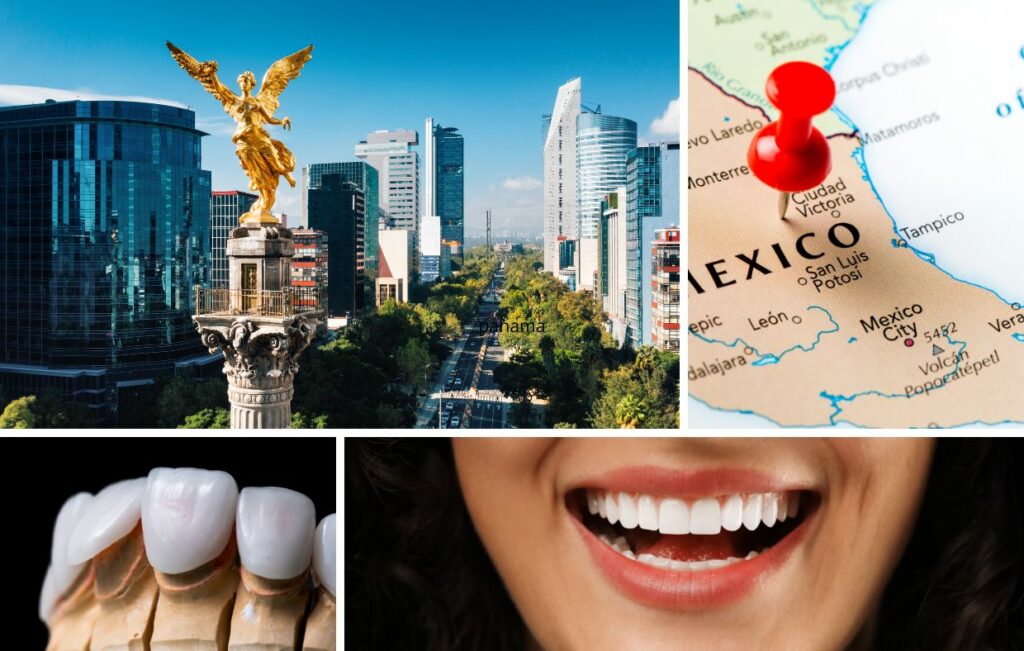
Dental veneers in Mexico cost $350-$600 per tooth, 60-75% less than US prices, with ISO-certified clinics using the same Emax and Zirconia materials found in American practices.
Top dental clinics in Tijuana, Los Algodones, and Cancun treat 800,000+ international patients yearly. Porcelain veneers average $475 versus $1,700 in the US. Many dentists hold dual US-Mexico certifications and use CAD/CAM technology for same-week treatment.
This guide covers veneer costs by type, city-by-city clinic comparisons, and the complete treatment process. You’ll find everything needed to plan your dental veneer trip to Mexico.
What Are Dental Veneers?
Dental veneers are thin shells that bond to the front surface of your teeth. They are typically 0.3-0.5mm thick. Veneers correct cosmetic issues like discoloration, chips, gaps, and minor misalignment.
Veneers come in three main materials: porcelain, lithium disilicate (Emax), or composite resin. Each material offers different benefits for durability, appearance, and cost.
Why Do Patients Choose Mexico for Dental Veneers?
Patients choose Mexico for two main reasons: cost savings of 60-75% and convenient access from the US. Mexico treats over 800,000 international dental patients each year.
The cost difference comes from lower operational overhead—not inferior quality. Mexican clinics pay less for rent, staffing, and lab services. Top facilities use identical premium materials sourced from the same manufacturers as US practices.
Border cities like Tijuana and Los Algodones allow weekend trips. Resort destinations like Cancun let you combine treatment with vacation time. Most clinics employ bilingual staff and complete veneer procedures in 5-7 days.
How Much Do Dental Veneers Cost in Mexico?
Porcelain veneers cost $350-$600 per tooth in Mexico. This compares to $900-$2,500 per tooth in the US—a savings of about 72%. The table below shows costs for each veneer type.
| Veneer Type | Mexico Cost (per tooth) | US/Canada Cost (per tooth) | Savings % |
|---|---|---|---|
| Porcelain Veneers | $350-$600 (avg $475) | $900-$2,500 (avg $1,700) | 72% |
| Emax/Lithium Disilicate | $450-$700 (avg $575) | $950-$2,800+ (avg $1,875) | 69% |
| Composite Resin | $150-$350 (avg $250) | $400-$1,500 (avg $950) | 74% |
Border clinics in Los Algodones offer Emax veneers for as low as $350 per tooth. For full smile makeovers (16-20 veneers), total savings can reach $10,000 to $40,000. These savings easily cover travel expenses.
For patients considering other dental work, see our complete guide to dental implants in Mexico.
What Types of Veneers Are Available in Mexico?
Three main veneer types are available: porcelain, Emax (lithium disilicate), and composite resin. Each offers different advantages for appearance, durability, and budget.
What Are Porcelain Veneers?
Porcelain veneers provide excellent, lifelike appearance with natural translucency. They resist staining from coffee, tea, and wine.
Appearance: Highly lifelike with natural translucency. Highly resistant to staining.
Durability: 10-20 years with proper care.
Tooth Preparation: Requires 0.3-0.5mm enamel removal. This process is irreversible.
Repair: Difficult. Damaged veneers usually require full replacement.
Timeline: 2 visits over 5-7 days for laboratory fabrication.
Cost: $350-$600 per tooth
What Are Emax Veneers?
Emax veneers (lithium disilicate) offer superior translucency for the most natural look. They are considered the premium veneer option.
Appearance: Superior translucency creates the most natural look.
Durability: 10-15+ years with high resistance to wear and staining.
Tooth Preparation: Requires 0.3-0.5mm enamel removal, similar to porcelain.
Repair: Difficult. Replacement is typically needed if damaged.
Timeline: 2 visits over 5-7 days for laboratory fabrication.
Cost: $450-$700 per tooth
What Are Composite Resin Veneers?
Composite resin veneers cost less and require minimal tooth preparation. They work well for patients wanting a reversible option.
Appearance: Good quality with modern materials. More prone to staining over time.
Durability: 5-7 years average before needing replacement.
Tooth Preparation: Minimal to no enamel removal. Potentially reversible.
Repair: Easier than porcelain. Chips can often be repaired by adding material.
Timeline: Often completed in 1-2 visits. Veneers are sculpted directly on teeth.
Cost: $150-$350 per tooth
What Quality Standards Do Mexican Dental Clinics Follow?
Top Mexican clinics meet international quality standards through technology investments and staff training. The competitive dental tourism market has pushed leading facilities to match equipment found in North American practices.
What Technology and Materials Do Mexican Clinics Use?
Mexican dental clinics use the same premium materials and technology as US practices. This includes CAD/CAM systems, digital scanners, and brand-name materials.
- CAD/CAM systems (CEREC, others) for precise milling—enables 24-48 hour fabrication
- Digital intraoral scanners for accurate impressions without uncomfortable molds
- 3D imaging and digital radiography for treatment planning
- Premium materials: IPS e.max®, Zirconia (same brands used in US/Europe)
- Major systems: Ivoclar, Dentsply Sirona, Amann Girrbach
What Training Do Mexican Dentists Have?
Mexican dentists complete a rigorous 5-year Doctor of Dental Surgery (DDS) program. This training ensures baseline competency before treating patients.
Cosmetic specialists complete an additional 2-3 years of advanced training. Over 70% of dentists in major tourist destinations have international training. Many completed residencies at US dental schools.
What Accreditations Should You Look For?
ISO certifications are the most important credential to verify. These represent third-party validation of quality management systems.
Top facilities use ADA standards as operational benchmarks. Note: The ADA does not directly accredit foreign clinics. Mexican clinics follow these standards voluntarily to demonstrate commitment to best practices.
Who Is a Good Candidate for Veneers in Mexico?
Good candidates have healthy gums, sound teeth, and sufficient enamel for bonding. You should not have severely misaligned teeth or untreated dental problems.
You’re likely a good candidate if:
- Your gums are healthy with no active gum disease
- Your teeth are generally sound without large untreated cavities
- You have sufficient enamel for proper bonding
- Your teeth are not severely misaligned
- You maintain good oral hygiene habits
- You have realistic expectations about results
Conditions requiring treatment first:
- Active gum disease must be resolved
- Extensive decay needs filling first
- Very thin enamel may disqualify you from traditional veneers
- Severe teeth grinding (bruxism) requires nightguard commitment
Your dentist will confirm your candidacy through X-rays and examination. Be honest about your dental history and grinding habits.
What Is the Complete Veneer Treatment Process in Mexico?
The veneer process takes 5-7 days and includes consultation, preparation, fabrication, and bonding. Most patients complete treatment in one trip.
Step 1: How Does the Initial Consultation Work?
Your dentist performs a comprehensive oral exam with X-rays and digital scans. You’ll discuss your aesthetic goals including tooth shape, shade, and smile design.
Modern clinics use Digital Smile Design software. This creates a preview of your results before treatment begins. You’ll finalize material selection based on budget and preferences.
Step 2: How Are Teeth Prepared for Veneers?
Local anesthesia ensures comfort during preparation. Your dentist removes a minimal layer of enamel—about 0.3-0.5mm—from the front surface.
This removal ensures veneers sit flush with surrounding teeth. Composite veneers may require little to no enamel removal.
Step 3: How Are Impressions Taken?
Modern clinics use digital intraoral scanners for precise 3D measurements. Some facilities still use traditional molds with dental putty.
Digital scanning is more comfortable and typically more accurate. Specifications go directly to the laboratory for fabrication.
Step 4: What Are Temporary Veneers?
Your dentist places temporary veneers to protect prepared teeth. These maintain your appearance during the fabrication period.
You’ll wear temporaries for 2-7 days while the lab creates your permanent veneers.
Step 5: How Long Does Laboratory Fabrication Take?
Skilled technicians create your custom veneers using premium materials. Traditional lab fabrication takes 2-5 business days.
Clinics with in-house CAD/CAM systems can reduce this to 24-48 hours. Not all facilities offer this rapid option.
Step 6: What Happens During Trial Fitting?
Your dentist places permanent veneers without permanent cement first. This trial fitting lets you evaluate fit, color, and appearance.
Your feedback is critical here. The dentist can adjust shape, length, or shade before final bonding.
Step 7: How Is Final Bonding Done?
Your dentist cleans prepared teeth and applies etching gel. This creates optimal surface texture for bonding.
Dental cement is applied to each veneer. A curing light hardens the cement for permanent bonding. Excess cement is removed and margins are checked.
Step 8: What Happens at the Final Follow-Up?
Your dentist checks your bite and makes final adjustments. Final polishing smooths any rough edges.
You’ll receive detailed care instructions. Schedule a post-procedure check-up before leaving Mexico.
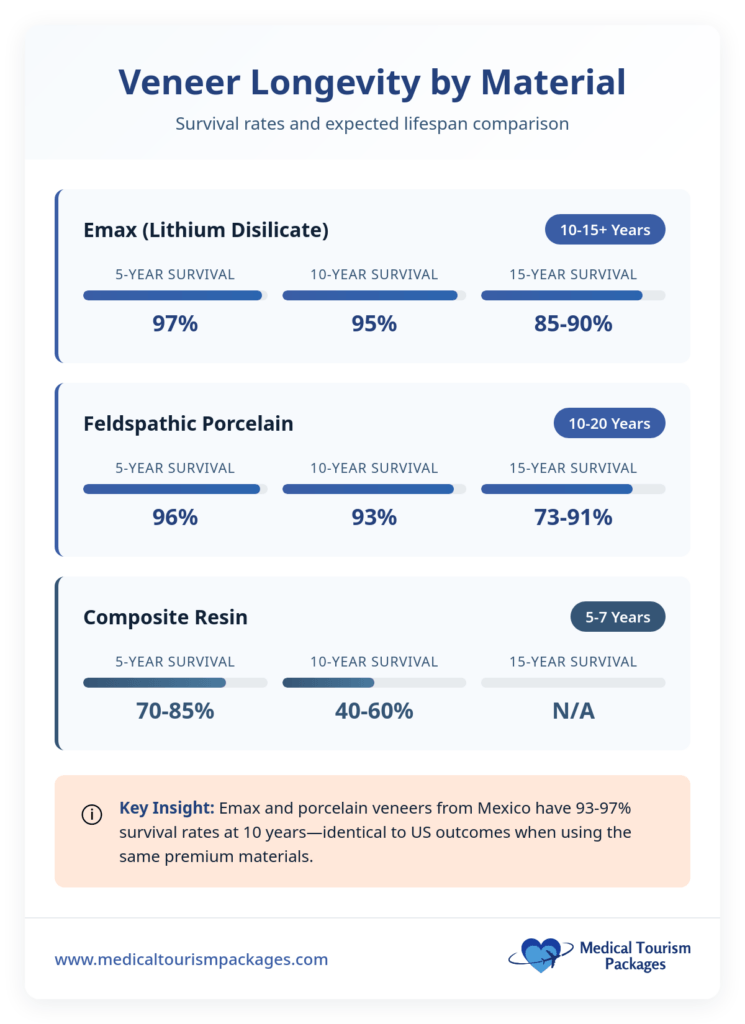
How Long Should You Plan to Stay?
Plan for 2-3 days minimum. However, 4-5 days is strongly recommended for multi-veneer cases. This allows proper adjustment time and reduces rushing.
How Long Do Veneers from Mexico Last?
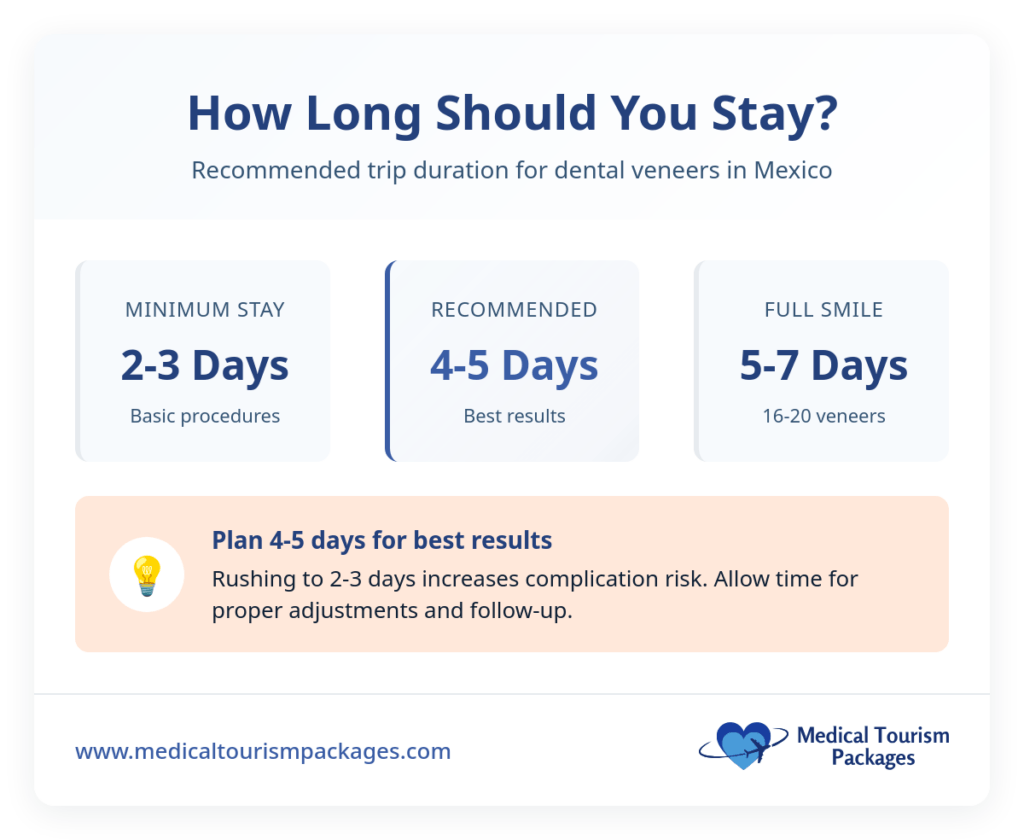
Ceramic veneers (porcelain and Emax) last 10-20 years with proper care. Composite veneers last 5-7 years on average. The table below shows survival rates by material.
| Material Type | 5-Year Survival | 10-Year Survival | 15-Year Survival | Expected Lifespan |
|---|---|---|---|---|
| Feldspathic Porcelain | 96% | 93% | 73-91% | 10-20 years |
| Emax/Lithium Disilicate | ~97% | ~95% | 85-90% | 10-15+ years |
| Composite Resin | 70-85% | 40-60% | N/A | 5-7 years |
Longevity depends on material quality, placement technique, and your aftercare habits. Composite requires more frequent replacement. Premium ceramic options provide better long-term value despite higher upfront costs.
Where Are the Best Cities in Mexico for Dental Veneers?
Six main cities serve dental tourists: Los Algodones, Tijuana, Cancun, Los Cabos, Puerto Vallarta, and Guadalajara. Each offers different advantages for cost, convenience, and experience.
For complete travel planning, read our guide for American medical tourists in Mexico.
Why Choose Los Algodones?
Los Algodones offers the lowest prices and easiest border access. Over 350 dental professionals serve this small town—the highest concentration globally.
Located minutes from Yuma, Arizona, this town focuses on maximum savings. Emax veneers start at $350 per tooth. Partner hotels offer rates around $60 per night.
Best for: Budget-conscious patients wanting savings and easy border access.
Why Choose Tijuana?
Tijuana serves Southern California patients with short travel times from San Diego. This major border city operates as a high-volume clinic hub.
Clinics balance competitive pricing with modern facilities. Infrastructure supports quick weekend visits.
Best for: California patients wanting short trips and quick weekend visits.
Why Choose Cancun?
Cancun pioneered the “dental vacation” model. You can combine treatment with Caribbean beach experiences.
Pricing runs mid-range to premium compared to border towns. Many clinics partner with hotels for up to 50% off standard rates.
Best for: Patients wanting treatment combined with beach vacation.
Why Choose Los Cabos?
Los Cabos caters to the luxury segment with high-end facilities and personalized service. Pricing runs 15-35% higher than border towns.
The location offers premium resort amenities alongside quality dental care.
Best for: Luxury experience with resort amenities.
Why Choose Puerto Vallarta?
Puerto Vallarta has over 176 dental professionals serving the luxury segment. Pricing is 15-35% higher than border towns.
The city balances dental excellence with Pacific coast vacation appeal.
Best for: Premium care with beach resort atmosphere.
Why Choose Guadalajara?
Guadalajara offers urban dental options without beach resort pricing. High-end facilities provide advanced care.
The city delivers rich cultural experiences and authentic Mexican cuisine.
Best for: Dental work combined with city exploration.
What Are the Risks of Getting Veneers in Mexico?
The main risk is rushed treatment timelines—not material quality or dentist skill. Complication rates in dental tourism range from 15-30%.
Primary risk factors:
- Compressed 2-3 day schedules skipping critical adjustments
- Improper bite adjustments affecting long-term comfort
- Poor margins leading to dental infections
- Rushing to meet flight schedules
How to reduce risks:
- Allocate 4-5 days minimum for multi-veneer cases
- Schedule a post-procedure check-up before departing
- Ensure time for occlusion (bite) adjustments
- Don’t accept work that doesn’t feel right
Corrective treatment in the US costs $3,500-$5,000. This can negate your initial savings. Choose a reputable clinic and allow sufficient treatment time.
How Do You Choose the Best Dentist in Mexico for Veneers?
Look for ISO certifications, specialist credentials, and premium material usage. Avoid clinics with extremely low prices or rushed timelines.
What Credentials Should You Verify?
These credentials indicate quality care:
- ISO certifications for quality management systems
- Specialization in Prosthodontics, Cosmetic Dentistry, or Oral Rehabilitation
- International training or dual certifications from US/European institutions
- Premium materials: IPS e.max or Zirconia (not generic ceramics)
- In-house CAD/CAM technology for precise fabrication
- Bilingual staff for clear communication
What Are Red Flags for Low-Quality Clinics?
Avoid clinics showing these warning signs:
- No ISO certifications or verifiable accreditations
- No specialist credentials—only general dentistry background
- Extremely rushed timelines (completing in 2-3 days)
- No in-house CAD/CAM technology
- No written warranty documentation
- No post-procedure check-up protocols
- Prices significantly below market (under $300 for porcelain/Emax)
- “Ivory piano keys” appearance in before/after photos
What Travel Requirements and Logistics Should You Know?
You need a valid US passport to enter Mexico. Border zone visits under 72 hours may not require additional permits. Plan accommodation based on your destination.
What Travel Documents Do You Need?
A valid US passport is required for entry into Mexico and re-entry to the US. The tourist permit (FMM) is waived for stays within 25km of the border for 72 hours or less.
This exemption supports typical 2-3 day veneer timelines in border cities. If driving, Mexican auto insurance is mandatory—US policies are not recognized.
How Much Does Accommodation Cost?
Accommodation ranges from $60/night in border towns to $300+/night in luxury resort areas. The table below shows typical costs.
| Location Type | Nightly Rate | 7-Day Estimate |
|---|---|---|
| Border Hubs (Los Algodones/Tijuana) | $60 (clinic partner rates) | $420 |
| Vacation Hubs – Budget | ≤$150 | $1,050 |
| Vacation Hubs – Mid-range | $150-$300 | $1,050-$2,100 |
| Vacation Hubs – Luxury | >$300 | $2,100+ |
Do Clinics Help with Accommodation?
Yes, many Mexican dental clinics partner with local hotels. They offer special rates for dental tourists to reduce trip costs.
Some clinics bundle accommodation with treatment packages. Cancun clinics frequently offer up to 50% off hotel rates through partnerships.
What Aftercare Is Required for Mexico Veneers?
Proper daily care is essential for veneer longevity. Use soft-bristled brushes, floss daily, and avoid hard or sticky foods.
Daily oral hygiene:
- Brush twice daily with soft-bristled toothbrush
- Use non-abrasive toothpaste—abrasive formulas can dull veneers
- Floss daily; water flossers work well around veneer margins
- Schedule professional cleanings every six months
Dietary guidelines:
- First 48 hours: soft foods only, avoid temperature extremes
- Long-term: avoid hard foods (ice, hard candy, nuts)
- Skip sticky foods (caramel, taffy, chewing gum)
- Limit staining agents (coffee, tea, red wine)
Protective measures:
- Custom nightguard is strongly recommended for all patients
- Essential for anyone with teeth grinding (bruxism)
- Sports mouthguard for contact sports
Warranty coverage:
- Emax veneers: typically 3-year warranties
- Porcelain veneers: often up to 5-year warranties
- Get written warranty documentation before treatment
Are Dental Veneers in Mexico Worth It?
Yes, for patients who choose reputable clinics and allow adequate treatment time. You can save 69-74% on ceramic veneers without sacrificing quality.
The cost difference comes from lower overhead—not inferior materials. Top clinics use identical IPS e.max and Zirconia from the same manufacturers. For full smile makeovers, savings often reach $10,000-$40,000.
Success requires three steps:
- Verify the clinic uses Emax/Zirconia and has in-house CAD/CAM
- Confirm your dentist holds specialist credentials (not just general dentistry)
- Plan 4-5 days for multi-veneer treatment—don’t rush
Mexico offers legitimate, high-quality dental care at a fraction of US prices. Approach the decision strategically and prioritize quality over speed.
Frequently Asked Questions
How long do I need to stay in Mexico for veneers?
Plan for a minimum of 2–3 days. For multiple veneers, 4–5 days is recommended to allow for fabrication, fitting, and any adjustments.
Are dental veneers in Mexico safe?
Yes—when you choose accredited clinics with qualified specialists. Look for ISO certifications and dentists trained in prosthodontics or cosmetic dentistry. Top clinics use the same materials and technology as U.S. practices.
What happens if my veneers fail after I return home?
Most reputable clinics offer warranties (3–5 years, depending on material). Minor issues can often be handled by a U.S. dentist; major problems may require a return trip. Choosing a high-quality clinic upfront reduces this risk.
Do I need a passport for dental work in Mexico?
Yes. A valid U.S. passport is required for entry into Mexico and re-entry to the United States. For border-zone visits under 72 hours, the FMM tourist permit may be waived.
Can I get veneers in one day in Mexico?
Composite veneers can sometimes be completed in one day. Porcelain and Emax veneers usually require 2–7 days for lab fabrication, though clinics with CAD/CAM can finish them in about 24–48 hours.
What’s the difference between Emax and porcelain veneers?
Emax veneers are lithium disilicate and offer superior translucency for a very natural look. Traditional porcelain also looks excellent but may be slightly less translucent. Both can last 10–20 years with proper care.
How do I find a reputable dentist in Mexico?
Check for ISO-certified clinics and dentists with specialist credentials in prosthodontics or cosmetic dentistry. Verify use of premium materials (Emax, Zirconia) and in-house CAD/CAM technology. Read patient reviews and examine before/after photos.
Ready to Start Your Dental Veneer Journey?
Medical Tourism Packages coordinates your entire veneer journey in Mexico. We connect you with certified cosmetic dentists, arrange your travel and accommodations, and provide bilingual support throughout treatment. Get a free consultation to discuss your smile goals and receive a personalized quote.
Contact us today to start planning your affordable dental veneers in Mexico.