Book Appointment Now

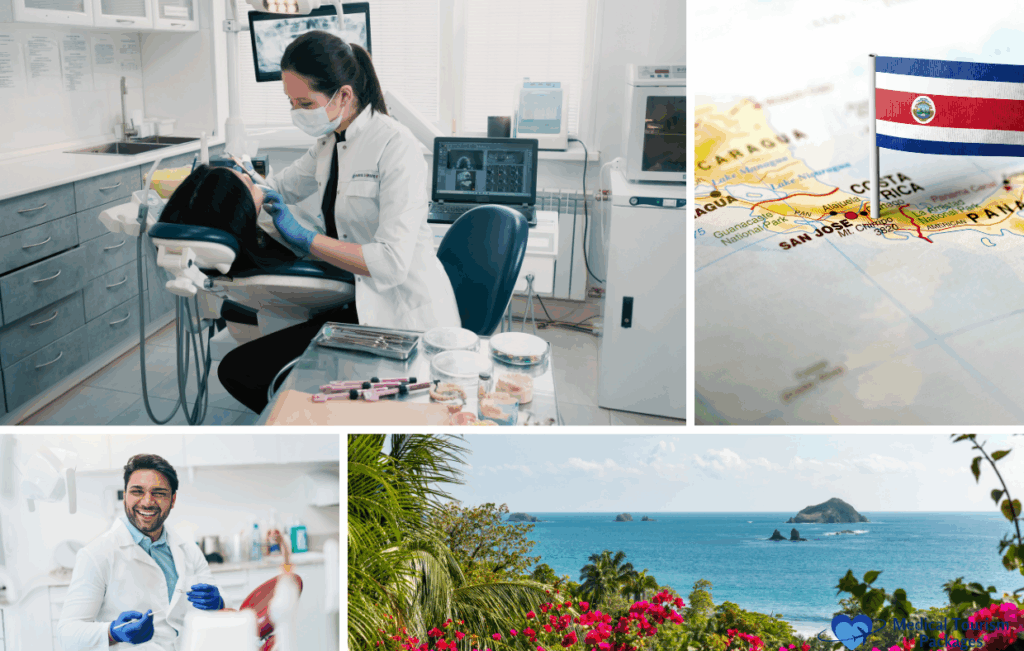
Best Dentists in Costa Rica: Where to Go for Quality and Affordable Dental Care
 By
By
The best dentists in Costa Rica combine CCDCR specialty registration, JCI-accredited hospital affiliation, and premium implant systems at 50 to 70 percent below US prices.
Costa Rica has three JCI-accredited hospitals (Hospital Clínica Bíblica, Hospital CIMA, Hospital La Católica), a public dentist directory at colegiodentistas.org, and US-trained specialists. Single implants cost $1,500 to $2,700 (versus $3,500 to $5,500 stateside), and All-on-4 cases run $9,500 to $14,000 per arch.
This guide teaches you how to vet any Costa Rica dental clinic in under an hour using the CCDCR public directory, JCI verification, and a weighted scoring rubric, rather than recommending specific dentists. Below you will find 2026 cost tables, a 10-question virtual-consult checklist, clinic red flags, a typical patient journey, and flight and visa logistics for US and Canadian patients.
Why choose Costa Rica for dental care?
Costa Rica offers dental treatment at 50 to 70 percent below US and Canadian prices, with three JCI-accredited hospitals, a strict licensing body (CCDCR), and Ministry of Health facility certification. Most specialist dentists train in the United States and speak fluent English.
The country follows FDI World Dental Federation standards and WHO-aligned infection-control protocols. Every legal clinic must use autoclave sterilization with weekly biological-indicator spore tests. Foreign-trained specialists have to validate credentials through CONARE and the University of Costa Rica before they can practice.
How does Costa Rica dental care compare to the US and Canada?
Costa Rica dental care matches US and Canadian clinical standards in regulated clinics but costs 50 to 70 percent less. Top clinics use the same implant brands (Straumann, Nobel Biocare, Zimmer Biomet) and ceramic systems (E.max, zirconia) found in any premium North American practice.
The cost gap comes from labor, overhead, and insurance, not quality or materials. A lab-fabricated crown sourced from the same Ivoclar or 3M supplier in both countries costs $500 to $700 in Costa Rica and $1,500 to $2,500 in the US. For patients seeking complex care like a full dental implant procedure, the savings on a single case often pay for the flight and hotel.
What regulatory bodies protect international patients?
Four authorities protect patients: the Colegio de Cirujanos Dentistas de Costa Rica (CCDCR) licenses dentists, the Ministry of Health certifies clinics, JCI accredits hospitals, and the Fiscalía inside the CCDCR handles malpractice complaints through a formal evidence-based process.
If a dispute is financial, the CCDCR’s Center for Alternative Conflict Resolution offers conciliation. If it is clinical, the Fiscalía receives a formal “Guía de denuncia” form with documentary, testimonial, or expert evidence. Both processes are open to foreign patients, and many patients from the United States and Canada have used them successfully when pursuing dental tourism in Costa Rica.
Which cities host most international dental patients?
Most international patients travel to San José, Escazú, or Santa Ana in the Central Valley, or to Liberia in Guanacaste province. Each city serves a different type of dental trip.
The Central Valley and Guanacaste offer different trade-offs for dental tourists:
| City | Airport | Best For | Hospital Base |
|---|---|---|---|
| San José | SJO (25 min) | Broadest specialist access | Multiple JCI-affiliated options |
| Escazú | SJO (20 min) | Upscale clinics inside a JCI hospital | Hospital CIMA |
| Santa Ana | SJO (30 min) | Modern suburb with JCI-affiliated clinics | Hospital Clínica Bíblica Santa Ana |
| Heredia | SJO (15 min) | Budget-friendly, close to airport | Independent clinics |
| Liberia | LIR (15 min) | Combining treatment with beach recovery | Independent clinics |
How do you verify a dentist in Costa Rica?
You verify a dentist in three steps: check the CCDCR public directory for active license status, confirm specialty registration for the procedure, and request a photo of the clinic’s current Ministry of Health habilitación certificate. Any dentist who resists these checks is a red flag.
How to use the CCDCR public directory
The CCDCR runs a free public directory at colegiodentistas.org/listado-odontologos where any patient can confirm a dentist’s license, specialty, and professional code in under two minutes. Verification is free and does not require registration.
Follow these five steps to verify any dentist before booking:
- Open the directory at colegiodentistas.org/listado-odontologos in any browser.
- Search by surname (apellido) or by the “código profesional” the clinic provides.
- Check the status field. Only “Activo” means the dentist is legally practicing. “Suspendido,” “Inactivo,” or no result means walk away.
- Confirm specialties listed. For implants, look for “Implantología,” “Periodoncia,” “Prostodoncia,” or “Cirugía Oral y Maxilofacial.” For braces, look for “Ortodoncia.”
- Screenshot the result with the date visible. Keep it with your booking records in case of future dispute.
How to confirm specialty certification for implants and cosmetic work
For implants, full-mouth rehabilitation, or complex cosmetic cases, insist on a CCDCR-registered specialist, not a general dentist. General dentists can legally place simple implants but are not board-certified for advanced surgical cases.
Match your procedure to the right CCDCR-recognized specialty:
- Dental implants, All-on-4/6/8, bone grafts: Periodontist, Oral & Maxillofacial Surgeon, or Prosthodontist with implant fellowship.
- Veneers, smile makeovers, full-mouth cosmetic: Prosthodontist (prostodoncista) with cosmetic training.
- Root canals, re-treatments: Endodontist (endodoncista).
- Braces, clear aligners, bite correction: Orthodontist (ortodoncista).
- Pediatric cases: Pediatric dentist (odontopediatra).
- Gum disease, periodontal surgery: Periodontist (periodoncista).
If a provider advertises themselves as a “specialist” but the CCDCR directory lists them as “Odontólogo General” only, the specialty claim is not officially recognized. Additional memberships with the American Dental Association (ADA), the American Academy of Implant Dentistry (AAID), or the International Congress of Oral Implantologists (ICOI) are helpful signals, but they do not replace CCDCR specialty registration.
How to check the Ministry of Health facility license
Every legal dental clinic in Costa Rica must display a current Ministry of Health habilitación certificate in a visible location. The certificate confirms the clinic passed facility inspection for sterilization, waste management, imaging equipment, and emergency protocols.
Ask the clinic to email you a clear photo of the current habilitación certificate before you pay any deposit. Check the expiration date and the facility name. A legitimate clinic will send it within 24 hours without pushback. Refusal, delay, or an expired certificate is a clear red flag and grounds to cancel.
Which accreditations actually matter?
Three accreditations carry real weight in Costa Rica: JCI (for the hospital your clinic is affiliated with), CCDCR specialty registration (for the individual dentist), and Ministry of Health habilitación (for the facility). International memberships like ADA and AAID are useful secondary signals but do not replace the three legal requirements.
Joint Commission International (JCI): the global gold standard
JCI accreditation is the most respected hospital credential worldwide. A JCI-accredited hospital has been audited against the same patient safety, infection control, medication management, and emergency-response standards applied to top US hospitals.
Costa Rica currently has three JCI-accredited private hospitals where international dental patients often receive care:
- Hospital Clínica Bíblica (San José and Santa Ana) – first JCI-accredited hospital in Central America (since 2008), continuously re-accredited.
- Hospital CIMA San José (Escazú) – JCI accredited through multiple cycles; hosts dental specialty clinics on site.
- Hospital La Católica (Guadalupe, San José) – JCI accredited; full-service private hospital.
You can confirm any hospital’s current JCI status at jointcommission.org. For surgical dental work such as sedation-assisted implant placement, All-on-4 full-arch surgery, or complex bone grafts, patients benefit from choosing a dental clinic located inside or formally affiliated with one of these JCI hospitals because on-site emergency and anesthesia support is immediately available.
CCDCR membership vs specialty board certification
Every dentist legally practicing in Costa Rica must be a CCDCR member with “Activo” status. This is the baseline, not a premium credential. The real differentiator is whether the dentist is also registered in a CCDCR specialty registry for the exact procedure you need.
For a simple cleaning or filling, a general dentist with active CCDCR status is enough. For surgery, implants, complex cosmetic work, or full-mouth rehabilitation, demand a CCDCR-registered specialist. The CCDCR verifies specialty credentials through the University of Costa Rica and CONARE for foreign-trained dentists, so the specialty listing carries legal weight.
International affiliations worth recognizing
Memberships with the ADA, AAID, ICOI, and the American Academy of Cosmetic Dentistry (AACD) indicate continuing education and peer involvement. None replaces a CCDCR specialty registration, but they strengthen a dentist’s profile when combined with local credentials.
Be skeptical of generic-sounding “international certifications” or boards that charge a fee and do no clinical review. Legitimate memberships publish a public directory. If you cannot verify the affiliation through the issuing body’s own website, treat it as marketing rather than a credential.
How much should dental work in Costa Rica cost?
Single dental implants cost $1,500 to $2,700 in Costa Rica versus $3,500 to $5,500 in the US, and All-on-4 full-arch restorations cost $9,500 to $14,000 per arch versus $24,000 to $30,000 in the US. Savings across all procedures typically run 50 to 70 percent.
Costa Rica vs US vs Canada price comparison
Typical 2026 cash prices for common procedures compare as follows:
| Procedure | Costa Rica (USD) | United States (USD) | Canada (USD) | Savings vs US |
|---|---|---|---|---|
| Single implant (post + abutment + crown) | $1,500-$2,700 | $3,500-$5,500 | $3,500-$6,000 | 50-70% |
| All-on-4 (per arch) | $9,500-$14,000 | $24,000-$30,000 | $25,000-$32,000 | 55-65% |
| All-on-6/8 (per arch) | $12,000-$18,000 | $28,000-$35,000 | $30,000-$38,000 | 55-65% |
| Porcelain veneer (per tooth) | $450-$650 | $1,500-$2,500 | $1,200-$2,200 | 60-75% |
| Zirconia or E.max crown | $450-$700 | $1,500-$2,500 | $1,200-$2,000 | 60-75% |
| Root canal (molar) | $350-$500 | $1,200-$1,800 | $900-$1,500 | 65-75% |
| Professional whitening | $200-$400 | $500-$1,000 | $400-$900 | 50-65% |
| Complete denture (per arch) | $800-$1,500 | $2,500-$5,000 | $2,000-$4,500 | 60-70% |
| Wisdom tooth (surgical extraction) | $150-$400 | $400-$800 | $350-$700 | 50-65% |
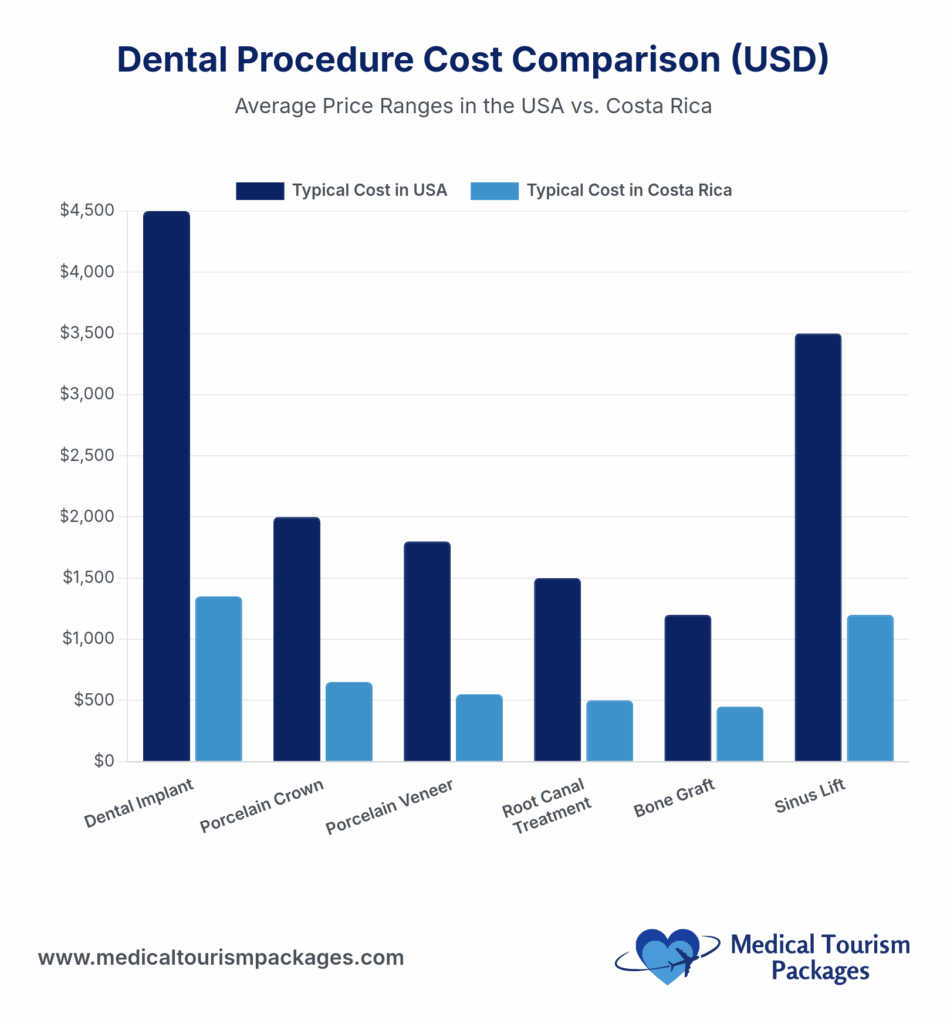
Even with flights and lodging added (typically $600 to $1,200 for a one-week trip from the US), a single full-arch case in Costa Rica saves patients $10,000 to $20,000 versus the same case in the United States. For detailed pricing on a single procedure, see our guide on dental implants in Costa Rica or on porcelain veneers in Costa Rica. Patients comparing destinations can also review our best dentists in Panama guide.
What’s included (and excluded) in package pricing
Most reputable clinics quote an all-inclusive price that covers consultation, imaging, the procedure, materials, temporaries, and follow-up during the stay. Common exclusions include flights, hotel, premium implant upgrades, bone grafts, and sedation anesthesia.
A complete written quote should itemize these categories:
- Consultation and imaging: CBCT (Cone-Beam CT), panoramic X-ray, and intraoral scanner.
- Surgical phase: Implant placement, anesthesia type (local vs IV sedation), and operating-room time.
- Prosthetic phase: Abutment, crown or bridge material (zirconia, E.max, PMMA temporary), and lab work.
- Materials named by brand: Implant system (Straumann, Nobel Biocare, Zimmer) and ceramic brand (Ivoclar, 3M ESPE).
- Follow-up: Post-op visits during the same trip and any return visit for final restoration.
- Warranty: Duration, components covered, exclusions, and remediation path.
- Transportation: Airport pickup, clinic shuttle, and hotel transfers if included.
- Payment terms: Accepted methods, deposit amount, and refund conditions.
If any line item above is missing, ask for it in writing before paying any deposit. Most Costa Rica clinics accept USD cash, Visa, Mastercard, and wire transfer. Many do not accept American Express, so confirm in advance.
How to read a dental tourism warranty
A dental warranty has two layers: the manufacturer’s warranty on the implant itself (lifetime for Straumann and Nobel Biocare) and the clinic’s warranty on placement and restoration (typically 5 to 10 years, with some clinics offering lifetime). These are separate contracts with different exclusions.
Before signing, check the warranty for these points:
- Written terms: A warranty that is not in writing is not a warranty.
- Components covered: Implant post, abutment, crown, and labor – each should be listed separately.
- Exclusions: Smoking, poor oral hygiene, trauma, and uncontrolled diabetes are common exclusions. Read them carefully.
- Remediation path: If the implant fails, does the clinic reimburse a local dentist or require you to fly back to Costa Rica? The former is more useful for North American patients.
- Activation steps: Some warranties require you to attend annual cleanings and share radiographs. Missing these can void coverage.
- Transferability: Warranties typically do not transfer to a new owner of the implant, but they should survive a clinic ownership change.
The manufacturer warranty (Straumann, Nobel Biocare) is typically easier to redeem than the clinic warranty, and patients can request the implant passport with the serial number after placement. Keep the passport with your records. If the clinic closes or changes ownership, the manufacturer warranty still applies to the physical implant.
What questions should you ask before booking?
Ask every clinic ten specific questions during the virtual consultation. Clinics that answer promptly, in writing, with named brands and verifiable credentials are worth shortlisting. Clinics that hedge, delay, or refuse written answers should be eliminated before you pay any deposit.
10 questions for every virtual consultation
Use this exact list as your screening script for any Costa Rica dental clinic. Expect written answers within 48 hours; responsive clinics typically reply within 24 hours.
These ten questions filter out most underqualified or dishonest clinics:
- Who will perform the surgical placement, and what is their CCDCR código profesional?
- Which implant brand and model will you use, and will you provide the implant passport after placement?
- What is your sterilization protocol, and do you run weekly biological-indicator (spore) tests on your autoclaves?
- What is your complication rate on this procedure over the last 24 months, and what is the remediation process if the case fails?
- Can you share before-and-after photos of patients with my specific case type (not general marketing photos)?
- What is the total itemized cost, including consultation, imaging, surgery, materials, restoration, temporaries, and follow-up?
- If I need corrective work after I return home, do you reimburse a local dentist, or must I return to Costa Rica?
- Which JCI-accredited hospital handles emergencies if something goes wrong during my stay?
- What payment methods do you accept? Do you accept American Express?
- Can I speak with two to three past patients who had my exact procedure?
Questions specific to dental implant placement
For dental implants, All-on-4, or full-mouth cases, add these implant-specific questions to the base list. They surface clinical quality differences that a general screening would miss.
- Do you take a CBCT (Cone-Beam CT) scan for every implant case, and is the cost included?
- Do you use guided-surgery protocols or digital-workflow planning software?
- What is your bone-grafting or sinus-lift plan if imaging shows insufficient bone?
- Will you place temporary teeth on the day of surgery (immediate loading) or wait 4 to 6 months?
- Which laboratory fabricates the final crowns or bridges, and where are they located?
Questions about aftercare and emergencies
Aftercare gaps are the single biggest risk in dental tourism. Many failed cases stem not from bad surgery but from poor follow-up when the patient is thousands of miles away. These questions surface how the clinic handles the 6 months after you leave.
- Do you offer video follow-up calls during the first 90 days after I return home?
- What is the 24-hour emergency contact if I experience pain, swelling, or bleeding after flying home?
- Do you have a referral network of vetted dentists in the United States and Canada who can handle urgent issues locally?
- How do you coordinate with my home dentist to share X-rays, treatment notes, and implant brand details?
- What is your written refund or partial-refund policy if the full treatment plan is not completed during my trip?
What are the red flags that should make you walk away?
Walk away if a clinic cannot confirm an “Activo” CCDCR license, refuses a written itemized quote, hides implant brand names, pressures you to pay a large non-refundable deposit within 24 hours, or has no video follow-up policy. Price that seems too low is usually the clearest signal.
Credential and licensing red flags
These credential gaps mean the clinic cannot legally or safely treat you:
- Dentist not listed as “Activo” in the CCDCR directory, or not listed at all.
- Specialty claim (implants, cosmetic, orthodontics) that does not match CCDCR’s specialty registry.
- No Ministry of Health habilitación certificate on display or provided on request.
- Foreign-trained dentist with no CONARE or University of Costa Rica validation on file.
- Clinic located in a JCI-accredited hospital, but the individual dentist is not registered with the hospital credentialing office.
Pricing and payment red flags
Pricing red flags usually point to cut corners on materials, sterilization, or labor. These are the ones to watch:
- Quoted price far below market (for example, a $500 “implant with crown” when the market is $1,500 to $2,700). Often signals counterfeit components or inexperienced operators.
- Refusal to name the implant brand and model in writing, or a generic “premium implant” label.
- Demand for a large non-refundable deposit (more than 20 percent) within 24 hours of the virtual consult.
- Cash-only payment policies for major procedures, with no Visa, Mastercard, or wire-transfer option.
- Surprise add-ons on arrival (bone graft, sinus lift, premium implant upgrade) that were not in the original written quote.
Communication and warranty red flags
Communication red flags predict aftercare failure, which is the single biggest risk in dental tourism. Walk away from any of these patterns:
- Slow replies (more than 48 hours) during the pre-treatment phase; responsive clinics reply within 24 hours.
- Written quote has gaps or uses vague terms like “lab fees may apply” or “anesthesia extra.”
- Warranty is verbal or limited to less than one year on implant components.
- No video follow-up policy and no referral network of vetted dentists in the United States or Canada.
- Patient references are all marketing-curated and the clinic refuses to connect you with any past patient.
- Online reviews cluster on a single platform with repetitive language or all within a narrow date range (common signs of paid reviews).
How do you compare clinics fairly?
Compare clinics with a weighted scoring rubric across six factors: credentials, accreditation, technology, materials, warranty and aftercare, and verifiable reviews. Shortlist three clinics, score them on the same rubric, and book the highest-scoring option that returns a complete written quote.
Clinic scoring rubric for patients
Score each shortlisted clinic on a 1-10 scale per factor, then multiply by the weight below for a total out of 100.
| Factor | Weight | What “Excellent” Looks Like |
|---|---|---|
| Credentials (CCDCR Activo + specialty match) | 25% | Dentist listed “Activo” with exact specialty for the procedure; foreign training validated through CONARE. |
| Accreditation (JCI hospital affiliation + habilitación) | 20% | Clinic is inside or formally affiliated with a JCI-accredited hospital; current Ministry of Health certificate. |
| Technology (CBCT, intraoral scanner, CAD/CAM, guided surgery) | 15% | All four present; in-house dental lab for crowns and bridges. |
| Materials (premium implant + ceramic brands) | 10% | Straumann, Nobel Biocare, or Zimmer implants; E.max or zirconia restorations. |
| Warranty and aftercare | 15% | 7+ year written warranty, video follow-up, and a US or Canadian referral network for urgent issues. |
| Verifiable reviews and patient references | 10% | Reviews distributed across multiple independent platforms; clinic provides 2-3 past-patient contacts. |
| Communication (English, quote turnaround, transparency) | 5% | Fluent English; written quote within 48 hours; no hidden fees. |
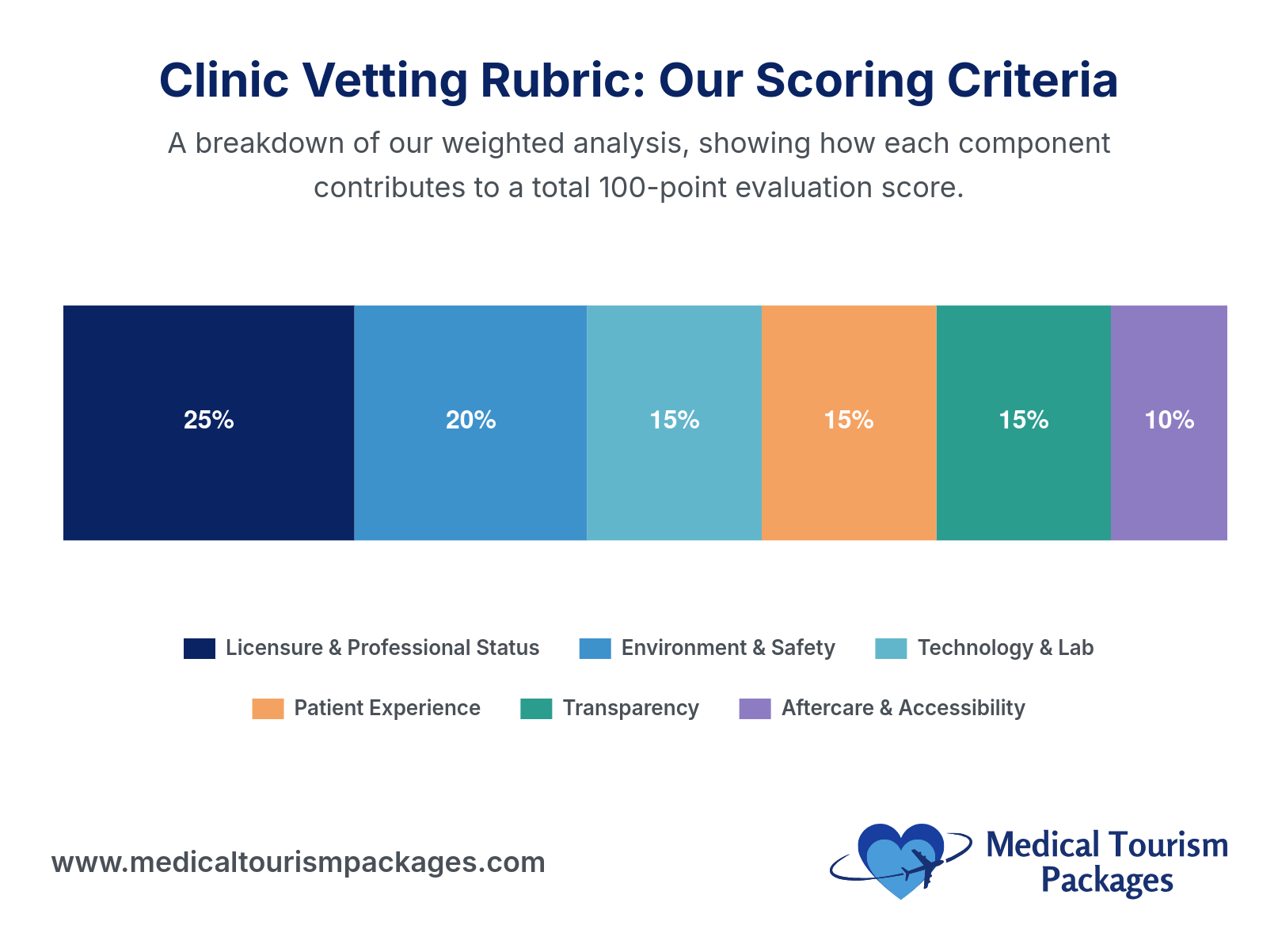
A clinic scoring 80 or higher on this rubric is a strong candidate. A clinic scoring below 60 should not be booked, regardless of price. If two clinics score within 5 points of each other, prefer the one with the JCI hospital affiliation because it reduces surgical risk.
How to interpret online reviews critically
Online reviews are useful but easily manipulated. A clinic with 500 five-star reviews on one platform and zero reviews elsewhere is less credible than a clinic with 80 reviews distributed across Google, Facebook, and independent medical tourism review sites.
Apply these filters when reading reviews:
- Cross-platform presence: Check Google, Facebook, Trustpilot, and dental tourism forums (Reddit r/DentalTourism is useful).
- Date distribution: Real reviews arrive steadily over years. A cluster in one month suggests a paid review campaign.
- Specificity: Real patient reviews mention the dentist’s name, the exact procedure, the implant brand, and timeline details. Fake reviews use generic praise.
- Negative reviews: A clinic with zero negative reviews is suspicious. Read the 3-star reviews closely; they often reveal the most useful information.
- Responses to complaints: Professional, specific responses to negative reviews are a positive signal. Defensive or templated responses are a warning.
What a complete written quote should include
A complete written quote protects you against surprise add-ons and warranty disputes. Treat it as a contract and refuse to pay any deposit until you have it.
Your written quote must include every one of these line items:
- Patient name, date of quote, validity period (usually 30 to 90 days).
- Each procedure with CPT or local procedure code and price.
- Imaging (CBCT, panoramic, intraoral photos) with cost or “included.”
- Implant brand, model, and quantity; abutment brand and material.
- Crown or bridge material, shade, and laboratory name.
- Anesthesia type and cost (local, IV sedation, general).
- Any contingent procedures (bone graft, sinus lift) with estimated cost if needed.
- Warranty terms and duration, with exclusions and remediation path.
- Total cost, deposit required, refund terms, and accepted payment methods.
- Named signatory and clinic stamp or digital signature.
What does a typical patient journey look like?
A typical Costa Rica dental journey spans 6 weeks: 4 weeks of pre-trip vetting, 1 to 2 weeks in-country for treatment, and 4 to 6 months of post-trip follow-up coordinated by video call. Implant cases require a second trip 4 to 6 months later for final restoration.
Pre-trip (weeks 1-4): virtual consult, records, deposit
The pre-trip phase is where vetting happens. Do not book flights until you have a written quote, confirmed credentials, and a signed warranty.
- Week 1 – Shortlist and initial outreach. Verify three clinics on the CCDCR directory, request virtual consultations, and send recent X-rays or intraoral photos.
- Week 2 – Virtual consults. Run the 10-question screening script on each clinic; ask for written itemized quotes.
- Week 3 – Compare and choose. Score the three quotes on the clinic scoring rubric; request two to three past-patient references from the top choice.
- Week 4 – Book and deposit. Sign the treatment plan, pay a reasonable deposit (typically 10-20 percent), book flights and hotel, and obtain travel medical insurance that covers dental emergencies.
In-country (days 1-10): consultation, procedure, recovery
In-country time depends on the procedure. Veneers and crowns fit in 5 to 8 days with an in-house lab. Implant placement takes 1 to 2 weeks for the surgical phase. All-on-4 cases often allow same-day temporary teeth.
- Day 1 – Arrival and in-person consultation. Clinic verifies X-rays, takes CBCT scan if needed, and confirms the treatment plan. Any deviation from the written quote must be discussed before treatment begins.
- Day 2-3 – Procedure phase 1. Surgical placement (implants), tooth preparation (veneers/crowns), or primary restoration. Expect 3 to 7 days of reduced activity afterward.
- Day 4-7 – Recovery and lab fabrication. Swelling peaks at 48 to 72 hours. Lab work on final restorations completes in 3 to 5 days for in-house labs.
- Day 8-10 – Procedure phase 2. Final crown or bridge placement, bite adjustment, hygiene instruction, and post-op photos.
- Day 10 – Discharge and records. Receive the implant passport, final photos, radiographs, procedure notes, and warranty documentation. Keep digital copies.
Post-trip (months 1-6): follow-up, warranty activation, local coordination
The post-trip phase is where aftercare quality shows. Top clinics schedule video check-ins at 1 week, 1 month, and 3 months. Patients with implants need a 4 to 6 month return trip for final loading.
- Month 1 – Video follow-up. Report any pain, swelling, or bite issues. Clinic confirms healing is on track or refers you to a vetted local dentist.
- Month 2-3 – Local hygiene visit. Book a cleaning with your home dentist; share the clinic’s records and implant passport so they can document baseline radiographs.
- Month 4-6 – Return trip (implants only). Second visit for final crown or bridge on osseointegrated implants. Typical stay: 5 to 7 days.
- Annual maintenance. Most warranties require annual cleanings and a yearly radiograph. Share results with the Costa Rica clinic to keep warranty coverage active.
How do you plan the logistics of your trip?
US and Canadian citizens need no visa for stays up to 180 days. Direct flights from Miami take under 3 hours; flights from New York and Los Angeles take 5 to 7 hours. Plan 5 to 14 days in-country depending on the procedure, and book lodging near the clinic.
Flights, visa, and currency essentials
Costa Rica has two international airports and simple entry rules for North American patients.
| From | Flight Time | Typical Fare (USD, 2026) | Airport |
|---|---|---|---|
| Miami | 2h 45m-3h 15m | $200-$450 | SJO or LIR |
| Houston | 3h 30m-4h | $250-$550 | SJO or LIR |
| Atlanta | 4h-4h 30m | $300-$600 | SJO |
| Dallas | 4h-4h 30m | $280-$580 | SJO or LIR |
| New York | 5h-5h 30m | $300-$650 | SJO |
| Los Angeles | 6h 30m-7h | $350-$700 | SJO |
| Toronto | 5h-5h 30m | CAD $450-$800 | SJO |
US and Canadian citizens enter visa-free for up to 180 days. Passport validity must exceed your stay by at least one day, with 6 months recommended. Local currency is the Costa Rican colón (about 500-540 CRC to 1 USD in 2026), but dental clinics quote and accept USD. Visa and Mastercard are universal; American Express acceptance varies.
Where to stay near major dental clinics
Central Valley dental patients typically stay in Escazú, Santa Ana, or central San José near their clinic. Most mid-range and upscale hotels are within 15 minutes of the major JCI hospitals and offer partner rates for dental patients. Liberia-based patients usually stay at beach-area resorts in Playa Hermosa, Playa del Coco, or Tamarindo, 30 to 45 minutes from the clinic.
Ask your clinic for its preferred hotel list. Clinic-partner hotels usually include airport transfers, clinic shuttles, and softer cancellation terms. If you prefer an independent booking, choose a hotel with a ground-floor room, ice machine, soft-food-friendly restaurants, and English-speaking reception. For context on travel logistics beyond dental care, see our guide for American medical tourists in Costa Rica.
Recovery planning and what to pack
Pack for soft-food meals, swelling management, and 3 to 7 days of reduced activity. Surgical patients should delay beach or pool time by at least 72 hours to reduce infection risk.
Essential items for a dental tourism trip:
- Medical documents: Recent X-rays, list of medications, allergy list, and medical clearance if you take blood thinners or have a pacemaker.
- Comfort items: Ice pack, soft travel pillow, loose-fitting clothes, and sunscreen (tropical UV is strong).
- Post-op supplies: Salt-rinse instructions, over-the-counter pain relief approved by the clinic, and a list of soft foods (yogurt, soup, mashed potatoes, smoothies).
- Payment and communication: Visa or Mastercard, USD cash for small vendors, an unlocked phone or SIM, and the clinic’s emergency line saved in your contacts.
- Insurance: Travel medical insurance that explicitly covers dental emergencies and medical evacuation (air ambulance from Costa Rica can exceed $50,000 without coverage).
Frequently asked questions about dental care in Costa Rica
How do I verify a dentist’s license in Costa Rica?
Visit the CCDCR public directory at colegiodentistas.org/listado-odontologos and search by surname or professional code. Confirm the status reads “Activo” and that any claimed specialty (implants, cosmetic, orthodontics) is officially listed. Screenshot the result with the date visible and keep it with your booking records.
How much do dental implants really cost in Costa Rica in 2026?
A single implant with abutment and crown costs $1,500 to $2,700 in Costa Rica versus $3,500 to $5,500 in the United States. All-on-4 full-arch restorations cost $9,500 to $14,000 per arch versus $24,000 to $30,000 stateside. Savings run 50 to 70 percent using identical Straumann, Nobel Biocare, or Zimmer implants.
Is dental tourism in Costa Rica safe for American and Canadian patients?
Yes, when patients use the CCDCR directory, choose clinics inside or affiliated with a JCI-accredited hospital, and verify Ministry of Health habilitación. Costa Rica has three JCI hospitals (Clínica Bíblica, Hospital CIMA, Hospital La Católica) and enforces WHO-aligned infection control. Risk comes from skipping vetting, not from the country itself.
Which accreditations should I look for in a Costa Rica dental clinic?
Three credentials matter: JCI accreditation on the affiliated hospital, CCDCR “Activo” status plus specialty registration on the dentist, and a current Ministry of Health habilitación on the facility. International memberships like ADA or AAID add credibility but do not replace these three legal baselines. Ask for verification of each in writing.
How do I know if a clinic uses authentic Straumann or Nobel Biocare implants?
Demand the implant passport (a manufacturer-issued certificate with the serial number, brand, and model) after placement. Verify the clinic on the manufacturer’s authorized-clinic locator at straumann.com or nobelbiocare.com. Keep the passport with your records so the manufacturer warranty remains valid if the clinic ever closes.
How long should I stay in Costa Rica for dental work?
Veneers or crowns with an in-house lab take 5 to 8 days. Implant placement requires 7 to 14 days, then a second trip 4 to 6 months later for final loading. All-on-4 cases can often deliver temporary teeth the same day, then a 7 to 10 day return for final restoration.
What happens if something goes wrong after I return home?
Contact the Costa Rica clinic within 24 hours, document the problem with photos, and visit a local dentist for assessment. The best clinics reimburse a vetted local dentist for corrective work under the warranty. Weaker clinics require you to fly back. Ask about both options in writing before booking.
Do I need a visa to visit Costa Rica for dental work?
US and Canadian citizens do not need a visa for stays up to 180 days (raised from 90 days in 2023). Bring a passport valid for at least 1 day beyond your stay (6 months recommended) with 2 blank pages. Immigration may request proof of onward travel and accommodation.
How do I read online reviews of Costa Rica dentists critically?
Check reviews across Google, Facebook, Trustpilot, and Reddit’s r/DentalTourism rather than one platform. Real reviews mention specific dentists, procedures, and brands; fake reviews use generic praise and cluster within narrow date ranges. Weigh 3-star reviews heavily because they reveal specific issues that 5-star and 1-star reviews often hide.
Ready to start your Costa Rica dental journey?
Medical Tourism Packages coordinates your entire dental trip to Costa Rica. We pre-vet clinics against the CCDCR directory, confirm JCI hospital affiliation, gather written quotes, and handle travel and lodging so you arrive with a verified plan rather than a sales pitch.
Contact our medical tourism team for a free clinic-vetting consultation and a written quote from three pre-screened Costa Rica dental clinics.