Book Appointment Now


5 Common Myths About Medical Tourism in Latin America: Debunked
 By
By
Medical tourism in Latin America delivers 40-70% cost savings at over 20 JCI-accredited hospitals with affiliations to Johns Hopkins Medicine International and Mayo Clinic.
Latin America’s $10.34 billion medical tourism market serves 200,000+ international patients in Colombia alone. Mexico attracts 1.2 million Americans annually. Hospitals like Hospital Punta Pacifica in Panama City and Fundacion Santa Fe de Bogota hold JCI accreditation, with procedures costing 40-70% less than US prices.
This guide debunks five persistent medical tourism myths about Latin American healthcare, covering facility quality, staff training, safety standards, and language concerns with verified data from JCI-accredited hospitals across the region.
What Is Medical Tourism in Latin America and Why Is It Growing?
Medical tourism in Latin America is the practice of traveling to countries like Colombia, Mexico, Costa Rica, and Panama for affordable, high-quality healthcare. The Latin American medical tourism market reached $10.34 billion in 2024 and is growing at 18.9% annually.
How Large Is the Latin American Medical Tourism Market?
The Latin American medical tourism market was valued at $10.34 billion in 2024. Analysts project it will reach $41.30 billion by 2032, representing an 18.9% compound annual growth rate. For context, the global medical tourism market totaled $76.1 billion in 2025.
Colombia alone attracts over 200,000 international patients each year. Medellin treated 23,323 international patients in 2024, with 14% annual growth since 2010. Mexico draws 1.2 million Americans annually for medical care. Our guide to top Latin American medical tourism destinations compares each country in detail.
Which Countries Lead Medical Tourism in Latin America?
Five countries lead medical tourism across Latin America:
| Country | Annual International Patients | JCI-Accredited Facilities | Key Strength |
|---|---|---|---|
| Mexico | 1.2 million Americans | 8+ | Border proximity, dental and cosmetic expertise |
| Colombia | 200,000+ | 6-7 | Plastic surgery, cardiovascular care |
| Costa Rica | Tens of thousands | 2 | First JCI in Central America (2007) |
| Panama | Growing | 2 | USD economy, Johns Hopkins affiliation |
| Brazil | Hundreds of thousands | Multiple | #1 globally for cosmetic surgery |
Are Medical Facilities in Latin America Really Substandard? (Myth 1)
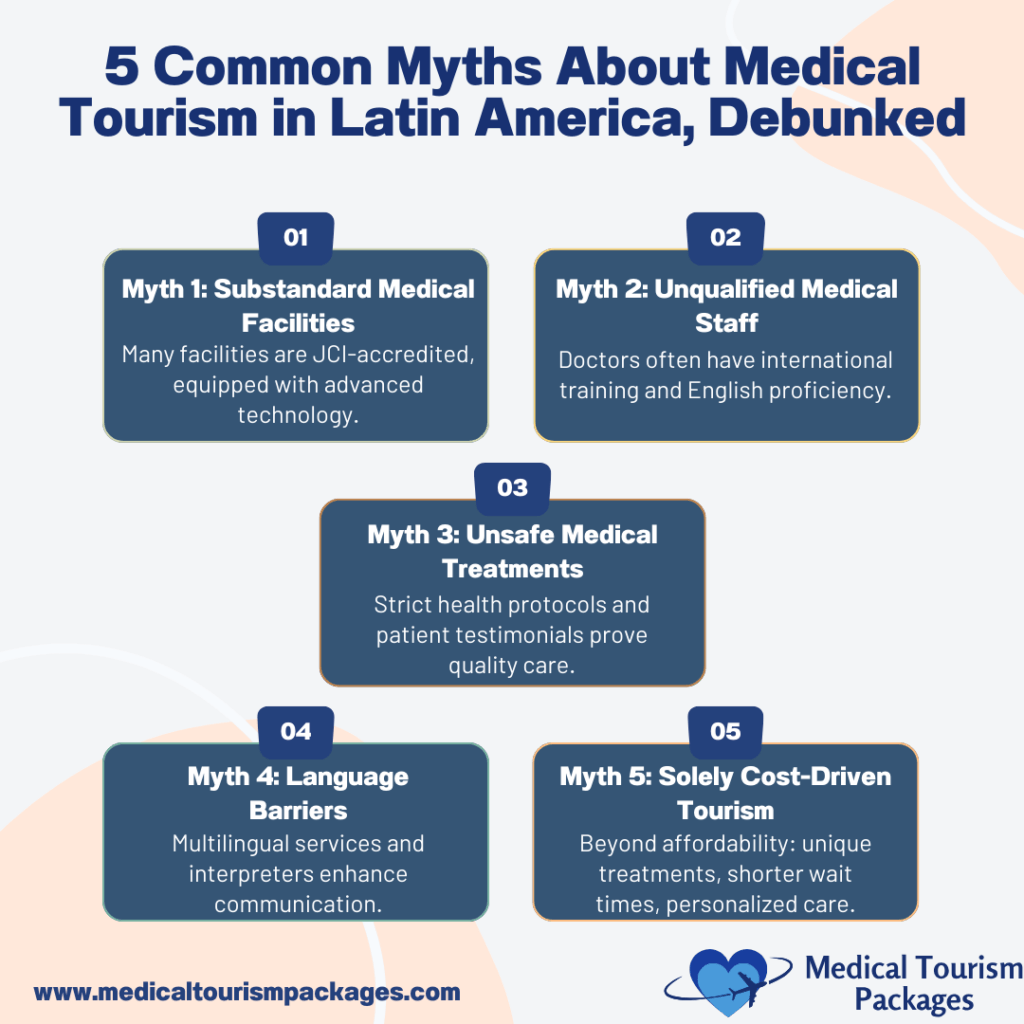
No, medical facilities in Latin America are not substandard. Hospitals across Mexico, Colombia, Costa Rica, and Panama hold JCI accreditation, the same gold standard that certifies top American hospitals. Many facilities use the same equipment found in leading US medical centers.
How Many Latin American Hospitals Hold JCI Accreditation?
Over 20 hospitals across Latin America hold Joint Commission International (JCI) accreditation. JCI certification verifies that a hospital meets 1,200+ global healthcare standards for patient safety, equipment protocols, and infection control.
| Country | JCI Facilities | Notable Hospital | Key Distinction |
|---|---|---|---|
| Mexico | 8+ | Multiple across major cities | Most JCI facilities in Latin America |
| Colombia | 6-7 | Fundacion Santa Fe de Bogota | #1 orthopedic program (Newsweek 2025) |
| Panama | 2 | Hospital Punta Pacifica | Johns Hopkins affiliation since 2002 |
| Costa Rica | 2 | Hospital Clinica Biblica | First JCI in Central America (2007) |
| Brazil | Multiple | Sao Paulo medical centers | World leader in cosmetic surgery |
What International Partnerships Do Latin American Hospitals Maintain?
Latin American hospitals maintain partnerships with some of the world’s most respected medical institutions. These affiliations ensure that local facilities follow the same protocols and quality standards used in top US hospitals.
Hospital Punta Pacifica in Panama City has been affiliated with Johns Hopkins Medicine International for over 20 years, since 2002. It is the only hospital in Central America with this affiliation. Johns Hopkins provides consulting on clinical programs, staff development, and patient safety. The hospital also directly bills US Medicare Advantage plans for emergencies.
Hospital Internacional de Colombia in Bucaramanga is part of the Mayo Clinic Care Network. It has earned JCI accreditation six consecutive times. Clinica Hospital San Fernando in Panama City partners with Tulane Medical Center and Baptist Health South Florida.
Do Medical Professionals in Latin America Lack Proper Training? (Myth 2)
No, medical professionals in Latin America do not lack proper training. Many specialists complete residencies or fellowships at institutions like Mayo Clinic, Johns Hopkins, or Cleveland Clinic. They hold board certifications from multiple countries and publish research in international medical journals.
Where Do Latin American Medical Professionals Complete Their Training?
Latin American medical professionals complete training at prestigious institutions worldwide. Surgeons in Bogota, Medellin, and Panama City commonly hold fellowships from US and European hospitals. Medical education programs in the region often require more clinical hours than US counterparts.
Specialists regularly participate in international conferences and research projects. Many hold certifications from multiple countries. This allows them to practice internationally and bring diverse perspectives to patient care. The result is a highly qualified workforce trained to global standards.
How Common Is English Proficiency Among Medical Staff?
English proficiency is standard among medical staff at major medical tourism hospitals. Medical schools in Colombia, Costa Rica, and Panama increasingly require English language courses. Hospitals serving international patients maintain dedicated bilingual departments.
At facilities like Hospital Clinica Biblica in San Jose and CIMA Hospital in Escazu, staff speak fluent English. Many also speak French, Portuguese, and German. This multilingual capability helps international patients communicate with their entire care team, from surgeons to nurses to administrative staff.
Are Medical Treatments in Latin America Unsafe and Unregulated? (Myth 3)
No, medical treatments at accredited Latin American facilities are not unsafe. JCI-accredited hospitals in Colombia, Costa Rica, Panama, and Mexico follow the same safety protocols as top US hospitals. Treatment outcomes consistently match or exceed international benchmarks.
What Safety Protocols Do Accredited Facilities Follow?
Accredited facilities follow strict safety protocols that align with international best practices. These cover every phase of patient care, from pre-operative assessment to post-surgical recovery.
- Government oversight: National health ministries in Colombia and Mexico actively regulate and invest in healthcare infrastructure
- International accreditation audits: JCI, ISO 9001, AAAASF, and ISQua conduct regular compliance reviews
- Infection control: Standardized protocols for sterilization, medication management, and surgical safety
- Continuous improvement: Facilities undergo regular audits and track patient outcomes transparently
- Emergency response: Staff receive ongoing training in emergency procedures and patient safety
How Do Treatment Outcomes Compare to the United States?
Treatment outcomes at accredited Latin American hospitals match or exceed those in the United States. A study of 460 international plastic surgery patients in Cartagena found a 98.2% referral rate, meaning nearly all patients would recommend their care to others.
Costa Rica ranks #54 on the Global Peace Index (2025) and holds US State Department Level 2 status. This makes it the safest Latin American destination for medical tourists. Colombia has significantly improved safety in major cities, with dedicated medical tourism zones in Medellin and Bogota.
Do Language Barriers Make Medical Tourism Too Difficult? (Myth 4)
No, language barriers do not make medical tourism in Latin America difficult. Major hospitals operate as multilingual environments with English-speaking staff, professional interpreters, and all documents available in the patient’s preferred language.
What Multilingual Services Do Major Hospitals Provide?
Major hospitals provide full multilingual services for international patients. Facilities like Hospital Punta Pacifica in Panama City and Hospital Clinica Biblica in San Jose maintain dedicated international patient departments. Bilingual coordinators manage all aspects of care.
All medical documents, consent forms, and discharge instructions are provided in English. Many facilities also offer multilingual websites, so patients can research procedures and facilities before traveling. This support extends to French, Portuguese, German, and other languages.
How Do Professional Medical Interpreters Support International Patients?
Professional medical interpreters are available 24 hours a day, 7 days a week at major medical tourism facilities. These interpreters receive specialized training in medical terminology, anatomy, and procedure-specific vocabulary.
Interpreters accompany patients during consultations and help explain treatment options. They ensure informed consent is genuinely informed. Many facilities also use video interpretation technology. This provides immediate access to interpreters for less common languages. The result is clear communication throughout every phase of care.
Is Cost the Only Advantage of Medical Tourism in Latin America? (Myth 5)
No, cost is not the only advantage of medical tourism in Latin America. While procedures cost 40-70% less than in the United States, patients also benefit from shorter wait times, personalized care, access to innovative treatments, and recovery in appealing destinations.
How Much Can You Save on Common Medical Procedures?
You can save 40-80% on common medical procedures in Latin America compared to US prices. Even including flights and accommodation, patients save over $20,000 on major procedures.
| Procedure | Latin America Cost | US Cost | Savings |
|---|---|---|---|
| Knee Replacement | $10,500 (Colombia) | $35,000-$50,000 | 70-79% |
| Hip Replacement | $11,000-$13,000 | $40,000-$60,000 | 72-78% |
| Dental Implants | $750-$1,200 (Mexico) | $3,500-$5,000 | 76-79% |
| Rhinoplasty | $3,000-$4,500 | $8,000-$15,000 | 62-70% |
| Gastric Sleeve | $4,500-$6,500 | $15,000-$25,000 | 70-74% |
| Breast Augmentation | $3,000-$5,000 | $8,000-$12,000 | 58-63% |
Savings vary by country. Colombia and Mexico offer the deepest discounts at 60-80%. Panama ranges from 40-70% but uses the US dollar, which eliminates currency exchange risk. Costa Rica and Brazil typically offer 50-70% savings across most procedures. See our medical tourism vs. US healthcare cost comparison for detailed pricing breakdowns.
What Benefits Beyond Cost Savings Does Latin America Offer?
The benefits of medical tourism in Latin America extend far beyond cost savings. Patients consistently report advantages that make the overall experience superior to care in their home countries.
- Shorter wait times: Procedures scheduled within 2-4 weeks versus months or years in the US and Canada
- Personalized care: Longer consultation times and lower patient-to-staff ratios
- Innovative treatments: Access to stem cell therapies, regenerative medicine, and advanced protocols
- Recovery destinations: Heal in tropical settings that promote wellbeing
- No currency risk in Panama: Panama uses the US dollar as its official currency
- No visa required: US citizens do not need visas for any major Latin American medical tourism destination
How Do You Choose a Safe and Accredited Hospital in Latin America?
You choose a safe hospital in Latin America by verifying JCI accreditation, checking international affiliations, and reviewing patient satisfaction data. A medical tourism coordinator can help you compare options and arrange your entire trip.
What Should You Verify Before Choosing a Medical Tourism Provider?
You should verify several key factors before choosing a medical tourism provider in Latin America:
- JCI or equivalent accreditation: Confirms the facility meets 1,200+ global healthcare standards
- International affiliations: Partnerships with Johns Hopkins, Mayo Clinic, or similar institutions
- Patient satisfaction data: Look for referral rates above 90% and published outcomes
- Multilingual staff: Confirm English-speaking medical teams and international patient departments
- Transparent pricing: Request detailed cost breakdowns including all fees
What Questions Should You Ask Your Medical Tourism Coordinator?
You should ask your medical tourism coordinator specific questions to ensure safe, quality care:
- Accreditation details: Which certifications does the hospital hold, and when were they last renewed?
- Complication rates: What are the published complication rates for your specific procedure?
- Post-operative care: What follow-up protocols are in place after discharge?
- Emergency procedures: What happens if complications arise during recovery?
- Insurance coverage: Does the facility accept or bill international insurance plans?
Frequently Asked Questions About Medical Tourism Myths in Latin America
What exactly is medical tourism in Latin America and how does it work?
Medical tourism in Latin America means traveling to countries like Mexico, Colombia, Costa Rica, or Panama for medical care. Patients research JCI-accredited facilities, consult with specialists remotely, then travel for treatment. Most hospitals offer packages that include airport transfers, accommodation, and bilingual support. Procedures cost 40-70% less than US prices.
Are medical facilities in Latin America truly safe and reliable for international patients?
Yes, leading medical facilities in Latin America are safe and reliable. Over 20 hospitals hold JCI accreditation across Mexico, Colombia, Costa Rica, and Panama. Hospital Punta Pacifica in Panama has been affiliated with Johns Hopkins Medicine International since 2002. Hospital Internacional de Colombia is part of the Mayo Clinic Care Network. Patient safety records match or exceed international benchmarks.
How do Latin American medical facilities handle language barriers for international patients?
Latin American medical facilities handle language barriers through dedicated international patient departments with bilingual staff. Professional medical interpreters are available 24/7. All documents, consent forms, and instructions are provided in English. Many hospitals also offer French, German, and Portuguese support. Most specialists at JCI-accredited facilities speak fluent English from US or European training.
Are medical treatments in Latin America as safe as those performed in the United States or Europe?
Yes, medical treatments at JCI-accredited Latin American facilities are as safe as those in the US or Europe. These hospitals follow identical safety protocols established by international healthcare organizations. A Cartagena study of 460 patients found a 98.2% referral rate. Costa Rica holds US State Department Level 2 status, the safest level for Latin American medical tourism destinations.
What types of medical procedures are most commonly performed for international patients in Latin America?
The most common procedures for international patients in Latin America include dental treatments (implants, veneers) at 70-79% savings, plastic surgery (rhinoplasty, breast augmentation, BBL), bariatric surgery (gastric sleeve, bypass), orthopedic surgeries (knee and hip replacements), fertility treatments (IVF, egg donation), and cardiac procedures. Brazil leads globally in cosmetic surgery volume.
What are the most persistent medical tourism myths about healthcare in Latin America?
The most persistent medical tourism myths are that Latin American facilities are substandard, professionals lack training, treatments are unsafe, language barriers are insurmountable, and the only benefit is low cost. In reality, over 20 JCI-accredited hospitals partner with Johns Hopkins and Mayo Clinic. Specialists train internationally, speak English, and deliver outcomes matching US standards.
How much can you save on medical procedures in Latin America compared to the United States?
Patients save 40-80% on medical procedures in Latin America compared to US prices. A knee replacement costs $10,500 in Colombia versus $35,000-$50,000 in the United States. Dental implants in Mexico cost $750-$1,200 versus $3,500-$5,000 in the US. Even after including flights and accommodation, patients save over $20,000 on major procedures.
Do you need a visa to travel to Latin America for medical tourism?
No, US and Canadian citizens do not need visas for medical tourism in Mexico, Colombia, Costa Rica, Panama, or Brazil. Most countries allow stays of 90-180 days with a valid passport. Panama uses the US dollar, which eliminates currency exchange risk. Costa Rica, Colombia, and Mexico accept major US credit cards at most medical facilities.
Ready to Start Your Medical Tourism Journey in Latin America?
Medical Tourism Packages coordinates your entire healthcare journey across Latin America. We connect you with JCI-accredited hospitals in Colombia, Costa Rica, Panama, and Mexico. Our team arranges travel, accommodations, and bilingual support throughout your treatment and recovery.
Contact us today for a free consultation and personalized medical tourism package.