Book Appointment Now

Which country has the best medical tourism in Latin America?
 By
By
Medical tourism in Latin America saves Americans 50-80% on procedures at JCI-accredited hospitals, with the $10.34 billion market projected to reach $41.3 billion by 2032.
Colombia leads for orthopedic surgery with Fundacion Santa Fe ranked #1 in Latin America. Mexico welcomes 1.2 million medical tourists yearly. Costa Rica excels in dental care. Brazil dominates cosmetic surgery. Panama offers Johns Hopkins-affiliated care at Pacifica Salud.
This guide compares the top five Latin American countries for medical tourism. You will find 2026 procedure costs, JCI-accredited hospital lists, and safety ratings to help you choose the best destination for your healthcare needs.
Why Are Americans Choosing Latin America for Medical Tourism?
Americans are choosing Latin America for medical tourism because of 50-80% cost savings at JCI-accredited hospitals, shorter wait times measured in days rather than months, geographic proximity under 4 hours from most US cities, time zone alignment for recovery, and English-speaking physicians trained in the US or Europe.
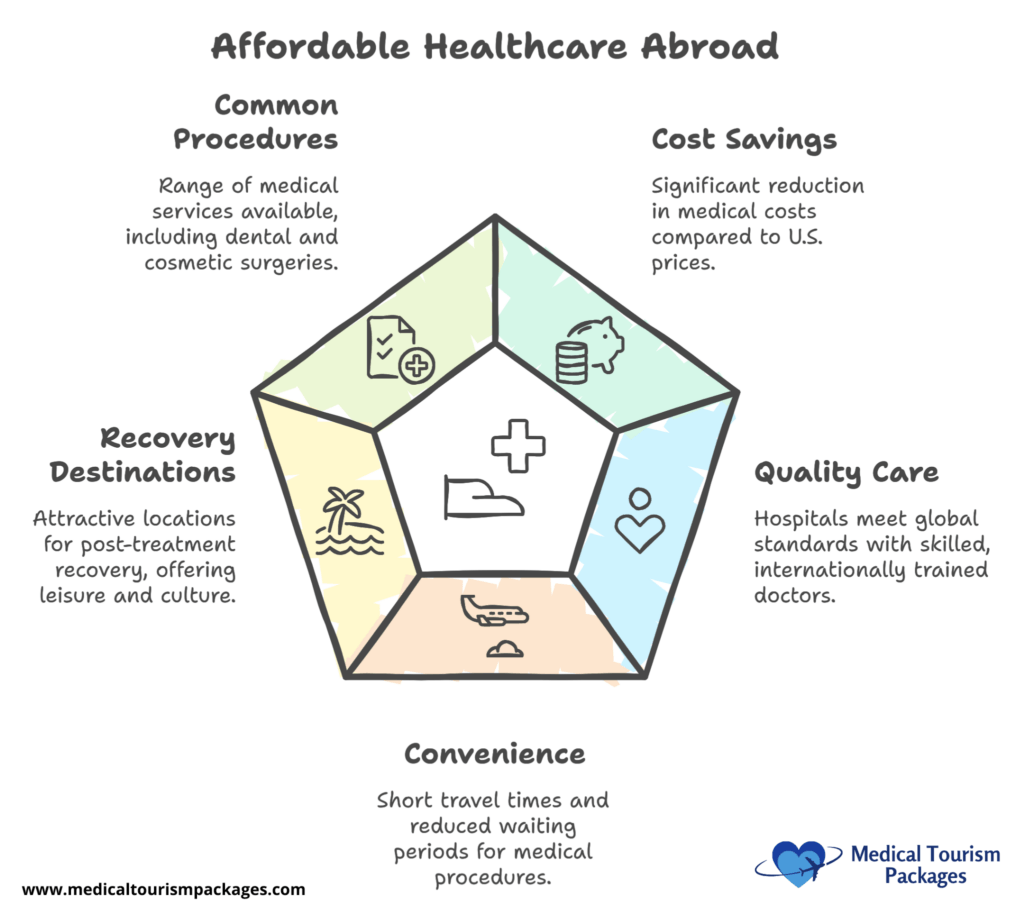
Healthcare costs in the United States continue rising. Out-of-pocket spending now averages $1,650 to $1,700 per person. Many procedures remain unaffordable for the 27 million uninsured Americans.
Latin American hospitals offer the same procedures at 50-80% lower costs. A knee replacement costing $35,000 in the US averages $10,500 in Colombia and $12,000 in Mexico.
Wait times present another advantage. While US patients wait months for elective surgeries, Latin American facilities with board-certified surgeons schedule procedures within days or weeks.
Geographic proximity makes Latin America practical for American patients. A flight from Miami to Bogota takes under 4 hours. Houston to Mexico City is even shorter.
How Big Is the Latin America Medical Tourism Market?
The Latin America medical tourism market is valued at $10.34 billion as of 2024 and is projected to reach $41.30 billion by 2032, growing at an 18.9% compound annual growth rate. Over 14 million people worldwide travel for medical procedures each year, with Latin America capturing growing medical travel market share.
Mexico leads in volume with 1.2 million medical tourists annually. Colombia’s medical tourism market is projected to reach $6.3 billion by 2032. Costa Rica generates over $437 million annually from health tourism.
What Factors Should You Consider When Choosing a Destination?
You should consider six key factors when choosing a medical tourism destination: hospital JCI accreditation status, procedure specialization by country, total cost including travel and accommodation, flight logistics and travel time, English language support at medical facilities, and safety ratings from the US State Department and Global Peace Index.
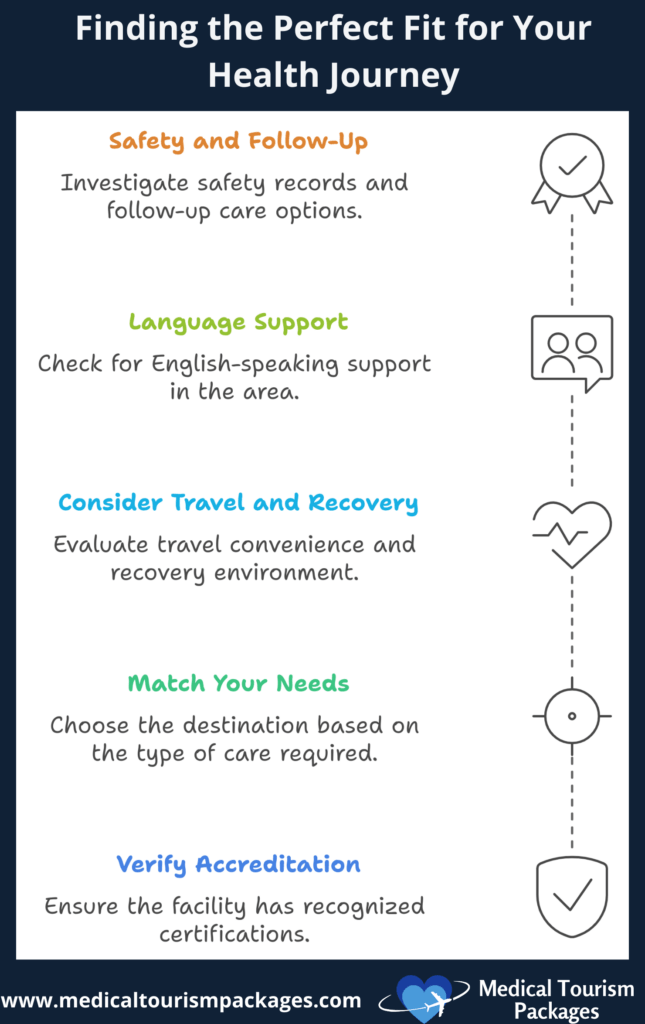
Why Is JCI Accreditation Important?
JCI accreditation is important because it verifies that hospitals meet 1,200+ global healthcare standards for patient safety, equipment protocols, staff qualifications, and infection control. Joint Commission International certification is rare in Latin America, with only about 20-25 hospitals across the five major destinations holding active accreditation.
Only about 9 hospitals in Mexico, 5-6 in Colombia, 4-6 in Brazil, 2 in Panama, and 2 in Costa Rica hold active JCI accreditation. The Medical Tourism Association recommends focusing on these flagship institutions.
Which Country Specializes in Which Procedures?
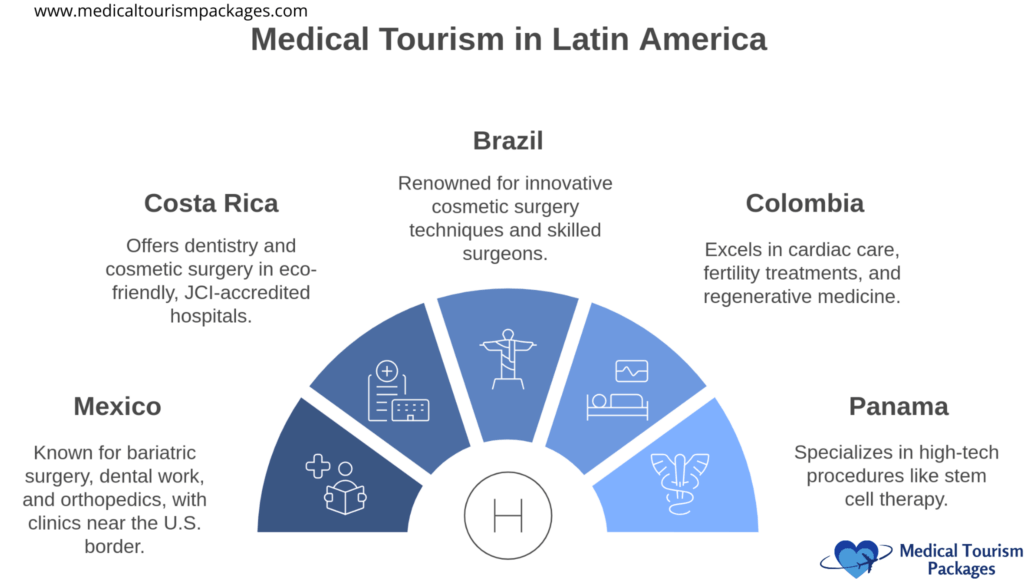
The countries specialize as follows: Colombia leads in orthopedics and cardiac care with Fundacion Santa Fe ranked #1 for orthopedic surgery. Mexico dominates bariatric surgery and dental work. Costa Rica excels in dental restoration. Brazil ranks #2 globally for cosmetic surgery. Panama focuses on stem cell therapy and high-tech treatments. Specialized procedures such as hand surgery in Latin America and rheumatology treatment across the region are also available at accredited facilities.
Tijuana performs gastric sleeves for $4,000-$5,500 versus $16,000+ in the US. Los Algodones serves over 1 million dental patients yearly. Hospital Clinica Biblica and Hospital CIMA hold JCI accreditation in Costa Rica.
Which Are the Top Five Countries for Medical Tourism in Latin America?
The top five countries for medical tourism in Latin America are Colombia for complex surgery and orthopedics, Mexico for bariatric and dental procedures, Costa Rica for dental care and safe recovery, Brazil for cosmetic surgery, and Panama for US-style care through its Johns Hopkins affiliation at Pacifica Salud hospital.
| Country | Specialty | Savings | Safety | Top Hospital | Best For |
|---|---|---|---|---|---|
| Colombia | Orthopedics, Cardiac | 60-80% | Level 3* | Fundacion Santa Fe (#1 Ortho) | Complex surgery, joint replacement |
| Mexico | Bariatric, Dental | 70-80% | Varies | ABC Medical Center | Gastric sleeve, dental implants |
| Costa Rica | Dental, General Health | 50-70% | #54 (Level 2) | Hospital Clinica Biblica | Dental restoration, safe recovery |
| Brazil | Cosmetic Surgery | 50-70% | Standard | Albert Einstein (#1 LatAm) | Plastic surgery, BBL |
| Panama | High-tech, Cardiac | 40-50% | #84 (Level 2) | Pacifica Salud | US-style care, stem cell |
Why Is Colombia the Best for Complex Surgery?
Colombia is the best for complex surgery because it has the highest concentration of JCI-accredited hospitals in Latin America, the #1-ranked orthopedic program at Fundacion Santa Fe de Bogota per Newsweek/Statista 2025, and procedures costing 60-80% less than US prices due to the favorable Colombian peso exchange rate.
Fundacion Cardioinfantil leads in cardiac procedures. Hospital Internacional de Colombia holds JCI accreditation for the sixth consecutive time and partners with the Mayo Clinic Care Network. Colombian hospitals also perform specialized procedures such as maxillofacial surgery in Colombia and hand surgery in Colombia at significant savings.
A knee replacement averages $10,500 versus $35,000 in the US. A hip replacement costs $11,000-$13,000 versus $40,000-$60,000 stateside.
Bogota and Medellin serve as the primary medical hubs. Both cities have safe medical zones with dedicated international patient departments offering airport pickups and translation services.
Why Does Mexico Lead in Patient Volume?
Mexico leads in patient volume because of its shared border with the United States, established medical tourism infrastructure serving 1.2 million patients annually, easy drive-across access for Americans in border states, and the deepest discounts on bariatric surgery and dental work ranging from 70-80% savings versus US prices.
Border cities like Tijuana, Mexicali, and Los Algodones provide easy access for Americans. Many patients drive across for dental work or bariatric surgery and return home the same week.
Mexico City, Guadalajara, and Monterrey offer more complex procedures at JCI-accredited hospitals, including maxillofacial surgery in Mexico. ABC Medical Center maintains an affiliation with Houston Methodist renewed through 2030. See our complete guide to medical tourism in Mexico for detailed hospital and procedure information.
Gastric sleeve surgery costs $4,000-$5,500 in Tijuana versus $16,000-$22,000 in the US. Dental implants average $750-$1,200 versus $3,500-$5,000 stateside.
What Makes Costa Rica the All-Around Favorite?
Costa Rica is the all-around favorite because it combines JCI-accredited hospitals with the safest environment in Central America at Global Peace Index rank #54, political stability, natural beauty for recovery in rainforests and beaches, English-speaking medical staff, and dental savings of 50-70% versus US prices at specialized clinics.
The US State Department rates Costa Rica Level 2, similar to most European destinations. Hospital Clinica Biblica and Hospital CIMA hold JCI accreditation in San Jose. Our Costa Rica medical tourism guide covers planning steps and hospital details.
Full-mouth restoration (All-on-4) costs $9,000-$13,000 versus $30,000-$45,000 in the US. Dental implants average $800-$1,200 per tooth.
The “Pura Vida” brand integrates healthcare with eco-tourism. Patients access accredited hospitals alongside the country’s eco-tourism infrastructure, generating over $437 million annually for the country.
Why Is Brazil the Cosmetic Surgery Capital?
Brazil is the cosmetic surgery capital because it ranks #2 globally for plastic surgery volume, pioneered techniques like the Brazilian Butt Lift, and has Hospital Israelita Albert Einstein in Sao Paulo holding the #1 ranking as the best hospital in all of Latin America per Newsweek/Statista 2025 rankings.
Rio de Janeiro and Sao Paulo dominate cosmetic surgery. Brazilian plastic surgeons train extensively and emphasize natural-looking results that harmonize with each patient’s physique.
Rhinoplasty costs $3,000-$4,500 versus $8,000-$15,000 in the US. Patients often combine multiple cosmetic procedures in one trip to maximize savings.
Distance and language present challenges. Brazil requires longer flights and Portuguese, not Spanish, is the primary language. Top international hospitals provide English-speaking staff.
What Makes Panama Unique for US-Style Care?
Panama is unique for US-style care because Pacifica Salud is the only hospital in Latin America affiliated with Johns Hopkins Medicine International since 2006, the economy uses US dollars eliminating exchange rate risks, many physicians trained in the United States and speak fluent English, and the country offers modern infrastructure.
The Johns Hopkins partnership ensures US-standard protocols for patient safety and clinical governance. Panama City’s modern infrastructure includes the recently expanded Tocumen International Airport. Read our Panama medical tourism guide for full hospital listings and cost breakdowns.
Patients can save 40-50% on procedures compared to US prices. The trade-off is higher costs versus other Latin American options in exchange for Johns Hopkins oversight.
The country excels in cardiology, stem cell therapy, and hand surgery in Panama. Hospital San Fernando also holds JCI accreditation in Panama City.
How Do Costs Compare Across Countries?
Costs compare favorably across all five countries with savings ranging from 50-80% versus US prices. Colombia and Mexico offer the deepest discounts at 60-80% savings. Costa Rica averages 50-70% savings. Panama costs slightly more at 40-50% savings but includes US-standard Johns Hopkins oversight protocols.
| Procedure | US Cost | Mexico | Colombia | Costa Rica | Savings |
|---|---|---|---|---|---|
| Rhinoplasty | $8,000-$15,000 | $3,200-$5,000 | $3,000-$4,500 | $3,500-$5,500 | 60-75% |
| Knee Replacement | $35,000-$50,000 | $12,000-$15,000 | $10,500-$12,000 | $12,500-$14,000 | 65-70% |
| Hip Replacement | $40,000-$60,000 | $13,000-$15,000 | $11,000-$13,000 | $13,600-$15,000 | 70-75% |
| Gastric Sleeve | $16,000-$22,000 | $4,000-$5,500 | $4,500-$6,500 | $6,000-$8,000 | 70-75% |
| Dental Implant | $3,500-$5,000 | $750-$1,200 | $850-$1,000 | $800-$1,200 | 75-80% |
| All-on-4 | $30,000-$45,000 | $8,500-$12,000 | $7,500-$10,000 | $9,000-$13,000 | 70-75% |
What Do Common Procedures Cost in 2026?
Common procedures in 2026 cost 50-80% less in Latin America than in the United States. Knee replacements cost $10,500-$15,000 versus $35,000-$50,000 in the US. Dental implants cost $750-$1,200 versus $3,500-$5,000 per tooth. Gastric sleeve surgery costs $4,000-$6,500 versus $16,000-$22,000 in the US.
Rhinoplasty: US costs $8,000-$15,000. Mexico averages $3,200-$5,000. Colombia averages $3,000-$4,500. Costa Rica averages $3,500-$5,500. Savings range 60-75%.
Knee Replacement: US costs $35,000-$50,000. Mexico averages $12,000-$15,000. Colombia averages $10,500-$12,000. Costa Rica averages $12,500-$14,000. Savings range 65-70%.
Hip Replacement: US costs $40,000-$60,000. Mexico averages $13,000-$15,000. Colombia averages $11,000-$13,000. Costa Rica averages $13,600-$15,000. Savings range 70-75%.
Gastric Sleeve: US costs $16,000-$22,000. Mexico averages $4,000-$5,500. Colombia averages $4,500-$6,500. Costa Rica averages $6,000-$8,000. Savings range 70-75%.
Dental Implant: US costs $3,500-$5,000 per tooth. Mexico averages $750-$1,200. Colombia averages $850-$1,000. Costa Rica averages $800-$1,200. Savings range 75-80%.
Full Mouth Restoration (All-on-4): US costs $30,000-$45,000. Mexico averages $8,500-$12,000. Colombia averages $7,500-$10,000. Costa Rica averages $9,000-$13,000. Savings range 70-75%.
Which JCI-Accredited Hospitals Should You Consider?
You should consider hospitals from the verified list of approximately 20-25 JCI-accredited facilities across Latin America. The top institutions include Fundacion Santa Fe de Bogota (#1 for orthopedics), Hospital Israelita Albert Einstein (#1 overall), ABC Medical Center (Houston Methodist affiliate), and Pacifica Salud (Johns Hopkins affiliate).
| Country | JCI Hospitals | Top Facilities | US Affiliations |
|---|---|---|---|
| Colombia | 5-6 | Fundacion Santa Fe, Fundacion Cardioinfantil, Hospital Internacional | Mayo Clinic Network |
| Mexico | ~9 | ABC Medical Center, Medica Sur, Hospital Galenia | Houston Methodist |
| Brazil | 4-6 | Hospital Israelita Albert Einstein, Hospital Sirio-Libanes, HCor | – |
| Costa Rica | 2 | Hospital Clinica Biblica, Hospital CIMA | – |
| Panama | 2 | Pacifica Salud, Hospital San Fernando | Johns Hopkins |
Which Hospitals Have JCI Accreditation in Each Country?
The JCI-accredited hospitals by country include: Colombia has Fundacion Santa Fe, Fundacion Cardioinfantil, Hospital Pablo Tobon Uribe, Clinica Imbanaco, and Hospital Internacional de Colombia. Mexico has Medica Sur, Hospital Galenia, ABC Medical Center, and Christus Muguerza facilities. Brazil has Hospital Israelita Albert Einstein, Hospital Sirio-Libanes, and HCor.
Costa Rica (2 hospitals): Hospital Clinica Biblica and Hospital CIMA, both located in San Jose.
Panama (2 hospitals): Pacifica Salud (Johns Hopkins affiliate) and Hospital San Fernando in Panama City.
How Do You Plan a Medical Trip to Latin America?
You plan a medical trip to Latin America by following these six essential steps, starting 3-6 months before your intended procedure date.
- Start research 3-6 months in advance
- Select a JCI-accredited hospital based on your procedure needs
- Gather and translate your medical records
- Purchase medical tourism insurance
- Coordinate logistics with the hospital’s international patient department
- Arrange a travel companion for support
What Documents Do You Need?
You need the following documents prepared before your medical trip.
- Complete medical records including diagnosis history
- Recent lab results from the past 3-6 months
- Relevant imaging studies (X-rays, MRIs, CT scans)
- List of current medications and dosages
- Translated documents in Spanish (if required by destination)
A pre-travel medical consultation in your home country helps identify risks or contraindications before travel.
What Insurance Options Exist?
Insurance options for medical tourism include specialized policies that cover complications, revision procedures, extended hospital stays, and medical evacuation if needed. Most US health insurance does not cover elective procedures abroad. Providers like Global Protective Solutions offer medical tourism-specific coverage for unexpected complications after returning home.
Verify your existing coverage before traveling. Some plans offer partial reimbursement for procedures performed at accredited international facilities.
How Long Should You Plan to Stay?
You should plan to stay longer than the minimum recovery time recommended by your surgeon. Factor in time for each of these phases.
- 2-3 days for pre-operative consultations and tests
- The procedure day itself
- Standard recovery period (varies by surgery type)
- Follow-up appointments
- Buffer time for any minor complications
Bring a travel companion if possible. They can help with daily tasks, communicate with medical staff, and provide support during recovery.
Is Latin America Safe for Medical Tourism?
Yes, Latin America is safe for medical tourism when you choose JCI-accredited hospitals, stay within recommended medical zones in each city, work with hospital international patient departments for logistics, and follow US State Department travel advisories for your specific destination country and region.
How Do Safety Ratings Compare?
Safety ratings compare as follows: Costa Rica ranks #54 on the Global Peace Index 2025 and holds US State Department Level 2 status, making it the safest destination. Panama ranks #84 with Level 2 status. Colombia is Level 3 but has safe medical zones in Bogota and Medellin. Mexico varies by state.
Colombia: US State Department Level 3 (Reconsider Travel). However, medical zones in Bogota (Usaquen) and Medellin (El Poblado) are heavily policed and safe for medical tourists.
Mexico: Varies by state. Border states have higher advisories. Mexico City, Merida, and Guadalajara are Level 2-3. Research your specific destination.
Brazil: Major cities require standard precautions. Medical facilities in Sao Paulo and Rio are secure. Follow local advice for areas outside medical zones.
What Happens If Something Goes Wrong?
If something goes wrong, JCI-accredited hospitals have established protocols for managing complications including 24/7 emergency care, revision procedures, and extended stays. Medical malpractice processes differ from the US with slower resolution and lower payouts. Medical tourism insurance provides the best protection for unexpected issues.
Choose accredited hospitals to minimize risk. JCI certification requires strict safety protocols including infection control and surgical checklists.
Frequently Asked Questions About Medical Tourism in Latin America
Why do Americans choose Latin America for medical tourism?
Americans choose Latin America for medical tourism because of 50-80% cost savings at JCI-accredited hospitals, shorter wait times, geographic proximity under 4 hours from most US cities, time zone alignment for recovery, and English-speaking physicians trained in the US. The $10.34 billion market includes world-class facilities.
What are the most popular medical procedures in Latin America?
The most popular medical procedures in Latin America are dental implants, cosmetic surgeries including Brazilian Butt Lift and rhinoplasty, bariatric surgeries like gastric sleeve, orthopedic procedures including knee and hip replacement, and cardiac care. Mexico leads in bariatric and dental work. Brazil dominates cosmetic surgery. Colombia excels in orthopedics.
How do I choose the best country for medical tourism in Latin America?
You choose the best country by matching your procedure needs with each destination’s specialty. Colombia leads for orthopedics and cardiac care. Mexico offers the best value for bariatric surgery and dental work. Costa Rica combines dental care with safe recovery. Brazil excels in cosmetic surgery. Panama provides US-style care through Johns Hopkins.
What are the cost savings for medical tourism in Latin America?
The cost savings for medical tourism in Latin America range from 50-80% versus US prices. A knee replacement costs $10,500 in Colombia versus $35,000 in the US. Dental implants cost $750-$1,200 in Mexico versus $3,500-$5,000 in the US. Even including flights and accommodation, patients save $20,000+ on major procedures.
Is it safe to travel to Latin America for medical procedures?
Yes, it is safe to travel to Latin America for medical procedures when you choose JCI-accredited hospitals and stay within recommended medical zones. Costa Rica ranks #54 on the Global Peace Index 2025. Medical zones in Colombia and Mexico are heavily policed. Work with hospital international patient departments for secure logistics.
How do JCI-accredited hospitals in Latin America compare to US facilities?
JCI-accredited hospitals in Latin America meet the same 1,200+ global healthcare standards as US facilities for patient safety, equipment protocols, and staff qualifications. Hospital Israelita Albert Einstein ranks among the world’s best hospitals. Fundacion Santa Fe holds the #1 orthopedic ranking. Pacifica Salud maintains Johns Hopkins protocols.
What role do medical tourism facilitators play in the process?
Medical tourism facilitators play a coordinating role for your entire healthcare journey abroad. They handle hospital selection, appointment scheduling, medical record transfers, travel logistics, accommodation booking, airport transportation, and translation services. Certified facilitators partner with JCI-accredited hospitals and assist with insurance documentation and telemedicine follow-ups.
How Do You Get Started with Medical Tourism in Latin America?
Medical Tourism Packages coordinates medical travel across Colombia, Panama, Costa Rica, Mexico, and Argentina.
Our team arranges hospital appointments, travel logistics, accommodation, and bilingual support. We verify credentials, coordinate medical records, and provide telemedicine follow-up connections.
Contact us today for a free consultation to discuss your procedure needs and get personalized destination recommendations.