Book Appointment Now



Rheumatology Surgery in Panama: Affordable, World-Class Care
 By
By
Rheumatology surgery in Panama costs 40-70% less than US prices, with JCI-accredited hospitals affiliated with Johns Hopkins and Cleveland Clinic treating 50,000+ international patients yearly.
Panama’s JCI-accredited hospitals, including Hospital Punta Pacifica (Johns Hopkins-affiliated) and Centro Medico Paitilla (Cleveland Clinic-affiliated), perform joint replacements starting at $5,000 for hip and $7,000 for knee, saving patients 40-70% versus US costs of $35,000-$57,000.
Our network connects you with board-certified orthopedic specialists at Hospital Punta Pacifica, Clinica Hospital San Fernando, and Centro Medico Paitilla, each verified for JCI accreditation and US academic affiliations. Below, you’ll find procedure costs, hospital profiles, a planning guide, recovery timelines, and answers to common questions about rheumatology surgery in Panama City.
What Is Rheumatology Surgery?
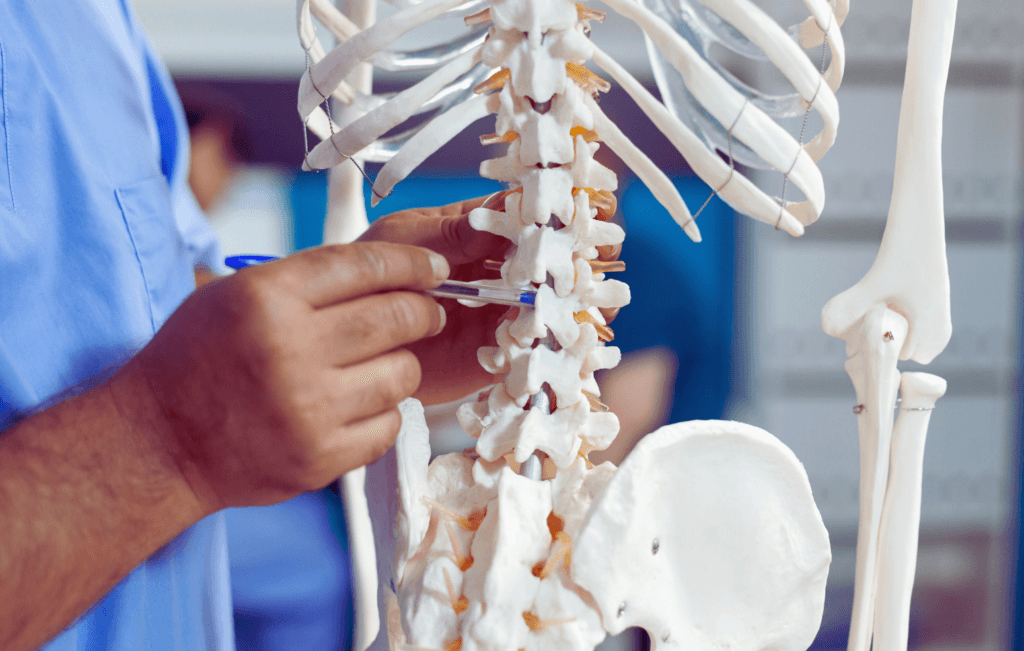
Rheumatology surgery treats diseases affecting the joints, muscles, and connective tissues. Procedures range from joint replacement to minimally invasive arthroscopy. Surgeons address conditions like rheumatoid arthritis, osteoarthritis, and tendon damage that no longer respond to medication or physical therapy.
What Conditions Does Rheumatology Surgery Treat?
Rheumatology surgery treats joint degeneration, autoimmune damage, and soft tissue injuries that cause chronic pain or loss of mobility. The most common conditions include osteoarthritis, rheumatoid arthritis, ankylosing spondylitis, lupus-related joint damage, and severe tendon or ligament tears.
Osteoarthritis is the leading reason patients seek joint replacement surgery. Cartilage wears down over time, causing bone-on-bone contact in the hip, knee, or shoulder. Rheumatoid arthritis, an autoimmune condition, attacks the synovial lining of joints and may require synovectomy or full replacement when damage is extensive. Specialists at JCI-accredited hospitals in Panama City treat all of these conditions using the same protocols as US medical centers.
When Is Surgery Recommended Over Other Treatments?
Surgery is recommended when pain is severe, mobility is significantly limited, and non-surgical treatments have failed. Non-surgical options include anti-inflammatory medications, corticosteroid injections, physical therapy, and biologic drugs for autoimmune conditions. When these no longer provide relief, surgery becomes the next step.
Board-certified specialists conduct thorough preoperative evaluations before recommending surgery. Imaging studies, blood panels, and functional assessments help determine whether joint replacement, arthroscopy, or soft tissue repair is appropriate. Patients who have lived with significant pain for six months or more without improvement from conservative care are typically considered surgical candidates. Our guide for American medical tourists in Panama covers what to expect when seeking care in Panama City.
Why Do Patients Choose Panama for Rheumatology Surgery?
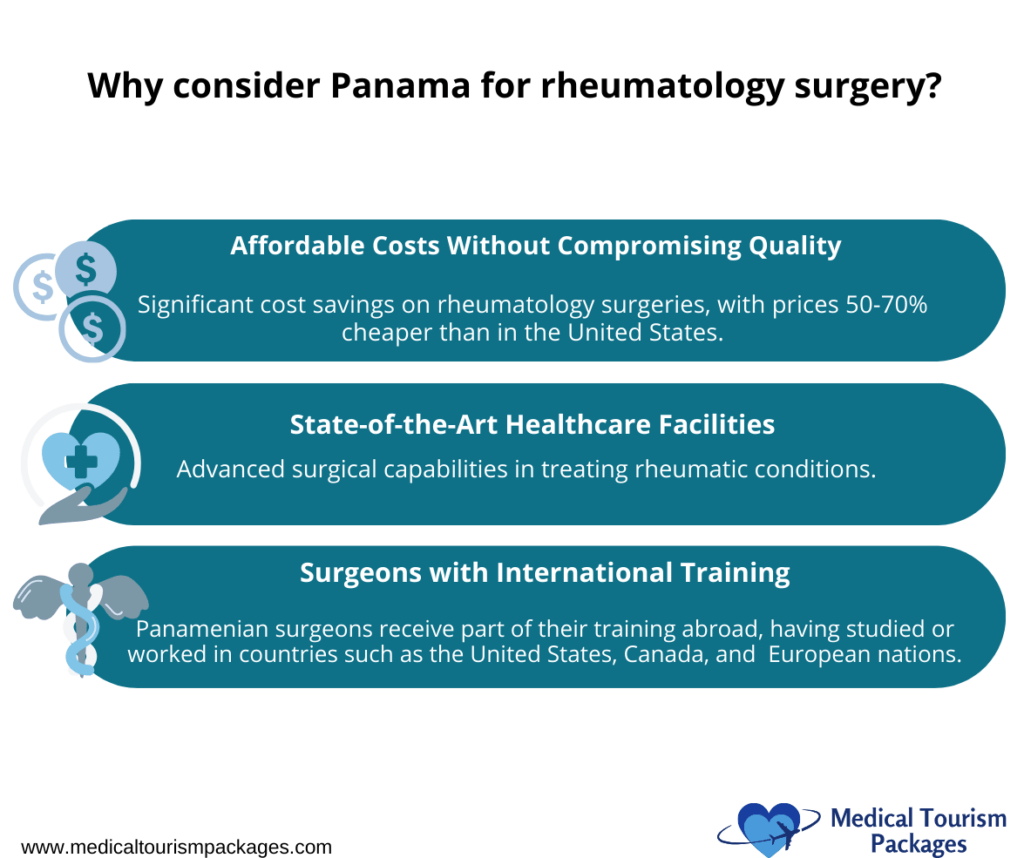
Patients choose Panama for rheumatology surgery because of 40-70% cost savings compared to the United States, JCI-accredited hospitals, and surgeons trained at top US institutions. Panama uses the US dollar, eliminating currency exchange risk, and offers English-speaking staff at private hospitals.
How Much Can You Save on Rheumatology Surgery in Panama?
You can save 40-70% on rheumatology surgery in Panama compared to the United States. A hip replacement that costs $40,000-$57,000 in the US runs $5,000-$20,000 in Panama. Knee replacements and arthroscopic procedures show similar savings.
| Procedure | Panama Cost (USD) | US Cost (USD) | Savings |
|---|---|---|---|
| Hip Replacement | $5,000–$20,000 | $40,000–$57,000 | 40–70% |
| Knee Replacement | $7,000–$12,000 | $35,000–$45,000 | 40–70% |
| Shoulder Replacement | $6,000–$10,000 | $25,000–$40,000 | 40–70% |
| Arthroscopic Surgery (knee) | $2,500–$7,500 | $20,000–$50,000 | 50–85% |
| ACL Reconstruction | $4,500–$7,500 | $20,000–$50,000 | 60–85% |
| Meniscus Repair | $2,500–$3,800 | $5,000–$18,000 | 50–80% |
What Makes Panama’s Private Hospitals Different from the US?
Panama’s private hospitals are different because they hold JCI (Joint Commission International) accreditation, the same standard used by top US hospitals. They use FDA-approved implants and surgical devices, and about 90% of specialists at private Panama City hospitals completed training in the United States or Europe.
Hospital Punta Pacifica holds a formal affiliation with Johns Hopkins Medicine International and has been JCI-accredited since 2011. Clinica Hospital San Fernando has affiliations with Tulane Medical Center and Baptist Health South Florida. Panama Law 419, enacted in 2024, allows private hospitals to access the same FDA-approved medications and devices cleared in the US, the European Union, and Japan. Patients receive the same implant brands they would use at home.
Why Does Panama’s USD Economy Benefit Medical Tourists?
Panama’s USD economy benefits medical tourists because there is no currency exchange. Panama uses the US dollar as its official currency, the only country in Latin America to do so. Prices quoted in dollars are the prices you pay, with no exchange rate fluctuations or conversion fees to worry about.
This is a significant advantage over other medical tourism destinations like Colombia, Mexico, or Thailand, where the exchange rate changes daily. In Panama, a $10,000 surgery quote remains exactly $10,000. Major credit cards are accepted at all JCI-accredited hospitals. ATMs dispense US dollars throughout Panama City.
How Much Does Rheumatology Surgery Cost in Panama?
Rheumatology surgery costs 40-70% less in Panama than in the United States. Hip replacements start at $5,000, knee replacements at $7,000, and arthroscopic procedures at $2,500. All pricing is in US dollars, with no currency exchange risk. Learn more about rheumatology surgery procedures and what to expect before booking your trip.
What Does Hip Replacement Cost in Panama?
Hip replacement costs $5,000-$20,000 in Panama versus $40,000-$57,000 in the United States, a savings of 40-70%. Pricing varies by implant type, hospital, and whether a robotic-assisted approach is used. The HUGO RAS robotic system at Hospital Punta Pacifica may affect total cost.
| Hip Replacement Type | Panama (USD) | US (USD) | Savings |
|---|---|---|---|
| Standard Total Hip Replacement | $5,000–$12,000 | $40,000–$50,000 | ~70% |
| Robotic-Assisted Hip Replacement | $12,000–$20,000 | $45,000–$57,000 | ~55–65% |
| Hip Revision Surgery | $10,000–$18,000 | $50,000–$65,000 | ~65–70% |
What Does Knee Replacement Cost in Panama?
Knee replacement costs $7,000-$12,000 in Panama versus $35,000-$45,000 in the United States, saving patients 40-70%. Partial knee replacement (unicompartmental) typically costs less than total knee replacement. Implants from Zimmer Biomet, Stryker, and Smith and Nephew are available at Panama City hospitals.
| Knee Replacement Type | Panama (USD) | US (USD) | Savings |
|---|---|---|---|
| Total Knee Replacement | $7,000–$12,000 | $35,000–$45,000 | ~65–70% |
| Partial (Unicompartmental) Knee Replacement | $6,000–$9,000 | $25,000–$35,000 | ~65–70% |
| Bilateral Knee Replacement (both knees) | $12,000–$20,000 | $65,000–$80,000 | ~70–75% |
What Does Arthroscopic Surgery Cost in Panama?
Arthroscopic surgery costs $2,500-$7,500 in Panama versus $20,000-$50,000 in the United States. ACL reconstruction runs $4,500-$7,500 and meniscus repair runs $2,500-$3,800. These minimally invasive procedures have a faster recovery time than open surgery.
| Procedure | Panama (USD) | US (USD) | Savings |
|---|---|---|---|
| Knee Arthroscopy | $2,500–$7,500 | $20,000–$50,000 | 50–85% |
| ACL Reconstruction | $4,500–$7,500 | $20,000–$50,000 | 60–85% |
| Meniscus Repair | $2,500–$3,800 | $5,000–$18,000 | 50–80% |
| Shoulder Arthroscopy | ~$5,000 | ~$15,000 | ~65% |
What Is Included in a Medical Tourism Package?
Medical tourism packages in Panama include surgery, hospital stay, rehabilitation, and coordinated travel logistics. All-inclusive packages at Hospital Punta Pacifica and Clinica Hospital San Fernando eliminate the need to arrange services separately.
- Surgical fees: Surgeon, anesthesia, and operating room costs
- Implants and prosthetics: FDA-approved hardware where applicable
- Hospital stay: Inpatient recovery room and nursing care
- Pre-operative consultation: Initial evaluation and diagnostic tests
- Physical therapy: Rehabilitation sessions during hospital stay
- Airport transfers: VIP pickup and hospital transport included
- Accommodation: 4-star hotel near the hospital
- Concierge and liaison services: Patient coordinator for scheduling and support
- Translation services: Interpreter available for non-English speakers
What Types of Rheumatology Surgeries Are Available in Panama?
Panama’s JCI-accredited hospitals offer the full range of rheumatology surgeries, including joint replacement, arthroscopic procedures, soft tissue and tendon repair, and synovectomy. Robotic-assisted surgery is available at Hospital Punta Pacifica using the HUGO RAS system.
How Are Joint Replacements Performed in Panama?
Joint replacements are performed in Panama under general or spinal anesthesia, using the same implant systems found at US hospitals. Surgeons remove damaged cartilage and bone and install prosthetic components made by brands like Zimmer Biomet and Stryker. Most patients walk within 24 hours after surgery.
Hospital Punta Pacifica offers robotic-assisted joint replacement using the HUGO RAS system. This technology allows surgeons to plan the procedure in 3D before making an incision and to place implants with greater precision. Robotic surgery reduces soft tissue trauma, lowers the risk of malalignment, and may speed up recovery. Board-certified orthopedic specialists at Punta Pacifica have performed thousands of joint replacement procedures.
What Is Arthroscopic Surgery and When Is It Used?
Arthroscopic surgery is a minimally invasive procedure where a surgeon inserts a small camera and tools through tiny incisions to treat joint damage. It is used for torn ligaments, meniscus tears, cartilage damage, and shoulder impingement. Recovery is faster than open surgery, typically 4-8 weeks.
Arthroscopy is performed at all three major Panama City hospitals. The procedure works well for patients with ACL tears, meniscus tears, rotator cuff injuries, and early-stage joint damage that does not yet require full replacement. Many patients who travel to Panama for arthroscopic surgery can return home within 5-7 days after the procedure.
What Does Soft Tissue and Tendon Repair Involve?
Soft tissue and tendon repair involves reattaching or reconstructing damaged tendons and ligaments around joints. Common procedures include rotator cuff repair, Achilles tendon repair, and patellar tendon reconstruction. Surgeons use sutures, anchors, or grafts depending on the severity of the tear.
These procedures are often performed arthroscopically when possible, reducing incision size and recovery time. Open repair is used for complete ruptures or complex reconstructions. Specialists at Clinica Hospital San Fernando and Centro Medico Paitilla perform both techniques. Full recovery from tendon repair typically takes 3-6 months (three to six months) with supervised physical therapy.
What Is Synovectomy and Who Needs It?
Synovectomy is a procedure that removes the inflamed synovial membrane lining a joint. It is used for rheumatoid arthritis patients whose joint lining remains chronically inflamed despite medication. Removing the synovium reduces pain, swelling, and further joint destruction without replacing the entire joint.
Synovectomy is performed arthroscopically in most cases, meaning small incisions and a shorter recovery. It works best for patients in the early-to-middle stages of rheumatoid arthritis, where cartilage is not yet severely damaged. Board-certified rheumatology surgeons in Panama City evaluate each patient to determine whether synovectomy or joint replacement is the better option.
Which Hospitals in Panama Offer Rheumatology Surgery?
Three hospitals in Panama City are confirmed for rheumatology and orthopedic surgery: Hospital Punta Pacifica, Clinica Hospital San Fernando, and Centro Medico Paitilla. All three hold JCI accreditation and have US or international academic affiliations.
What Makes Hospital Punta Pacifica a Top Choice?
Hospital Punta Pacifica is the top choice for rheumatology surgery in Panama because it is JCI-accredited since 2011, affiliated with Johns Hopkins Medicine International, and the only hospital in Panama that can directly bill Medicare Advantage plans for emergency care. It is located in the Punta Pacifica neighborhood of Panama City.
The hospital houses approximately 250 physicians, most trained in the United States or Europe. It offers the HUGO RAS robotic surgery system for orthopedic procedures, a technology used at major US academic medical centers. Specialist teams cover hip replacement, knee replacement, shoulder replacement, arthroscopic surgery, and complex revision cases. The hospital serves as part of the Pacifica Salud network, which treats more than 50,000 international patients per year across Panama’s private hospital system.
What Does Clinica Hospital San Fernando Offer Orthopedic Patients?
Clinica Hospital San Fernando offers orthopedic patients JCI-accredited care with affiliations at Tulane Medical Center and Baptist Health South Florida. It was the first hospital in Panama to receive JCI accreditation in August 2011. The hospital is located in Panama City and serves patients traveling from across North America and the Caribbean.
San Fernando’s orthopedic program covers joint replacement surgery, arthroscopic procedures, and rheumatologic surgical care. Staff assist international patients with flight arrangements and insurance coordination. English-speaking staff and interpreter services are available. The hospital is a strong alternative for patients seeking JCI-accredited care with a different set of US academic partnerships than Punta Pacifica.
What Is Centro Medico Paitilla Known For?
Centro Medico Paitilla is known for its dual JCI accreditation and ISO certification (ISO 9001:2015 and ISO 14001:2015), its affiliation with the Cleveland Clinic, and recognition by the American Heart Association. It is located in the Paitilla neighborhood of Panama City.
The hospital offers comprehensive orthopedic services including primary and revision hip replacement. Its Cleveland Clinic affiliation brings access to clinical protocols and quality benchmarks used at one of the top hospitals in the United States. Patients who prioritize dual accreditation (JCI plus ISO) and an academic connection to a major US health system often choose Paitilla for complex orthopedic cases.
How Do You Plan Your Trip for Rheumatology Surgery in Panama?
You plan a rheumatology surgery trip to Panama by confirming your hospital, arranging medical records, booking flights to Tocumen International Airport, and organizing accommodation near your hospital. US and Canadian citizens do not need a visa. Plan for a stay of 10-14 days before flying home.
Do US and Canadian Citizens Need a Visa for Panama?
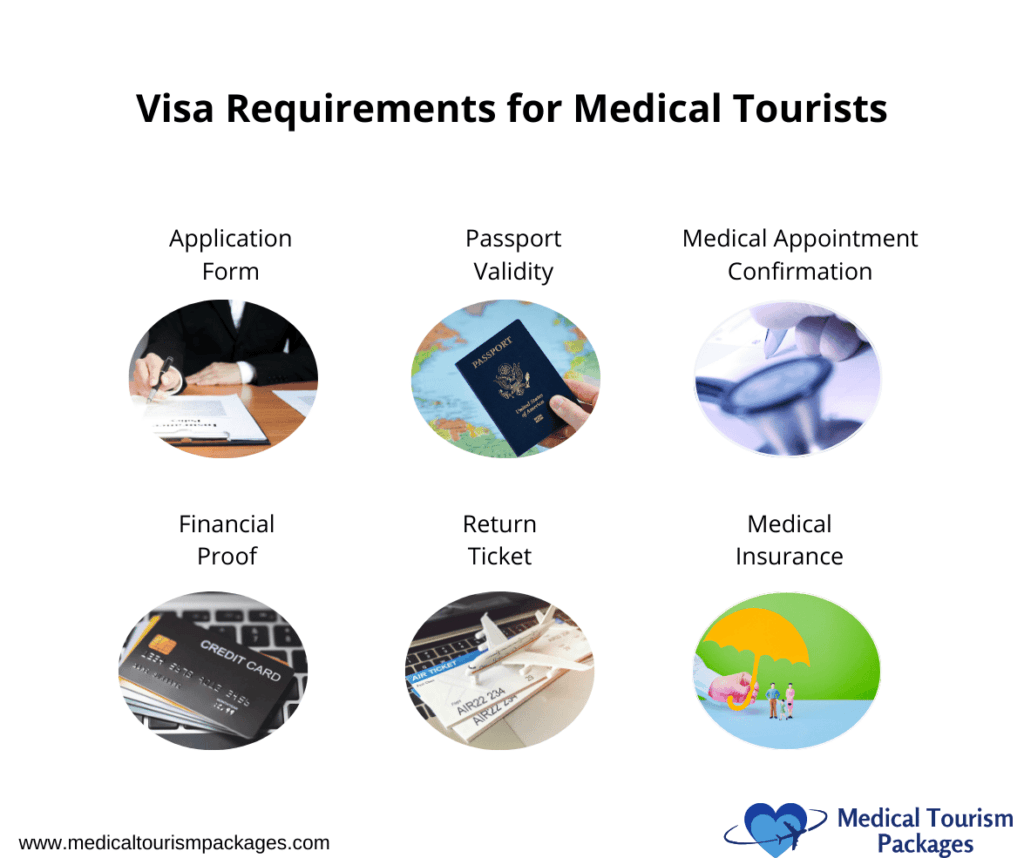
No, US and Canadian citizens do not need a visa for Panama. Both nationalities can enter and stay visa-free for up to 180 days (one hundred eighty days). This makes Panama one of the most accessible medical tourism destinations for North American patients.
- US citizens: Visa-free entry for up to 180 days
- Canadian citizens: Visa-free entry for up to 180 days
- Passport validity: Must be valid for at least 3-6 months beyond your planned departure date
- Proof of onward travel: A return ticket is required at entry
- Customs declaration: Complete the electronic Traveler Declaration Form before arrival
- Health requirements: No mandatory vaccinations for entry from the US or Canada
What Are the Best Neighborhoods to Stay Near Panama City Hospitals?
The best neighborhoods for medical tourists in Panama City are Punta Pacifica, Marbella, and Costa del Este. All three are safe, modern, and close to the city’s top private hospitals.
| Neighborhood | Proximity to Hospitals | Character | Best For |
|---|---|---|---|
| Punta Pacifica | Walking distance to Hospital Punta Pacifica | Modern, secure, expat-friendly | Patients at Punta Pacifica / Pacifica Salud |
| Marbella / Bella Vista | 5-10 min drive to major hospitals | Upscale commercial, hotel-rich | Central location near multiple hospitals |
| Costa del Este | 15-20 min drive to hospitals | Residential, modern, quiet | Extended-stay families and couples |
| El Cangrejo | 10-15 min drive | Walkable, budget-friendly, English-friendly | Shorter stays on a tighter budget |
Avoid the neighborhoods of El Chorrillo, San Miguelito, and Curundú. These areas have higher crime rates and are not suitable for medical tourists. Most hospital-coordinated accommodation packages place patients in the Punta Pacifica or Marbella areas.
How Do You Get to Panama City from the United States?
You get to Panama City by flying into Tocumen International Airport (PTY), located 24 km from the city center. Copa Airlines operates the most nonstop routes from the US. Miami is the closest gateway at about 3 hours of flight time.
| Origin City | Airlines | Approx. Flight Time | Approx. Round-Trip Cost |
|---|---|---|---|
| Miami | Copa, American, Spirit | ~3 hours | $300–$600 |
| New York (JFK) | Copa, Delta, United | ~6 hrs 47 min | $400–$800 |
| Houston | Copa, United | ~4–5 hours | $350–$700 |
| Los Angeles | Copa (connection) | ~7 hrs 22 min | $500–$900 |
Most hospitals provide VIP airport pickup and ground transport as part of their medical tourism packages. Private transfers from Tocumen International Airport to Punta Pacifica take about 20-30 minutes depending on traffic.
What Medical Records Should You Bring?
You should bring recent imaging studies, a list of current medications, and prior surgical records. Panama’s hospitals accept digital copies sent via email 7-10 days before your consultation. Originals should travel with you.
- Imaging studies: MRI, CT scan, or X-rays of the affected joint (taken within 6-12 months)
- Blood panel results: CBC, metabolic panel, coagulation studies if available
- Medication list: All current prescriptions, doses, and frequencies
- Allergy documentation: Drug allergies and reactions
- Prior surgical records: Operative reports and discharge summaries from previous joint procedures
- Referring physician notes: Diagnosis confirmation and specialist referral letter
- Travel insurance documentation: Proof of international medical coverage
What Is Recovery Like After Rheumatology Surgery in Panama?
Recovery after rheumatology surgery in Panama includes inpatient hospital care, supervised physical therapy, and telemedicine follow-up after you return home. Most joint replacement patients spend 10-14 days in Panama before flying. Full recovery takes 6-12 weeks depending on the procedure.
How Long Should You Plan to Stay in Panama After Surgery?
You should plan to stay 10-14 days in Panama after joint replacement surgery. Surgeons recommend this window because cabin pressure during flights can increase blood clot risk in the weeks immediately after joint surgery. Arthroscopic procedures typically require a shorter stay of 5-7 days.
- Total joint replacement (hip or knee): 10–14 days before flying home
- Arthroscopic surgery (knee, shoulder): 5–7 days before flying home
- ACL reconstruction: 7–10 days before flying home
- Soft tissue repair: 5–7 days before flying home
- Synovectomy: 5–7 days before flying home
What Inpatient Care Do Panama’s Hospitals Provide?
Panama’s JCI-accredited hospitals provide private rooms, 24-hour nursing care, daily physician visits, pain management, and early mobilization programs during the inpatient stay. Hospital Punta Pacifica, Clinica Hospital San Fernando, and Centro Medico Paitilla all have dedicated orthopedic recovery units.
Inpatient stays for joint replacement typically last 2-4 days (two to four days). During this time, physical therapists begin working with patients within 24 hours of surgery. Occupational therapists advise on mobility aids and safe movement. Interpreters are available for English-speaking patients, and most nursing staff at private hospitals have functional English skills.
What Rehabilitation Programs Are Available?
Rehabilitation programs in Panama include inpatient physical therapy, outpatient PT sessions, and guided home exercise programs. Most medical tourism packages include a set number of outpatient rehabilitation sessions before you fly home.
- Inpatient PT: Begins within 24 hours of surgery; focuses on safe range of motion and weight-bearing
- Outpatient sessions: Daily or every-other-day sessions during your Panama stay; gait training and strength building
- Home exercise program: Written and video-based instructions to follow after returning home
- Hydrotherapy: Available at select facilities for low-impact joint mobilization
- Telemedicine PT check-ins: Remote sessions with Panama therapists after returning home
How Does Telemedicine Support Recovery After You Return Home?
Telemedicine supports recovery by connecting you with your Panama-based surgeon and care team via video call after you return home. Follow-up appointments are scheduled at 2 weeks, 6 weeks, and 3 months post-surgery. Surgeons review X-rays and photos, assess wound healing, and adjust medication or therapy plans remotely.
All three JCI-accredited hospitals in Panama City offer telemedicine as a standard part of their international patient programs. This eliminates the need to return to Panama for routine post-operative checkups. Your local physician in the US can coordinate with the Panama surgical team. Telemedicine records are maintained in your patient file and shared with your US doctor upon request.
What Should You Know About Panama Before Your Surgery?
Before your surgery in Panama, you should know that English is widely spoken at private hospitals, the country uses US dollars, and Panama City’s private hospital districts are safe for medical tourists. Panama ranks as one of the most accessible medical tourism destinations in Latin America for North American patients.
Is English Widely Spoken at Panama’s Private Hospitals?
Yes, English is widely spoken at Panama’s private hospitals. Most physicians at Hospital Punta Pacifica, Clinica Hospital San Fernando, and Centro Medico Paitilla trained in the United States and are fluent in English. Nursing staff at international-facing units also speak functional English.
All three JCI-accredited hospitals maintain dedicated international patient departments with English-speaking patient coordinators. These coordinators manage scheduling, translation, insurance paperwork, and communication between departments. Patients report that language is rarely a barrier at Panama City‘s top private hospitals. Interpreter services for Spanish, French, and other languages are also available upon request.
What Currency Does Panama Use and How Does That Help Patients?
Panama uses the US dollar as its official currency. There is no local paper currency. All transactions use USD. This means US patients face zero currency exchange risk. The price quoted for your surgery is the price you pay, with no conversion fees or exchange fluctuations.
This sets Panama apart from every other major medical tourism destination in Latin America. In Colombia, Mexico, Costa Rica, and Brazil, the exchange rate changes daily, making it difficult to budget accurately. In Panama, $10,000 quoted today is $10,000 when you arrive and $10,000 when you pay. Major credit cards are accepted at all private hospitals. ATMs dispense US dollars throughout Panama City at withdrawal fees of about $3-5 per transaction. Patients exploring other options can also review rheumatology surgery in Colombia, where JCI-accredited centers offer similar savings in a different destination.
Is Panama Safe for Medical Tourists?
Yes, Panama is safe for medical tourists who stay in the recommended neighborhoods of Punta Pacifica, Marbella, and Costa del Este. These areas are modern, well-policed, and home to international residents and expats. The private hospital districts have a strong security presence and easy access to emergency services.
The US Embassy in Panama City is located at Building 783, Demetrio Basilio Lakas Avenue, Clayton, Panama. The 24/7 emergency line is +(507) 317-5000. US citizens are encouraged to enroll in the Smart Traveler Enrollment Program (STEP) at travel.state.gov before traveling. Local emergency services can be reached by dialing 104 for police and 103 for fire and ambulance services in Panama City.
Frequently Asked Questions About Rheumatology Surgery in Panama
What is rheumatology surgery?
Rheumatology surgery treats conditions affecting joints, muscles, and connective tissues, such as rheumatoid arthritis, osteoarthritis, and tendon tears. Common procedures include hip replacement, knee replacement, shoulder replacement, arthroscopic surgery, synovectomy, and soft tissue repair. JCI-accredited hospitals in Panama City offer the full range of these procedures.
Why choose Panama for rheumatology surgery?
Panama offers 40-70% cost savings on rheumatology surgery versus US prices. Hospital Punta Pacifica is JCI-accredited and affiliated with Johns Hopkins Medicine International. Clinica Hospital San Fernando and Centro Medico Paitilla also hold JCI accreditation. About 90% of specialists at Panama City’s private hospitals trained in the United States. Panama uses the US dollar, eliminating currency risk.
What is the recovery process like after rheumatology surgery in Panama?
Recovery includes 2-4 days of inpatient care, daily physical therapy sessions, and outpatient rehabilitation before flying home. Surgeons recommend staying 10-14 days in Panama after joint replacement before flying. After returning home, JCI-accredited hospitals provide telemedicine follow-up appointments at 2 weeks, 6 weeks, and 3 months post-surgery.
How much does rheumatology surgery cost in Panama?
Rheumatology surgery in Panama costs 40-70% less than in the US. Hip replacement runs $5,000-$20,000 versus $40,000-$57,000 in the US. Knee replacement costs $7,000-$12,000 versus $35,000-$45,000. Arthroscopic procedures start at $2,500. All prices are in US dollars with no currency exchange risk.
How long do I need to stay in Panama after joint replacement surgery?
You should plan to stay 10-14 days in Panama after hip or knee replacement surgery. Surgeons recommend this because cabin pressure during flights increases blood clot risk in the first two weeks after joint surgery. Arthroscopic procedures and soft tissue repairs typically require only 5-7 days before flying home safely.
Is Panama safe for medical tourists?
Yes, Panama is safe for medical tourists who stay in recommended areas. Punta Pacifica, Marbella, and Costa del Este are secure, modern neighborhoods with strong expat communities. Private hospitals in these areas have security staff on site. The US Embassy 24/7 emergency line is +(507) 317-5000. Registering with the STEP program at travel.state.gov is recommended before departure.
Do I need a visa to travel to Panama for surgery?
No, US and Canadian citizens do not need a visa to travel to Panama. Both nationalities can enter and stay visa-free for up to 180 days. You need a valid passport, a return ticket, and proof of sufficient funds. No vaccination certificates are required for entry from the United States or Canada.
What currency does Panama use?
Panama uses the US dollar as its official currency. There is no local paper currency. All transactions at hospitals, hotels, restaurants, and shops use USD. This eliminates currency exchange risk for US patients. The price quoted for surgery in dollars is exactly what you pay, with no conversion fees or exchange rate fluctuations.
Can I use my US health insurance for surgery in Panama?
Most US health insurance plans do not cover elective surgery abroad. However, since April 2025, Hospital Punta Pacifica (Pacifica Salud) can directly bill Medicare Advantage plans for emergency care. Travel medical insurance and international health insurance plans can cover overseas procedures. Patients typically pay out of pocket and submit for reimbursement if their plan allows it.
Ready to Start Your Rheumatology Surgery Journey in Panama?
Medical Tourism Packages coordinates your entire healthcare journey to Panama. We connect you with JCI-accredited hospitals in Panama City, arrange travel and accommodations near your hospital, and provide bilingual support throughout your treatment and recovery.
Contact us today for a free consultation and personalized rheumatology surgery package.