Book Appointment Now

Hair Implant Procedures in Mexico: Complete Guide to Cost, Clinics, and Safety
 By
By
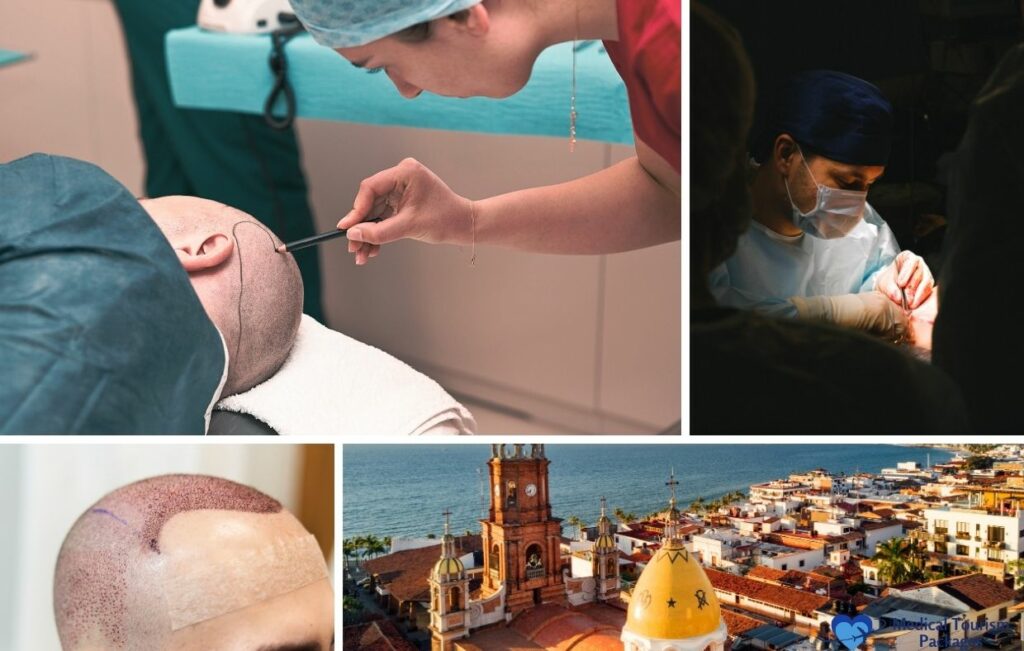
Mexico has become a leading destination for hair restoration surgery, attracting thousands of patients from the United States and Canada each year. The country offers world-class medical facilities, experienced surgeons, and significant cost savings compared to procedures performed in North America.
Hair transplant procedures in Mexico typically cost 50-70% less than equivalent treatments in the US, with prices ranging from $2,000 to $6,000 depending on the technique and number of grafts needed. Major medical tourism hubs like Tijuana, Cancún, and Mexico City host internationally accredited clinics that specialize in both FUE (Follicular Unit Extraction) and FUT (Follicular Unit Transplantation) methods.
This comprehensive guide examines the key factors you need to consider when choosing Mexico for your hair restoration journey. We’ll cover clinic selection criteria, safety protocols, expected costs, recovery planning, and what to look for in qualified surgeons. Whether you’re dealing with male pattern baldness, thinning hair, or other forms of hair loss, understanding your options in Mexico can help you make an informed decision about this life-changing procedure.
What Are Hair Implant Procedures in Mexico?
Hair implant procedures in Mexico involve the surgical transplantation of healthy hair follicles from donor areas to balding or thinning regions of the scalp. Mexican clinics primarily offer two established techniques: Follicular Unit Extraction (FUE) and Follicular Unit Transplantation (FUT).
FUE involves extracting individual hair follicles using specialized micro-punches, leaving minimal scarring and requiring shorter recovery times. FUT removes a strip of scalp tissue from the donor area, which is then dissected into individual grafts for transplantation. Both methods achieve permanent, natural-looking results when performed by qualified surgeons.
Mexico’s medical tourism industry has experienced remarkable growth, attracting 1.3 million medical tourists in 2019, with 70% traveling from the United States. This surge reflects the country’s investment in modern medical infrastructure and internationally trained specialists.
The hair restoration market continues expanding rapidly, with projections showing growth to $428.2 million by 2030 at a 15.6% compound annual growth rate from 2024-2030. This growth drives competition among Mexican clinics, resulting in improved service quality and competitive pricing.
Cost advantages represent a primary draw for international patients. Procedures in Mexico typically offer 60-70% savings compared to US and UK markets, making hair restoration accessible to patients who might otherwise be unable to afford treatment. These savings don’t compromise quality, as many Mexican clinics maintain international accreditation standards and employ surgeons trained in leading medical institutions.
What Types of Hair Transplant Techniques Are Available in Mexico?
Mexican clinics offer three primary hair transplant techniques, each designed to address different patient needs and preferences. Understanding these methods helps you choose the most suitable approach for your specific hair loss pattern and lifestyle requirements.
What Is FUE Hair Transplant in Mexico?
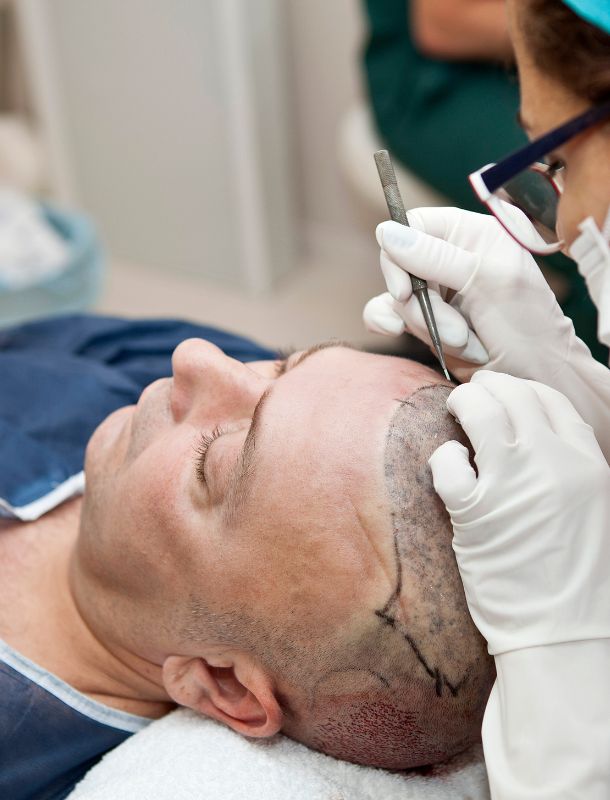
Follicular Unit Extraction (FUE) represents the most popular hair transplant method in Mexican clinics. This technique involves extracting individual follicles using a micro-punch tool, typically measuring 0.8 to 1.0 millimeters in diameter.
The procedure takes 6-8 hours for 1,500-3,000 grafts in a single session, depending on the extent of hair loss and desired density. Surgeons work meticulously to preserve each follicle’s integrity during extraction and implantation.
FUE produces no linear scar, making it ideal for patients who prefer short hair or active lifestyles. The tiny circular extraction sites heal quickly and become virtually undetectable within days. Recovery time is typically shorter than other methods, with most patients returning to work within 3-5 days.
What Is FUT Hair Transplant in Mexico?
Follicular Unit Transplantation (FUT), also known as the strip method, removes a small scalp strip from the donor area, usually measuring 1-2 centimeters in width. Technicians then dissect this strip under microscopes to create individual follicular unit grafts.
FUT procedures are generally less expensive than FUE because they require less time and specialized equipment. This cost advantage makes FUT attractive for patients needing large numbers of grafts while working within budget constraints.
The technique results in a linear scar at the donor site, which skilled surgeons can minimize through advanced closure techniques. The scar typically measures 1-2 millimeters in width when properly executed and can be concealed with hair longer than 2-3 centimeters.
What Is DHI Hair Transplant in Mexico?
Direct Hair Implantation (DHI) uses a specialized Choi pen implanter to place extracted follicles directly into recipient areas. This advanced technique eliminates the need for pre-made recipient site incisions.
The Choi pen provides precise control over angle, depth, and direction of each implanted follicle. This control is critical for achieving natural-looking results that match your existing hair growth patterns.
DHI typically requires more time than traditional methods due to the meticulous nature of direct implantation. However, many patients prefer this technique for its precision and the natural appearance it produces, particularly in the hairline area where natural angles are essential for realistic results.
How Much Do Hair Implants Cost in Mexico?
Hair transplant costs in Mexico offer substantial savings compared to procedures performed in the United States and other developed countries. The significant price difference stems from lower operational costs, favorable exchange rates, and competitive market dynamics.
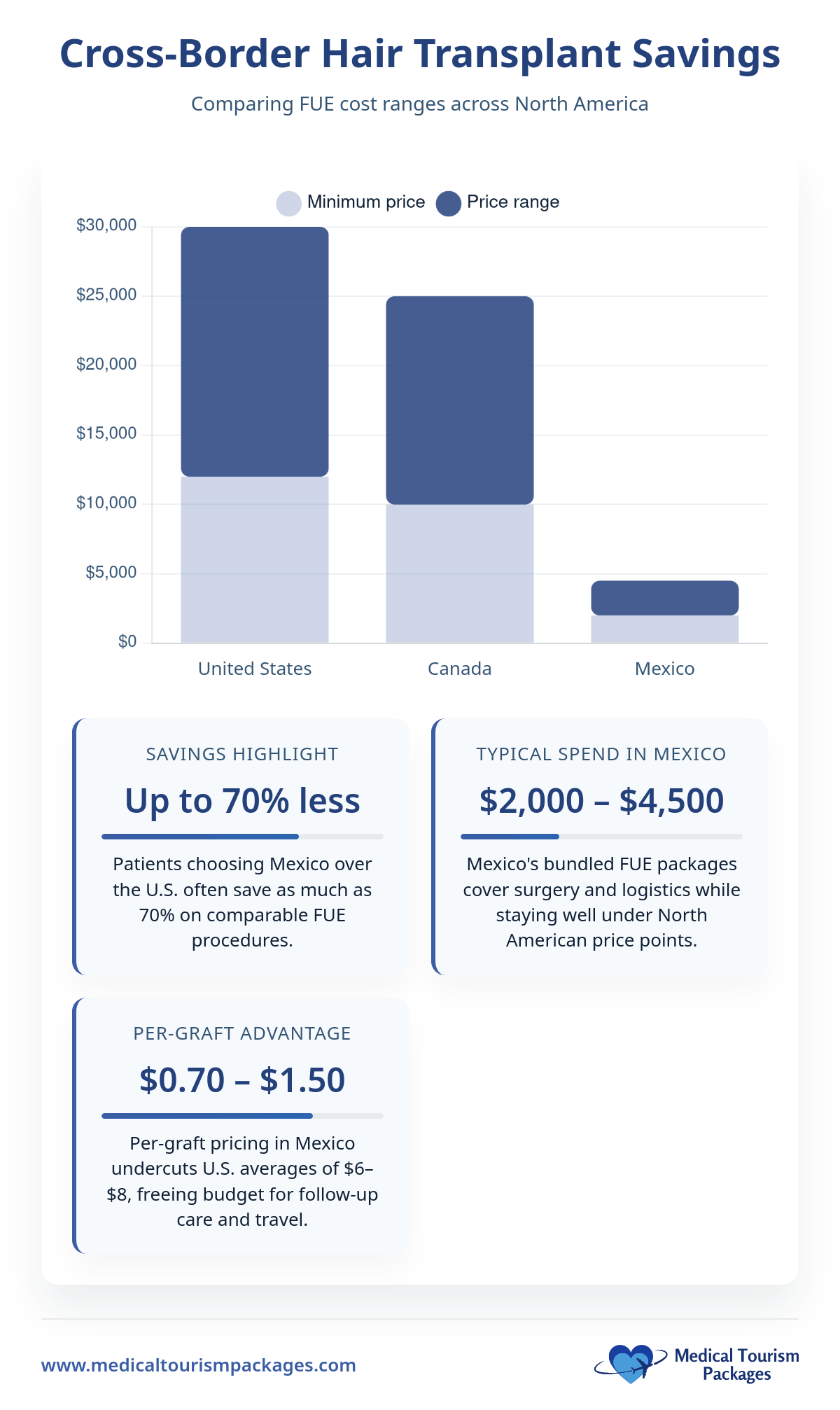
Per graft costs in Mexico range from $0.60 to $1.50, while equivalent procedures in the US cost $6 to $8 per graft. This dramatic difference translates to savings of 60-70% compared to US and UK markets, making hair restoration accessible to a broader range of patients.
Complete hair transplant procedures in the US typically cost $12,000 to $30,000, depending on the number of grafts needed and clinic location. In contrast, Mexico procedures range from $2,000 to $4,500 for similar graft counts and quality standards.
The cost differential becomes even more striking with specific examples. Procedures costing $3,500 in Mexico might exceed $10,000 in the US for identical techniques and graft numbers. This pricing advantage allows patients to combine their medical treatment with vacation time while still achieving significant savings.
Hair Transplant Costs by City and Method
| City | FUE Cost Range | FUT Cost Range |
| Mexico City | $3,000-$7,000 | $2,500-$6,000 |
| Tijuana | $2,000-$4,500 | $2,200-$4,000 |
| Cancún | $2,500-$5,500 | $2,800-$4,500 |
Cost variations depend on several factors including clinic reputation, surgeon experience, facility amenities, and included services. Premium clinics in major cities typically charge higher rates but often provide comprehensive packages including accommodation, transportation, and post-operative care.
Which Cities in Mexico Are Best for Hair Transplants?
Mexico offers excellent hair transplant options across multiple cities, each with distinct advantages for international patients. The choice depends on your priorities regarding cost, surgeon expertise, convenience, and additional amenities.
Hair Transplant Cities Comparison
| City | Key Advantages | Price Range | Notable Clinics | Best For |
| Tijuana | Most competitive prices; 65% US savings; Border convenience | $2,000-$4,500 | Hair Medical Restoration (HMR), TJ Hair Clinic (BBB accredited) | Budget-conscious US patients |
| Guadalajara | Proven techniques; High success rates | $2,500-$5,000 | Hair In 1 Day (99% success rate), Kaloni (15+ years, 9,000+ procedures) | Quality-focused patients |
| Mexico City | Top-tier surgeons; International training | $3,000-$7,000 | Capilclinic (Min Time FUE), Dr. Espinosa Custodio, Dr. Luis A. Nader | Premium care seekers |
| Cancún | Resort experience; Vacation recovery | $2,500-$5,500 | Esthetic Hair Mexico (Turkish physicians) | Medical tourism with luxury |
Who Is a Good Candidate for Hair Implants in Mexico?
Hair transplant candidacy depends on multiple factors including hair loss pattern, donor hair quality, age, and realistic expectations. Mexican clinics evaluate each patient individually to determine the most appropriate treatment approach and expected outcomes.
Ideal candidates have sufficient donor hair density in the back and sides of the scalp, stable hair loss patterns, and realistic expectations about results. Patients should be in good overall health and able to follow post-operative care instructions for optimal healing.
Age considerations vary, but most surgeons prefer patients over 25 years old to ensure hair loss patterns have stabilized. Younger patients may require multiple procedures as hair loss progresses, while older patients typically need single treatments for established patterns.
Hair Loss Treatment Options
| Hair Loss Type | Graft Requirements | Cost Range | Success Rate | Notes |
| Receding hairline | 1,000-2,000 grafts | $2,000-$3,500 | 95%+ | Single session usually sufficient |
| Crown thinning | 1,500-2,500 grafts | $2,500-$4,000 | 90-95% | May require touch-up |
| Extensive balding | 4,000-6,000+ grafts | $4,000-$8,000 | 85-90% | Multiple sessions often needed |
| Female pattern loss | 1,000-3,000 grafts | $2,600-$6,500 | 90%+ | Different technique required |
Treatment suitability is determined by clinical evaluation, not online calculators or generalized assessments. The Norwood scale provides standardized classification for male pattern baldness, ranging from Stage I (minimal recession) to Stage VII (extensive balding).
How Do You Choose a Hair Transplant Clinic in Mexico?
Selecting the right clinic requires thorough research and careful evaluation of credentials, facilities, and surgeon qualifications. The decision impacts both your safety and long-term results, making due diligence essential before committing to treatment.
Essential Surgeon Credentials Checklist
- FUE Europe membership
- SERECAP certification
- ISHRS affiliation
- CMCPER board certification
- International Trichoscopy Society membership
Red Flag Warning Signs
- Clinics providing only surgery without support services
- “All-inclusive” packages excluding medications/extended stays/translation
- No visible COFEPRIS license at entrance
- Fixed prices without detailed analysis
- Reluctance to provide surgeon license numbers
- No before/after photos from recent patients
Essential Consultation Questions
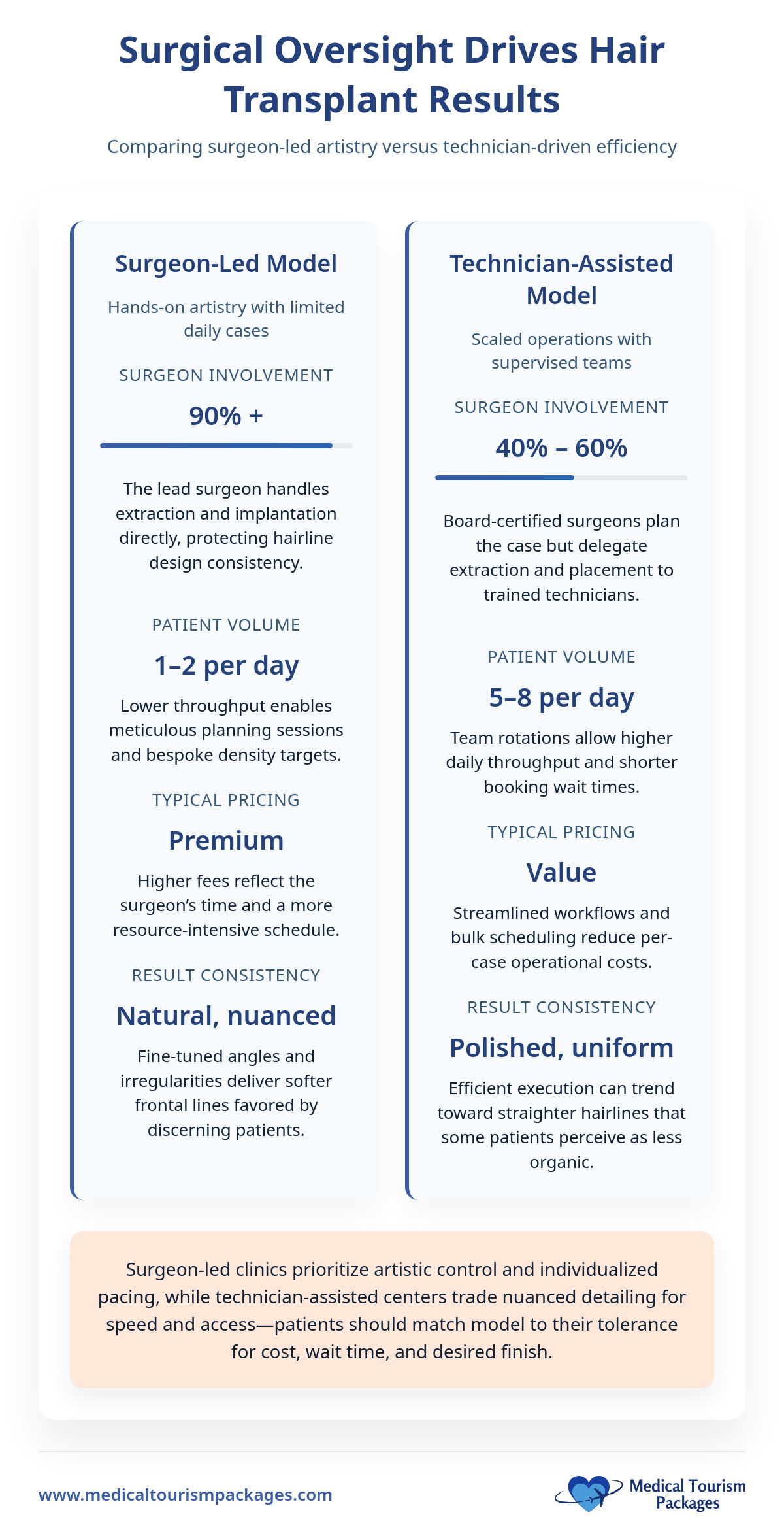
- Will the surgeon perform the entire procedure or will technicians assist?
- Can I see before/after photos taken 9-12 months post-procedure?
- What is your graft survival rate?
- How many procedures do you perform per day?
- What post-operative support do you provide?
- Can you provide references from recent international patients?
What Is the Hair Transplant Process in Mexico?
The hair transplant process follows standardized protocols that ensure patient safety and optimal results. Understanding each phase helps you prepare mentally and physically for the procedure and recovery period.
Mexican clinics typically begin with detailed pre-operative planning, including hairline design, donor area assessment, and graft distribution mapping. This preparation phase ensures natural-looking results that complement your facial features and existing hair patterns.
FUE procedures require 6-8 hours of typical duration, depending on the number of grafts being transplanted and the complexity of the case. Larger sessions requiring 3,000+ grafts may extend to 8-10 hours with appropriate breaks for patient comfort.
Recovery Timeline
Days 1-7: Initial Healing
- Swelling, redness, scab formation
- Sleep on back to avoid graft damage
- Avoid touching treated area
Weeks 2-4: Shock Loss Phase
- Transplanted hair falls out temporarily (normal)
- Scabs naturally shed
- Return to normal activities
Months 3-6: New Growth Begins
- Fine “baby hair” emerges
- Hair appears thin initially
- Gradual thickening occurs
Months 12-18: Final Results
- Full maturity achieved
- Natural texture returns
- Blend with existing hair complete
How Safe Are Hair Transplants in Mexico?
Hair transplant safety in Mexico varies significantly between clinics. While many facilities meet international standards, others may cut corners to offer lower prices. The key lies in choosing accredited clinics that follow proper protocols.
COFEPRIS (Federal Commission for Protection against Sanitary Risks) regulates all facilities. This federal agency oversees medical facilities, equipment sterilization, and practitioner licensing. All legitimate clinics must comply with COFEPRIS standards before performing procedures.
Clinics must obtain a Sanitary License or “Operating Notice”. Every medical facility needs either a Sanitary License (Licencia Sanitaria) or Operating Notice (Aviso de Funcionamiento). These documents verify that clinics meet basic safety requirements covering facility cleanliness, equipment standards, and staff qualifications.
Public registry exists but is not always up-to-date. COFEPRIS maintains a searchable database of licensed facilities. However, this registry often contains outdated information. Patients should verify current licensing status directly with the clinic before booking procedures.
What Results Can You Expect from Mexican Hair Implants?
Hair transplant results in Mexico can match those achieved anywhere in the world when performed by skilled surgeons. However, outcomes depend heavily on clinic selection, technique used, and your individual hair characteristics.
When Will You See Final Results?
Transplanted follicles enter a resting phase after surgery. New growth typically begins around month three as thin, wispy strands that appear lighter and finer than your natural hair texture.
Some Mexican clinics advertise extremely high success rates. These figures often refer to graft survival rather than aesthetic outcomes. Success rates above 95% are possible with proper technique, but be wary of unrealistic claims.
Hair transplants don’t stop pattern baldness progression. Most patients need finasteride or similar medications to protect existing hair. Without these treatments, you may experience continued thinning around transplanted areas.
View your transplant as part of ongoing hair maintenance rather than a permanent solution. Many patients require touch-up procedures or additional treatments as natural hair loss continues over time.
What Affects Your Final Results?
Top results require direct surgeon oversight throughout the procedure. Some clinics use technicians for graft placement while surgeons only handle extraction. This delegation can impact precision and overall outcomes.
Inexperienced technicians often create overly uniform hairlines that lack natural variation. Skilled surgeons vary angle, direction, and density to mimic natural growth patterns. This artistic element separates good results from obvious transplants.
How Do You Prepare for a Hair Transplant Trip to Mexico?
Planning your hair transplant trip requires careful preparation beyond booking your procedure. Proper documentation, insurance coverage, and timeline planning ensure a smooth medical tourism experience.
American and Canadian passport holders can enter Mexico without advance visa applications. Tourist permits allow stays up to six months, which covers even extended recovery periods. Ensure your passport remains valid for at least six months beyond your travel dates.
Insurance Requirements
- US/Canadian health insurance not accepted for cosmetic procedures
- Travel medical insurance available from $1/day
- Medical evacuation coverage strongly recommended
Standard domestic health plans exclude elective cosmetic treatments performed abroad. Travel medical insurance provides coverage for unexpected complications during your stay. Medical evacuation insurance covers emergency transport back to your home country if serious complications arise.
Most patients need three to seven days in Mexico for their procedure and initial recovery. This timeframe allows for consultation, surgery, and follow-up appointments before traveling home. Your first post-surgery hair wash occurs at the clinic 48 hours after transplantation.
Mexico’s geographic advantage over distant destinations like Turkey enables convenient follow-up visits. If complications arise or touch-up procedures become necessary, return trips involve shorter flights and minimal jet lag.
How Does Mexico Compare to Other Hair Transplant Destinations?
Mexico faces strong competition from Turkey and other medical tourism hotspots. Each destination offers distinct advantages depending on your priorities, budget, and location.
Mexico vs Turkey Comparison
| Factor | Mexico | Turkey |
| Per-graft cost | $0.60-1.50 | From $0.50 |
| Travel time from US | 2-5 hours | 12+ hours |
| Follow-up care | In-person possible | Virtual-only |
| Language | Spanish/English common | Turkish/English varies |
Turkey maintains a cost advantage with lower per-graft pricing, especially for large procedures. However, Mexico’s proximity to North America creates significant practical benefits. Shorter flight times reduce travel fatigue and jet lag during your recovery period.
Follow-up care represents Mexico’s strongest advantage over Turkey. Return visits for complications or touch-up procedures are feasible from the US and Canada. Turkish clinics rely entirely on virtual consultations for post-procedure support.
The choice between destinations often comes down to priorities. Turkey offers maximum cost savings for budget-conscious patients willing to travel far. Mexico provides convenience and accessibility for those prioritizing ongoing care and shorter travel distances.
What Aftercare Is Required Following Hair Implants in Mexico?
Proper aftercare determines your transplant’s success more than the surgery itself. Following detailed post-operative instructions protects your investment and ensures optimal graft survival rates.
Clinics increasingly emphasize complementary treatments alongside transplant procedures. Platelet-rich plasma (PRP) therapy supports healing and strengthens existing hair. Many Mexican facilities now include PRP sessions as part of comprehensive aftercare protocols.
Post-Surgery Care Instructions
- Sleep on back initially to avoid damaging grafts
- Protect scalp from direct sunlight
- Avoid touching or scratching treated area
- Use prescribed shampoos and healing solutions
- Follow specific washing schedule exactly
- Wear loose-fitting hats when outdoors
- Contact clinic immediately for severe itching or complications
Sleeping position becomes critical during the first week after surgery. Back sleeping prevents graft displacement from pillow friction. Use extra pillows to maintain comfortable elevation and reduce swelling.
Sun protection remains essential for several weeks post-surgery. Direct UV exposure can damage healing tissue and cause hyperpigmentation. Resist the urge to touch your scalp despite itching or discomfort, as scratching can dislodge grafts during their vulnerable healing phase.
Can You Finance Hair Transplants in Mexico?
Hair transplant financing makes procedures accessible to patients who cannot pay full costs upfront. Mexican clinics increasingly offer payment plans to compete with domestic providers and attract international patients.
Available Payment Options
- United Medical Credit partnerships – Loans specifically for cosmetic procedures with competitive interest rates
- eFinancing Solutions – Flexible repayment terms ranging from six months to several years
- In-house financing – Some clinics like Hair In 1 Day offer direct payment plans (verify for international clients)
- Medical credit cards – Most common option for medical tourists
- Traditional credit cards – Immediate payment with personal repayment management
Third-party lenders typically require credit checks and income verification. Approval depends on your credit score and debt-to-income ratio. Interest rates vary from promotional zero percent offers to standard medical loan rates around 10-25% annually.
International patients should verify financing availability before booking consultations. Some clinics restrict payment plans to residents with Mexican bank accounts or credit histories. Others may require larger down payments from foreign patients to offset collection risks.
Frequently Asked Questions
Why is Mexico a popular destination for hair transplant surgery?
Mexico is a leading destination for hair transplants due to its affordable pricing, internationally accredited clinics, skilled surgeons, and close proximity to the U.S. and Canada. Patients can save 60–70% on procedures without compromising on quality or safety.
How much do hair transplants cost in Mexico?
Hair transplant costs in Mexico range from $2,000 to $6,000, depending on the technique and number of grafts. Per-graft pricing typically falls between $0.60 and $1.50, offering significant savings compared to $6–$8 per graft in the U.S.
What hair transplant techniques are available in Mexico?
Mexican clinics offer FUE (Follicular Unit Extraction), FUT (Follicular Unit Transplantation), and DHI (Direct Hair Implantation). FUE is the most popular for minimal scarring, while FUT is ideal for large graft counts. DHI provides precise follicle placement using Choi implanters.
Which Mexican cities are best for hair transplants?
Top cities for hair transplants in Mexico include Tijuana (affordable and close to the U.S. border), Mexico City (premium care and renowned surgeons), Cancún (vacation-friendly medical tourism), and Guadalajara (high success rates and mid-range pricing).
Are hair transplants in Mexico safe?
Hair transplants in Mexico are safe when performed at COFEPRIS-licensed clinics with international accreditations. Choosing reputable facilities with experienced surgeons and modern equipment is essential for minimizing risks and achieving quality outcomes.
Who is a good candidate for a hair transplant in Mexico?
Good candidates have sufficient donor hair, a stable pattern of hair loss, and realistic expectations. Most clinics prefer patients over 25 years old in good overall health to ensure long-term success and suitability for surgery.
What results can I expect from a hair transplant in Mexico?
With proper care and a qualified surgeon, hair transplants in Mexico can produce natural, permanent results. New growth begins around 3–4 months post-surgery, with full results visible within 12–18 months.
Plan Your Hair Restoration Journey with Confidence
Exploring hair restoration in Mexico can feel overwhelming with so many clinics, techniques, and options available. That’s where we come in. At Medical Tourism Packages, we specialize in connecting international patients with accredited clinics, experienced surgeons, and tailored treatment plans.
Our team helps you navigate every step: from choosing the right clinic and arranging travel logistics to ensuring seamless aftercare support. With our guidance, you can focus on your recovery while we take care of the details.
Ready to take the next step? Contact us today to begin planning your personalized hair restoration journey in Mexico.