Book Appointment Now

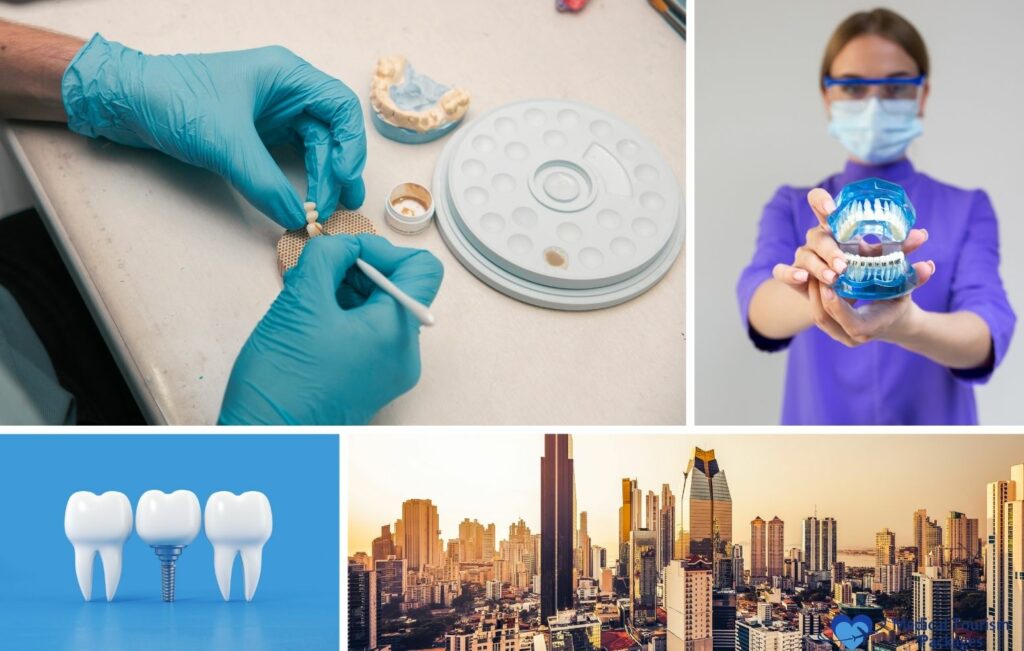
Dental Implants in Panama: Smile Bright with Affordable Care
 By
By
Dental implants in Panama cost $1,500 to $2,100 per implant (30 to 70 percent less than US prices), performed by ICOI- and ADA-affiliated specialists at JCI-accredited hospitals using Straumann and Nobel Biocare systems.
Panama City clinics, including the Johns Hopkins affiliate Pacifica Salud, place single implants for $1,500 to $2,100 and All-on-4 full-arch restorations for $10,000 to $15,000 per arch (25 to 71 percent less than US costs), with implant success rates of 97 percent at 10 years.
This guide covers verified 2026 pricing, credentialing criteria, destination comparisons (Panama vs Costa Rica, Mexico, and Colombia), and safety data so you can evaluate Panama City as your dental implant destination. Each clinic reference is checked against JCI accreditation records, ICOI membership directories, and the Consejo Tecnico de Salud idoneidad registry.
What Are Dental Implants and Are They Right for You?
Dental implants are titanium posts placed into your jawbone to replace missing teeth. They fuse with bone through osseointegration over three to six months. Implants then support a crown, bridge, or full prosthesis that looks, feels, and functions like a natural tooth.
What Is a Dental Implant and How Does It Work?
A dental implant is a small titanium screw, called the fixture, placed surgically into your jawbone. Over three to six months, bone cells grow onto the surface in a process called osseointegration. This locks the implant in place. A small connector, the abutment, then attaches to the implant. Your dentist tops it with a custom crown, bridge, or denture.
Because the implant fuses with bone, it acts like a natural tooth root. This protects against the jawbone loss that follows missing teeth. Procedures use the same global brands (Straumann, Nobel Biocare, Zimmer Biomet) found in US offices, with surgery performed under local anesthesia or IV sedation. Most single implants are completed in one to two hours as an outpatient procedure with zero hospital stay required.
Who Is a Good Candidate for Dental Implants?
You are a good candidate for dental implants if you have one or more missing teeth, healthy gums, and enough jawbone to anchor the post. Non-smokers with controlled diabetes and good oral hygiene have the highest success rates. Bridges or dentures remain reasonable alternatives if implants are not suitable.
Specialists in Panama City, Panama evaluate five core eligibility criteria before recommending implants:
- Adequate bone density: Confirmed through a CBCT scan; bone grafting can compensate if needed
- Healthy gum tissue: No active periodontal disease; gum treatment may precede surgery
- Good general health: Stable blood pressure, controlled diabetes (HbA1c under 7), no untreated autoimmune issues
- Non-smoker (preferred): Nicotine impairs osseointegration; quitting at least four weeks before and after surgery improves success
- Realistic timeline commitment: Willingness to complete healing over three to six months across one or two trips
If you do not yet meet these criteria, conservative alternatives include traditional bridges, partial dentures, or full dentures. Many dentists recommend trying conservative options first when bone loss is severe, when budget is the limiting factor, or when general health rules out elective surgery.
What Types of Dental Implants Are Available in Panama City, Panama?
Three implant variants are available in Panama City, Panama: single tooth implants for one missing tooth, All-on-4 for a full arch on four implants, and mini implants for narrow ridges or denture stabilization. Each variant has different recovery times, costs, and best-fit patient profiles.
Panama clinics offer three main implant variants for different patient needs:
| Variant | Best Fit Patient | Procedure Time | Recovery to Light Use | Relative Cost (Panama) |
|---|---|---|---|---|
| Single Dental Implant | One missing tooth, healthy adjacent teeth | 1 to 2 hours per implant | 3 to 6 months until final crown | $1,500 to $2,100 per implant |
| All-on-4 (full arch) | Full arch missing or failing teeth, sufficient bone in front jaw | 3 to 5 hours total | Same-day temporary teeth; final prosthesis at 4 to 6 months | $10,000 to $15,000 per arch |
| Mini Dental Implant | Narrow ridge, denture stabilization, lower bone volume | 30 to 60 minutes per implant | 1 to 3 months | $600 to $1,000 per implant |
Single implants suit patients replacing one tooth or several scattered teeth. All-on-4 (immediate-load full arch) suits patients with a failing or fully missing arch and is performed in a single surgical day with provisional teeth attached the same visit. Mini implants are ideal for stabilizing a loose lower denture or for patients with thinner bone who want to avoid grafting.
How Much Do Dental Implants Cost in Panama City, Panama?
A single dental implant costs $1,500 to $2,100 in Panama compared to $3,000 to $5,000 in the United States, a savings of 30 to 70 percent. All-on-4 full arch restorations cost $10,000 to $15,000 per arch in Panama versus $20,000 to $35,000 in the US. Prices are quoted in US dollars.
What Is the Cost of a Single Dental Implant in Panama vs the US?
A single dental implant costs $1,500 to $2,100 (one thousand five hundred to two thousand one hundred dollars) in Panama including the fixture, abutment, and crown. The same complete implant runs $3,000 to $5,000 in the United States. Savings range from 30 to 70 percent.
Verified prices for the three main implant variants in 2026:
| Procedure | Panama Cost | US Cost | Savings vs US |
|---|---|---|---|
| Single Dental Implant (complete) | $1,500 to $2,100 | $3,000 to $5,000 | 30 to 70% |
| All-on-4 (per arch) | $10,000 to $15,000 | $20,000 to $35,000 | 25 to 71% |
| Mini Dental Implant | $600 to $1,000 | $500 to $1,500 | 0 to 60% |
Panama uses the US dollar, so there is no exchange-rate risk and no need for currency conversion when paying with a US credit card or bank wire.
What Additional Procedures Might You Need and How Much Do They Cost?
You may need additional procedures such as a bone graft, sinus lift, or 3D imaging before implant surgery. These ancillary services run $150 to $2,100 each in Panama and are typically quoted separately. Your dentist will identify what you need during the initial CBCT review.
Common pre-implant procedures and their typical costs in Panama:
- Bone graft (socket preservation): $400 to $600 in Panama. Adds bone where it has receded so the implant can anchor properly. Heals for three to four months before implant placement.
- Sinus lift: $1,500 to $2,100 in Panama. Required for upper-jaw implants when the sinus floor sits too close to the planned implant site. Adds three to six months to the total timeline.
- 3D CBCT scan: $150 to $300 in Panama. Provides a detailed 3D image of bone and nerves.
- Tooth extraction: $50 to $150 per tooth. Often done in the same visit as the implant fixture placement.
- Temporary crown or flipper: $100 to $300. Bridges the gap during healing if the implant site is visible.
Bone graft and sinus lift figures for Panama come from local clinic quotes; US equivalents range $300 to $800 for a simple graft and $1,500 to $5,000 per side for a sinus lift, per current US pricing guides.
Why Should You Choose Panama for Dental Implants?
You should choose Panama for dental implants because it pairs 30 to 70 percent cost savings with JCI-accredited hospitals, US-trained specialists, premium implant brands, and the US dollar as official currency. A three-hour flight from Miami and no visa requirement make Panama the most accessible dental tourism destination for North Americans. Learn more about dental implant options and what to expect from the procedure before comparing destinations.
What Makes Panama’s Dental Care Standards High?
Panama’s dental care standards are high because Panama City hosts a Joint Commission International-accredited hospital, multiple specialist clinics holding international memberships, and dentists trained in the US, Spain, and Latin America. Clinics use the same global implant brands (Straumann, Nobel Biocare, Zimmer Biomet) found in top US offices.
Pacífica Salud (also known as Hospital Punta Pacífica) has held JCI accreditation since 2011 and is the only Johns Hopkins Medicine International affiliate in Central America. Within its complex sits a dedicated dental clinic that operates under the same quality framework as the main hospital. JCI accreditation requires reaccreditation every three years and benchmarks each facility against more than 1,200 international quality and safety standards.
Specialists at Panama clinics commonly hold memberships in ICOI (International Congress of Oral Implantologists), the ADA (American Dental Association), and the AACD (American Academy of Cosmetic Dentistry). Implant success rates published in long-term studies sit at roughly 97 percent over 10-year follow-up, drawing on the foundational Brånemark research. For All-on-4 restorations, the Malo Clinic longitudinal study reports a 93 percent implant survival rate and 98.8 percent prosthesis survival at 18 years.
Why Do English-Speaking Specialists and USD Pricing Matter for US Patients?
English-speaking specialists and USD pricing matter because they eliminate the two biggest barriers to dental tourism: communication and currency risk. Roughly 80 to 90 percent of patient-facing staff at top Panama City hospitals speak English. Panama is fully dollarized, so a $1,800 quote is $1,800 regardless of exchange rate moves.
You can discuss treatment plans, consent forms, and aftercare directly with the dentist, the anesthesiologist, and the front desk staff without an interpreter. This matters most for informed consent on surgical procedures and for clear post-op instructions on pain medication, soft-food diet, and bite restrictions during healing.
US, Canadian, and UK citizens do not need a visa to enter Panama. A valid passport and proof of a return ticket are sufficient for stays up to 180 days. The country’s accessibility, combined with USD pricing and English fluency, removes the friction that often deters North American patients from traveling abroad for care. Our guide for American medical tourists in Panama covers travel logistics, hospital options, and what to expect on arrival.
How Does Panama’s Location and Infrastructure Compare to Other Dental Destinations?
Panama is closer to the US East Coast than other dental destinations, with a three-hour flight from Miami and direct service from New York, Houston, and Los Angeles. The country ranked 96 on the Global Peace Index 2024 and concentrates medical facilities in the modern Punta Pacífica and Costa del Este districts.
Most international dental clinics cluster in Punta Pacífica, a waterfront high-rise district built around Pacífica Salud hospital, and in Costa del Este, a master-planned community 15 to 20 minutes from Tocumen International Airport (PTY). These districts feature modern hotels, supermarkets, pharmacies, and English-speaking concierge services. Uber operates throughout Panama City and is the recommended ground-transport option.
Compared to Costa Rica and Mexico, Panama offers shorter flights from the East Coast and a fully dollarized economy with no currency conversion. Compared to Colombia, Panama has higher single-implant prices but a stronger JCI hospital presence and a closer location.
Is It Safe to Get Dental Implants in Panama City, Panama?
Yes, it is safe to get dental implants in Panama City, Panama, when you choose a properly credentialed clinic. Implants in Panama show success rates around 97 percent at 10 years, matching global benchmarks. Risks are similar to those in the US and depend on patient health, not on geography.
What Are the Success Rates of Dental Implants in Panama?
Success rates for dental implants in Panama match global standards at roughly 97 percent over 10-year follow-up, per the foundational Brånemark research. Success depends primarily on patient bone density, oral hygiene, smoking status, and systemic health rather than on country of treatment.
For All-on-4 full-arch restorations, the Malo Clinic longitudinal study reports a 93 percent implant survival rate and a 98.8 percent prosthesis survival rate at 18 years. These figures apply when the procedure is performed by qualified specialists using validated implant systems. Provisional teeth are typically placed the same day, with the final prosthesis fitted at four to six months after osseointegration.
Patient-side factors that most affect success include smoking (which doubles failure risk), uncontrolled diabetes, severe gum disease, and inadequate bone volume. Panama clinics screen for these factors during the initial CBCT scan and consultation and will recommend grafting, periodontal treatment, or a different prosthetic approach if implants are not the best fit.
What Are the Risks and Complications of Dental Implants?
Risks and complications of dental implants include bleeding, infection, nerve injury, sinus perforation, and implant failure. These are uncommon but can occur regardless of where surgery is performed. Panama clinics manage each through careful planning, sterile technique, and 3D imaging that maps nerve and sinus location before surgery.
The main risks specialists screen for and manage are:
- Bleeding: Mild bleeding for 24 hours is normal. Specialists review your medications (especially blood thinners) before surgery.
- Infection: Sterile surgical technique, pre-op rinses, and post-op antibiotics keep infection rates under 2 percent.
- Nerve damage: A pre-op CBCT scan maps the inferior alveolar nerve in the lower jaw so the implant is placed at a safe distance.
- Sinus perforation: Upper-jaw implants near the sinus floor are planned with the CBCT; a sinus lift is added when bone is too thin.
- Implant failure: About 3 percent of single implants fail to integrate. If this occurs, the implant is removed, the site heals, and a replacement is placed at no additional fixture cost at most clinics offering warranties.
- Bone graft complications: Rare; managed with antibiotics if early infection develops.
Anesthesia options include local anesthesia, IV sedation, and general anesthesia. Most single implants are placed under local anesthesia in an outpatient setting with no hospital stay required. IV sedation is widely available for anxious patients and for longer surgeries such as All-on-4.
What Accreditations and Credentials Should You Verify Before Choosing a Clinic?
You should verify the clinic’s JCI accreditation status (for hospitals), the dentist’s idoneidad license through the Consejo Técnico de Salud, and any specialist memberships in ICOI, ADA, or AACD. These four checks confirm both facility standards and individual provider qualifications.
Use this checklist before booking a dental implant appointment in Panama:
- JCI accreditation: Verify on jointcommissioninternational.org. Pacífica Salud and Clínica Hospital San Fernando are the two JCI-accredited general hospitals in Panama (both since 2011).
- Idoneidad license: Every practicing dentist must hold an active idoneidad number issued by the Consejo Técnico de Salud. Verifiable through the Ministry of Health (MINSA) online portal or mobile app.
- Specialty board memberships: Confirm ICOI, ADA, or AACD membership on each organization’s website by searching the dentist’s name.
- Implant brand: Ask which specific implant system (Straumann, Nobel Biocare, or Zimmer Biomet) will be used and confirm the global warranty.
- Written guarantee: Reputable Panama clinics offer multi-year warranties (some up to five years) on dental work. Request the guarantee in writing.
- Outpatient confirmation: Single implants and most All-on-4 cases are outpatient procedures with zero overnight hospital stay required.
The implant procedure itself is outpatient, meaning you can return to your hotel the same day. There is no required hospital stay for single implants or routine All-on-4 placements.
How Do Dental Implants in Panama Compare to Costa Rica, Mexico, and Colombia?
Panama implants cost more than Costa Rica, Mexico, or Colombia, but Panama offers JCI-accredited hospitals, USD pricing, and English-speaking specialists that competitors do not consistently match. Single implant costs are $1,500 to $2,100 in Panama, $750 to $900 in Costa Rica, $650 to $1,000 in Mexico, and $700 to $1,200 in Colombia.
Should You Choose Panama or Costa Rica for Dental Implants?
You should choose Panama over Costa Rica if you value JCI hospital infrastructure, English fluency, and USD pricing. Choose Costa Rica if lowest single-implant price is the priority. Costa Rica single implants cost $750 to $900 versus $1,500 to $2,100 in Panama, but Costa Rica lacks JCI-accredited dental hospital affiliations.
Panama and Costa Rica compared on key dental-implant factors:
| Factor | Panama | Costa Rica |
|---|---|---|
| Single implant cost | $1,500 to $2,100 | $750 to $900 |
| All-on-4 cost (per arch) | $10,000 to $15,000 | $8,500 to $12,750 |
| Savings vs US | 30 to 70% | 70 to 80% |
| Flight time from Miami | 3 hours 6 minutes | 2 hours 50 minutes |
| JCI-accredited hospitals | 2 (Pacífica Salud, San Fernando) | 1 (Clínica Bíblica) |
| Currency | USD (no conversion) | Colón / USD accepted |
| Visa for US/CA/UK | None required | None required |
Panama is the better choice when you want hospital-grade infrastructure and zero currency-conversion friction. Costa Rica is the better choice when you want the lowest implant price and are comfortable with a smaller dedicated dental-tourism cluster.
Should You Choose Panama or Mexico for Dental Implants?
You should choose Panama over Mexico if you live on the US East Coast or value English-speaking specialists and USD pricing. Choose Mexico if you live near the southern US border and want the lowest entry-level prices. Mexico single implants cost $650 to $1,000 versus $1,500 to $2,100 in Panama.
Panama and Mexico compared on key factors:
| Factor | Panama | Mexico |
|---|---|---|
| Single implant cost | $1,500 to $2,100 | $650 to $1,000 |
| All-on-4 cost (per arch) | $10,000 to $15,000 | $6,000 to $10,000 |
| Savings vs US | 30 to 70% | 67 to 87% |
| Border accessibility | Flight required from any US city | Drive or walk-across for southwest US |
| Currency | USD (no conversion) | Mexican peso (USD often accepted at border) |
| JCI dental-relevant hospitals | 2 | Multiple (varies by city) |
Patients along the US southwest border often choose Tijuana or Los Algodones in Mexico for short same-week trips. Patients on the East Coast or those seeking JCI-accredited hospital infrastructure tend to prefer Panama for the shorter flight and the dollar economy.
Should You Choose Panama or Colombia for Dental Implants?
You should choose Panama over Colombia if you want USD pricing, the shortest flight from the US East Coast, and JCI hospital affiliations. Choose Colombia if you want lower prices on a single implant and a strong cosmetic dentistry culture. Colombia single implants cost $700 to $1,200 versus $1,500 to $2,100 in Panama.
Panama and Colombia compared on dental implant factors:
| Factor | Panama | Colombia |
|---|---|---|
| Single implant cost | $1,500 to $2,100 | $700 to $1,200 |
| All-on-4 cost (per arch) | $10,000 to $15,000 | $7,000 to $11,000 |
| Savings vs US | 30 to 70% | 60 to 80% |
| Flight time from Miami | 3 hours 6 minutes | 3 hours 15 minutes |
| Currency | USD (no conversion) | Colombian peso |
| JCI-accredited hospitals (total) | 2 | 9+ |
Colombia has more JCI-accredited hospitals overall, but most are concentrated in general medical specialties rather than dental tourism. Panama’s dental scene is smaller but more concentrated and more accessible from the US East Coast. Patients considering Colombia may also review our full breakdown of dental implants in Colombia, which covers Bogota, Medellin, and Cartagena clinic options in detail.
Which Are the Top Dental Implant Clinics in Panama City?
The top dental implant clinics in Panama City include Pacífica Salud (JCI-accredited, Johns Hopkins affiliated), Clínica Arango Orillac (operating since the 1930s), Clínica Ford Dental Spa (AACD-credentialed, five-year guarantee), and Smile Design Panama (Digital Smile Design protocols). Each combines international training with global implant brands.
What Are the Accredited Dental Facilities in Panama City?
Accredited dental facilities in Panama City include one JCI-accredited hospital with an in-complex dental clinic, plus three specialized dental clinics holding MINSA and professional-body credentials. Only Pacífica Salud (Hospital Punta Pacífica) holds direct JCI accreditation; dental-specific clinics hold local licenses and specialty memberships.
Top dental implant facilities in Panama City compared:
| Facility | Accreditation | US Affiliation | Notable Feature |
|---|---|---|---|
| Pacífica Salud (Hospital Punta Pacífica) | JCI since 2011 | Johns Hopkins Medicine International (since 2006) | Only Johns Hopkins affiliate in Central America; dental services within hospital complex |
| Clínica Arango Orillac | MINSA, Consejo Técnico de Salud (no JCI) | None confirmed | Operating since the 1930s; memberships in Pierre Fauchard Academy and International College of Dentists |
| Clínica Ford Dental Spa | MINSA, AACD (no JCI) | None confirmed | Five-year guarantee on dental work; CAD/CAM same-day crowns |
| Smile Design Panama | MINSA (no JCI; additional credentials pending verification) | None confirmed | Digital Smile Design protocols for preview of results |
Pacífica Salud houses the dental clinic Pacific Dental Clinic within its JCI complex; the dental clinic operates under the hospital’s quality framework. The three independent clinics are not hospitals and do not carry JCI accreditation, but they hold valid MINSA registration and member dentists hold individual licenses verifiable through the Consejo Técnico de Salud.
What Implant Brands Do Panama Clinics Use?
Panama clinics use the same premium implant brands found in top US offices, including Straumann (Switzerland), Nobel Biocare (Switzerland/USA), and Zimmer Biomet (USA). All three brands carry global warranties, meaning any dentist worldwide can service the implant if you ever need follow-up care.
The three main implant systems used in Panama:
- Straumann (Switzerland): Industry-leading research base; SLActive surface technology; global lifetime warranty on the implant fixture.
- Nobel Biocare (Switzerland/USA): Original Brånemark system; deep clinical data going back to 1965; widely used for All-on-4 procedures.
- Zimmer Biomet (USA): US-based manufacturer; Tapered Screw-Vent and Trabecular Metal systems; common in US offices.
Ask your Panama dentist to specify which brand they will use and request the implant’s serial number or passport on completion. This documentation lets any future dentist (in Panama, the US, or elsewhere) identify the system and order matching components if needed.
How Do You Verify a Dentist’s Credentials in Panama?
You verify a dentist’s credentials in Panama by checking the Consejo Técnico de Salud idoneidad license, confirming specialty memberships in ICOI or ADA, and reviewing the clinic’s MINSA registration. All practicing dentists must hold an active idoneidad number issued by the Ministry of Health (MINSA).
The credential-verification process has four steps:
- Step 1, MINSA registration: Confirm the clinic is registered with the Ministry of Health via the MINSA web portal.
- Step 2, idoneidad license: Ask for the dentist’s idoneidad number and verify it through the Consejo Técnico de Salud mobile app or MINSA online portal.
- Step 3, specialty membership: Search the dentist’s name on the ICOI, ADA, or AACD member directories to confirm active membership.
- Step 4, written warranty: Request the clinic’s written guarantee on implant work, ideally three to five years.
Reputable Panama dental clinics will share idoneidad numbers and credentials before you book travel. If a clinic resists this transparency, treat it as a warning sign.
What Does the Dental Implant Process Look Like in Panama?
The dental implant process in Panama spans three to six months across two trips. Trip one (three to five days) covers consultation, CBCT scan, and implant placement. After three to six months of healing at home, trip two (five to ten days) covers crown placement and final adjustments.
What Happens During the Initial Consultation and Assessment?
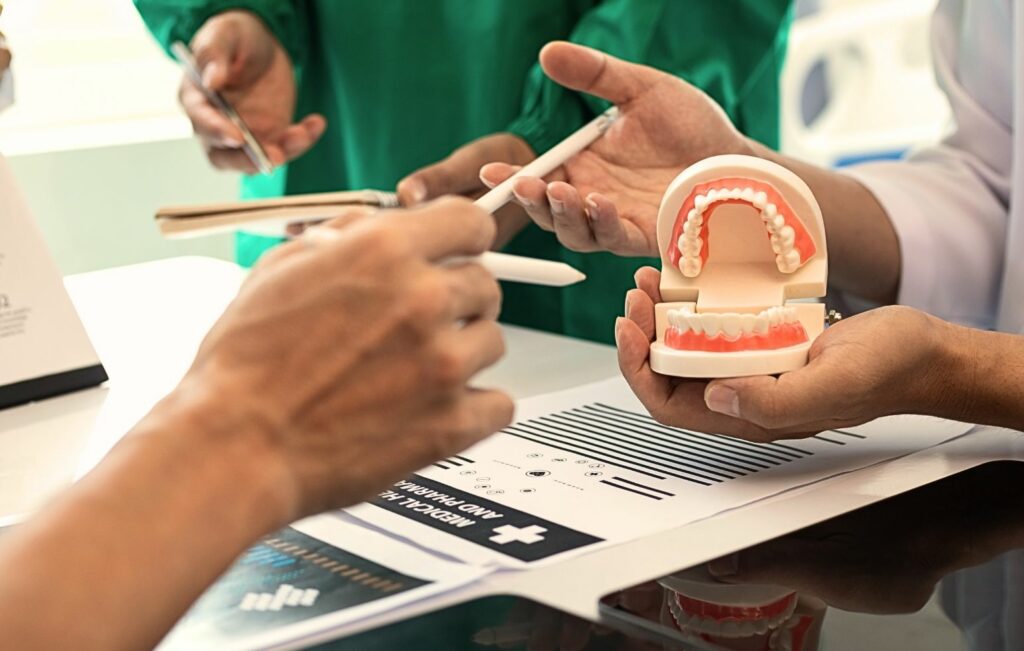
During the initial consultation, your Panama dentist reviews your medical history, performs a clinical oral exam, and orders a 3D CBCT scan. The scan maps bone height, density, and nerve location. The dentist then builds a treatment plan that confirms candidacy, implant type, the number of fixtures needed, and whether grafting is required.
Pre-operative testing typically includes a panoramic X-ray, the CBCT scan, a periodontal exam, and a medical history review covering current medications, allergies, and conditions such as diabetes or osteoporosis. Many clinics also offer a remote consultation by video call before you travel. You email recent dental records and panoramic X-rays, and the dentist provides a preliminary treatment plan and price estimate.
A remote consultation costs $0 to $100 and is often credited toward treatment if you book.
What Happens on the Day of Implant Surgery?
On the day of implant surgery, you arrive at the clinic, receive local anesthesia or IV sedation, and the dentist places the titanium fixture in your jawbone. Single-implant surgery takes one to two hours per implant. You return to your hotel the same day with post-op instructions and medication.
The day-of-surgery sequence is:
- Step 1, check-in and consent: Final review of treatment plan and signed consent (15 minutes).
- Step 2, anesthesia: Local anesthesia for single implants; IV sedation available for All-on-4 or anxious patients.
- Step 3, implant placement: The dentist creates a small opening in the gum, drills a precise pilot site, and inserts the titanium fixture. Stitches close the gum if needed (one to two hours).
- Step 4, immediate aftercare: Bite-pressure gauze, post-op instructions, prescription for antibiotics and pain medication.
- Step 5, return to hotel: Outpatient procedure; no overnight hospital stay required. Same-day Uber back to the hotel is fine.
- Step 6, time before flying: Wait at least two days after a single implant before flying home; three days minimum for All-on-4.
For All-on-4 surgery, provisional teeth are attached the same day, allowing you to leave the clinic with functional teeth. Final permanent prostheses are fitted four to six months later after osseointegration is complete.
How Long Does the Full Dental Implant Process Take in Panama?
The full dental implant process in Panama takes three to six months from start to finish. Trip one (three to five days) covers consultation and implant placement. Healing happens at home for three to six months. Trip two (five to ten days) covers crown placement and final bite adjustments.
During the healing phase between trips, osseointegration takes place, with bone cells growing onto the titanium surface. You follow soft-food restrictions for the first week, gradually returning to normal eating. Most patients work normally throughout the healing phase. Your home dentist can perform routine check-ups, cleanings, or any unrelated dental work during this window.
For straightforward cases, total in-country time is five to fifteen days across both trips combined. Bone grafting or sinus lifts extend the overall timeline by three to six months because the graft must heal before the implant fixture is placed.
When Is the Crown or Prosthesis Placed?
The crown or prosthesis is placed three to six months after the implant fixture, once osseointegration is complete. For All-on-4, a provisional bridge is attached the same day as surgery; the final permanent prosthesis is fitted at four to six months. The crown phase takes five to ten days and includes digital impressions, fitting, and bite adjustment.
The crown phase begins with a digital scan of the implant site, which goes to the dental laboratory. The lab fabricates a porcelain or zirconia crown matched to your existing teeth. The dentist tries in the crown, adjusts the bite, and cements or screws it onto the implant abutment. A short follow-up visit confirms comfort and function.
With proper care, dental implants can last 20 or more years. Long-term outcomes depend on daily brushing, regular professional cleanings every six months, and avoiding habits such as smoking or grinding (a night guard is recommended if you grind). Routine x-ray check-ups every one to two years allow your dentist to spot any early bone-loss issues.
What Are the Advantages and Disadvantages of Getting Dental Implants in Panama?
Advantages of Panama dental implants include 30 to 70 percent cost savings, JCI-accredited hospital infrastructure, English-speaking specialists, and USD pricing. Disadvantages include the need for two trips, travel logistics, and the distance from home if complications arise. Most patients find the trade-offs favorable for major implant work.
What Are the Main Advantages of Choosing Panama for Dental Implants?
The main advantages of choosing Panama for dental implants are cost savings, accreditation, currency, language, accessibility, and infrastructure. Each addresses a specific barrier US and Canadian patients face when considering dental tourism. Together, they distinguish Panama from competing dental destinations.
Six factors weighed as advantages vs disadvantages:
| Factor | Advantage | Disadvantage |
|---|---|---|
| Cost | 30 to 70% savings vs US on single implants; 25 to 71% on All-on-4 | Higher per-implant cost than Costa Rica, Mexico, or Colombia |
| Accreditation | JCI-accredited hospital (Pacífica Salud) and dental clinics with MINSA + AACD credentials | Standalone dental clinics are not JCI-accredited (only general hospitals can be) |
| Currency | USD is official currency; no exchange rate risk | None. US patients pay in dollars directly. |
| Language | 80 to 90% of patient-facing staff speak English at top clinics | Outside the medical districts, English fluency drops |
| Travel | 3-hour flight from Miami; no visa required for US, CA, UK | Two trips typically required for full implant treatment |
| Infrastructure | Modern medical districts (Punta Pacífica, Costa del Este) with hotels and Uber | Tourism outside medical districts requires planning for safety |
The accreditation and currency advantages set Panama apart from cheaper alternatives. The two-trip requirement is the most common operational consideration, though many patients combine the second trip with a vacation in Panama or with adjacent travel to Costa Rica or Colombia.
What Are the Potential Disadvantages and How Do You Manage Them?
Potential disadvantages include the two-trip requirement, travel logistics, distance from home if complications arise, and gaps in US insurance coverage. You can manage each by booking flexible flights, choosing clinics with multi-year warranties, and confirming your travel medical insurance covers dental complications abroad.
The two-trip structure means you spend three to fifteen total days in Panama spread across roughly four to six months. This timeline rarely conflicts with work for most patients, but it does require booking two sets of flights and accommodations. Combine the second trip with a short vacation to make the most of it. Choose a clinic that offers a written multi-year warranty (some Panama clinics offer up to five years) so you have recourse if a fixture or crown fails.
For complications after you return home, your Panama dentist coordinates with your local dentist by sharing the implant brand, fixture serial number, and treatment notes. Most Panama clinics provide a written passport or wallet card documenting the implant system for exactly this scenario. US dental insurance typically does not cover work done abroad, but travel medical insurance can cover unexpected complications during the trip itself.
Is Panama the Right Choice for Your Dental Implants?
Panama is the right choice if you live on the US East Coast, want JCI hospital infrastructure, value English fluency, prefer USD pricing, and have one to several implants or an All-on-4 case. Patients prioritizing the lowest price may find Costa Rica, Mexico, or Colombia better suited.
Patient fit by situation and country:
| Patient Profile | Situation | Best Country Fit |
|---|---|---|
| East Coast US patient, single implant | Wants JCI hospital, English fluency, short flight | Panama |
| East Coast US patient, full arch | Wants JCI hospital plus All-on-4 expertise | Panama or Colombia |
| Lowest single-implant price priority | Budget-driven, willing to fly farther | Mexico or Costa Rica |
| Southwest US patient, single implant | Near US-Mexico border, can drive | Mexico (Tijuana, Los Algodones) |
| Patient wanting cosmetic dentistry combo | Implants plus veneers or smile design | Colombia or Panama |
| Patient with complex bone loss case | Needs grafting plus advanced imaging | Panama (JCI hospital backup) |
| Patient wanting recovery vacation | Beach or city recovery setting | Costa Rica or Panama |
If multiple factors point you to Panama, it is likely the right choice. If price alone is the deciding factor, the alternatives are worth exploring. A free remote consultation can confirm fit before you commit to flights.
Frequently Asked Questions About Dental Implants in Panama
What are dental implants?
Dental implants are titanium posts placed into the jawbone to replace missing teeth. They fuse with bone through osseointegration over three to six months and provide a stable foundation for crowns, bridges, or dentures. Implants look, feel, and function like natural teeth and can last 20 or more years with proper care.
Are dental implants painful, and is sedation available in Panama?
Dental implant surgery is not painful during the procedure because local anesthesia fully numbs the area. Mild soreness and swelling for two to five days afterward are normal and managed with over-the-counter pain medication. Panama clinics offer local anesthesia, IV sedation, and general anesthesia, so anxious patients have full options.
Can I get dental implants if I have bone loss?
Yes, you can get dental implants if you have bone loss, but you may need a bone graft or sinus lift first. Bone grafts cost $400 to $600 in Panama and add three to four months to the timeline. A CBCT scan during your consultation will confirm whether grafting is needed before the implant fixture is placed.
What is the success rate of dental implants in Panama?
The success rate of dental implants in Panama matches global standards at roughly 97 percent over 10-year follow-up, drawing on the foundational Brånemark research. For All-on-4 restorations, the Malo Clinic longitudinal study reports 93 percent implant survival and 98.8 percent prosthesis survival at 18 years. Success depends more on patient health than location.
How long does the dental implant process take in Panama?
The dental implant process in Panama takes three to six months total across two trips. Trip one (three to five days) covers consultation, CBCT scan, and implant placement. Healing happens at home for three to six months. Trip two (five to ten days) covers crown placement and final bite adjustments.
Which implant brands do Panama clinics use?
Panama clinics use premium implant brands including Straumann (Switzerland), Nobel Biocare (Switzerland/USA), and Zimmer Biomet (USA). These are the same brands used in top US offices. All three carry global warranties, so any dentist worldwide can service them later if needed. Ask which brand your clinic uses and request the serial number.
What warranty do Panama dental clinics offer on implants?
Most reputable Panama dental clinics offer written warranties from three to five years on implant work. Clínica Ford Dental Spa, for example, offers a five-year guarantee. The implant fixtures themselves carry global lifetime warranties from manufacturers Straumann, Nobel Biocare, and Zimmer Biomet, so any dentist worldwide can replace components if needed.
Can I combine dental implants with other dental work in one trip to Panama?
Yes, you can combine dental implants with other dental work in one Panama trip, such as cleanings, fillings, crowns on natural teeth, or smile design veneers. Combining procedures lowers per-procedure costs and saves on travel. Discuss the full scope during your remote consultation so the clinic can schedule all work efficiently across your stay.
Ready to Start Your Medical Tourism Journey?
Medical Tourism Packages coordinates your entire healthcare journey to Panama. We connect you with JCI-accredited hospitals, arrange travel and accommodations, and provide bilingual support throughout your dental treatment and recovery.
Contact us today for a free consultation and personalized medical tourism package.