Book Appointment Now

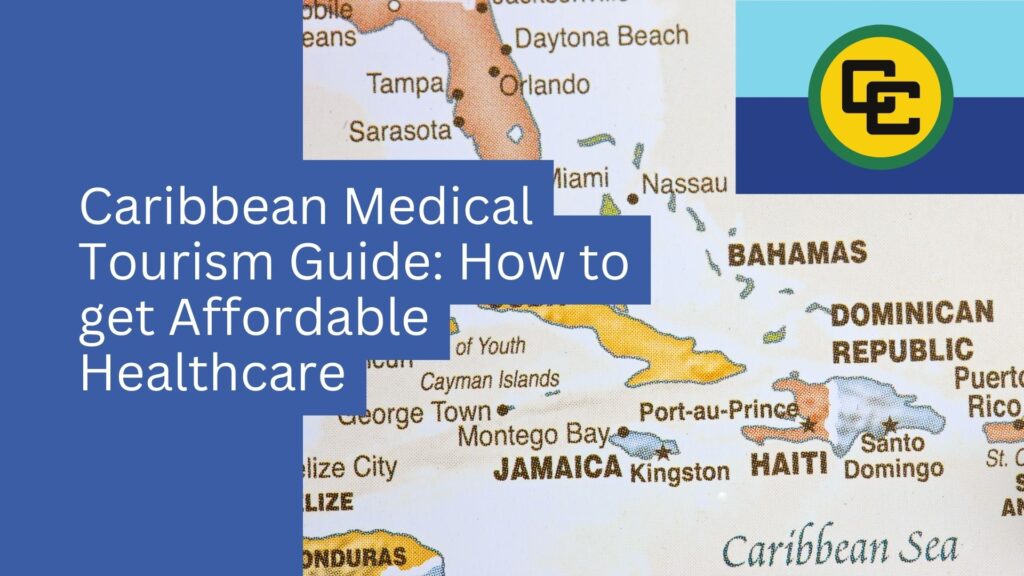
Caribbean Medical Tourism Guide: Affordable Healthcare in Colombia and Panama for Caribbean Residents
 By
By
Medical tourism from the Caribbean has grown rapidly as residents face healthcare gaps that national insurance doesn’t cover. Patients from the Bahamas, Jamaica, Trinidad, and Barbados now travel to Colombia and Panama for procedures costing 40-80% less than US prices.
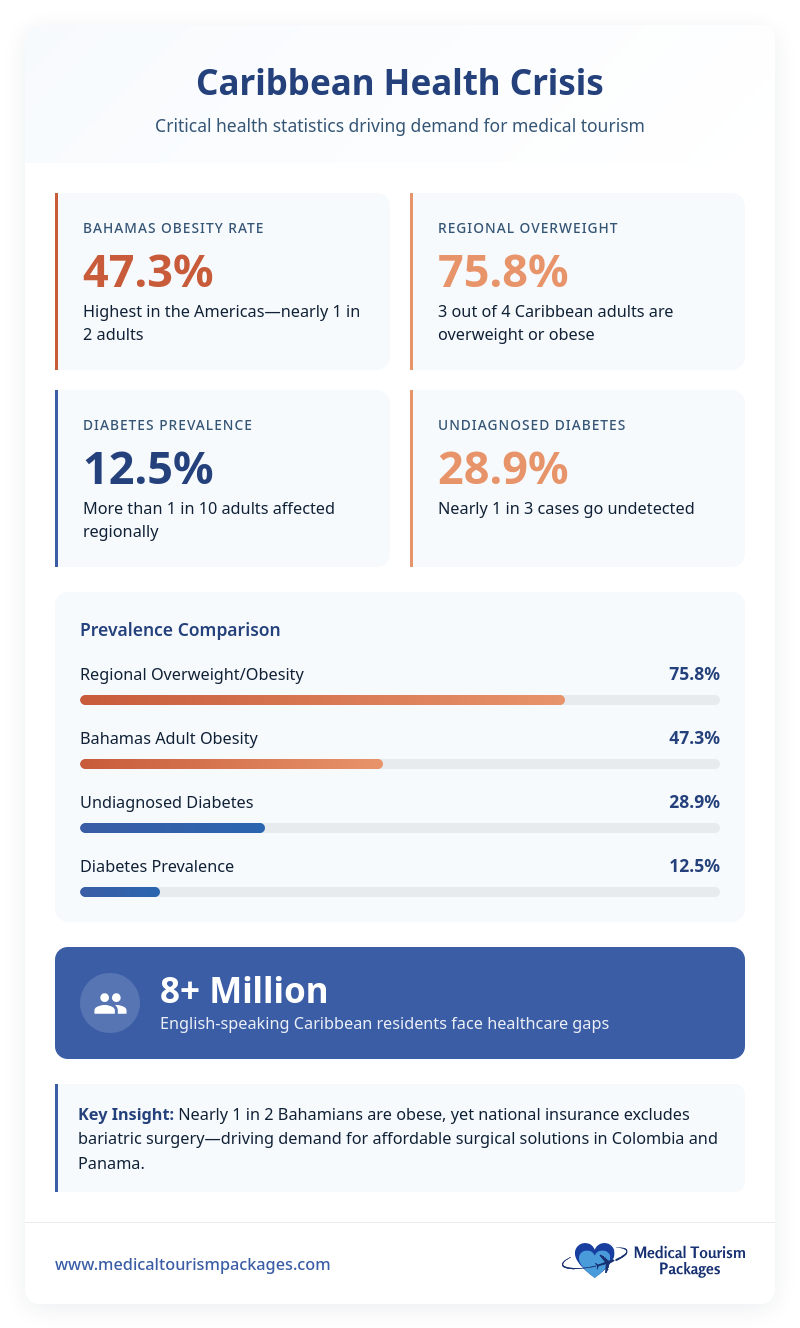
The Bahamas has the highest obesity rate in the Americas at 47.3%, yet NHI excludes bariatric surgery, dental work, and chemotherapy. Similar gaps exist across Jamaica, Trinidad, and the Cayman Islands. Over 8 million English-speaking Caribbean residents face these healthcare gaps. Colombia has emerged as the top medical tourism destination for the region.
Medical Tourism Packages connects Caribbean patients with board-certified surgeons in Bogotá, Medellín, and Panama City. As your independent advocate, not a clinic representative, we coordinate flights, accommodations, and bilingual support. Below, you’ll find cost comparisons, destination guides, and step-by-step planning resources for Caribbean residents.
Why Do Caribbean Residents Travel Abroad for Medical Care?
Caribbean residents face a straightforward problem: quality healthcare at home is either unavailable, unaffordable, or involves waiting too long. This reality pushes thousands of patients each year to seek medical care in Colombia and Panama.
The health burden across the Caribbean is significant. The Bahamas has the highest adult obesity rate in the Americas at 47.3%. Across the region, 75.8% of adults are overweight or obese. Diabetes affects 12.5% of the population, with 28.9% of cases undiagnosed. These conditions require surgical interventions that local healthcare systems cannot provide.
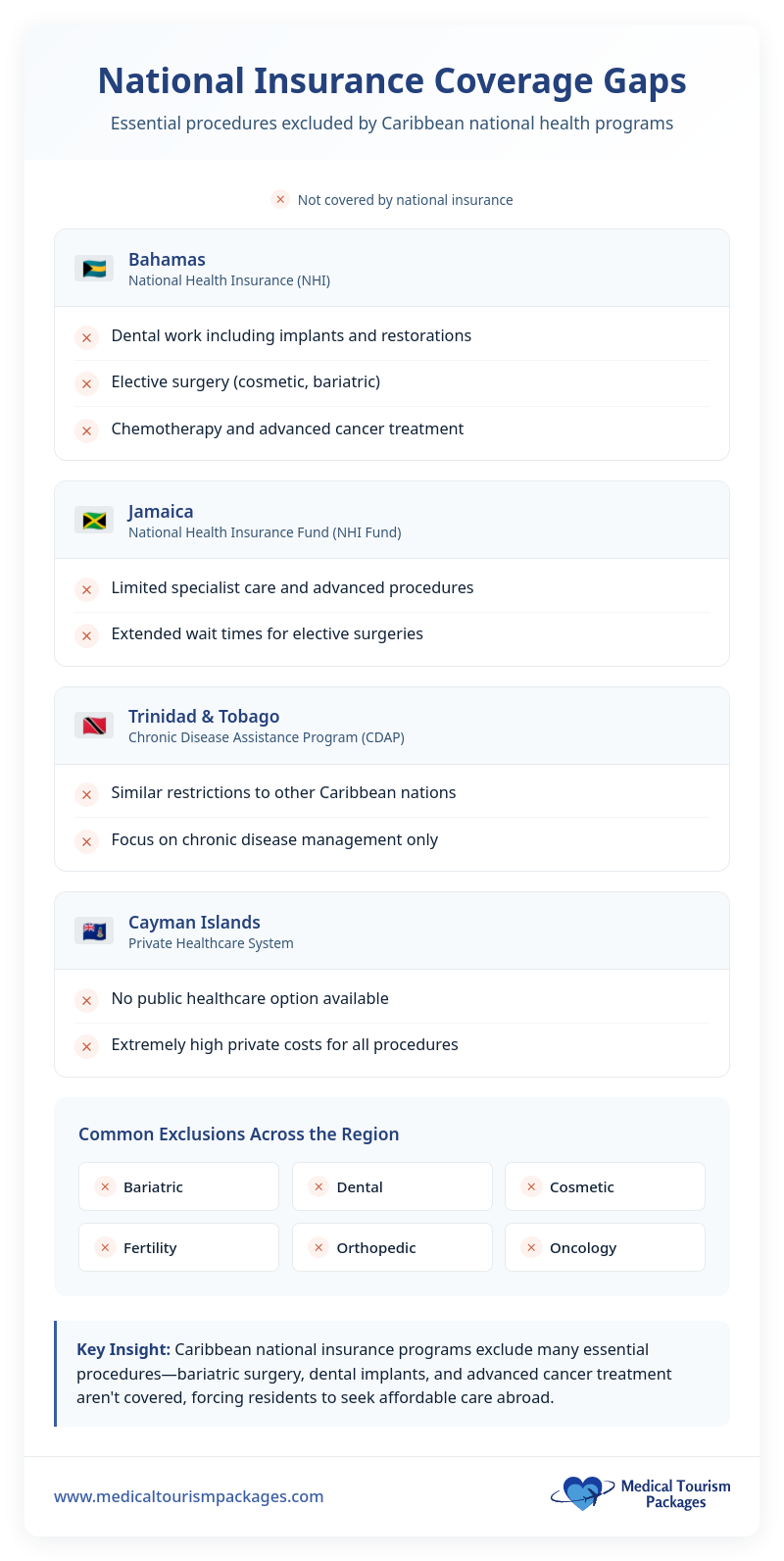
National health insurance across the Caribbean excludes major procedures. Bahamas NHI does not cover dental work, elective surgery, or chemotherapy. Jamaica’s NHI Fund offers limited coverage for specialist care. Trinidad’s CDAP program faces similar restrictions. Cayman Islands residents pay extremely high private costs with no public option. These gaps force residents to seek care abroad.
Medical tourism solves the access and cost problem simultaneously. Savings range from 40% to 80% compared to US prices. A knee replacement costs $12,000 in Colombia versus $45,000 in the United States. Dental implants drop from $6,000 to under $1,500. Many facilities hold JCI accreditation, the same standard as top US hospitals.
The market reflects this demand. The Latin American and Caribbean medical tourism market reached $10.34 billion in 2024. Projections estimate $41.30 billion by 2032, growing at 18.9% annually. For Caribbean residents, traveling for healthcare has become the standard solution.
What Is the Healthcare Landscape in the Caribbean?
The Caribbean healthcare system has consistent gaps that affect patient care across the region. Basic medical services exist, but specialized treatments remain limited or unavailable. Understanding these limitations explains why residents seek care abroad.
Caribbean countries share common healthcare challenges. Economic pressures limit hospital budgets and equipment upgrades. Facilities operate with outdated technology. Limited specialist services mean patients travel for advanced care. Underfunded public systems result in aging infrastructure. Brain drain compounds these issues as medical professionals emigrate for better opportunities.
Each island faces specific coverage gaps. Barbados Queen Elizabeth Hospital faces capacity constraints for elective procedures. Bermuda offers limited specialists at extremely high costs. British Virgin Islands residents depend on US facilities for complex care. Guyana’s public system lacks advanced surgical capabilities. These gaps affect over 8 million English-speaking Caribbean residents.
Extended wait times make these problems worse. Patients needing elective surgeries wait months for appointments. For time-sensitive conditions, these delays push patients to seek faster access abroad. Appointments in Colombia or Panama can be scheduled within weeks.
The shortage of specialist services is acute. Advanced cardiac surgery remains unavailable on most islands. IVF with genetic screening exists only in limited locations. Oncology services with modern chemotherapy protocols don’t exist in many nations. Robotic-assisted orthopedic surgery is not an option for most residents.
This creates a clear choice for Caribbean residents. Wait indefinitely at home. Pay premium prices for limited local private options. Or travel to Colombia and Panama where services are available at competitive costs.
What Medical Procedures Do Caribbean Residents Seek Abroad?
Caribbean residents travel abroad for procedures that are unavailable at home or priced beyond reach. The savings are substantial across all major specialties. Quality often matches or exceeds what’s available domestically.
Colombia has become a leading destination for dental tourism. Clinics in Bogotá and Medellín offer full-mouth restorations at a fraction of US costs. Many operate on-site labs to expedite turnaround times. Patients can complete treatment in a single trip rather than multiple visits.
| Procedure | US Cost | Medical Tourism Cost | Savings |
|---|---|---|---|
| Single Dental Implant | $3,000 – $6,000 | $800 – $1,500 | 50% – 85% |
| All-on-4 (Per Arch) | $25,000 – $35,000 | $9,000 – $15,000 | 55% – 75% |
| Veneers (Per Tooth) | $1,200 – $2,500 | $350 – $600 | 70% – 85% |
Cosmetic surgery represents another major category for Caribbean medical tourists. Colombia is globally recognized for body contouring procedures. Surgeons in Bogotá and Medellín specialize in high-volume aesthetic work. Many complete hundreds of procedures annually. This expertise translates to consistent results at prices accessible to middle-class families.
| Procedure | US Cost | Medical Tourism Cost | Savings |
|---|---|---|---|
| Mommy Makeover | $15,000 – $25,000 | $6,000 – $8,500 | 60% – 75% |
| Tummy Tuck | $8,000 – $12,000 | $3,500 – $6,000 | 50% – 70% |
| Breast Augmentation | $6,000 – $10,000 | $3,000 – $4,500 | 50% – 70% |
| Rhinoplasty | $8,000 – $12,000 | $3,000 – $4,000 | 60% – 75% |
Joint replacement surgery ranks among the most sought-after procedures for Caribbean medical tourists. Colombia leads the region in robotic surgery and orthopedics. Hospitals in Bogotá and Medellín offer precision techniques that reduce recovery times. JCI-accredited facilities provide outcomes comparable to top US hospitals.
| Procedure | US Cost | Medical Tourism Cost | Savings |
|---|---|---|---|
| Knee Replacement | $35,000 – $50,000 | $12,000 – $16,000 | 50% – 75% |
| Hip Replacement | $39,000 – $45,000 | $12,000 – $16,000 | 60% – 70% |
Fertility treatment is another growing category for Caribbean residents. Colombia offers IVF cycles at significant savings compared to US prices. Clinics in Bogotá provide genetic screening and egg donation programs. Panama City also has established fertility clinics serving international patients.
| Procedure | US Cost | Medical Tourism Cost | Savings |
|---|---|---|---|
| IVF Cycle (Own Eggs) | $15,000 – $20,000 | $5,500 – $7,000 | 60% – 70% |
These four categories account for the majority of medical tourism from the Caribbean. Cost savings, shorter wait times, and JCI-accredited facilities make traveling practical. Thousands of Caribbean residents choose Colombia and Panama for care each year. For more details on specific procedures, see our complete guide to medical tourism in Colombia.
Which Countries Are the Top Medical Tourism Destinations for Caribbean Residents?
Two countries lead medical tourism for Caribbean residents: Colombia and Panama. Each offers distinct advantages in cost, accessibility, and specialization. Medical Tourism Packages coordinates care in both destinations.
Colombia leads as the top destination for Caribbean medical travel. The country has built a reputation for high-value procedures across multiple specialties. Internationally trained surgeons and modern infrastructure deliver results at prices well below North American rates. Major cities like Bogotá, Medellín, and Cali house JCI-accredited hospitals. These facilities serve thousands of international patients annually. Flight times from most Caribbean islands range from two to four hours. This makes Colombia accessible for consultations and follow-ups without exhausting long-haul travel.
Panama serves as an excellent secondary destination for Caribbean patients. Its strategic location as a connecting hub makes it logistically convenient. Copa Airlines operates direct routes from most major Caribbean islands. Panama City houses several JCI-accredited hospitals specializing in cardiac care, orthopedics, and general surgery. The country’s use of the US dollar eliminates currency exchange concerns. This simplifies budgeting for Caribbean residents. Many choose Panama for complex procedures requiring extended recovery periods. The stable environment offers easy communication back home.
How Much Do Procedures Cost in Each Destination?
Understanding the cost structure in Colombia and Panama helps you budget accurately. Prices vary based on facility quality, surgeon experience, and included services. Both destinations offer substantial savings compared to US prices.
Colombia offers the most competitive medical pricing in Latin America. Prices typically include surgeon fees, anesthesia, facility costs, and basic post-operative care. Flights, accommodation, and extended recovery stays are separate expenses.
| Procedure Type | Specific Procedure | Colombia Cost | Savings |
|---|---|---|---|
| Bariatric | Gastric Sleeve | $4,500 – $7,000 | 60% – 75% |
| Gastric Bypass | $6,000 – $9,000 | 65% – 75% | |
| Dental | Single Implant | $800 – $1,200 | 70% – 85% |
| All-on-4 | $8,000 – $12,000 | 60% – 70% | |
| Cosmetic | Mommy Makeover | $6,000 – $8,000 | 65% – 75% |
| Tummy Tuck | $3,500 – $5,000 | 55% – 70% | |
| Orthopedic | Knee Replacement | $11,000 – $14,000 | 65% – 75% |
| Hip Replacement | $11,500 – $14,500 | 65% – 70% | |
| Fertility | IVF Cycle | $5,500 – $7,000 | 60% – 70% |
Panama positions itself as a premium medical tourism destination. Pricing reflects modern infrastructure and US dollar transactions. Slightly higher costs compared to Colombia correlate with newer facilities. English-speaking medical staff trained in North American protocols serve international patients.
| Procedure Type | Specific Procedure | Panama Cost | Savings |
|---|---|---|---|
| Bariatric | Gastric Sleeve | $5,500 – $8,000 | 60% – 70% |
| Gastric Bypass | $7,000 – $10,000 | 60% – 70% | |
| Dental | Single Implant | $900 – $1,500 | 65% – 80% |
| All-on-4 | $10,000 – $15,000 | 50% – 65% | |
| Cosmetic | Mommy Makeover | $7,000 – $9,500 | 60% – 70% |
| Tummy Tuck | $4,500 – $6,500 | 50% – 65% | |
| Orthopedic | Knee Replacement | $13,000 – $16,000 | 60% – 70% |
| Hip Replacement | $13,500 – $16,500 | 60% – 70% | |
| Fertility | IVF Cycle | $6,500 – $8,500 | 55% – 65% |
The savings remain substantial even after adding travel expenses. A patient traveling from Jamaica to Bogotá for knee replacement will spend roughly $12,500 total. This includes flights and one week of accommodation. Compare this to $35,000 or more for the same procedure in the United States. Learn more about weight loss surgery in Colombia or explore other procedure options.
How Do You Plan a Medical Trip from the Caribbean?
Planning a medical trip requires budgeting beyond the procedure cost and coordinating multiple logistics simultaneously. Proper planning prevents financial surprises during recovery and ensures you have the support systems in place when complications arise.
What Should You Budget Beyond the Procedure?
The full financial picture helps you avoid unexpected expenses. Beyond the quoted procedure cost, flights run $300 to $800 depending on your origin island and season. Hotels in Colombia and Panama range from $80 to $200 per night. Recovery apartments with nursing support are available in Bogotá and Medellín. Set aside 10% to 20% of your total budget as a complication contingency.
How Do You Vet Your Surgeon?
Your primary protection is vetting the surgeon, not just the facility:
- Verify surgeon credentials by checking board certifications and training history
- Review before-and-after photos from patients with similar conditions
- Read independent reviews on medical tourism platforms
- Seek surgeons who offer revision policies for unsatisfactory outcomes
- Schedule video consultations before committing to travel
What Are the Visa Requirements?
Most Caribbean passport holders enjoy straightforward entry to Colombia and Panama. Citizens receive visa-free entry up to 90 days for tourism and medical purposes in both countries. Barbados and Cayman immigration departments grant visa extensions with a medical certificate if recovery takes longer than expected.
Where Should You Recover?
Where you recover matters as much as where you have surgery. Colombia offers recovery apartments and post-operative care facilities in Bogotá and Medellín. These provide nursing support, meals, and transportation to follow-up appointments. For cosmetic surgery patients, dedicated recovery facilities prove safer than hotels. They offer medical beds for proper positioning and staff trained to handle surgical drains. Contact Medical Tourism Packages to coordinate your recovery accommodations as part of your care package.
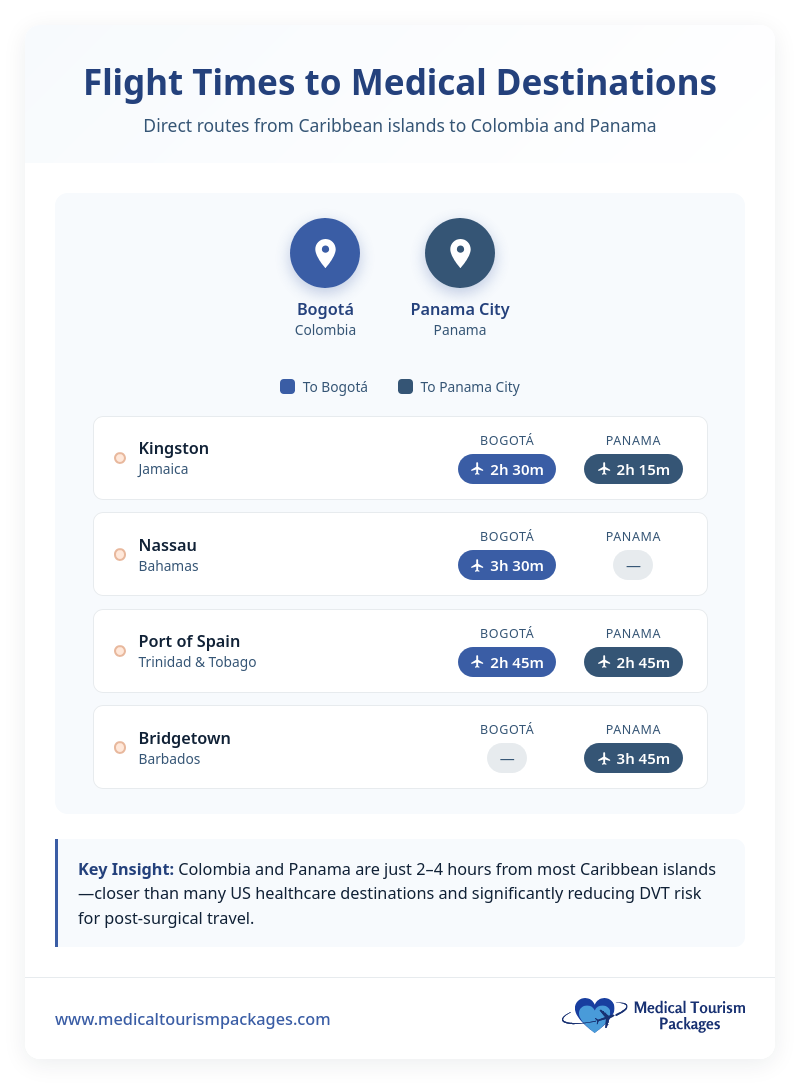
Flight times from most Caribbean islands to medical destinations remain short. Kingston to Bogotá takes about 2 hours 30 minutes, while Kingston to Panama City runs 2 hours 15 minutes. Port of Spain to Panama City takes approximately 2 hours 45 minutes. These shorter durations reduce DVT risk compared to long-haul travel to Asia or other distant regions.
What Accreditations Should Caribbean Patients Look For?
Accreditation separates world-class hospitals from unregulated clinics. It is one of the most important factors in your facility selection. Verify that your chosen facility holds recognized international certifications before booking any procedure abroad.
What Is JCI Accreditation?
Joint Commission International (JCI) represents the gold standard in international patient safety. JCI accreditation is the highest-level designation a medical facility can earn outside the United States. Hospitals undergo rigorous on-site evaluations covering infection control, medication safety, and surgical protocols. The process takes years and requires continuous compliance monitoring.
JCI Enterprise Accreditation covers an entire hospital system rather than individual departments. This certification ensures US-style safety protocols across all services. Facilities with JCI Enterprise Accreditation meet the same standards as top-tier American hospitals.
What Are ACHC and TEMOS?
The Accreditation Commission for Health Care (ACHC) is another reputable body. It is prominent in Latin America and the Caribbean. ACHC focuses on quality assurance in orthopedics, cardiology, and ambulatory surgery centers. TEMOS certifies medical tourism-specific services beyond clinical quality. It evaluates airport transfers, translation services, and accommodation coordination.
When researching facilities in Colombia and Panama, ask directly about accreditation status. Verify independently through the accrediting body’s website. Reputable hospitals display certifications prominently. If a facility cannot provide proof of JCI, ACHC, or TEMOS accreditation, consider it a red flag. Medical Tourism Packages only works with accredited facilities to ensure your safety.
What Are the Travel Logistics for Caribbean Medical Tourists?
Travel logistics directly impact your recovery timeline and overall cost. Understanding flight connections, airline options, and recovery requirements helps you plan a safe medical trip that minimizes complications.
What Are the Flight Times from Caribbean Islands?
Most Caribbean-to-medical-destination routes keep flight times manageable, which minimizes DVT risk and reduces travel fatigue during recovery.
| Origin | Destination | Flight Duration |
|---|---|---|
| Kingston, Jamaica | Bogotá, Colombia | ~2 hours 30 minutes |
| Kingston, Jamaica | Panama City, Panama | ~2 hours 15 minutes |
| Nassau, Bahamas | Bogotá, Colombia | ~3 hours 30 minutes |
| Port of Spain, Trinidad | Bogotá, Colombia | ~2 hours 45 minutes |
| Port of Spain, Trinidad | Panama City, Panama | ~2 hours 45 minutes |
| Bridgetown, Barbados | Panama City, Panama | ~3 hours 45 minutes |
Which Airlines Fly to Colombia and Panama?
Copa Airlines dominates Caribbean-to-Panama routes through its Panama City hub. Direct connections run from Kingston, Port of Spain, and Bridgetown. Avianca serves Jamaica and Trinidad with routes to Bogotá and Medellín. Both airlines offer medical tourism packages with flexible rebooking options.
How Long Before You Can Fly Home After Surgery?
Recovery timelines vary by procedure complexity. Flying too soon risks complications:
- Dental procedures: 24 to 48 hours (implants may require 3-5 days)
- Cosmetic surgery: 7 to 14 days minimum (drains must be removed first)
- Orthopedic surgery: 10 to 14 days typically
- Bariatric surgery: 10 to 14 days
Your surgeon will provide specific clearance for air travel. Book flexible or refundable tickets when possible.
Is Medical Tourism from the Caribbean Right for You?
Medical tourism works best for Caribbean residents who can:
- Afford the total cost including contingency funds
- Take 2 to 3 weeks off work
- Match their procedure to a destination’s specialty
- Verify JCI or ACHC accreditation before booking
- Budget 10% to 20% extra for contingencies
- Pre-arrange follow-up care with a Caribbean physician
If you meet these criteria and choose accredited facilities, medical tourism offers substantial savings without compromising quality.
Frequently Asked Questions
Do Caribbean residents need a visa for Colombia or Panama?
No. Most Caribbean passport holders receive visa-free entry for up to 90 days in both Colombia and Panama. This covers tourism and medical purposes.
Do doctors in Colombia and Panama speak English?
Many surgeons in Bogotá, Medellín, and Panama City speak English. Medical Tourism Packages provides bilingual coordinators for all appointments and recovery support.
What if I have complications after returning home?
Arrange follow-up care with a local physician before traveling. Your surgeon in Colombia or Panama can provide medical records and communicate directly with your home doctor if needed.
Can I bring a companion on my medical trip?
Yes. Many patients bring a family member or friend for support. Our packages can include accommodations for companions at recovery houses or hotels.
How do I pay for procedures abroad?
Most clinics accept credit cards, wire transfers, and cash. Panama uses US dollars, which simplifies transactions. Colombia uses Colombian pesos, but many facilities quote prices in USD for international patients.
How far in advance should I book?
Book 4 to 8 weeks ahead for most procedures. This allows time for virtual consultations, pre-operative tests, and travel arrangements.
Ready to Start Your Medical Journey from the Caribbean?
Medical Tourism Packages coordinates your entire healthcare journey in Colombia and Panama. We connect Caribbean residents with board-certified specialists in Bogotá, Medellín, and Panama City. As your independent advocate, we work for you, not the clinics.
Our team arranges consultations, travel, accommodations, and bilingual support throughout your treatment. Get a free consultation to discuss your health goals and receive a personalized quote.
Contact us today to start planning your affordable healthcare in Colombia or Panama.